News
Walking on a Spring morning.
15th April 2024
15th April 2024
Susan and I were out walking yesterday on a local hillside enjoying a beautiful spring morning. A breeze blew on the top of the hills but it was more refreshing than cold. The ground up high was firm underfoot, unlike the mud down on the low lying areas of the Brecon Beacons. Skylarks sang from on high and Meadow Pipits darted around in front of us as we walked along. As we were passing a fallen tree we could see four Northern Wheatears perched together on one branch. These are a beautiful spring migrant to the Beacons where they always favour high ground, where they breed. As we passed by one bird popped up onto an old fence post to check us out and I didn’t need any encouragement to take a photograph. This is the advantage of carrying a high quality compact zoom lens which weighs very little. The Canon R5 in the 1.6 crop factor mode coupled with the Canon RF100-500 f7.1 is ideal in these situations With the RF 1.4 extender fitted this gives a focal length of 1120mm. Full image stabilization on the lens and camera body makes hand held shots eminently possible.
Beautiful little birds.
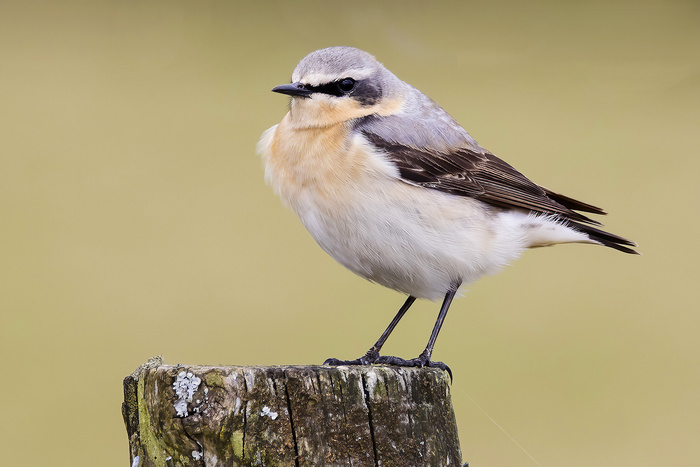
Beautiful little birds.
The Beautiful Barn Owl.
10th April 2024
10th April 2024
There is a very small nature reserve close to where we used to stay in North Norfolk where if you were prepared to wait there was always a chance of a Barn Owl. These gorgeous birds were mostly seen in flight but sometimes, although not very often, one would perch on a fence post.
It was a late autumn evening and the marshes were bathed in a beautiful and subtle golden light, the light photographers dream about. We used to pass a couple of hours there on a regular basis in the hope of seeing these lovely birds.
We had waited patiently and had captured a couple of nice flight shots but we were calling it a day and making our way back to the vehicle via a marsh track bordered on both sides by dense bushes. These bushes prevented us from seeing anything on the reserve but also importantly nothing could see us either. As we neared the end of the track the bushes thinned and we could now see a white shape about twenty yards acroos the reserve, we looked closer and could now see a Barn Owl perched on a fence post. These opportunities don’t come around too often so I set up very quietly and just pushed the lens hood through the foliage and took a few shots. The Owl had heard me though and was in flight straight away disappearing over the hedgerow. However, it was too late because I had him, I say him because I think this bird is a male because of the total lack of spotting on the flanks and the really light plumage. Females usually have spotting on the flanks and an ochre breast band.
Stunning bird of our countryside!!
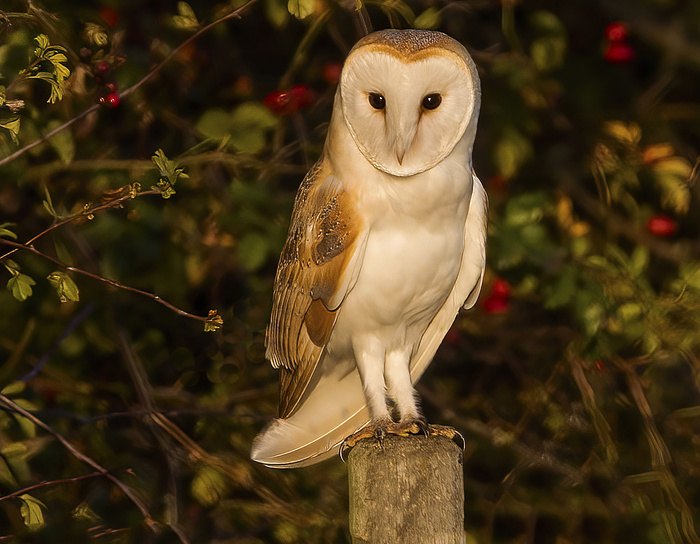
It was a late autumn evening and the marshes were bathed in a beautiful and subtle golden light, the light photographers dream about. We used to pass a couple of hours there on a regular basis in the hope of seeing these lovely birds.
We had waited patiently and had captured a couple of nice flight shots but we were calling it a day and making our way back to the vehicle via a marsh track bordered on both sides by dense bushes. These bushes prevented us from seeing anything on the reserve but also importantly nothing could see us either. As we neared the end of the track the bushes thinned and we could now see a white shape about twenty yards acroos the reserve, we looked closer and could now see a Barn Owl perched on a fence post. These opportunities don’t come around too often so I set up very quietly and just pushed the lens hood through the foliage and took a few shots. The Owl had heard me though and was in flight straight away disappearing over the hedgerow. However, it was too late because I had him, I say him because I think this bird is a male because of the total lack of spotting on the flanks and the really light plumage. Females usually have spotting on the flanks and an ochre breast band.
Stunning bird of our countryside!!
Cuckoos hopefully coming soon.
09th April 2024
09th April 2024
Soon Cuckoos will be arriving back in the Brecon Beacons, it’s usually mid-month before we hear their distinctive call from the surrounding hillsides. Personally I can’t wait, because then I know it’s time for me to check my favoured sites for these enigmatic yet characterful birds, these adjectives describe Cuckoos from a photographers point of view at least.
One day last week I was indoors cataloguing photographs - unable to venture out during this horrible spell of weather we are enduring. When I came to the Cuckoo master file I paused to look at some photographs from way back, and it jogged my memory.
It was 2012 and a beautiful late spring evening on a local mountainside. Susan and I had been watching four perhaps five Cuckoos flying around and perching on the sparsely populated Hawthorn trees. These were the halcyon days when Cuckoos could be seen in some numbers at this site.
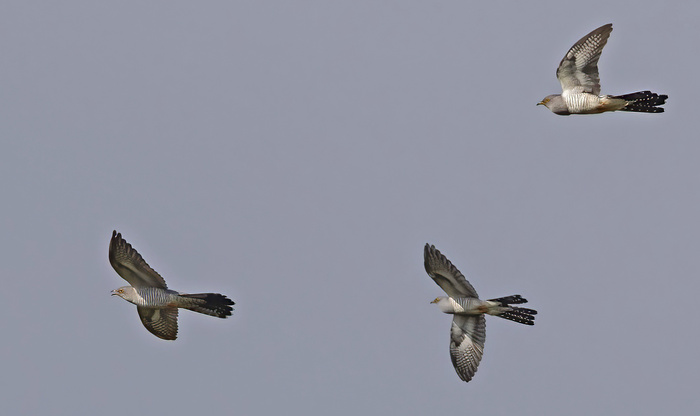
I had tried to approach them for a photograph but they were having none of it, sometimes that’s the way it is. We had resigned ourselves to getting a few record shots and just enjoying the spectacle. The sun was getting lower and the light was becoming mellower as a result, the Cuckoos were still quite active chasing each other from tree to tree – unsurprising given their territorial nature.
As I have outlined many times previously, when male Cuckoos are chasing each other during a territorial spat they can and do perch in the most unexpected positions, sometimes relatively close to people. I have experienced this many times and can therefore say categorically that more than one Cuckoo in the same area greatly increases a photographer’s chance of success.
This scenario I’m pleased to say was repeated and Susan and I were treated to quite a spectacle with birds flying all around us calling as they flew - a special few minutes.
Surprisingly a man came along casually riding a mountain bike and he stopped and asked what we were looking at. He explained that he was on a management course locally and he was just out for a ride. I pointed out a Cuckoo in a tree because he said he had never seen one before. ‘So that’s a Cuckoo’ he said, with a degree of doubt in his voice, as two birds flew over us calling loudly – ‘Yes they are’ I said conclusively. He thanked us and rode off down the track.
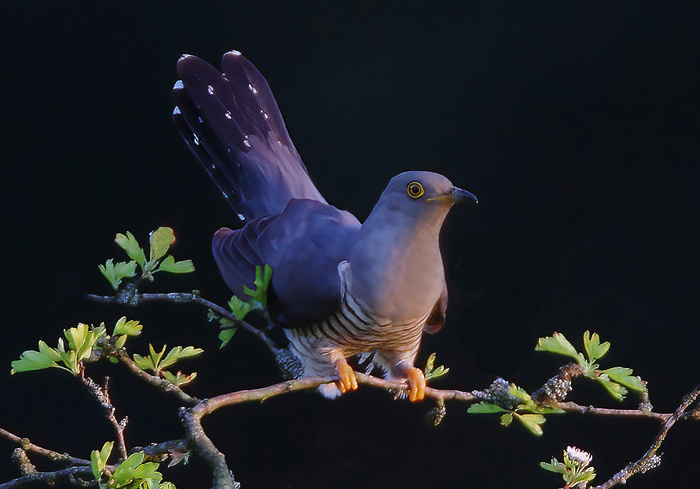
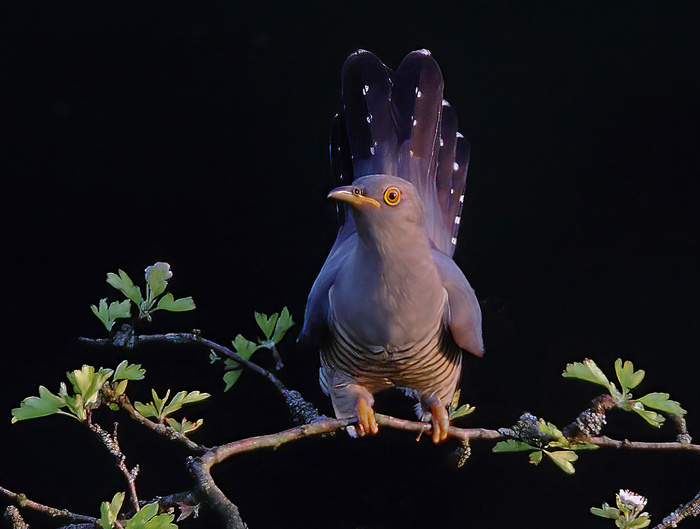
The sun had lowered further and was now shining directly on some hawthorn trees behind us, illuminating them beautifully in a very nice early evening light. Cuckoos were still flying around and unbelievably one of the more inquisitive males landed right in one of these Hawthorns. I shot him immediately, however, he was still a bit further away than I would have liked. This is something that had always irked me with the resulting images from this particular day. I had forgotten about them until this week, but seeing them again brought my frustrations back.
However, there is now something I can do about it, and it’s called AI (Topaz). I am now able to crop in without the resultant noise problems.
My photographic memories of that evening are now far more pleasing.
One day last week I was indoors cataloguing photographs - unable to venture out during this horrible spell of weather we are enduring. When I came to the Cuckoo master file I paused to look at some photographs from way back, and it jogged my memory.
It was 2012 and a beautiful late spring evening on a local mountainside. Susan and I had been watching four perhaps five Cuckoos flying around and perching on the sparsely populated Hawthorn trees. These were the halcyon days when Cuckoos could be seen in some numbers at this site.
I had tried to approach them for a photograph but they were having none of it, sometimes that’s the way it is. We had resigned ourselves to getting a few record shots and just enjoying the spectacle. The sun was getting lower and the light was becoming mellower as a result, the Cuckoos were still quite active chasing each other from tree to tree – unsurprising given their territorial nature.
As I have outlined many times previously, when male Cuckoos are chasing each other during a territorial spat they can and do perch in the most unexpected positions, sometimes relatively close to people. I have experienced this many times and can therefore say categorically that more than one Cuckoo in the same area greatly increases a photographer’s chance of success.
This scenario I’m pleased to say was repeated and Susan and I were treated to quite a spectacle with birds flying all around us calling as they flew - a special few minutes.
Surprisingly a man came along casually riding a mountain bike and he stopped and asked what we were looking at. He explained that he was on a management course locally and he was just out for a ride. I pointed out a Cuckoo in a tree because he said he had never seen one before. ‘So that’s a Cuckoo’ he said, with a degree of doubt in his voice, as two birds flew over us calling loudly – ‘Yes they are’ I said conclusively. He thanked us and rode off down the track.
The sun had lowered further and was now shining directly on some hawthorn trees behind us, illuminating them beautifully in a very nice early evening light. Cuckoos were still flying around and unbelievably one of the more inquisitive males landed right in one of these Hawthorns. I shot him immediately, however, he was still a bit further away than I would have liked. This is something that had always irked me with the resulting images from this particular day. I had forgotten about them until this week, but seeing them again brought my frustrations back.
However, there is now something I can do about it, and it’s called AI (Topaz). I am now able to crop in without the resultant noise problems.
My photographic memories of that evening are now far more pleasing.
The decline of the Lesser Spotted Woodpecker.
17th March 2024
17th March 2024
The enigmatic Lesser Spotted Woodpecker is an extremely difficult bird to see in the Brecon Beacons, in fact damn near impossible! These diminutive woodpeckers are on the ‘Red List’ of birds in the UK after a massive 83% decline in numbers since 1970. Some explanations have been offered up as the reasons for this decline, primarily the ongoing loss of ancient and mature woodland which is thought to be a key factor, and also the removal of dead and rotting wood may have also had an impact. There are now thought to be no more than 2,000 pairs left in the UK which is an awful statistic.
These delightful little bird are usually found high up in mature trees searching for food by crawling around small tree branches, their flight is a series of very deep loops, much more exaggerated than other woodpeckers because of their very short wings.
They emit a chipping sound which is a bit weaker than their Great Spotted cousins.
Their drumming is also a more muted and subdued affair, lasting a bit longer than the Great Spotted's and is also much less 'Staccato' in nature.
Please click the link and press play to listen.
https://xeno-canto.org/842218
Quite unlike the harshness of the Great Spotted's.
Their song has been likened to a quieter version of a Sparrowhawk – a series of Kee Kee Kee notes.
https://xeno-canto.org/832184
Not to be confused with the Nuthatches delivery of somewhat similar notes.
https://xeno-canto.org/840562
Over the last week Susan and I have heard a bird drumming and singing in the same area but as yet haven’t been able to see it. Just seeing one would be great – photographing one would be another much more difficult matter.
Here is a photograph of a male bird I took in Bulgaria, where they don’t have the declining numbers that we have.
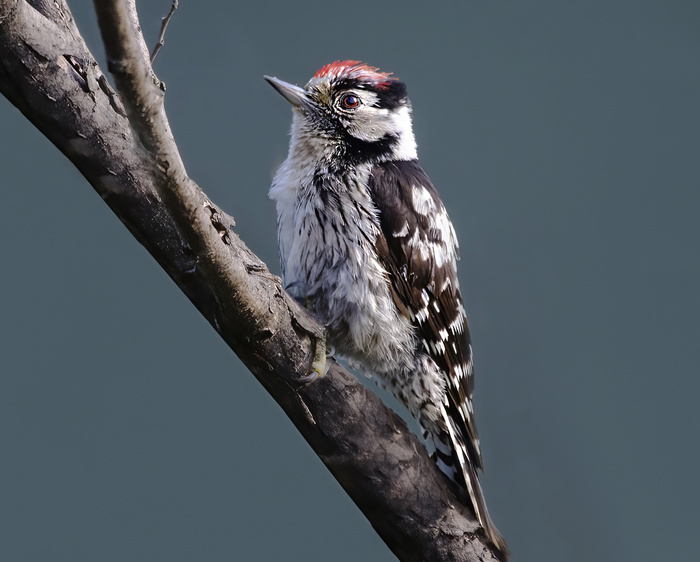
I really wish things could be different here.
These delightful little bird are usually found high up in mature trees searching for food by crawling around small tree branches, their flight is a series of very deep loops, much more exaggerated than other woodpeckers because of their very short wings.
They emit a chipping sound which is a bit weaker than their Great Spotted cousins.
Their drumming is also a more muted and subdued affair, lasting a bit longer than the Great Spotted's and is also much less 'Staccato' in nature.
Please click the link and press play to listen.
https://xeno-canto.org/842218
Quite unlike the harshness of the Great Spotted's.
Their song has been likened to a quieter version of a Sparrowhawk – a series of Kee Kee Kee notes.
https://xeno-canto.org/832184
Not to be confused with the Nuthatches delivery of somewhat similar notes.
https://xeno-canto.org/840562
Over the last week Susan and I have heard a bird drumming and singing in the same area but as yet haven’t been able to see it. Just seeing one would be great – photographing one would be another much more difficult matter.
Here is a photograph of a male bird I took in Bulgaria, where they don’t have the declining numbers that we have.
I really wish things could be different here.
Spring is coming.
15th March 2024
15th March 2024
Susan and I have only just finished completely redecorating the interior of the house and it has taken six weeks of hard work. However, it is finished now and we have started to go out birding in the locality. Fortunately last week we were lucky to come across two Willow Tits.
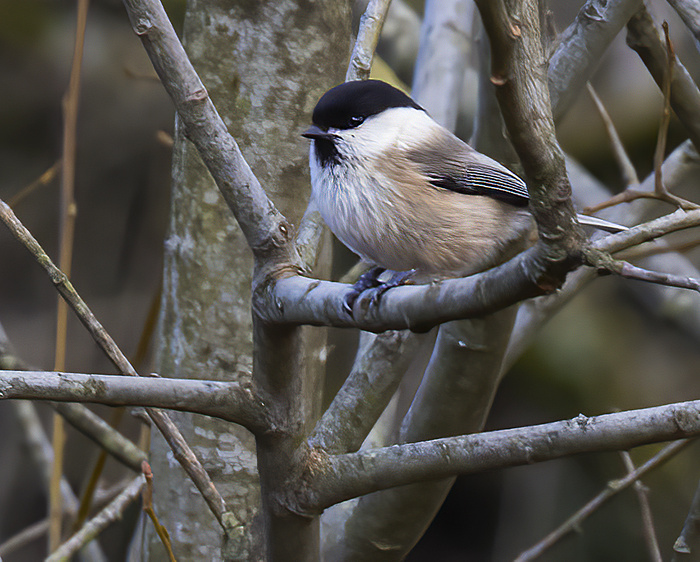
Notice the extensive sooty black cap, prominent black bib, large white cheeks, buffy underparts and a light wing panel.
They always look a warmer colour than the Marsh Tit, which could be a confusion species.
These little birds are on the 'Red List' and as a consequence have become quite difficult to see nationally.
However, encouragingly the days are now noticeably lengthening, despite the horrible, gloomy and wet weather we have been enduring for months. The land is sodden and everywhere you walk is just mud – disgusting.
Around our garden finch numbers are building - Goldfinches and Siskins in the main. Each year at this time they come to the bird feeders to fatten up ready for breeding. This morning in a rare couple of hours of brightness I set up a lens and camera in the permanent hide in my garden. Traditionally the finches were quarrelling over the seeds and I managed to capture a few flight shots using the method I explained in a previous blog post.
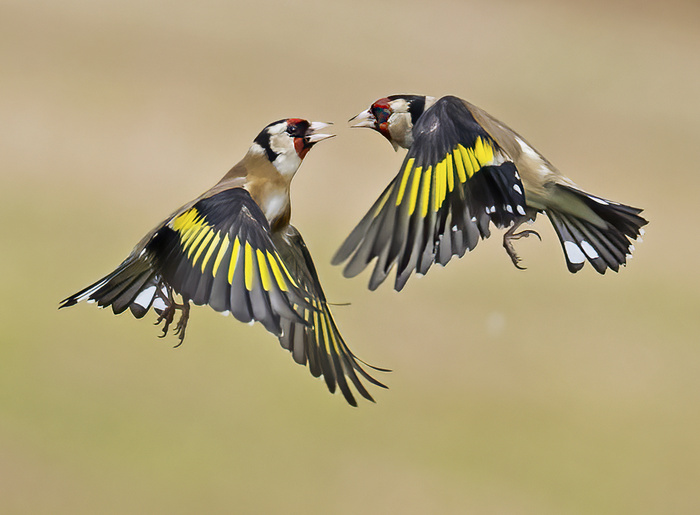
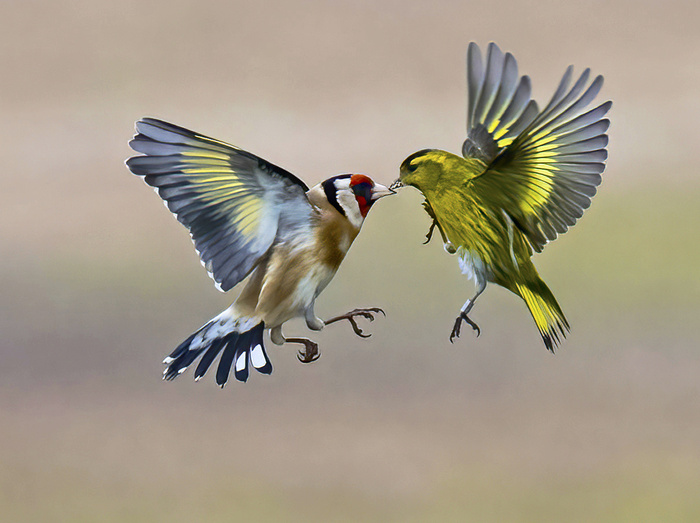
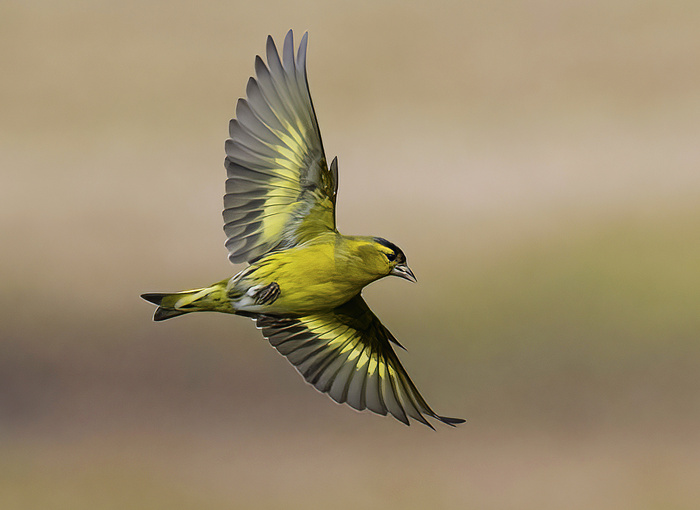
In order to capture these flight shots;
Canon R5 and Canon Rf 100-500 zoom lens.
Details - 5000/sec - ISO 2500 @ f8 for some DOF.
I have sold my Canon 7D Mk2 DSLR and I am now ‘mirrorless’ only, and for the first time in twenty years I have one single camera, it feels strange!
Positively I can’t wait for the spring migrants to start appearing to put an end to this miserable wet winter…….
Notice the extensive sooty black cap, prominent black bib, large white cheeks, buffy underparts and a light wing panel.
They always look a warmer colour than the Marsh Tit, which could be a confusion species.
These little birds are on the 'Red List' and as a consequence have become quite difficult to see nationally.
However, encouragingly the days are now noticeably lengthening, despite the horrible, gloomy and wet weather we have been enduring for months. The land is sodden and everywhere you walk is just mud – disgusting.
Around our garden finch numbers are building - Goldfinches and Siskins in the main. Each year at this time they come to the bird feeders to fatten up ready for breeding. This morning in a rare couple of hours of brightness I set up a lens and camera in the permanent hide in my garden. Traditionally the finches were quarrelling over the seeds and I managed to capture a few flight shots using the method I explained in a previous blog post.
In order to capture these flight shots;
Canon R5 and Canon Rf 100-500 zoom lens.
Details - 5000/sec - ISO 2500 @ f8 for some DOF.
I have sold my Canon 7D Mk2 DSLR and I am now ‘mirrorless’ only, and for the first time in twenty years I have one single camera, it feels strange!
Positively I can’t wait for the spring migrants to start appearing to put an end to this miserable wet winter…….
Egyptian Plover.
31st January 2024
31st January 2024
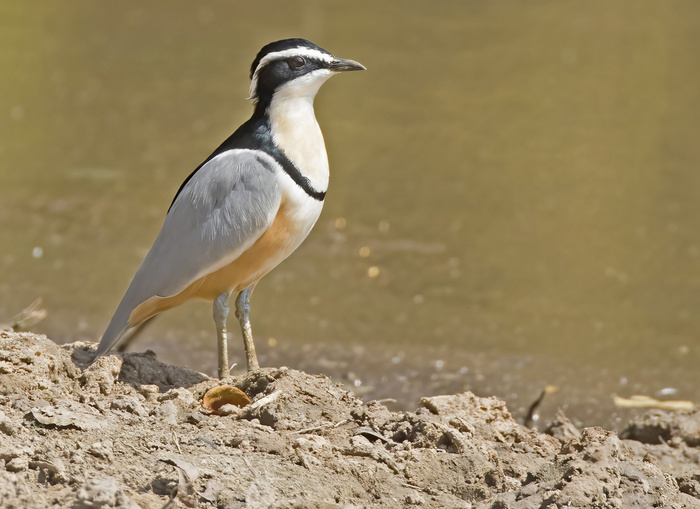
The iconic Egyptian Plover, or coloquilly named the ‘Crocodile bird’ is sought after by most people who visit The Gambia. However, a trip ‘Up River’ is necessary if you want to see these lovely birds.
The Egyptian plover is a localised resident in tropical sub-Saharan Africa. It breeds on sandbars in very large rivers. Despite its vernacular and scientific names, it is not present in modern-day Egypt. However when it was described in 1758 by Carolus Linnaeus, the Egyptian state encompassed much of the territory that the bird is found in today, including Sudan, Chad, and Ethiopia.
We found these birds in two locations, thanks to Mas’s expertise, and they posed nicely.
They are by nature quite confiding so once you find them you can usually get some images.
The Egyptian plover is a localised resident in tropical sub-Saharan Africa. It breeds on sandbars in very large rivers. Despite its vernacular and scientific names, it is not present in modern-day Egypt. However when it was described in 1758 by Carolus Linnaeus, the Egyptian state encompassed much of the territory that the bird is found in today, including Sudan, Chad, and Ethiopia.
We found these birds in two locations, thanks to Mas’s expertise, and they posed nicely.
They are by nature quite confiding so once you find them you can usually get some images.
Blue-bellied Roller.
31st January 2024
31st January 2024
These beautiful birds are typical Rollers, shy most of the time but now and again they will perch out and allow a photo opportunity.
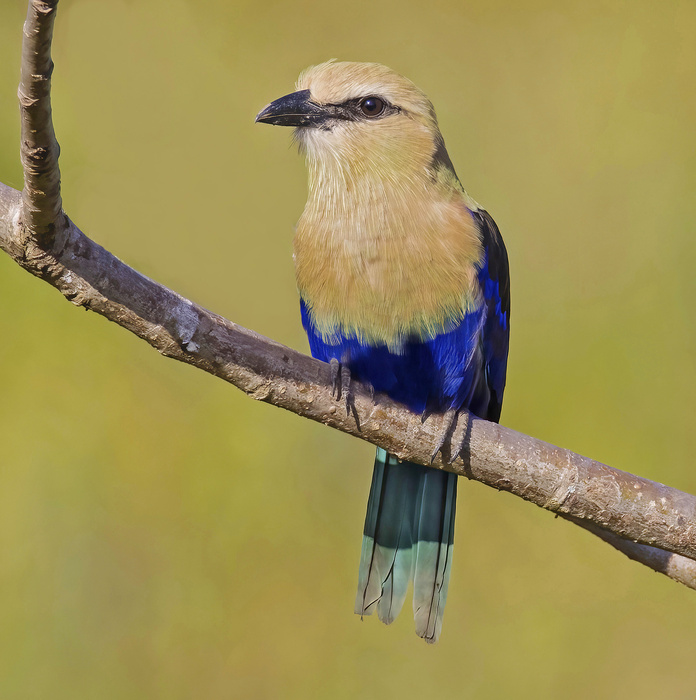
They are attracted to bush fires and will perch in a tree on the fires edge and wait for insects like crickets and grasshoppers to flee the flames. They also forage on the ground for insects, they are often seen in pairs.
They are attracted to bush fires and will perch in a tree on the fires edge and wait for insects like crickets and grasshoppers to flee the flames. They also forage on the ground for insects, they are often seen in pairs.
Black-and white-casqued Hornbill.
31st January 2024
31st January 2024
These impressive birds are found in wooded habitats in central and western Africa, ranging from western Kenya to Côte d'Ivoire with an isolated population in north Angola. This Hornbill is found mostly in the Ivory-Coast, with smaller populations in its surrounding countries. The Central-African populations are mostly in Uganda and Kenya as well as Cameroon, with smaller populations in Gabon, Tanzania and Central Africa. They are tropical birds that live in regions with high amounts of forests and because of this arboreal nature they are rarely seen on flat lands.
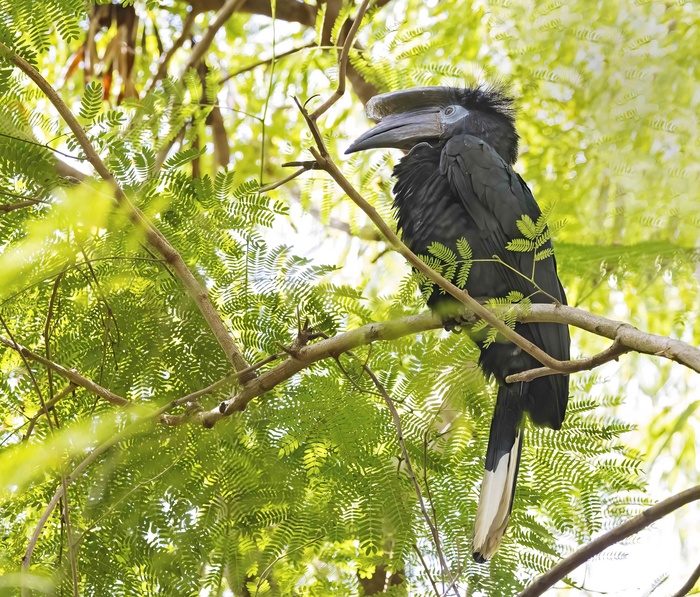
Quite what this bird is doing in the Gambia is a mystery, nevertheless it seems happy to have taken up residence in the grounds of a large hotel. It has become resident in this same location because it’s probably having a good living there.
Whatever the circumstances, it’s a very impressive bird to see, standing at around 30 inches.
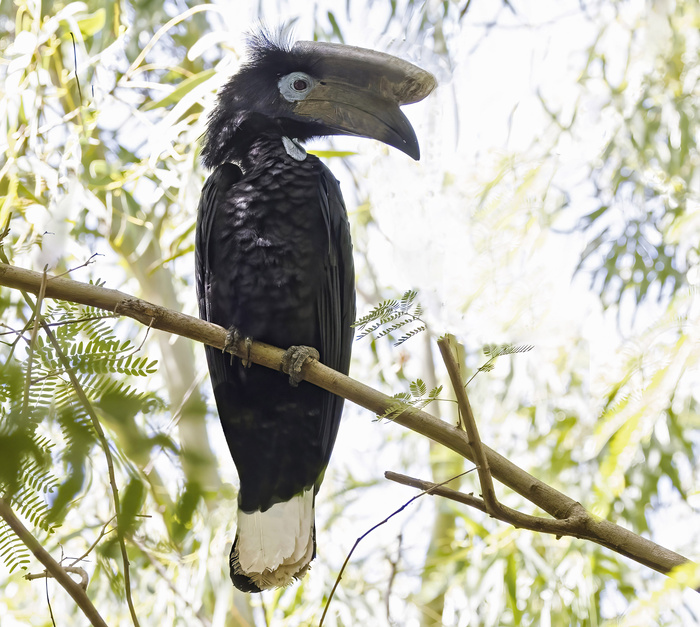
Quite what this bird is doing in the Gambia is a mystery, nevertheless it seems happy to have taken up residence in the grounds of a large hotel. It has become resident in this same location because it’s probably having a good living there.
Whatever the circumstances, it’s a very impressive bird to see, standing at around 30 inches.
Greater Honeyguide.
31st January 2024
31st January 2024
The Greater Honeyguide is said to live up to its name by leading local people to wild bee hives that are erected in cavities of the trunks of Baobab and other tall trees. Once located, men then scale these trees, open up the bee hives and remove the much sought after honey. They leave the wax and the calorie-laden larvae in the hives for the Honeguides to eat. The Greater Honeyguide is one of the few birds that can eat and digest wax.
Adult

Juvenile

This activity is what’s called ‘Mutual Interaction’.
This unlikely partnership has been chronicled in many African countries as early as the fifteen century.
Utterly fascinating!!
Adult
Juvenile
This activity is what’s called ‘Mutual Interaction’.
This unlikely partnership has been chronicled in many African countries as early as the fifteen century.
Utterly fascinating!!
Adamawa Turtle Dove.
24th January 2024
24th January 2024
After motoring up the River Gambia for about a mile, watching Ospreys soaring high overhead and contrastingly lower down, a foot above the water, flying fish skipping along accompanying our boat, we finally disembarked on to a rickety old wooden jetty where we met the guide who works the forest we were entering.
From there we proceeded to walk through a dense forest of old hardwood trees with an understorey consisting of very overgrown bush. Huge vines draped down from the tree tops and exotic looking fruits hung from the foliage above the small track that led us deeper into the forest. Lines of huge ants that must have been an inch long marched across our path and we were careful to step over them very quickly, because if they crawl up your leg then you are in trouble, as they possess a very potent bite.
We had seen and heard various birds as we walked along but as we entered a small clearing Mas pointed and whispered very excitedly, ‘There – There, above us, Adamawa Turtle dove’!!! This was our quarry, although we didn’t know it until then - typical Mas he likes surprises. These birds are incredibly rare and most difficult to see, they only exist in a very narrow band in East Gambia and South East Senegal. Mas was desparate to get a photo and he pleaded ‘Don’t miss it Steve’ – no pressure then!!
This nervous bird only stayed for around twenty seconds before flying off, but after examining the screen on the back of my camera I could see I had it - phew relief.

After showing the image to him and the forestry guide, mobile phones were produced and images were happily photographed from the camera screen.
Mas was elated, because it was a big thing for him to find this bird, because it shows well on his Palmares for future bird guiding, not many people get images of these elusive birds.
I was pleased to help!
From there we proceeded to walk through a dense forest of old hardwood trees with an understorey consisting of very overgrown bush. Huge vines draped down from the tree tops and exotic looking fruits hung from the foliage above the small track that led us deeper into the forest. Lines of huge ants that must have been an inch long marched across our path and we were careful to step over them very quickly, because if they crawl up your leg then you are in trouble, as they possess a very potent bite.
We had seen and heard various birds as we walked along but as we entered a small clearing Mas pointed and whispered very excitedly, ‘There – There, above us, Adamawa Turtle dove’!!! This was our quarry, although we didn’t know it until then - typical Mas he likes surprises. These birds are incredibly rare and most difficult to see, they only exist in a very narrow band in East Gambia and South East Senegal. Mas was desparate to get a photo and he pleaded ‘Don’t miss it Steve’ – no pressure then!!
This nervous bird only stayed for around twenty seconds before flying off, but after examining the screen on the back of my camera I could see I had it - phew relief.
After showing the image to him and the forestry guide, mobile phones were produced and images were happily photographed from the camera screen.
Mas was elated, because it was a big thing for him to find this bird, because it shows well on his Palmares for future bird guiding, not many people get images of these elusive birds.
I was pleased to help!
Black-headed Lapwing
24th January 2024
24th January 2024
The Black-headed Lapwing, unlike our Northern lapwing is a bird of dry ground, typically grasslands with patches of bare earth where it forages for food. It is mostly active in the early morning, late evening and through the night. These lovely birds are a dry season visitor to The Gambia, migrating from the Sahel region of Africa.

The Sahel is a bio geographical area of land which extends from the Atlantic coast in the west, right across to the Red Sea. It is basically a transitional zone between the humid Savannahs to the south and the more arid lands to the north of the Sahara. Many of these Intra African migrant birds are just escaping unfavourable climatic conditions.
The Sahel is a bio geographical area of land which extends from the Atlantic coast in the west, right across to the Red Sea. It is basically a transitional zone between the humid Savannahs to the south and the more arid lands to the north of the Sahara. Many of these Intra African migrant birds are just escaping unfavourable climatic conditions.
The versatile Baobab tree.
23rd January 2024
23rd January 2024
The Baobab tree is a classic African tree which is dotted around the landscape, some specimens are absolutely gigantic with truly massive girths. These giants can live to a thousand years old, mature trees can be a valuable source of water because they store large volumes in their trunks. Their branches spread out horizontally and many birds make their homes in these trees. They also provide a valuable source of medicine and food for African people. We have on occasions collected the fruit of these trees with Mas our bird guide, he uses them as a digestive supplement because they are an important source of fibre.

Cruising the backwaters of the River Gambia.
14th January 2024
14th January 2024
A cruise along the many back-waters of the River Gambia is special, of that there is no doubt. Many birds can be seen by travelling in a small boat and the habitat viewed doing this is really unusual and somewhat diverse.
https://youtu.be/FXvyWvBfKy8
One area in particular looked like a huge field of watercress, inhabited mostly by herons and storks. The storks allowed very close approach.
Yellow-billed Stork

The herons, however, were typically wary. The ground looked almost solid enough to walk on but the boatman assured us it was most definitely not, and was also quite dangerous to attempt.
He said the herons and storks were obviously harmless and the ground was quite solid in places. However! What can be lurking in the damp vegetation could present a problem. I asked him to elaborate and he pointed to an innocuous area of vegetation and said ’look closer’.
I could now see what he meant!

West African Crocodile
https://youtu.be/FXvyWvBfKy8
One area in particular looked like a huge field of watercress, inhabited mostly by herons and storks. The storks allowed very close approach.
Yellow-billed Stork
The herons, however, were typically wary. The ground looked almost solid enough to walk on but the boatman assured us it was most definitely not, and was also quite dangerous to attempt.
He said the herons and storks were obviously harmless and the ground was quite solid in places. However! What can be lurking in the damp vegetation could present a problem. I asked him to elaborate and he pointed to an innocuous area of vegetation and said ’look closer’.
I could now see what he meant!
West African Crocodile
Red-throated Bee-eaters.
13th January 2024
13th January 2024
Red-throated Bee-eaters are one of the most beautiful Bee eaters in The Gambia. A trip ‘up country’ or ‘up river’ is usually needed to see them. We came across this small colony of nesting birds and Mas our guide placed a few sticks in some appropriate positions. We waited behind a small banking and sure enough they came and perched right in front of my lens, what an absolute treat! It really is a privilege to see them up close like this. I had difficulty getting single birds on their own because they like to perch on a stick in numbers.

Swallow-tailed Bee eater.
05th January 2024
05th January 2024
The Swallow-tailed Bee eater is one of many Bee eaters than can be seen in The Gambia. These are not really that numerous compared to some of the other Bee eater species, but they are all so beautiful. The variety of bird species in most areas there is quite remarkable and as a consequence it’s so difficult to adjust to birding when I return home.

Woodland Kingfisher.
05th January 2024
05th January 2024
Another African Kingfisher that doesn’t hunt in water. The Woodland Kingfisher as its name suggests feeds in woody and grassy areas. I find that these non-water hunting Kingfishers are more approachable than their aquatic cousins. It looks like a type of grasshopper in its beak.

Guinea Baboons.
02nd January 2024
02nd January 2024
When walking through dense forests a few times we were followed by a troop of baboons. Guinea Baboons as Mas our guide called them. These fierce looking animals are actually very shy, but hugely inquisitive. They would follow us, peeping through the vegetation from a distance of about fifty yards. They make a deep barking sound like a big dog when they get excited. They are nevertheless quite comical, so I made an effort to get a photo by peeping around a tree myself, trying not to spook them.

Violet Turaco.
02nd January 2024
02nd January 2024
The Violet Turaco and the Green Turaco have similar habits, they both frequent tree canopies and they are as expected fruit eaters. The Violet, however, is more frequently seen because it is slightly more confiding. They both have really gorgeous crimson underwings, visible only in flight.
Relaxing on the loungers in the gardens of our lodge with a cold beer in the late afternoon, with my camera at the ready – just in case, is very pleasant indeed.
We could look up at an extensive Fig – like tree and identify various species of birds coming in to eat. Bearded Barbet, unbelievably Hooded Vultures, and Fork-tailed Drongos etc.
Infrequently, but nevertheless quite regularly, Violet Turacos flew in and stayed for ten minutes or so, but getting a shot was still difficult because of the extensive leaf cover. They were nearly always obscured, but I managed to isolate a bird once or twice – lovely to see them!

Relaxing on the loungers in the gardens of our lodge with a cold beer in the late afternoon, with my camera at the ready – just in case, is very pleasant indeed.
We could look up at an extensive Fig – like tree and identify various species of birds coming in to eat. Bearded Barbet, unbelievably Hooded Vultures, and Fork-tailed Drongos etc.
Infrequently, but nevertheless quite regularly, Violet Turacos flew in and stayed for ten minutes or so, but getting a shot was still difficult because of the extensive leaf cover. They were nearly always obscured, but I managed to isolate a bird once or twice – lovely to see them!
Giant Kingfisher.
02nd January 2024
02nd January 2024
The Giant Kingfisher is the largest Kingfisher and it certainly lives up to its name being an incredible 18 inches in length. It frequents wooded rivers, lagoons, lakes and mangrove plantations. It perches quietly, often out of sight, watching for crabs and fish. The male birds have a chestnut breast and a white belly with black barring. This bird looks like a juvenile because the barring on the belly is not showing much yet.
The female’s plumage is the reverse of this.
In flight they are so large they can be confused with some small Herons.
We found this bird perched over a water filled ditch as it tried to regulate the heat by ventilating on a blisteringly hot day.

The female’s plumage is the reverse of this.
In flight they are so large they can be confused with some small Herons.
We found this bird perched over a water filled ditch as it tried to regulate the heat by ventilating on a blisteringly hot day.
4 Banded Sandgrouse.
01st January 2024
01st January 2024
The 4 Banded Sandgrouse gets its name from the male bird’s breast banding, however, this is a misnomer because the male in fact has only three breast bands. These birds are largely nocturnal in their habits and are usually only seen in the daytime when disturbed. This male bird exploded virtually from under my feet and landed a short distance away for a few seconds - just enough time for a shot!
