News
Lovely Morning in a Local Wood.
12th October 2022
12th October 2022
Yesterday Susan and I went looking for Fungi in a local conifer plantation – it’s that time of year. The best time to look is after a couple of days of rain, so we were hopeful of finding some photographable subjects and indeed we came across some lovely displays of the.
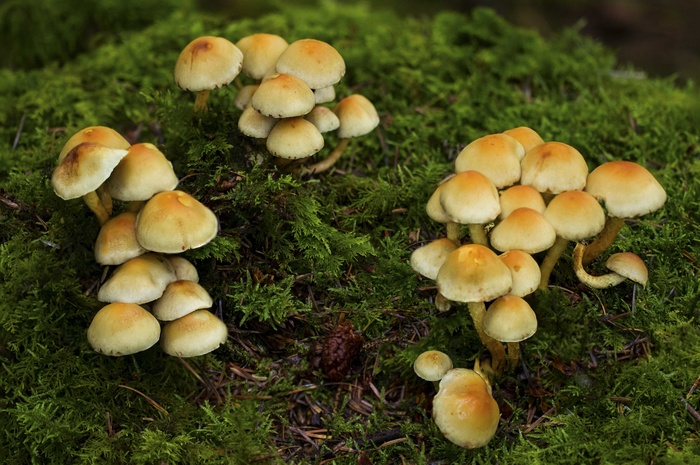
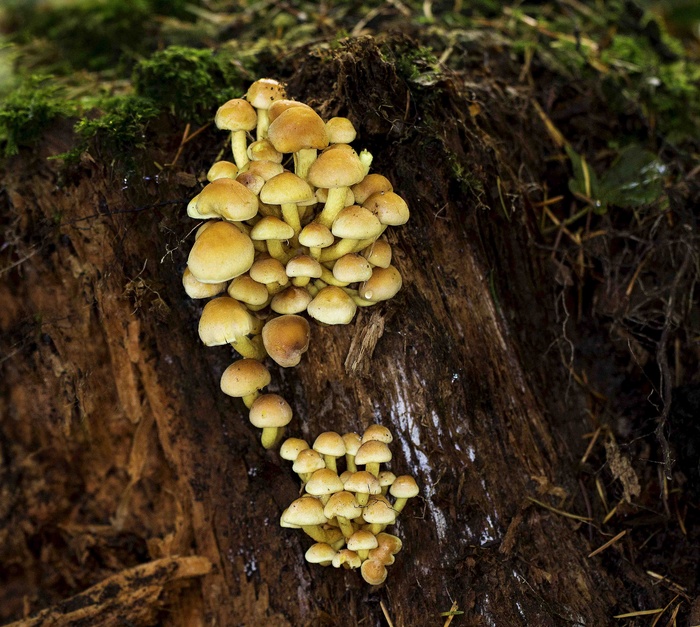
‘Poisonous’ Sulphur Tuft mushrooms on rotting tree stumps.
In order to save walking around with equipment unnecessarily, we always carry binoculars because this helps you to see across the woodland floor. However, nothing could have prepared us for the spectacle which appeared before us - hundreds of Chanterelle mushrooms in groups of up to fifty, and probably in total over a thousand throughout the woods.
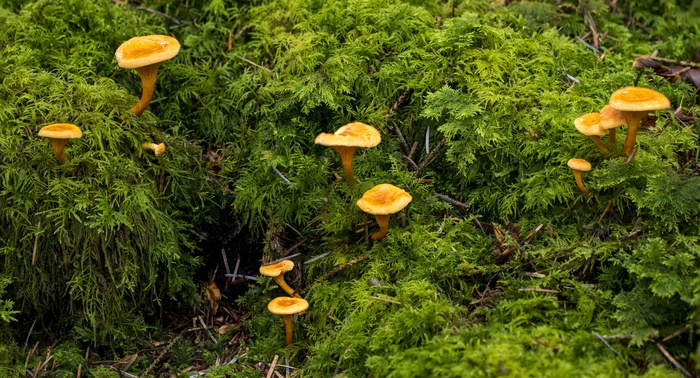
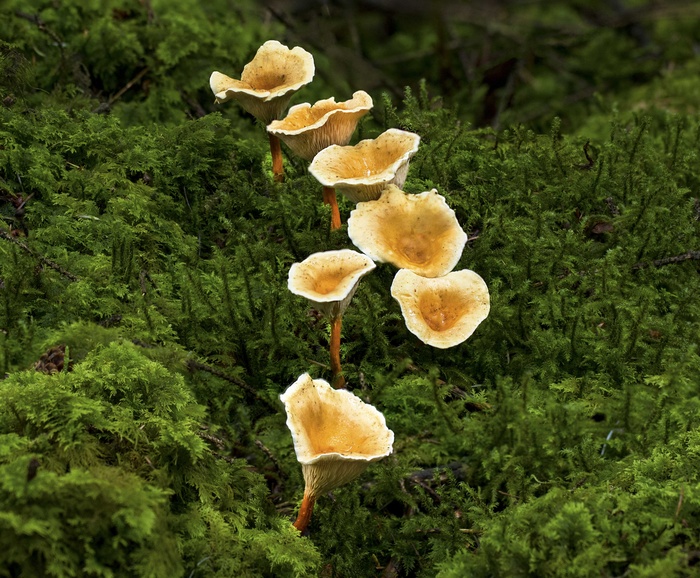
This was a veritable natural wonder and a pleasure to behold.
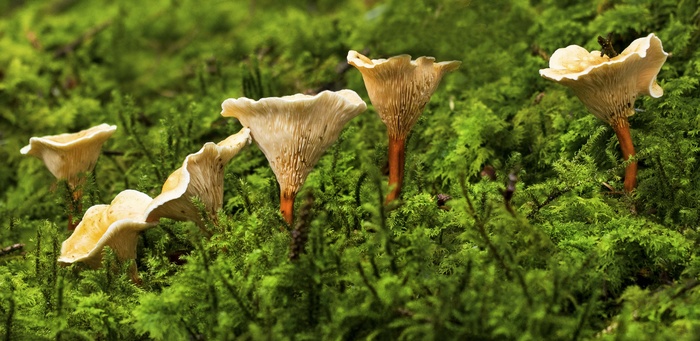
If these mushrooms had been true Chanterelles they would have been worth a fortune, but unfortunately true Chanterelles, a highly prized, delicious and very expensive mushroom, appear in mid to late summer and grow in primarily deciduous woodlands. These were in fact False Chanterelles and are not edible because they can give people bad gastric problems and some people have experienced hallucinatory episodes after consumption.
On casual observation it is easy to confuse these two species but with closer inspection, (which is highly recommended), there are marked differences between the two, principally colour, gills or the lack of and distinctive odour.
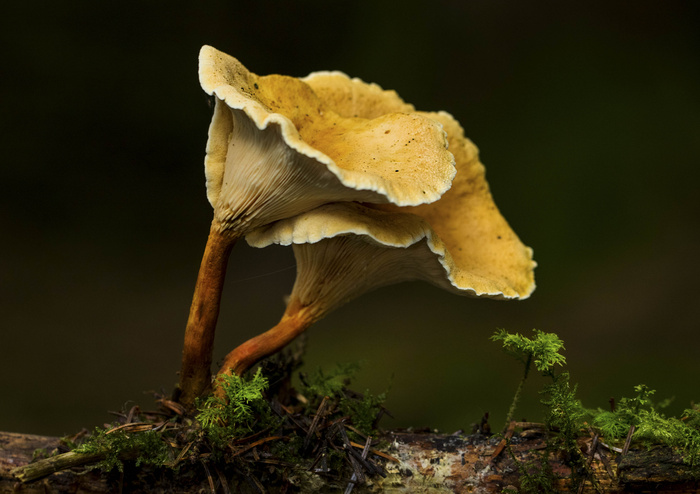
Both examples of False Chanterelle.
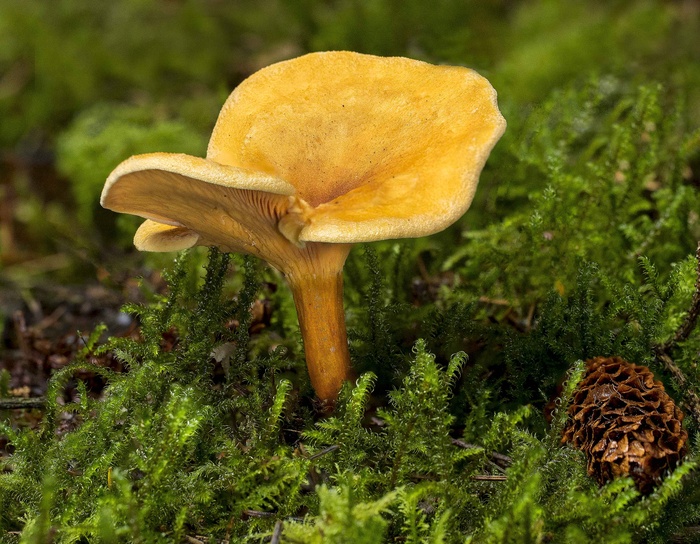
Overall just remember if they are in a conifer woodland in the autumn then they are most likely to be the inedible false species which should not be consumed.
This however, made no difference to a glorious panorama that would brighten up any woodland. We walked on through a mixture of habitats through lovely settings with the sun’s dappled rays illuminating the woodland floor and pleasingly in total silence, which is a rare commodity in today’s world. We stopped to examine and photograph a number of species as we made our way through but then totally unexpectedly we came across a mushroom we always like to see.
The Fly Agaric.
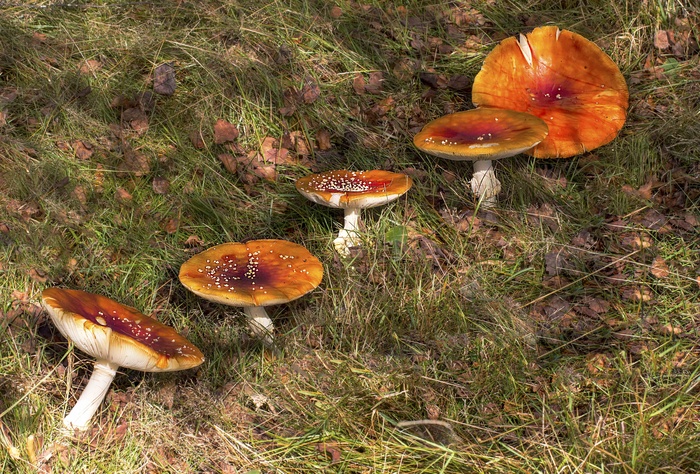
They brightens up any walk and although these mushrooms have a very close mycorrhizal relationship with Birch trees as we found, they are also discovered in conifer plantations. These lovely mushrooms look like they are straight out of a children’s book of fairy stories.
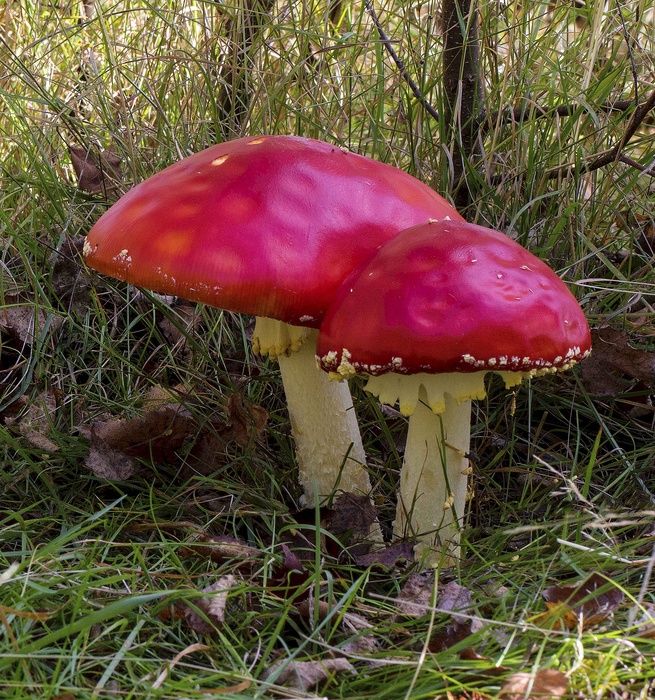
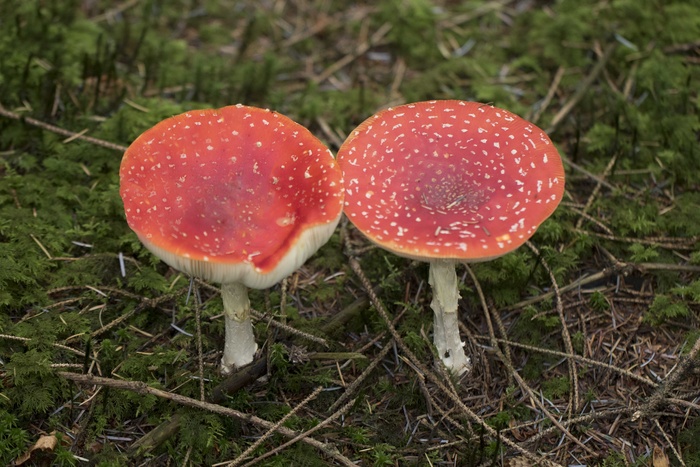
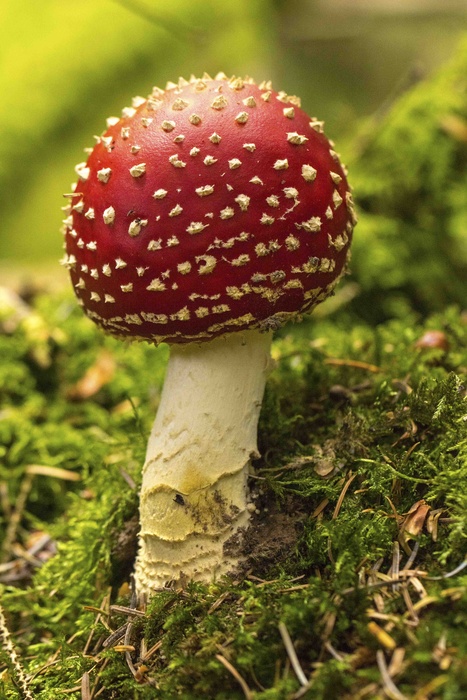
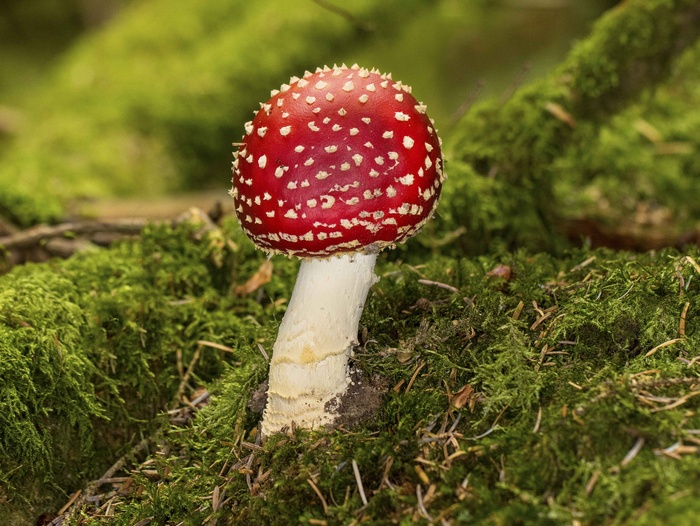
I was only too happy to take a few shots as they rounded off the morning perfectly.
‘Poisonous’ Sulphur Tuft mushrooms on rotting tree stumps.
In order to save walking around with equipment unnecessarily, we always carry binoculars because this helps you to see across the woodland floor. However, nothing could have prepared us for the spectacle which appeared before us - hundreds of Chanterelle mushrooms in groups of up to fifty, and probably in total over a thousand throughout the woods.
This was a veritable natural wonder and a pleasure to behold.
If these mushrooms had been true Chanterelles they would have been worth a fortune, but unfortunately true Chanterelles, a highly prized, delicious and very expensive mushroom, appear in mid to late summer and grow in primarily deciduous woodlands. These were in fact False Chanterelles and are not edible because they can give people bad gastric problems and some people have experienced hallucinatory episodes after consumption.
On casual observation it is easy to confuse these two species but with closer inspection, (which is highly recommended), there are marked differences between the two, principally colour, gills or the lack of and distinctive odour.
Both examples of False Chanterelle.
Overall just remember if they are in a conifer woodland in the autumn then they are most likely to be the inedible false species which should not be consumed.
This however, made no difference to a glorious panorama that would brighten up any woodland. We walked on through a mixture of habitats through lovely settings with the sun’s dappled rays illuminating the woodland floor and pleasingly in total silence, which is a rare commodity in today’s world. We stopped to examine and photograph a number of species as we made our way through but then totally unexpectedly we came across a mushroom we always like to see.
The Fly Agaric.
They brightens up any walk and although these mushrooms have a very close mycorrhizal relationship with Birch trees as we found, they are also discovered in conifer plantations. These lovely mushrooms look like they are straight out of a children’s book of fairy stories.
I was only too happy to take a few shots as they rounded off the morning perfectly.
Autumn
11th September 2022
11th September 2022
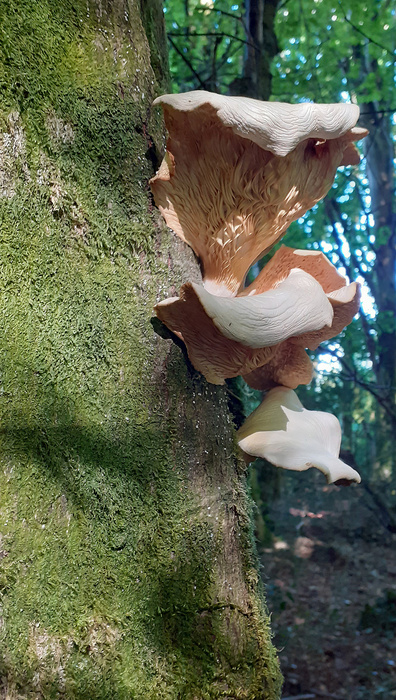
Walking in a local wood this week the first signs of Fungi are starting to appear, it’s been so dry up until last week but the recent rains have started to rejuvenate the land - and boy did it need it. These long dry spells are no good for the ground or the rivers, in particular the River Usk was clogged up with algae but the rains have now washed it all away. When walking in the wood we came across the first vestiges of Oyster.
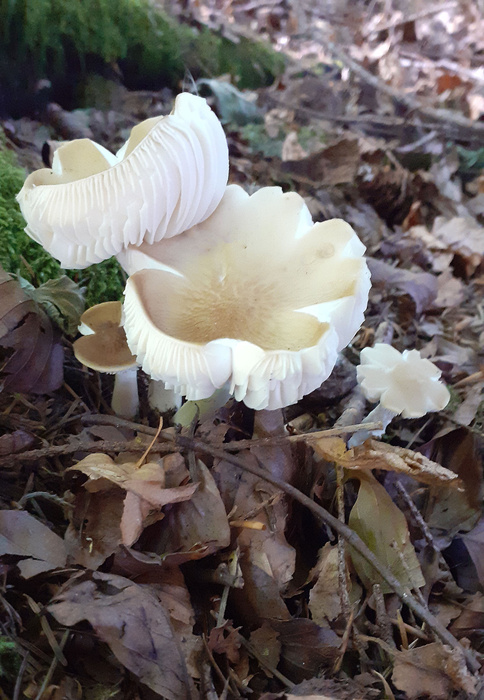
Also Blusher mushrooms.
Let’s hope it’s going to be a good fungi season.
When we returned home I could see some white objects in the field that backs on to our garden, so after hopping over the fence I could see that they were edible Field Mushrooms and what a display there was. We couldn’t begin to pick them all so we filled a basket and left the smaller ones for another day.
Now that our Runner beans have finished and the plants have been composted we turned out attention to apples. We have picked about a hundred Cooking Apples from our tree and the Pear tree in the garden is laden with fruit this year.
Edible Field Mushroons – Agaricus campestris
These are most delicious and are much tastier than the cultivated supermarket mushrooms.
Lightly fried in a little Olive Oil with a pinch of fresh garlic is just perfect for us – Yum Yum!
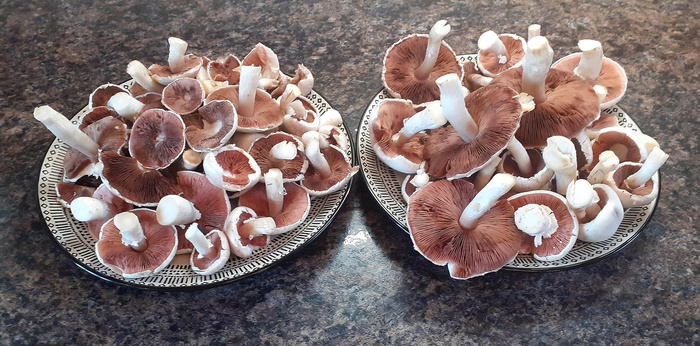
Please be careful when picking mushrooms - not all are edible and some are deadly!!
Also Blusher mushrooms.
Let’s hope it’s going to be a good fungi season.
When we returned home I could see some white objects in the field that backs on to our garden, so after hopping over the fence I could see that they were edible Field Mushrooms and what a display there was. We couldn’t begin to pick them all so we filled a basket and left the smaller ones for another day.
Now that our Runner beans have finished and the plants have been composted we turned out attention to apples. We have picked about a hundred Cooking Apples from our tree and the Pear tree in the garden is laden with fruit this year.
Edible Field Mushroons – Agaricus campestris
These are most delicious and are much tastier than the cultivated supermarket mushrooms.
Lightly fried in a little Olive Oil with a pinch of fresh garlic is just perfect for us – Yum Yum!
Please be careful when picking mushrooms - not all are edible and some are deadly!!
Drama on the River Usk.
11th September 2022
11th September 2022
This week I invited a fellow photographer and friend to spend an hour or two with me on the banks of the River Usk in the Brecon Beacons. I had set up a few perches in an area where I had seen Kingfishers previously. We got under the cover of a large sheet of Camo netting strung roughly between some fallen branches. It was a very makeshift affair but it would allow us to observe life on the river.
It was still dark when we met near the banks of the river and just breaking dawn as we got under cover. We could hear Kingfishers ‘Peeping’ in the gloom, because as usual they are about very early. Unfortunately, (not for me as I have literally hundreds of Kingfisher images), but for him because he is yet to get a really close up, the Kingfishers didn’t play ball and were only seen briefly up river. However, that’s wildlife photography and we both fully understand and accept this. Dippers though were showing very well, at times some ten feet away from us, allowing for some decent shots.
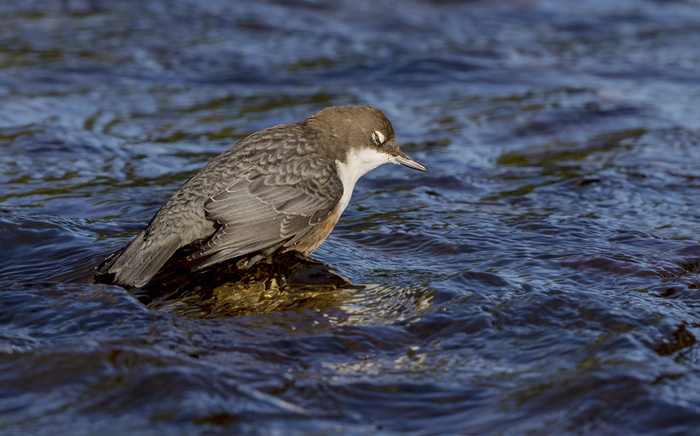
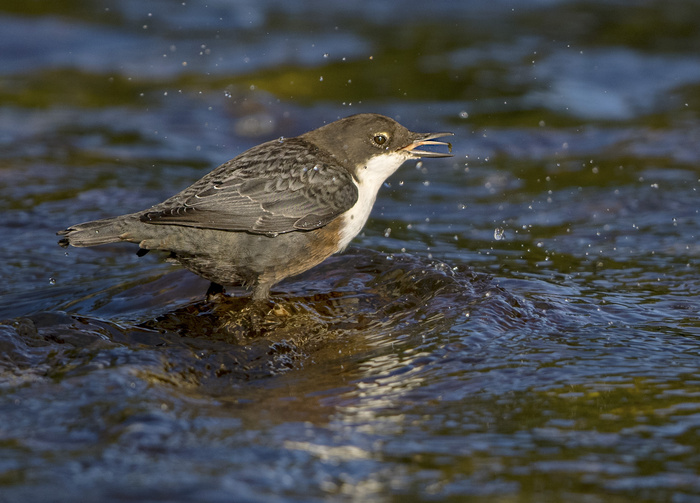
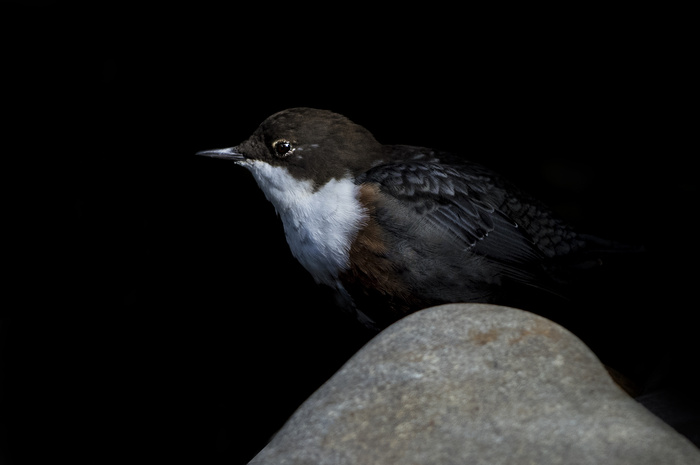
It’s not always about one bird and I’m quite sure with persistence he will get the Kingfisher photographs he wants.
As time wore on we decided that it wasn’t going to be a ‘Kingfisher’ morning and we decided to pack up, but just as we were going to exit the Camo netting we could see, quite unbelievably, what looked like a Pigeon swimming down river. This obviously wasn’t normal behaviour and rightly so because we then caught a flash of a raptor across the river. I thought it was a Sparrowhawk that I had seen a few days previously but as it looped back around and perched in a dead tree we could now see it was a Juvenile Peregrine. The mystery of the Pigeon trying to swim became clearer, it had been hit by the Peregrine and landed in the river and was fighting for its life against drowning. We quickly took a shot of the Peregrine before it flew off.
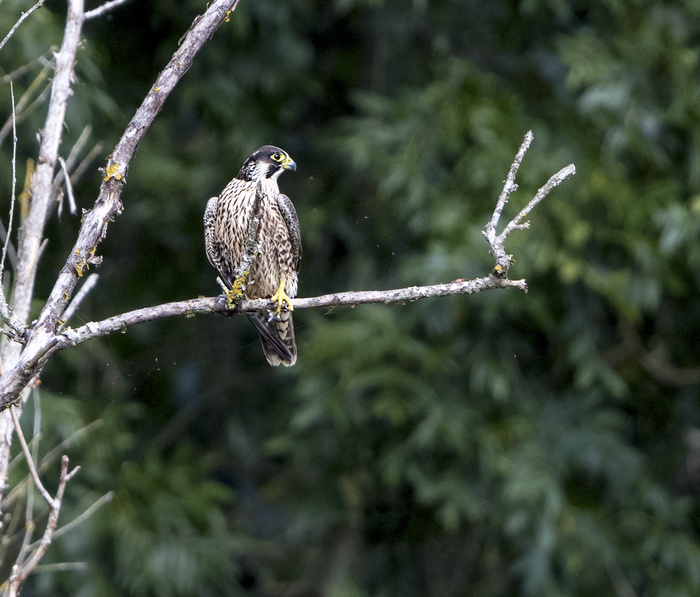
It had obviously assessed it could no longer access the Pigeon and left.
We watched as, what we could now see was a Racing Pigeon, make land and scramble under the trees to escape its attacker.
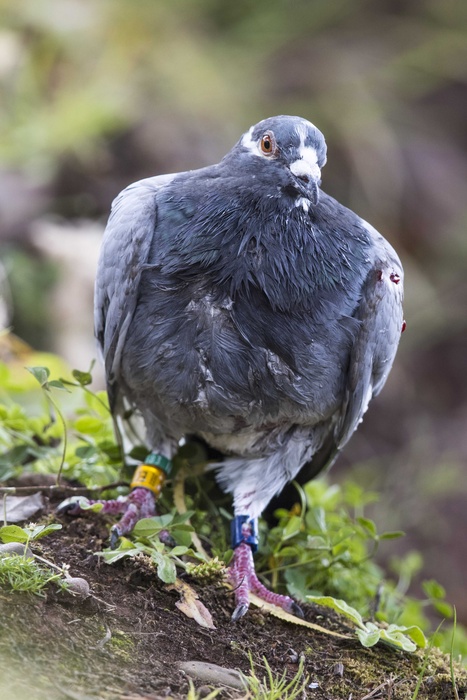
Bloodied but still alert.
I tried to catch it but the terrain was too awkward and the bird still had good wing movement. We took some photos and relayed the info on the bird’s rings to the relevant database in the hope some local Pigeon fancier might be able to retrieve it. Quite an eventful end to a quiet morning on the river.
It was still dark when we met near the banks of the river and just breaking dawn as we got under cover. We could hear Kingfishers ‘Peeping’ in the gloom, because as usual they are about very early. Unfortunately, (not for me as I have literally hundreds of Kingfisher images), but for him because he is yet to get a really close up, the Kingfishers didn’t play ball and were only seen briefly up river. However, that’s wildlife photography and we both fully understand and accept this. Dippers though were showing very well, at times some ten feet away from us, allowing for some decent shots.
It’s not always about one bird and I’m quite sure with persistence he will get the Kingfisher photographs he wants.
As time wore on we decided that it wasn’t going to be a ‘Kingfisher’ morning and we decided to pack up, but just as we were going to exit the Camo netting we could see, quite unbelievably, what looked like a Pigeon swimming down river. This obviously wasn’t normal behaviour and rightly so because we then caught a flash of a raptor across the river. I thought it was a Sparrowhawk that I had seen a few days previously but as it looped back around and perched in a dead tree we could now see it was a Juvenile Peregrine. The mystery of the Pigeon trying to swim became clearer, it had been hit by the Peregrine and landed in the river and was fighting for its life against drowning. We quickly took a shot of the Peregrine before it flew off.
It had obviously assessed it could no longer access the Pigeon and left.
We watched as, what we could now see was a Racing Pigeon, make land and scramble under the trees to escape its attacker.
Bloodied but still alert.
I tried to catch it but the terrain was too awkward and the bird still had good wing movement. We took some photos and relayed the info on the bird’s rings to the relevant database in the hope some local Pigeon fancier might be able to retrieve it. Quite an eventful end to a quiet morning on the river.
Shadows and Highlights - not always a problem.
13th August 2022
13th August 2022
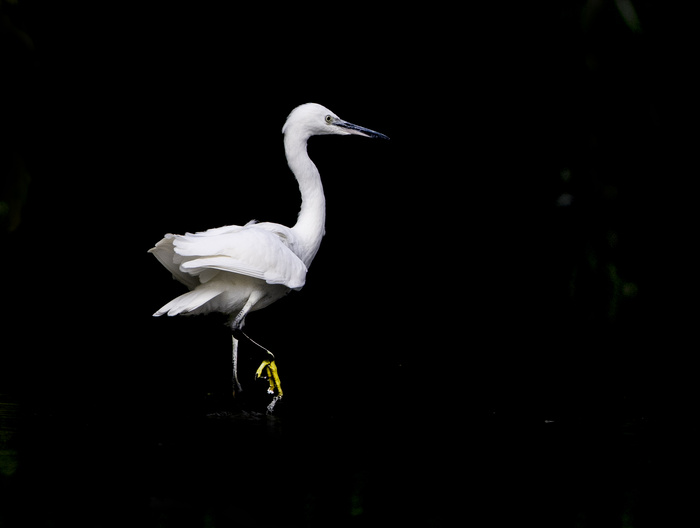
Shadows and highlights can sometimes be a big problem for a photographer. However, other times they can work in their favour and I outlined a method I use for deliberately underexposing an image to create drama in a previous blog featuring a Little Egret. By underexposing the image the already dark background took on a black appearance and with a White bird like the Egret it accentuated the subject because of its bright plumage.
Yesterday I saw a Woodpigeon fly under some dense overhanging Willows on the River Usk in an effort to escape the relentless sun. A huge slice of luck for me was the sheer coincidence of beams of sunlight shining through a gap in the Willows that were illuminating the Pigeon. This allowed me to again underexpose the scene, thereby darkening the background. I was able to do this with the Egret because it was a snowy white bird and it could take the underexposure. However, I needed the sunbeams to do the same thing with the Pigeon otherwise it would have darkened the subject too much.
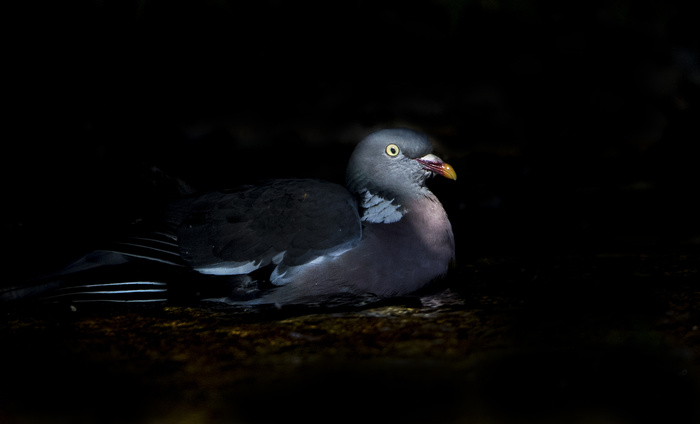
Sometimes you have to take advantage of your lucky breaks
Yesterday I saw a Woodpigeon fly under some dense overhanging Willows on the River Usk in an effort to escape the relentless sun. A huge slice of luck for me was the sheer coincidence of beams of sunlight shining through a gap in the Willows that were illuminating the Pigeon. This allowed me to again underexpose the scene, thereby darkening the background. I was able to do this with the Egret because it was a snowy white bird and it could take the underexposure. However, I needed the sunbeams to do the same thing with the Pigeon otherwise it would have darkened the subject too much.
Sometimes you have to take advantage of your lucky breaks
Tales of the River Usk Bank.
13th August 2022
13th August 2022
I have been making the most of this glorious weather by getting up very early almost every morning over the last ten days. I can’t sleep much anyway, so there’s little point in just lying there half-awake waiting for a perceived civilised time to get up. I have been attempting to photograph birds on the River Usk which currently is at the lowest level I can remember, you can with care walk across in places just wearing wellingtons and indeed this is what I have been doing. I have crossed the river a few times, even in the dark, to get to better vantage points. I must stress though that unless you are confident then it’s best to avoid doing this, especially if you are alone. I know from experience the deeper parts of the river which are still over wellington height and I also use two sticks to probe the river bed for uneven stones because you can still overbalance quite easily. You’re unlikely to drown if you fall over but you would still be very wet indeed and possibly get injured, and your expensive and fragile photographic equipment could be ruined. The Usk is relatively warm where the river is shallow but there are still some eight foot deep pools which look inviting but remain very cold and could surprise unwary people, and this is inevitably what happens when accidents occur every year around the country in spells of warm weather.
Last week I crossed the river in the darkness to access an area where I had watched Kingfishers fishing regularly. It was a bit of a struggle but I was all set up under cover before first light full of expectation that a bird would land on my perches. It didn’t happen, the Kingfishers were there, four of them, two adults and two juveniles, but they completely ignored my perches and fished all morning from overhanging Willows. This was a big disappointment but it’s a regular feature of wildlife photography and that’s the way it is – move on and try again. Persistence is a fundamental element in successful wildlife watching, without it you will never achieve anything.
Fast forward to two days ago, previously I had observed the same birds in another area, so up again at 04.00 –Yawn! Under cover by 05.00 and here they come again, this time very briefly landing on my perch placed in the river in my concrete flower pot, (see previous blogs). However, they were still favouring some overhanging Willows near my artificial perch. I had some shots.
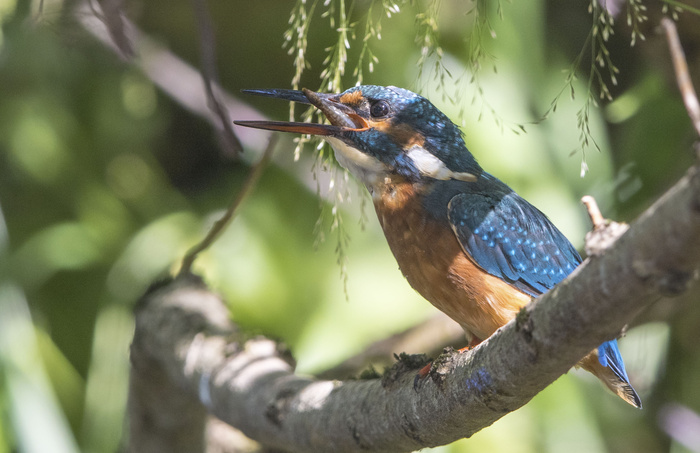
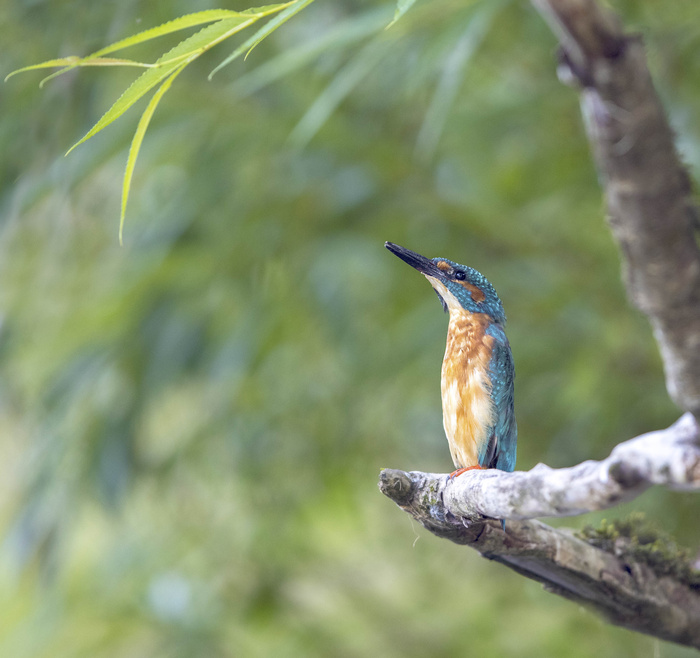
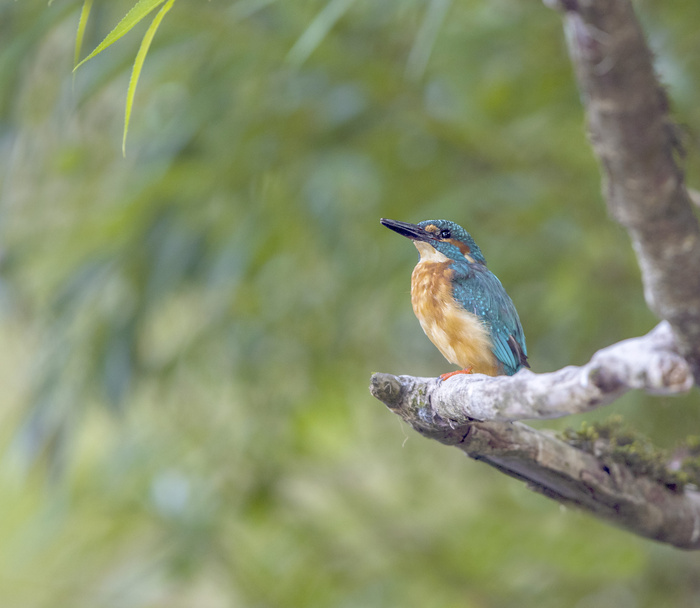
Kingfishers frequently fish off semi-submerged rocks in a river but also dive from heights of twenty five feet, contradicting how many people think they operate. They can spot a small fish from ten yards away using their polarizing vision- remarkable!
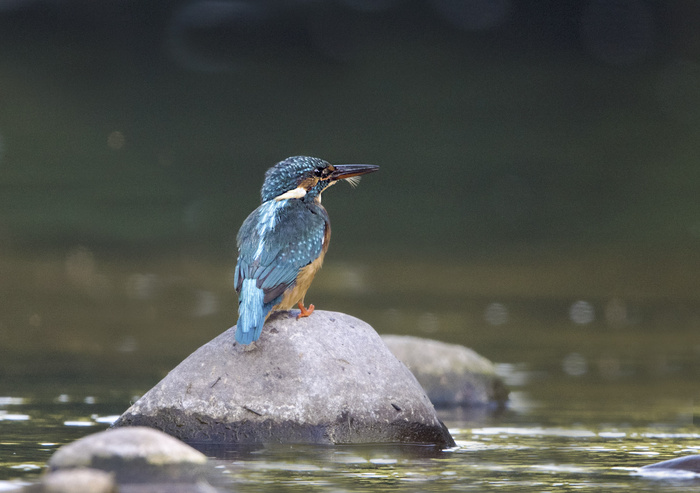
However, I had to leave by 10.00 because by then my portable hide had become hotter than Satan’s underpants and was quite frankly unbearable.
After these observations I decided to do something about the situation with the Willows if I was to get any close-up shots. Yesterday at 10.00 after doing some shopping I went down to the river and walked under said Willows, which was just about possible in wellingtons. Now I could see why the birds were fishing from there, below was a crystal clear pool wherein which many little fish were swimming, small fish like the river edges because there they can avoid the larger fish who eat them. The life of a small fish is fraught with danger, it’s either typically a Brown Trout or a Kingfisher hunting you.
I had brought a loppers and pruning saw with me and I proceeded to cut some 'fallen' branches to size, this may seem drastic but my experience with branches is that the nicest looking branch is always the wrong shape and you can’t do anything about it. I worked for about an hour and a half looking for the right branches and then fitting then sympathetically into the Willows environment. As I’ve mentioned previously never alter the birds feeding situation, it’s nothing to you but it matters to them. We get our food easily, but if we had to dive into a river every time we were hungry we would have a different perspective. I was sweating like a dray horse by the time I’d finished, (not a pleasant thought, and one I would discourage the readers of this blog from dwelling on).
These new perches raised my expectation levels for the following morning and after stopping to look at a magnificent full and golden moon over the Beacons I was again on the river and under cover by 05.00. It was a glorious morning and again I could hear the tell-tale ‘Peep’ of a Kingfisher, they are also early risers. As I sat there just watching the river - a scene of blissful tranquillity, with its soft bubbling water tumbling over rounded pebbles fashioned over millennia, I Felt really uplifted. There’s nothing like first light, it’s good for the soul. I could also hear the ‘Yaffle’ of a Green Woodpecker and slowly but surely the other incumbents of the river.
Dippers
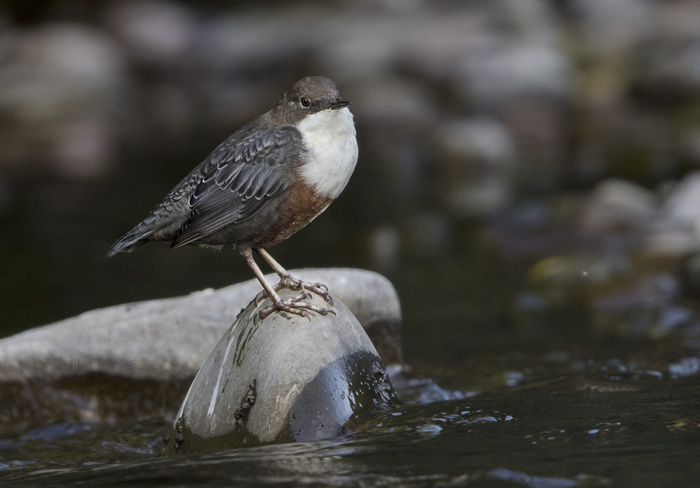
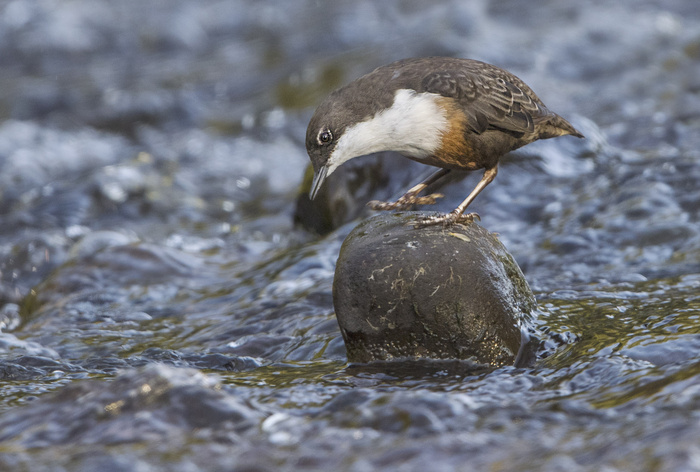
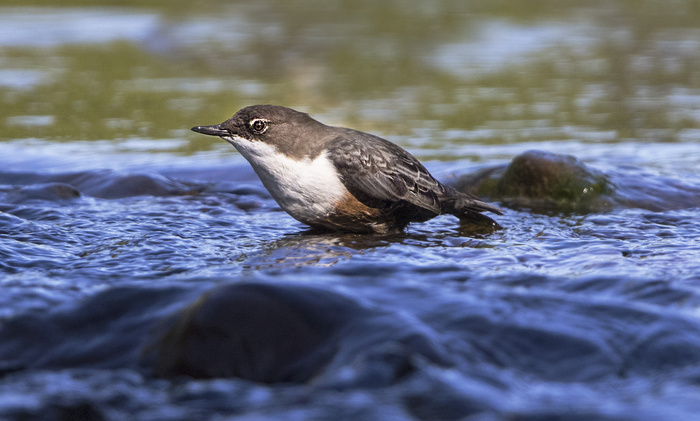
These birds must be the most waterproof around, they never look wet.
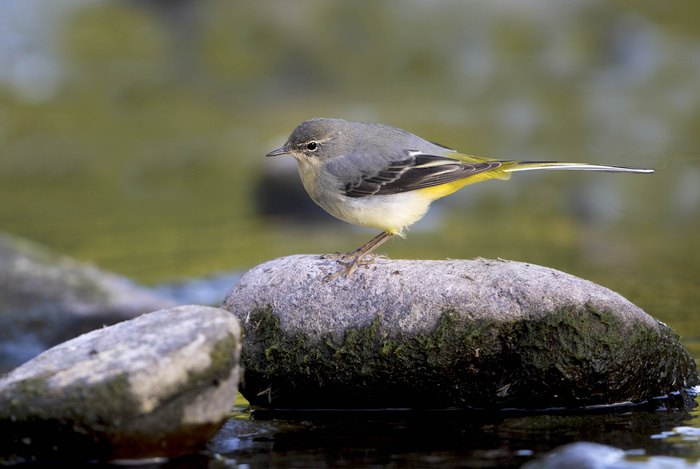
Grey Wagtail feeding right outside my hide.
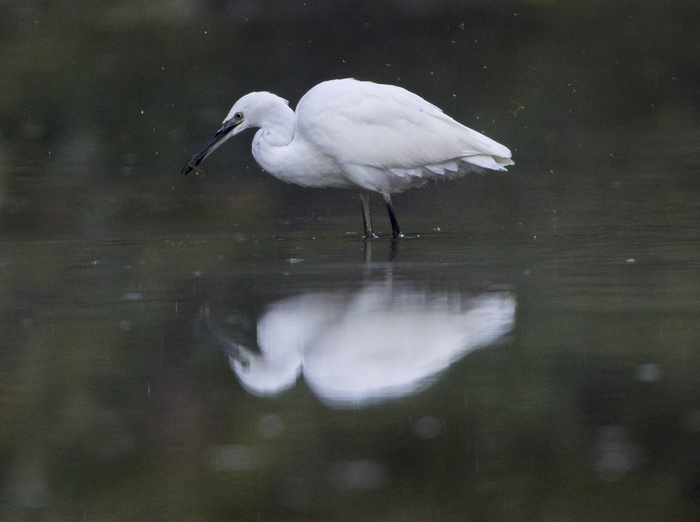
Also the visiting Little Egret appeared.
Chiffchaffs and a Spotted Flycatcher flitted around the trees and Brown Trout rose out of the water taking the early morning insects.
By now it was 06.00 and the daylight was illuminating the willows, suddenly there was a male Kingfisher on one of my perches.
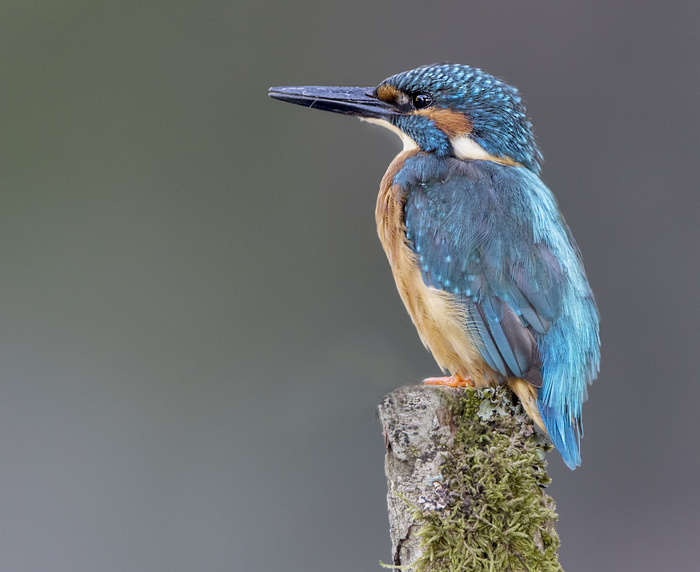
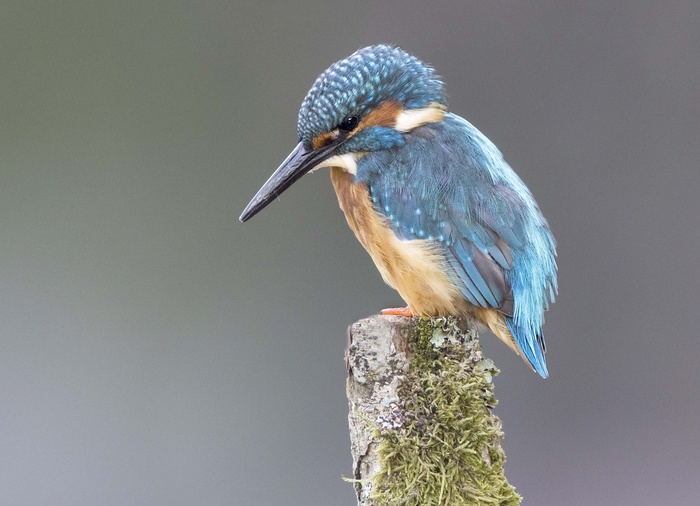
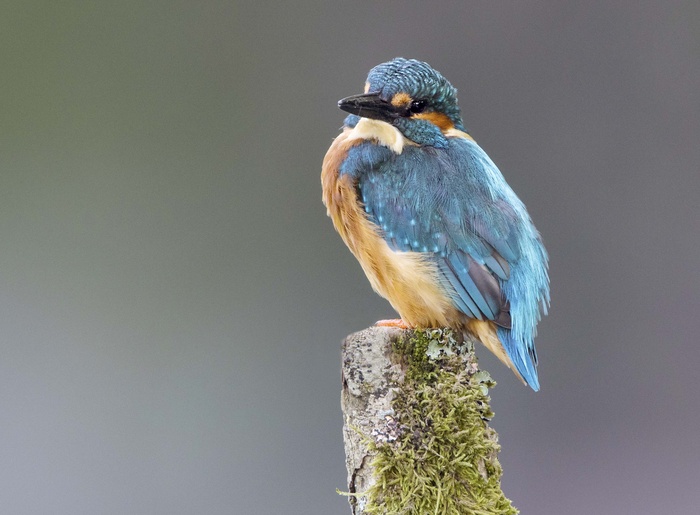
A vertical branch I had propped up with river stones which was overlooking the previously mentioned pool.
What a nice feeling of success, not only for me but the bird had an extra perch which it obviously liked. I took a few shots of him in various poses before he flew away. Several times Kingfishers came to fish on a variety of my perches.
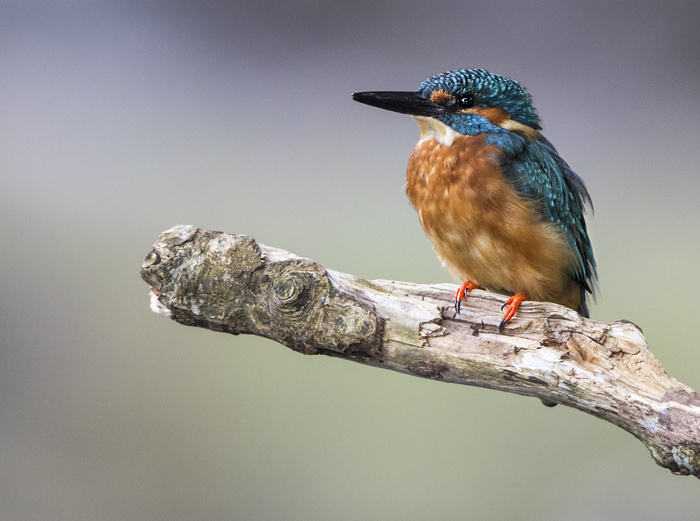
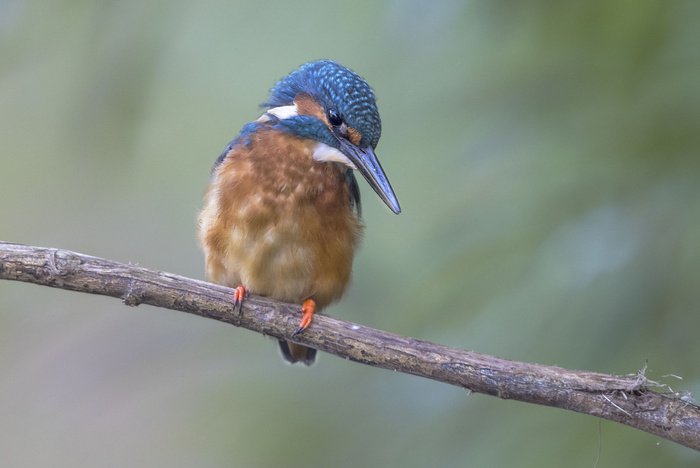
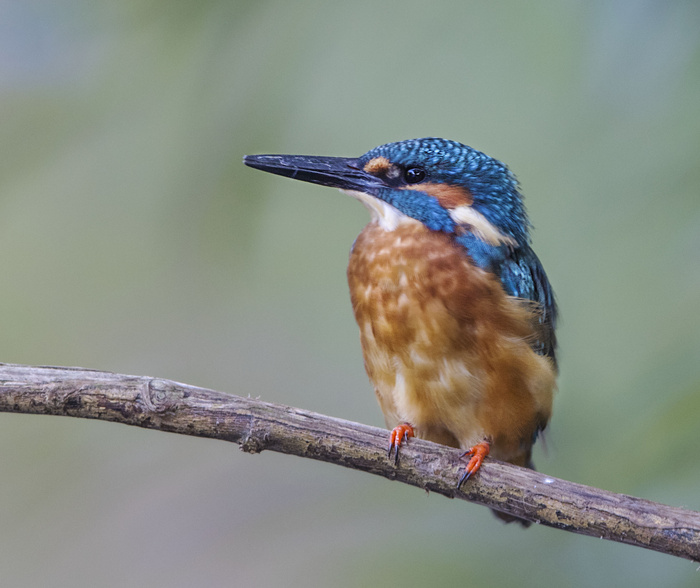
Also fishing from the Willows.
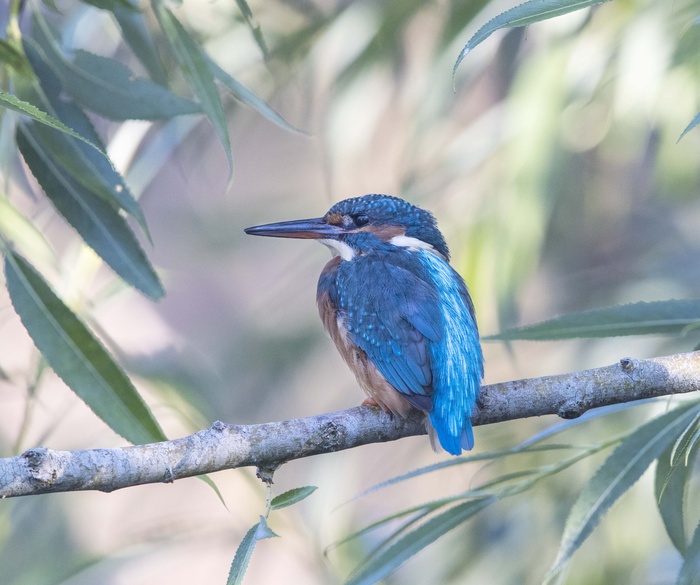
I was able to take some reasonable shots. The previous day’s work had certainly paid off but by 10.00 the inevitable heat had started to build again, and if anything it was even hotter. As soon as the birds had disappeared up river I took the opportunity to pack my kit away and leave for home – a stunning morning on the river bank.
See video link below.
https://youtu.be/kWz1pTXiols
Last week I crossed the river in the darkness to access an area where I had watched Kingfishers fishing regularly. It was a bit of a struggle but I was all set up under cover before first light full of expectation that a bird would land on my perches. It didn’t happen, the Kingfishers were there, four of them, two adults and two juveniles, but they completely ignored my perches and fished all morning from overhanging Willows. This was a big disappointment but it’s a regular feature of wildlife photography and that’s the way it is – move on and try again. Persistence is a fundamental element in successful wildlife watching, without it you will never achieve anything.
Fast forward to two days ago, previously I had observed the same birds in another area, so up again at 04.00 –Yawn! Under cover by 05.00 and here they come again, this time very briefly landing on my perch placed in the river in my concrete flower pot, (see previous blogs). However, they were still favouring some overhanging Willows near my artificial perch. I had some shots.
Kingfishers frequently fish off semi-submerged rocks in a river but also dive from heights of twenty five feet, contradicting how many people think they operate. They can spot a small fish from ten yards away using their polarizing vision- remarkable!
However, I had to leave by 10.00 because by then my portable hide had become hotter than Satan’s underpants and was quite frankly unbearable.
After these observations I decided to do something about the situation with the Willows if I was to get any close-up shots. Yesterday at 10.00 after doing some shopping I went down to the river and walked under said Willows, which was just about possible in wellingtons. Now I could see why the birds were fishing from there, below was a crystal clear pool wherein which many little fish were swimming, small fish like the river edges because there they can avoid the larger fish who eat them. The life of a small fish is fraught with danger, it’s either typically a Brown Trout or a Kingfisher hunting you.
I had brought a loppers and pruning saw with me and I proceeded to cut some 'fallen' branches to size, this may seem drastic but my experience with branches is that the nicest looking branch is always the wrong shape and you can’t do anything about it. I worked for about an hour and a half looking for the right branches and then fitting then sympathetically into the Willows environment. As I’ve mentioned previously never alter the birds feeding situation, it’s nothing to you but it matters to them. We get our food easily, but if we had to dive into a river every time we were hungry we would have a different perspective. I was sweating like a dray horse by the time I’d finished, (not a pleasant thought, and one I would discourage the readers of this blog from dwelling on).
These new perches raised my expectation levels for the following morning and after stopping to look at a magnificent full and golden moon over the Beacons I was again on the river and under cover by 05.00. It was a glorious morning and again I could hear the tell-tale ‘Peep’ of a Kingfisher, they are also early risers. As I sat there just watching the river - a scene of blissful tranquillity, with its soft bubbling water tumbling over rounded pebbles fashioned over millennia, I Felt really uplifted. There’s nothing like first light, it’s good for the soul. I could also hear the ‘Yaffle’ of a Green Woodpecker and slowly but surely the other incumbents of the river.
Dippers
These birds must be the most waterproof around, they never look wet.
Grey Wagtail feeding right outside my hide.
Also the visiting Little Egret appeared.
Chiffchaffs and a Spotted Flycatcher flitted around the trees and Brown Trout rose out of the water taking the early morning insects.
By now it was 06.00 and the daylight was illuminating the willows, suddenly there was a male Kingfisher on one of my perches.
A vertical branch I had propped up with river stones which was overlooking the previously mentioned pool.
What a nice feeling of success, not only for me but the bird had an extra perch which it obviously liked. I took a few shots of him in various poses before he flew away. Several times Kingfishers came to fish on a variety of my perches.
Also fishing from the Willows.
I was able to take some reasonable shots. The previous day’s work had certainly paid off but by 10.00 the inevitable heat had started to build again, and if anything it was even hotter. As soon as the birds had disappeared up river I took the opportunity to pack my kit away and leave for home – a stunning morning on the river bank.
See video link below.
https://youtu.be/kWz1pTXiols
Early Morning on the River Usk.
04th August 2022
04th August 2022
Yesterday morning I was up at 03.30 in readiness for a morning down on the River Usk in the Brecon Beacons. I had all my kit packed into my car the night before as per usual - no time for messing about that early. I only had one shredded wheat, (I wasn’t up to two that early), washed down with a small tea before I left. Outside there was a fine drizzle but that didn’t matter to me, my portable hide is waterproof and I have ‘Goretex’ covers for my kit. Driving this early the roads are empty, or so I thought, because suddenly there was a Tawny Owl sat on the road right in front of me – I braked hard to avoid hitting it and it flew up over my now stationary car and away into the trees – close call that one! Further on as I approached a local pub which is on the roadside I could now see a Barn Owl perched on the pub sign, it flew off as I approached giving good views. I began to wonder what I was going to see next.
I made my way down to the river in darkness where I erected my hide under some overhanging Willows this gives me cover and more shelter if it rains. I really like being on the river bank this early because you get to see and hear the wild life waking up. There was no bird sound whatsoever, but I knew it wouldn’t be long before the Kingfishers in particular would become active. They are about before it gets light, you can hear them calling to each other. I made sure I had everything under cover before settling down in my comfortable hide. True to form within ten minutes I could hear them ‘Peeping’ as they started to fly around, they can’t fish this early but they are nevertheless still active. A big plus for me is that there is no fishing allowed on the Usk at the moment because of the low water, so the chance of disturbance is minimal.
As daylight started to build and I could see the water eight Goosanders came idling up river and I took a few shots as they drifted past unaware of me.
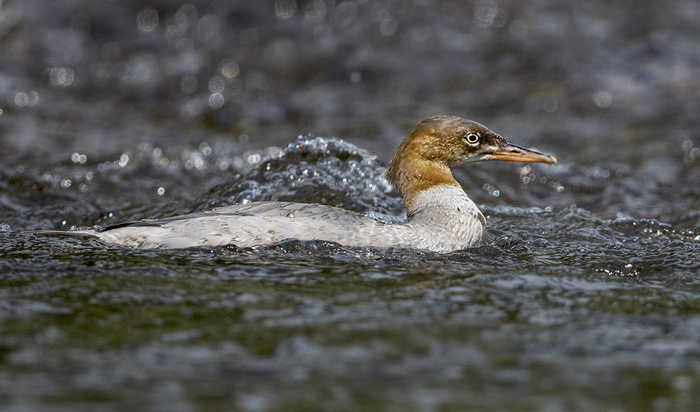
I must have been well hidden because they are very wary birds. As the morning unfolded a Grey Heron walked right passed me.
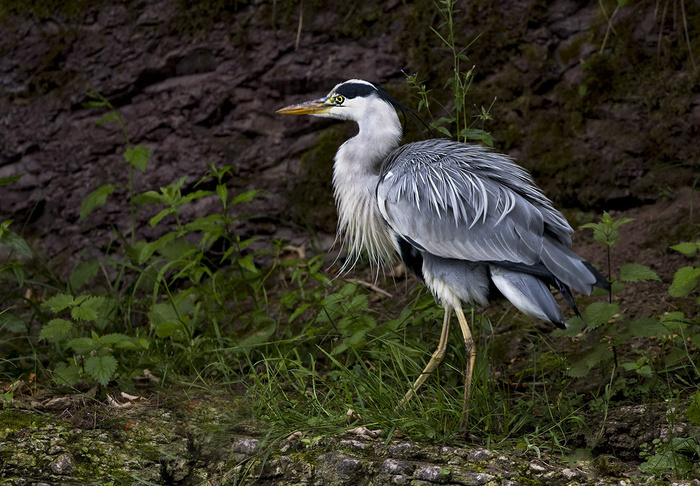
Another extremely nervous bird oblivious to my hide. I had placed my hide looking at another group of Willows about thirty feet away, because a few days ago I had watched some Kingfishers perching underneath these willow branches and diving into a pool underneath. These birds like overhanging foliage, it shades the water allowing them to see the fish and in addition Kingfishers have polarizing vision so it makes their fishing even more effective.
I had also erected another perch there by tying a fallen branch to the others overhanging, not only for me to see the birds for a photo but for the birds to have better access to the water. After an hour three birds were flying around the area, two being chased by one. I guessed this was a parent bird trying to drive two youngsters away to find their own territory. Kingfishers are not good parents and are quite selfish. Then my planning paid off and an adult perched right on my new perch.
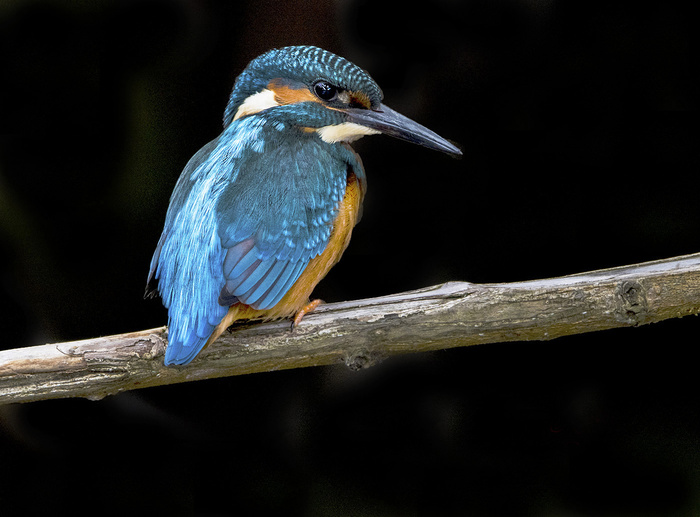
Notice the bird's orange feet denoting an adult, they will in time turn red.
Deliberately underexposed for effect.
I must have done something right. (You have to be careful you do not under any circumstances effect their routine by disturbing their fishing area). I took a few shots before it flew off again chasing the two youngsters. However, these young birds were persistent because now there was one of them sitting on my perch.
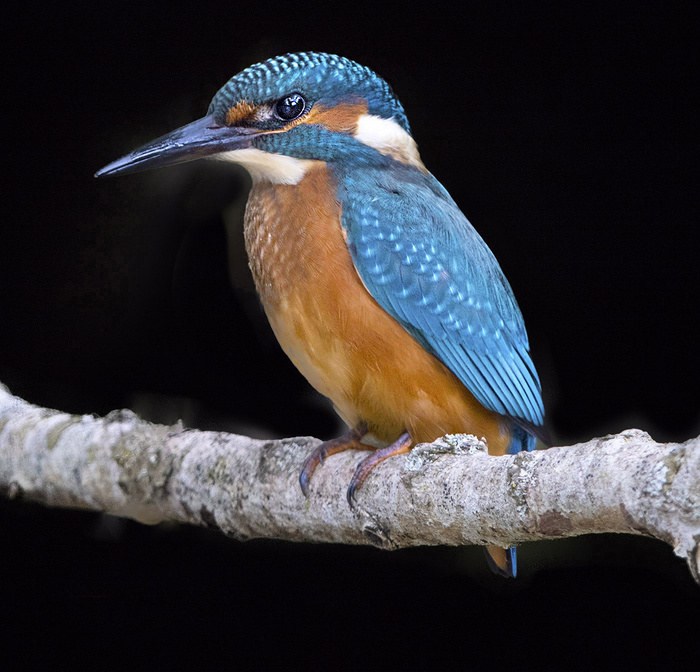
Smokey markings to the breast and dull smokey coloured feet - Juvenile.
Again deliberately underexposed for effect.
I took a few more shots before the chase started again.
I decided to leave them to it and when they had flown down river I exited my hide and moved it to another location where I had watched a Little Egret feeding earlier in the week. I knew where it would be, in the shallows underneath some dense overhanging Willows. I thought it would make a decent photo because the water under there looks black and with a snowy white bird like an Egret it would make a nice contrast. I could see the bird feeding about a hundred yards away but I knew it would be coming back because that’s what it had been doing all week - I have been watching it! I set my hide up again and waited, sure enough here it comes slowly but surely down to its favoured area of Willows. I waited until it was underneath and then I deliberately under exposed the shot to exemplify the black water and maintain the white colour of the bird.
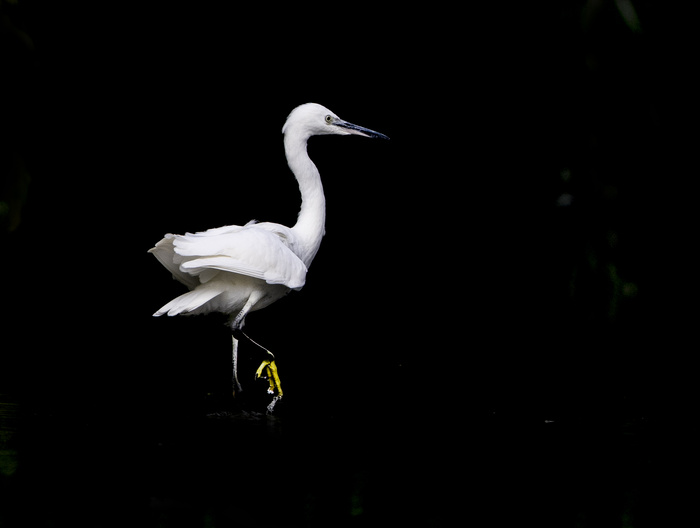
This underexposing is a technique I often employ in this type of situation.
This Egret is standing in water although it doesn't look like it.
I waited for it to walk down river before I got out of my hide and eventually packed up. It turned out to be a very pleasant couple of hours with no one else around which is a bonus.
I made my way down to the river in darkness where I erected my hide under some overhanging Willows this gives me cover and more shelter if it rains. I really like being on the river bank this early because you get to see and hear the wild life waking up. There was no bird sound whatsoever, but I knew it wouldn’t be long before the Kingfishers in particular would become active. They are about before it gets light, you can hear them calling to each other. I made sure I had everything under cover before settling down in my comfortable hide. True to form within ten minutes I could hear them ‘Peeping’ as they started to fly around, they can’t fish this early but they are nevertheless still active. A big plus for me is that there is no fishing allowed on the Usk at the moment because of the low water, so the chance of disturbance is minimal.
As daylight started to build and I could see the water eight Goosanders came idling up river and I took a few shots as they drifted past unaware of me.
I must have been well hidden because they are very wary birds. As the morning unfolded a Grey Heron walked right passed me.
Another extremely nervous bird oblivious to my hide. I had placed my hide looking at another group of Willows about thirty feet away, because a few days ago I had watched some Kingfishers perching underneath these willow branches and diving into a pool underneath. These birds like overhanging foliage, it shades the water allowing them to see the fish and in addition Kingfishers have polarizing vision so it makes their fishing even more effective.
I had also erected another perch there by tying a fallen branch to the others overhanging, not only for me to see the birds for a photo but for the birds to have better access to the water. After an hour three birds were flying around the area, two being chased by one. I guessed this was a parent bird trying to drive two youngsters away to find their own territory. Kingfishers are not good parents and are quite selfish. Then my planning paid off and an adult perched right on my new perch.
Notice the bird's orange feet denoting an adult, they will in time turn red.
Deliberately underexposed for effect.
I must have done something right. (You have to be careful you do not under any circumstances effect their routine by disturbing their fishing area). I took a few shots before it flew off again chasing the two youngsters. However, these young birds were persistent because now there was one of them sitting on my perch.
Smokey markings to the breast and dull smokey coloured feet - Juvenile.
Again deliberately underexposed for effect.
I took a few more shots before the chase started again.
I decided to leave them to it and when they had flown down river I exited my hide and moved it to another location where I had watched a Little Egret feeding earlier in the week. I knew where it would be, in the shallows underneath some dense overhanging Willows. I thought it would make a decent photo because the water under there looks black and with a snowy white bird like an Egret it would make a nice contrast. I could see the bird feeding about a hundred yards away but I knew it would be coming back because that’s what it had been doing all week - I have been watching it! I set my hide up again and waited, sure enough here it comes slowly but surely down to its favoured area of Willows. I waited until it was underneath and then I deliberately under exposed the shot to exemplify the black water and maintain the white colour of the bird.
This underexposing is a technique I often employ in this type of situation.
This Egret is standing in water although it doesn't look like it.
I waited for it to walk down river before I got out of my hide and eventually packed up. It turned out to be a very pleasant couple of hours with no one else around which is a bonus.
Trip Report for Lesvos May 2022
25th July 2022
25th July 2022
Details of the trip is now available in the Trip Report section.
The insignificant River Taf Fawr.
22nd July 2022
22nd July 2022
When in the Brecon Beacons we have extended dry periods and the local reservoirs decrease in depth, little glimpses of history are sometimes revealed. One such piece of history is an old bridge named Pont Y Daf, (translated as ‘Bridge on or over the River Taf), which is normally submerged beneath the waters of the Llwyn Onn reservoir.
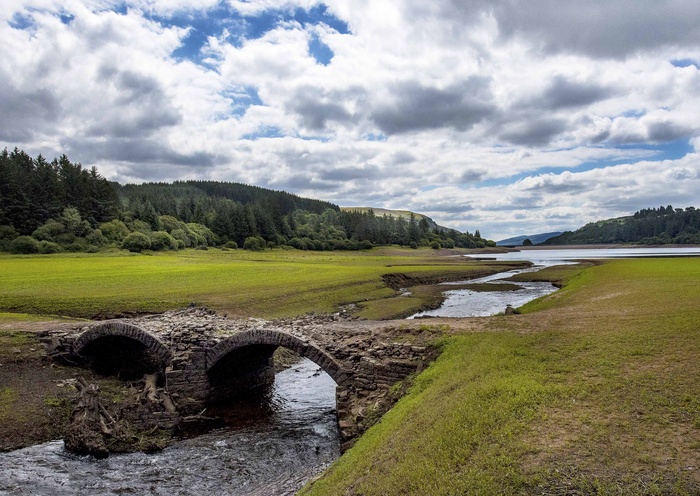
There are two River Tafs the Taf Fawr and Taf Fechan, Great Taf and Little Taf, they both rise in the Brecon Beacons and converge just north of the historic town of Merthyr Tydfil. These little rivers played a fundamental part in the 'Industrial Revolution'. This may seem a broad statement but these waters fed the huge ironworks at Cyfarthfa in Merthyr Tydfil and along with the Dowlais Ironworks also in Merthyr Tydfil were the two biggest in the world!! There was also an abundance of wood and limestone in the surrounding area so all the fundamentals were there to produce Iron. In total there were five ironworks in the town.
A leat was constructed to channel water from the Taf Fawr into the Cyfarthfa ironworks. This consisted of a cast iron sluice gate with a stone weir and parts of the leat were actually cut out of the river’s bedrock, the remainder being walled and buttressed with stone - a remarkable construction which is still visible today. The word Cyfarthfa means ‘place of the barking dogs’
On the 21st February 1804, Merthyr Tydfil witnessed the first ever steam locomotive journey as Richard Trevithick’s ‘Penydarren Locomotive’ travelled down through Pentrebach and on to Abercynon. Trevithick has been largely overlooked as the creator of the World’s first steam locomotive.
This town is where the industrial revolution was fuelled from. Iron from these works provided arms for the Napoleonic wars and Lord Nelson’s famous sea battles. Nelson favoured Cyfarthfa iron for his cannons and he visited the works and the town with Lady Hamilton in 1802 staying at the Crown Hotel, a coaching inn in the town. Rails for the world’s railways were made here. No other welsh town has an industrial heritage anything like Merthyr Tydfil.
The Llwyn Onn reservoir was completed in 1926 and is the lowest and biggest of the three dams in the Taf valley that supply the city of Cardiff with water.
The hamlet of Ynys Y Felin was flooded during the construction and some small remnants of stone walls are still visible during periods of drought. In this little community there were twelve houses, a fulling mill, two inns and a Baptist chapel. All the chapel’s graves were exhumed and the dead reinterred in a new chapel and graveyard nearby.
Pont Y Daf Bridge was the main crossing point of the Taf Fawr during the 19th Century and there is evidence of a crossing here as far back as 1800. This old bridge was the main link to the turnpike road between Brecon and Merthyr Tydfil and also to the village of Penderyn in the west.
The derogatory term "Taffy" for a Welsh person is sometimes erroneously stated to have originated with the river. This may have given rise to a colloquial usage of the term "Taffy" or "Taffs" for people from the Mid Glamorgan Valleys (which form the Taf's northern reaches).
The name actually originates as a corruption of the name Dafydd, with the Oxford English Dictionary describing the origin as "representing a supposed Welsh pronunciation of the given name Davy or David (Welsh Dafydd)" It was common for people in times of war to dehumanise an enemy by ascribing a singular name to them all. It is therefore an equivalent of other historic English pejoratives such as Paddy and Jock.
Today the words Pont Y Daf have been used to name the car park just south of the Storey Arms hostel where thousands of people park their cars to walk up to the very popular Pen Y Fan. I wonder how many of them realise the significance of the little river they cross on their way up the mountain.
There are two River Tafs the Taf Fawr and Taf Fechan, Great Taf and Little Taf, they both rise in the Brecon Beacons and converge just north of the historic town of Merthyr Tydfil. These little rivers played a fundamental part in the 'Industrial Revolution'. This may seem a broad statement but these waters fed the huge ironworks at Cyfarthfa in Merthyr Tydfil and along with the Dowlais Ironworks also in Merthyr Tydfil were the two biggest in the world!! There was also an abundance of wood and limestone in the surrounding area so all the fundamentals were there to produce Iron. In total there were five ironworks in the town.
A leat was constructed to channel water from the Taf Fawr into the Cyfarthfa ironworks. This consisted of a cast iron sluice gate with a stone weir and parts of the leat were actually cut out of the river’s bedrock, the remainder being walled and buttressed with stone - a remarkable construction which is still visible today. The word Cyfarthfa means ‘place of the barking dogs’
On the 21st February 1804, Merthyr Tydfil witnessed the first ever steam locomotive journey as Richard Trevithick’s ‘Penydarren Locomotive’ travelled down through Pentrebach and on to Abercynon. Trevithick has been largely overlooked as the creator of the World’s first steam locomotive.
This town is where the industrial revolution was fuelled from. Iron from these works provided arms for the Napoleonic wars and Lord Nelson’s famous sea battles. Nelson favoured Cyfarthfa iron for his cannons and he visited the works and the town with Lady Hamilton in 1802 staying at the Crown Hotel, a coaching inn in the town. Rails for the world’s railways were made here. No other welsh town has an industrial heritage anything like Merthyr Tydfil.
The Llwyn Onn reservoir was completed in 1926 and is the lowest and biggest of the three dams in the Taf valley that supply the city of Cardiff with water.
The hamlet of Ynys Y Felin was flooded during the construction and some small remnants of stone walls are still visible during periods of drought. In this little community there were twelve houses, a fulling mill, two inns and a Baptist chapel. All the chapel’s graves were exhumed and the dead reinterred in a new chapel and graveyard nearby.
Pont Y Daf Bridge was the main crossing point of the Taf Fawr during the 19th Century and there is evidence of a crossing here as far back as 1800. This old bridge was the main link to the turnpike road between Brecon and Merthyr Tydfil and also to the village of Penderyn in the west.
The derogatory term "Taffy" for a Welsh person is sometimes erroneously stated to have originated with the river. This may have given rise to a colloquial usage of the term "Taffy" or "Taffs" for people from the Mid Glamorgan Valleys (which form the Taf's northern reaches).
The name actually originates as a corruption of the name Dafydd, with the Oxford English Dictionary describing the origin as "representing a supposed Welsh pronunciation of the given name Davy or David (Welsh Dafydd)" It was common for people in times of war to dehumanise an enemy by ascribing a singular name to them all. It is therefore an equivalent of other historic English pejoratives such as Paddy and Jock.
Today the words Pont Y Daf have been used to name the car park just south of the Storey Arms hostel where thousands of people park their cars to walk up to the very popular Pen Y Fan. I wonder how many of them realise the significance of the little river they cross on their way up the mountain.
Great Egret with the Canon R5.
17th July 2022
17th July 2022
Llangors Lake in the Brecon Beacons has a small number of Great Egrets present. These birds hitherto called Great White Egrets up until a few years ago were a real rarity in the UK, they have followed in the footsteps of the Little Egret which was also in its time a rarity. Little Egrets are now commonplace and are no longer talked about so much and the Greats are going the same way. On the Somerset levels they can be found in quite large numbers and are a real success story. These birds found in southern Europe are moving their range further north as our climate warms, similarly are the Glossy Ibis and Cattle Egret. Penduline Tits are also moving north and in time they will become more numerous.
Great Egrets are very shy birds and normally they fly off at the first sign of people but when I was in the car park at Llangasty Church a few days ago a bird landed right in front of me near the reed bed and stayed there for a few minutes. I couldn’t move too much but luckily I had my gear set up and was able to shoot a few frames before it decided to fly off.
I have now switched to a Canon R5 ‘mirrorless’ camera body from my trusty Canon 7D mk2, DSLR, a camera I have had some good results with and am keeping as a backup body. However, the R5 has clear advantages over the 7D mk2 such as much higher frame rates, double the sensor resolution, totally silent shooting and above all the formidable animal eye tracking auto focus which has to be viewed to be believed. The only thing I don’t like are the viewfinders on mirrorless camera, they present an awful synthetic image unlike the totally natural view from a DSLR, but I will have to get used to it. These are the first images taken with the R5 and I am still very much getting used to it so things will improve over time.
After all it really isn’t all about the camera and lens, although quality helps a great deal, it’s about field craft and getting close to wildlife in a responsible way that matters.
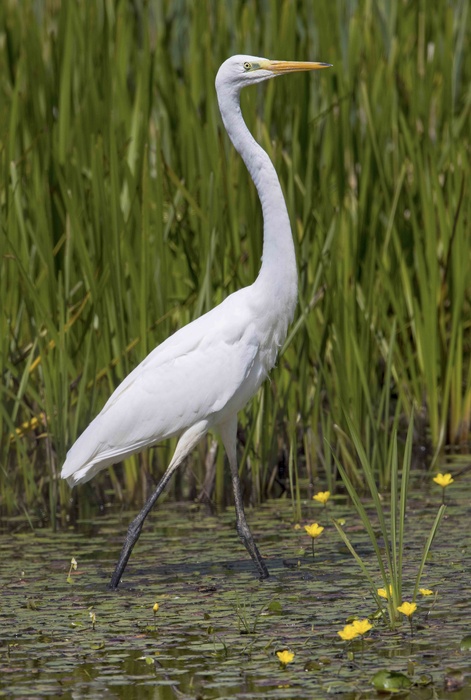

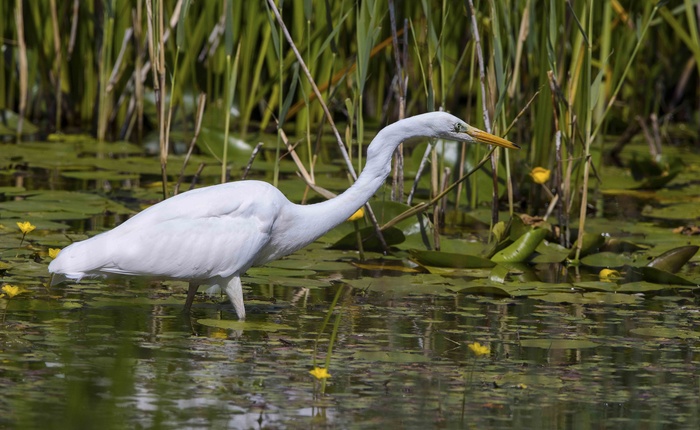
Great Egrets are very shy birds and normally they fly off at the first sign of people but when I was in the car park at Llangasty Church a few days ago a bird landed right in front of me near the reed bed and stayed there for a few minutes. I couldn’t move too much but luckily I had my gear set up and was able to shoot a few frames before it decided to fly off.
I have now switched to a Canon R5 ‘mirrorless’ camera body from my trusty Canon 7D mk2, DSLR, a camera I have had some good results with and am keeping as a backup body. However, the R5 has clear advantages over the 7D mk2 such as much higher frame rates, double the sensor resolution, totally silent shooting and above all the formidable animal eye tracking auto focus which has to be viewed to be believed. The only thing I don’t like are the viewfinders on mirrorless camera, they present an awful synthetic image unlike the totally natural view from a DSLR, but I will have to get used to it. These are the first images taken with the R5 and I am still very much getting used to it so things will improve over time.
After all it really isn’t all about the camera and lens, although quality helps a great deal, it’s about field craft and getting close to wildlife in a responsible way that matters.
A Little Ball of Fluff.
24th June 2022
24th June 2022
A few days ago I was walking along the banks of the River Usk which is a fairly large river that flows through the Brecon Beacons. I was sat in my usual spot underneath a large Beech tree just watching the river. This is a favourite pastime of mine because I find it very therapeutic. I had witnessed a couple of Kingfishers whizz by but I don’t try and photograph them until later on in the summer when their breeding has finished.
When Susan and I were walking the same area recently we accidentally came across a Kingfisher nest in a place where I would least expect it. Two birds were going back and fore the nest so young birds will be out soon and there is a nice log right outside where I’m sure the young birds will line up to be fed and which would make a really nice shot. However, I’m not going there because Kingfishers are not the best of parents anyway and it wouldn’t take much for them to stop feeding the young and no image is worth that.
When I was sitting under the Beech tree I could see three or four Common Sandpipers feeding around some shingle banks and I thought that there might be a chance of an image if I was in a hide, because these are very shy birds to get close to.
I made my mind up to have a try because the river is very benign at the moment and easily navigable. The following morning I was at the river in darkness after preparing as usual all my kit the night before. I walked across the river just wearing wellingtons it’s so shallow.
I quickly strung a large ‘Camo’ net across some willows to soften the outline of my hide and got under cover as quickly as possible. If you get up this early you don’t want to ruin your efforts by being seen at first light. As I sat there drinking a cup of coffee a female Mallard and large ducklings drifted by, they didn’t notice me and that’s always a good sign. Suddenly out of nowhere a Kingfisher appeared, flying low and issuing its peeping call, no doubt on its way to the nest site. A Green Woodpecker ‘Yaffled’ from the overhead canopy but they are rarely seen on the river banks.
As daylight broke I could hear a Common Sandpiper calling and although the light wasn’t the best I could now see a bird feeding amongst the river bank stones about twenty yards away. Slowly as the light improved it made its way towards me and it came very close indeed so much so that I was just about able to frame a shot or two.
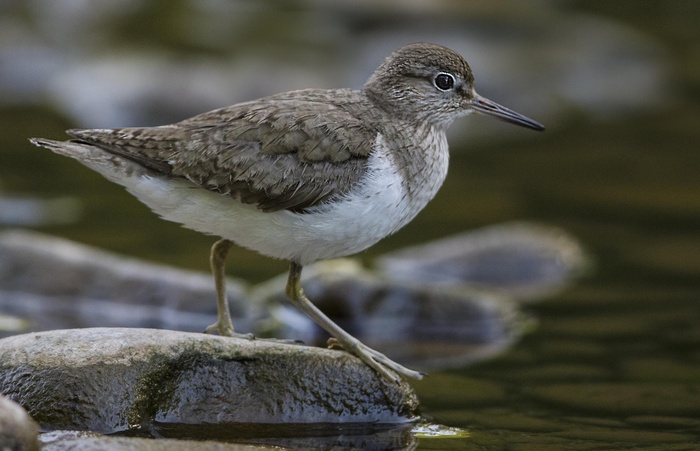
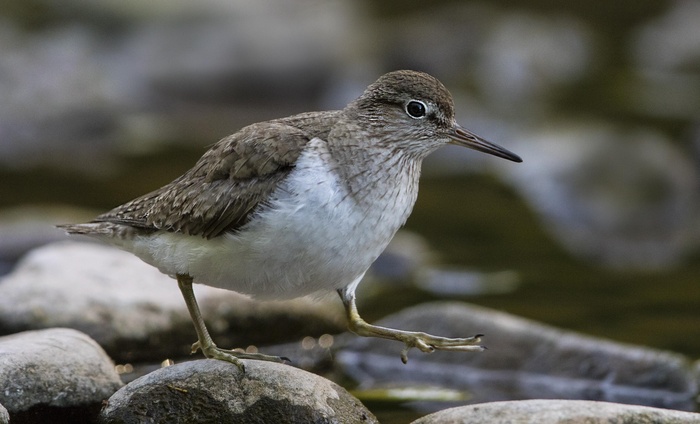
I didn’t think they would come that close! The bird then began to call repeatedly, I was confident it wasn’t because of me as I was well hidden and it was also very close to my hide. I sat tight because I wasn’t sure why it was calling, I thought perhaps for its mate. The calling stopped and I could then see a tiny little bird walking amongst the stones. I looked closer and incredibly I could see it was a Common Sandpiper chick.
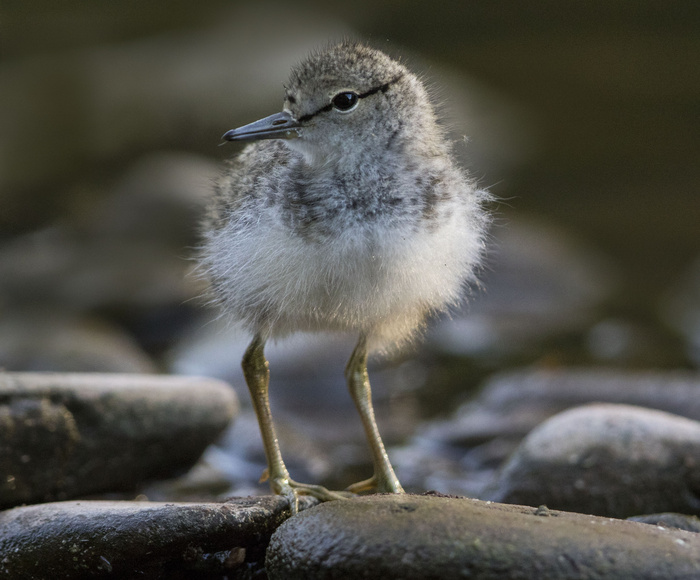
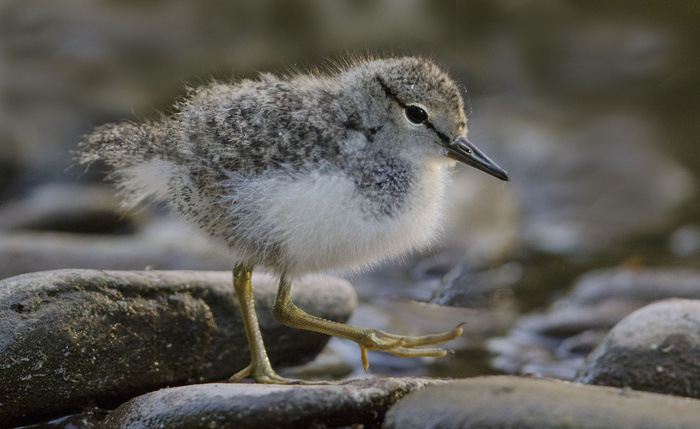
She must have been calling it out of the vegetation where it was hiding. It was about the size of a golf ball with longish legs and incredibly it walked right in front of my hide. It was very difficult to get a clear shot because of its close proximity and diminutive size. Somehow I managed a few but as quickly as it appeared it was then gone again under cover, necessary I suppose because it looked so vulnerable. I was thrilled to be so close to this little ball of fluff - a real privilege!
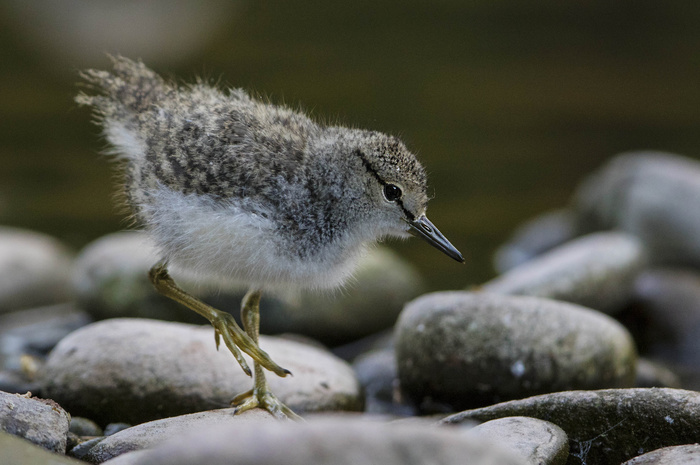
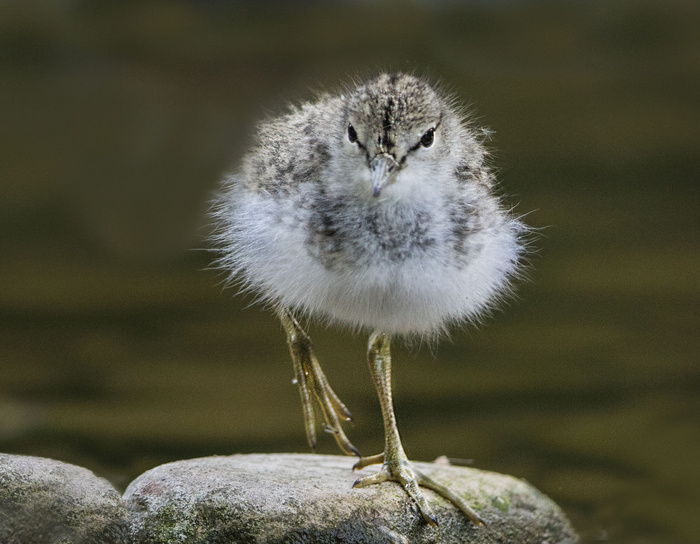
I decided after the adult had disappeared down river to pack up, now that I knew there was a vulnerable chick close by. I left earlier than planned but really pleased with the experience. A very nice morning on the river.
When Susan and I were walking the same area recently we accidentally came across a Kingfisher nest in a place where I would least expect it. Two birds were going back and fore the nest so young birds will be out soon and there is a nice log right outside where I’m sure the young birds will line up to be fed and which would make a really nice shot. However, I’m not going there because Kingfishers are not the best of parents anyway and it wouldn’t take much for them to stop feeding the young and no image is worth that.
When I was sitting under the Beech tree I could see three or four Common Sandpipers feeding around some shingle banks and I thought that there might be a chance of an image if I was in a hide, because these are very shy birds to get close to.
I made my mind up to have a try because the river is very benign at the moment and easily navigable. The following morning I was at the river in darkness after preparing as usual all my kit the night before. I walked across the river just wearing wellingtons it’s so shallow.
I quickly strung a large ‘Camo’ net across some willows to soften the outline of my hide and got under cover as quickly as possible. If you get up this early you don’t want to ruin your efforts by being seen at first light. As I sat there drinking a cup of coffee a female Mallard and large ducklings drifted by, they didn’t notice me and that’s always a good sign. Suddenly out of nowhere a Kingfisher appeared, flying low and issuing its peeping call, no doubt on its way to the nest site. A Green Woodpecker ‘Yaffled’ from the overhead canopy but they are rarely seen on the river banks.
As daylight broke I could hear a Common Sandpiper calling and although the light wasn’t the best I could now see a bird feeding amongst the river bank stones about twenty yards away. Slowly as the light improved it made its way towards me and it came very close indeed so much so that I was just about able to frame a shot or two.
I didn’t think they would come that close! The bird then began to call repeatedly, I was confident it wasn’t because of me as I was well hidden and it was also very close to my hide. I sat tight because I wasn’t sure why it was calling, I thought perhaps for its mate. The calling stopped and I could then see a tiny little bird walking amongst the stones. I looked closer and incredibly I could see it was a Common Sandpiper chick.
She must have been calling it out of the vegetation where it was hiding. It was about the size of a golf ball with longish legs and incredibly it walked right in front of my hide. It was very difficult to get a clear shot because of its close proximity and diminutive size. Somehow I managed a few but as quickly as it appeared it was then gone again under cover, necessary I suppose because it looked so vulnerable. I was thrilled to be so close to this little ball of fluff - a real privilege!
I decided after the adult had disappeared down river to pack up, now that I knew there was a vulnerable chick close by. I left earlier than planned but really pleased with the experience. A very nice morning on the river.
Another Milestone.
24th June 2022
24th June 2022
When I first started this website from my little ‘Office’ in the back of our cottage in the Brecon Beacons I never thought I’d see the time that it would receive its three millionth hit. (This is not much relative to some websites but considering what the site's about and its very low key origins, it’s not doing too badly). This milestone was achieved yesterday when the site had two thousand hits in a couple of hours. As a consequence of this site I have had images published in field guides, wildlife publications, magazines, etc. and a viewing audience spread literally around the world, with a substantial following, for whatever reasons, in Pakistan, Afghanistan and India.
Although pleasing, this is a big surprise to me and there have been barren times when I didn’t know where my next image was coming from but I carried on trying to find interesting content. This is the biggest problem facing people starting these websites and blogs. It’s easy to start them, it’s made idiot proof, and I’m evidence to that. However, maintaining them is another matter, it takes discipline to keep on finding things to write about and even more discipline to get images that illustrate and hopefully embellish these writings. It’s not easy, and I see many capable people letting their websites just fade away and finally disappear because they just can’t find the inspiration to carry on.
I don’t know how much longer I will continue with the site but at the moment I have no intention of stopping because it’s an extension of our hobby and that is an important driver.
All that’s left is to thank everyone who views the site and hopefully enjoys it, and here’s to the future.
Although pleasing, this is a big surprise to me and there have been barren times when I didn’t know where my next image was coming from but I carried on trying to find interesting content. This is the biggest problem facing people starting these websites and blogs. It’s easy to start them, it’s made idiot proof, and I’m evidence to that. However, maintaining them is another matter, it takes discipline to keep on finding things to write about and even more discipline to get images that illustrate and hopefully embellish these writings. It’s not easy, and I see many capable people letting their websites just fade away and finally disappear because they just can’t find the inspiration to carry on.
I don’t know how much longer I will continue with the site but at the moment I have no intention of stopping because it’s an extension of our hobby and that is an important driver.
All that’s left is to thank everyone who views the site and hopefully enjoys it, and here’s to the future.
Little Bittern, Lesvos.
21st June 2022
21st June 2022
Little Bitterns are widespread throughout Lesvos and are found on most waterways. However, that doesn’t mean that they are always easy to see. They can be quite secretive and all you hear is their loud ‘Barking’ call. Like all these secretive water birds they can, on the odd occasion and for no logical reason, just walk out into the open and early one morning this happened to us as we driving along the Tsiknias River near Skala Kallonis.
We watched this bird from our vehicle and then we got out quietly and it still wasn’t bothered, so I set up my kit on a tripod and attempted to shoot a short video along with a few stills.
https://youtu.be/_hV0JNXjST8
We watched this bird from our vehicle and then we got out quietly and it still wasn’t bothered, so I set up my kit on a tripod and attempted to shoot a short video along with a few stills.
https://youtu.be/_hV0JNXjST8
Nightingale, Lesvos.
21st June 2022
21st June 2022
One of the sounds of Lesvos is the Nightingale, wherever you go they can be heard. From the hotel grounds where we stayed, from roadside bushes as you drive by, in riverside vegetation, concealed in trees on hillside tracks etc. etc. Few people pay them much attention because of their numbers and not many try and see them because of this but also because they are very difficult to catch out in the open. We always stop to listen to their song because it is so varied and beautifully composed with audacious phrasing and soaring clear notes.
There is a small bridge over a slow moving river where we always stop to listen to these birds and it is where there is, with patience, a good chance of seeing them. They sing all day and night from these areas but in the evening is best in this particular location because there are less people passing by in cars and you can then really listen to their song.
We were standing on this little bridge just listening to the evening’s performance when I could see the vegetation moving, so I got my camera ready and sure enough a bird began to make its way out of hiding and on to a branch. They will do this from time to time and the best way to see them is to just wait for them to appear.
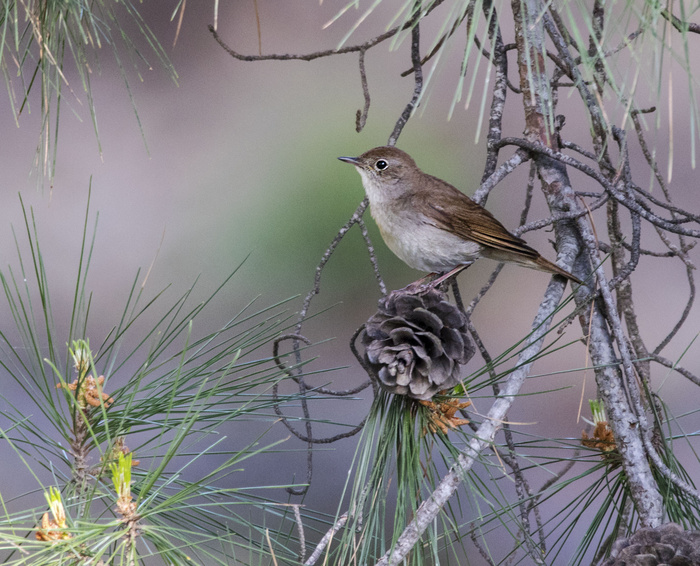
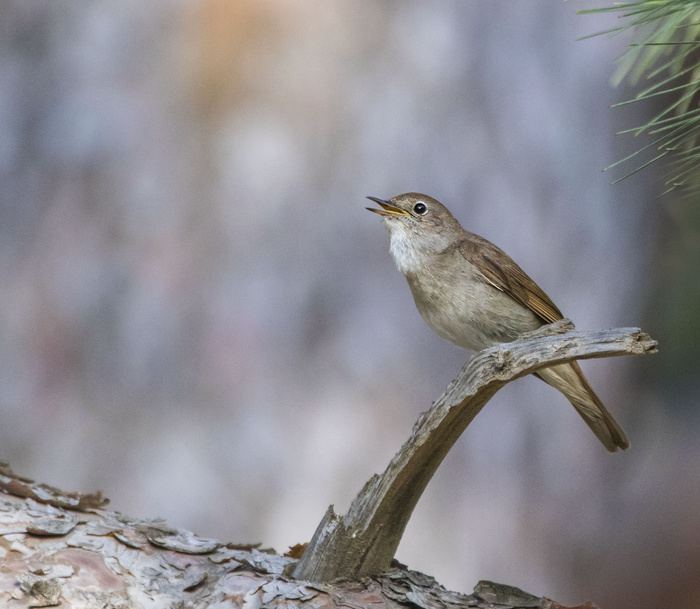
I always love to see them because I think they are really special birds that enrich our lives with their song.
There is a small bridge over a slow moving river where we always stop to listen to these birds and it is where there is, with patience, a good chance of seeing them. They sing all day and night from these areas but in the evening is best in this particular location because there are less people passing by in cars and you can then really listen to their song.
We were standing on this little bridge just listening to the evening’s performance when I could see the vegetation moving, so I got my camera ready and sure enough a bird began to make its way out of hiding and on to a branch. They will do this from time to time and the best way to see them is to just wait for them to appear.
I always love to see them because I think they are really special birds that enrich our lives with their song.
Rock Nuthatch.
13th June 2022
13th June 2022
Very early one morning, as usual – you have to be out early, we were driving along a very rough track called the 'Makara Track' on our way down to a small estuary and shoreline just looking for whatever wildlife that was on offer. We had passed some old ramshackle sheds used by the people who try and farm this particularly difficult terrain and we had started to see the local Starred Agama lizards lying out on the rocks trying to warm up in the early morning sun. These lizards are commonplace in these hot rocky areas and they are quite confiding up to a point.
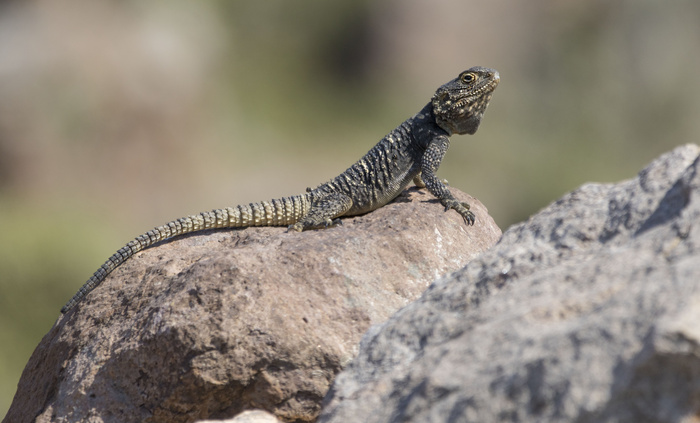
There are also a few birds that occupy these rocky areas, typically Cretzschmar's Buntings.
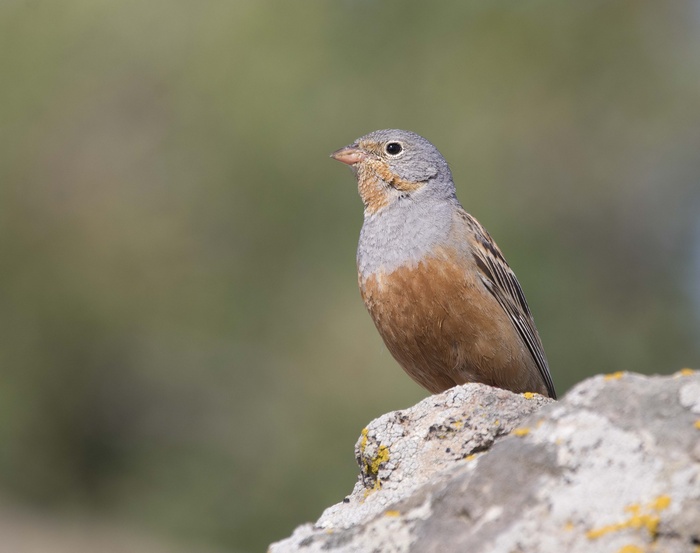
What we weren’t expecting though was a Rock Nuthatch, although these birds live and breed amongst rocks they are usually higher up on large rocks where they build their nests and cling to the rock faces looking for food. This particular bird was very unusually perched on a length of reinforcing bar right on the side of the road. I let the car just drift passed not to spook it by stopping quickly and I quietly reversed back until I was right opposite. I felt sure it would fly off but no it just stayed there about fifteen feet away, quite remarkable really. However, it didn’t take its eyes off us for a second, but I didn’t care because it allowed me to take a quick shot.
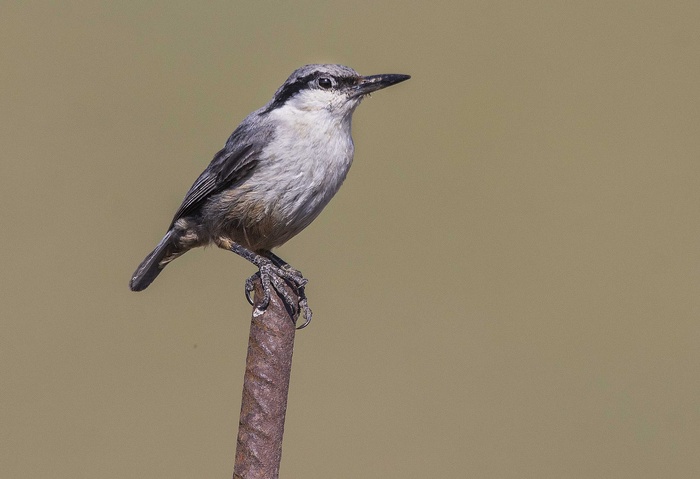
Look at the size of those feet.
We carried on still surprised by this little bird’s confidence.
We arrived at the deserted seashore on a now glorious morning, we just stood on the shoreline drinking in the view as the crystal clear emerald waves broke around our feet. I looked high up into the air as fifteen Alpine Swifts swooped back and fore chasing the insects now elevated on the warm air currents.
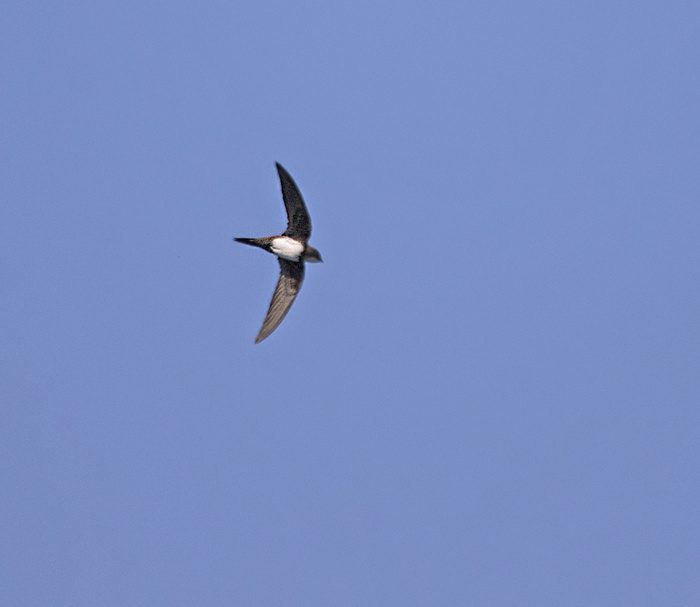
What a lovely scene this was and we were reluctant to leave but we had to make our way back up though the valley. When we passed the old sheds mentioned above unbelievably there was the Rock Nuthatch still perched in the same place. It must have been there for an hour at least, we couldn’t believe it. We moved on because it was exactly the same shot as on the way down. I don’t know what this bird was doing, whether just drying off in the sun after bathing because it looks a bit wet, but we’ve never seen one exhibiting this confident behaviour before.
There are also a few birds that occupy these rocky areas, typically Cretzschmar's Buntings.
What we weren’t expecting though was a Rock Nuthatch, although these birds live and breed amongst rocks they are usually higher up on large rocks where they build their nests and cling to the rock faces looking for food. This particular bird was very unusually perched on a length of reinforcing bar right on the side of the road. I let the car just drift passed not to spook it by stopping quickly and I quietly reversed back until I was right opposite. I felt sure it would fly off but no it just stayed there about fifteen feet away, quite remarkable really. However, it didn’t take its eyes off us for a second, but I didn’t care because it allowed me to take a quick shot.
Look at the size of those feet.
We carried on still surprised by this little bird’s confidence.
We arrived at the deserted seashore on a now glorious morning, we just stood on the shoreline drinking in the view as the crystal clear emerald waves broke around our feet. I looked high up into the air as fifteen Alpine Swifts swooped back and fore chasing the insects now elevated on the warm air currents.
What a lovely scene this was and we were reluctant to leave but we had to make our way back up though the valley. When we passed the old sheds mentioned above unbelievably there was the Rock Nuthatch still perched in the same place. It must have been there for an hour at least, we couldn’t believe it. We moved on because it was exactly the same shot as on the way down. I don’t know what this bird was doing, whether just drying off in the sun after bathing because it looks a bit wet, but we’ve never seen one exhibiting this confident behaviour before.
Great Snipe.
13th June 2022
13th June 2022
Great Snipe is always a special bird to find even on Lesvos and one had been showing, albeit infrequently on a rapidly drying up muddy area not too far away from where we were based in Skalla Kalloni. Therefore, although we don’t really chase around after birds there because there’s no point given the wealth of birdlife on the island, it was worth driving a few miles to try and see it. When we arrived there was a group of young Greek birders/photographers there which was unusual but refreshing to see and they were very polite and friendly as indeed are most people in Greek society. I could see though that they were keeping away from a group of about six people who were what I term masquerading as birders because the three women of the group were so noisy. They were just talking and laughing as if they were in a local taverna. I’ve got nothing against enjoying yourself but there’s a time and a place. These people were probably very nice but how do they expect to see a bird like a Great Snipe behaving like that. I asked the young Greeks if the bird had shown and they said no – hardly surprising! They left and we went straight after them to explore somewhere else a bit disappointed by these people.
I saw on our bird app that the Snipe had been seen a few days later, although I knew the mud had become very dry and it obviously wouldn’t be too long before the bird located to a more suitable habitat. With this in mind late one afternoon Susan and I decided to have one more try because most birders call it a day at this time because of the heat. We had also read that the Snipe had been seen in a narrow channel that fed the now dried up pool with water.
When we arrived there it was deserted – great! We approached carefully trying to see into the channel which disappointingly was impossible without getting out of the car, which was not a good idea because we would have spooked the bird – Snipe are easily spooked! However, as we moved along slowly there was a gap of about ten feet in the channel banking which allowed us to see into the channel itself. We waited, there was no option because this was the only viable watch point. I was in the front of the car and Susan was on the back seat just waiting and waiting and it was hot – the late afternoon sun was very intense and the light was very harsh – not good for photographing anything.
After a relatively short while and to our total surprise there came the Snipe.
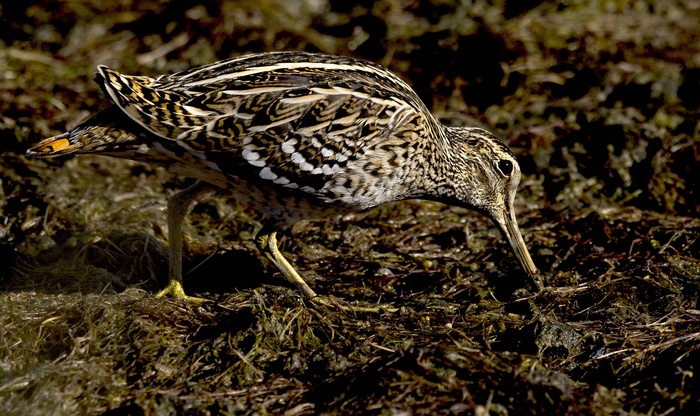
Probing the still soft mud in the channel, this was why it had left the main pool area – the channel floor was in shade from the sun and therefore was softer for feeding. I waited for it to come into full view and proceeded to take a few shots, it totally ignored us in the car, if we had got out I’m sure things would have been much different, cars are great hides. I couldn’t believe how close we were, less than ten feet from a mega bird like that was epic.
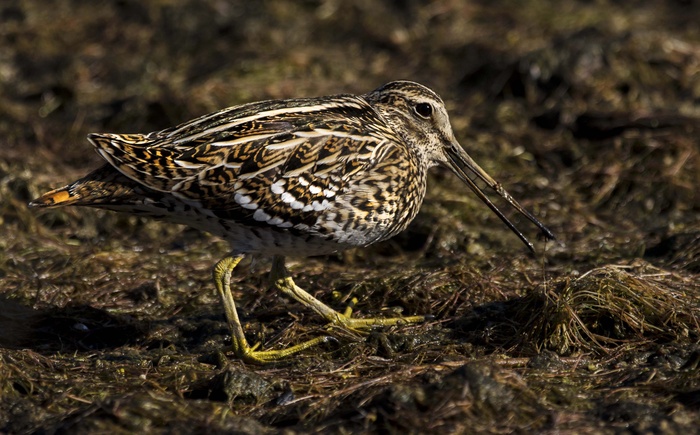
If I had been using my Canon ef600 there would have been no shot because the minimum focussing distance is about fifteen feet, zoom lenses are very useful in these situations. We watched and photographed this lovely bird, albeit in very difficult light until it wandered up the channel and disappeared out of view but we were grateful for what we had. It just goes to show that without noisy people birds will come much closer, it just takes a little common sense.
We left for a shower and change of clothes back at the hotel and enjoyed a delicious Greek salad and a few cold ones at the local taverna, which is the place to talk and laugh!
I saw on our bird app that the Snipe had been seen a few days later, although I knew the mud had become very dry and it obviously wouldn’t be too long before the bird located to a more suitable habitat. With this in mind late one afternoon Susan and I decided to have one more try because most birders call it a day at this time because of the heat. We had also read that the Snipe had been seen in a narrow channel that fed the now dried up pool with water.
When we arrived there it was deserted – great! We approached carefully trying to see into the channel which disappointingly was impossible without getting out of the car, which was not a good idea because we would have spooked the bird – Snipe are easily spooked! However, as we moved along slowly there was a gap of about ten feet in the channel banking which allowed us to see into the channel itself. We waited, there was no option because this was the only viable watch point. I was in the front of the car and Susan was on the back seat just waiting and waiting and it was hot – the late afternoon sun was very intense and the light was very harsh – not good for photographing anything.
After a relatively short while and to our total surprise there came the Snipe.
Probing the still soft mud in the channel, this was why it had left the main pool area – the channel floor was in shade from the sun and therefore was softer for feeding. I waited for it to come into full view and proceeded to take a few shots, it totally ignored us in the car, if we had got out I’m sure things would have been much different, cars are great hides. I couldn’t believe how close we were, less than ten feet from a mega bird like that was epic.
If I had been using my Canon ef600 there would have been no shot because the minimum focussing distance is about fifteen feet, zoom lenses are very useful in these situations. We watched and photographed this lovely bird, albeit in very difficult light until it wandered up the channel and disappeared out of view but we were grateful for what we had. It just goes to show that without noisy people birds will come much closer, it just takes a little common sense.
We left for a shower and change of clothes back at the hotel and enjoyed a delicious Greek salad and a few cold ones at the local taverna, which is the place to talk and laugh!
Rose Coloured Starlings.
12th June 2022
12th June 2022
These gregarious birds can be seen on passage through Lesvos usually from the third week of May with some, usually small numbers, seen the week before. They can be erratic in nature turning up anywhere and perching in any available bush or tree be it on a roadside or in a remote location. One thing, however, is that they are attracted to Mulberry trees, so if you know where any of these trees are it’s worth keeping an eye out during this period. I must admit to having had little luck with these birds over the years because it involves either being fortunate enough to be in the right place at the right time or alternatively staying in an area where there are suitable trees and even then it’s still difficult because it may be a wait for nothing. In the previous blog I detailed our search for Lesser Grey Shrike and how we saw all those Spotted Flycatchers near to the town of Sigri. Well that wasn’t quite the end of the story, because we were parked outside what is known as the ‘Old Sanatorium’ outside Sigri reflecting on the fruitful drive through the valley when I casually looked across the fields and about 500 yds away I could see around 25 Rose Coloured Starlings land in a tree. I called to Susan to come and see because it was a rare sighting for us, they then almost immediately took flight and I remarked how typically erratic their behaviour was, but incredibly and quite astonishingly they flew across the fields towards us and perched in a small track-side bush 50yds from where we were standing. I couldn’t believe what I was seeing - we leapt into the car and drove as quietly as we could towards the little bush - terrified of flushing them. I switched the car’s engine off and took one burst of shots before they again flew off, luckily we both had good views.
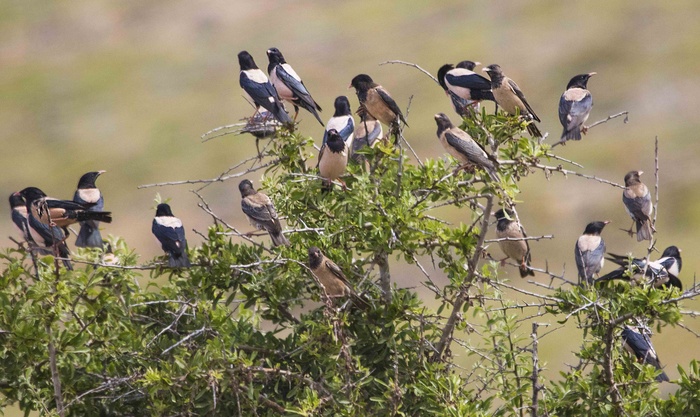
This scenario typically illustrates their behaviour and what I mentioned previously about the pure luck of being there at the time. That really was the end of the journey through that valley.
This scenario typically illustrates their behaviour and what I mentioned previously about the pure luck of being there at the time. That really was the end of the journey through that valley.
Lesser Grey Shrike at last.
12th June 2022
12th June 2022
I’ve photographed all six of the Shrikes likely to be seen in Europe and have managed to get reasonable shots of five; Woodchat, Masked, Red Backed, Great Grey and Isabelline. However, the sixth, Lesser Grey has been particularly elusive for me, seemingly avoiding my lens at all costs, I have come close on Lesvos before but the sun was against me and there was nothing I could do because of the terrain, which was extremely frustrating. Also in Bulgaria our guide Dimiter, (top birder), drove me with great care quite close to a perched bird but just as we got in shooting range the bird flew off - mega frustrating!! This time I made it a target bird for the trip and very early one morning at first light, Susan and I drove a very rough track between the towns of Eressos and Sigri on Lesvos. This track can be unpassable some years because of rock falls and other problems, however, reports were that it was passable currently. Climbing out of Eressos immediately there was a Lesser Grey Shrike on a fence post thirty feet away I reached for my lens behind my seat but it was too late and the bird was gone. We waited for five minutes to see if it would return, but no luck – mega mega frustrating.
On we go and soon it became apparent that there had been a big fall of birds because there were Red Backed Shrikes everywhere we counted at least a hundred birds as we drove slowly along the road. There were also many Spotted Flycatchers all along the track. We also encountered a few Woodchat Shrikes as we would expect, but our main quarry was conspicuous by its absence. Black Headed Buntings were apparent and you can get a lot of these birds most springs. We reached the bottom of the valley and stopped for a belated breakfast and above us five Woodlarks were singing from overhead wires, a nicer way to enjoy breakfast is hard to imagine. Further on two Ruddy Shelduck were on the now nearly dried up river bed and a Little Bittern showed briefly from a small area of reeds while Bee Eaters constantly flew around.
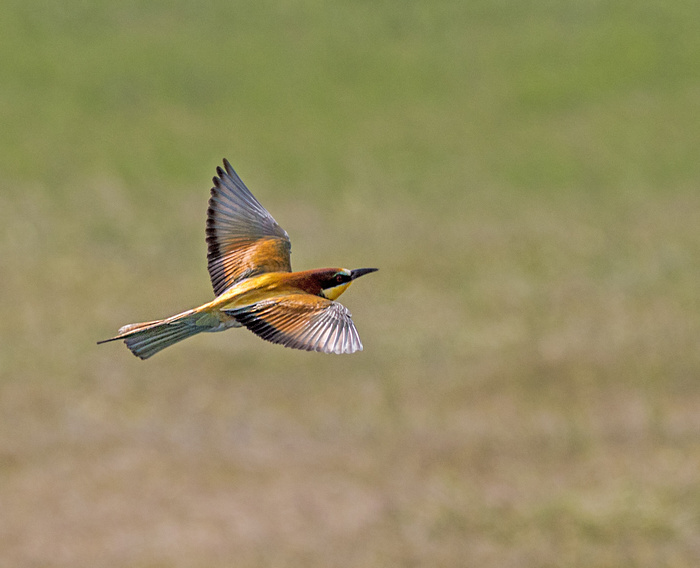
Along a line of bushes we had Orphean and Icterine Warblers though they both skulked in the foliage. This is the type of birding you get on Lesvos, and back home in the UK if I had a tenth of the birds seen I would be talking about it for years. We spoke to another birder who came along and I asked him if he had had any Lesser Grey Shrikes and he answered disappointingly in the negative.
We drove on with the sound of Nightingales resonating from roadside thickets and Cretzschmar’s Buntings darting around the rocky slopes. We stopped to watch a Red Backed Shrike that was perched on a roadside fence post when Susan whispered ‘Lesser Grey Shrike ahead’ - I went into alert mode - for me this is a mixture of fear and excitement, one the prospect of getting a shot of a much wanted bird and the other the fear of missing out again. We crept closer hardly daring to move but it flew off onto a line of steel reinforcing bars that are used for fencing posts on Lesvos. I manoeuvred the car into the best possible position and just waited. It now became a war of nerves between us and the bird, but after about five minutes it started to make its way closer probably after assessing that we weren’t a threat. You have to stay put in your vehicle in these situations, once you ‘Crack’ and get out it will be all over. Closer and closer it came across the posts, it seemed interminable, but finally I had a shot, the light was still harsh, but it wasn’t too bad and I wanted more.
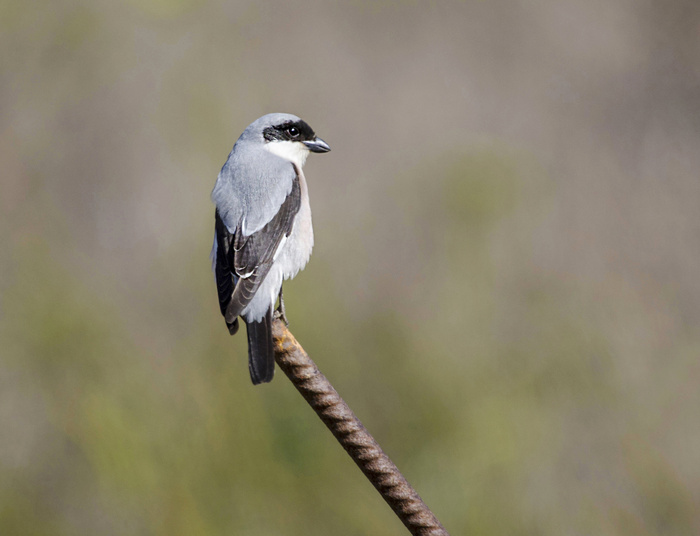
I let the clutch out and inched closer off the track on to a bare patch of ground about fifteen feet nearer and unbelievably the bird tolerated me and I had another shot and then he flared his tail slightly which was a better shot.
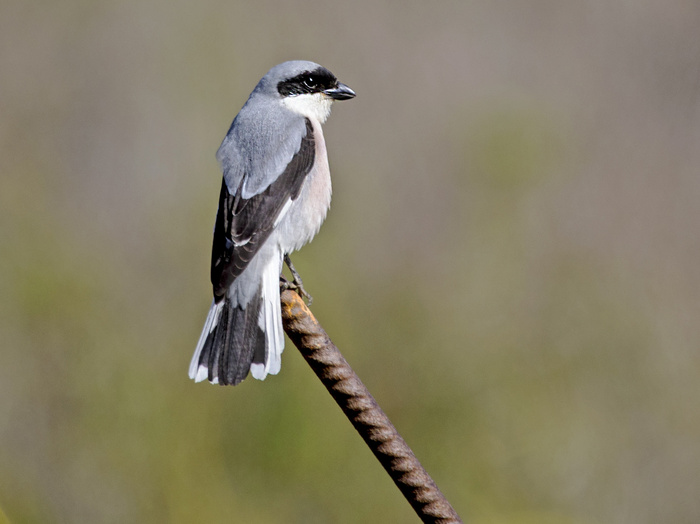
I was realising a dream now. I couldn’t get any closer without getting out so I had to accept what I had and the bird flew off and away anyway – WOW!!
I was made up after this and anything else would be a bonus but just as we were coming to the end of the track by some old farm sheds, absolutely unbelievably there was another Lesser Grey on the fence in a much better position than the previous bird. I couldn’t believe it, the famous comment from the 1966 world cup final came to mind – ‘They thought it was all over’ etc. Again it flew off out a sight but we inched forward and there it was in an even better position, conditions were also perfect now because a small cloud had moved across the sun diffusing the hitherto harsh light – a dream shot.
I’m not particularly religious but I was praying now. I stopped the engine then I tentatively put my bean bag on the door of the car and then rested my little Sigma lens on it and the bird snapped into focus, what a feeling as I took the shot, all these years and there it was ‘In the can’ to use motion picture parlance.
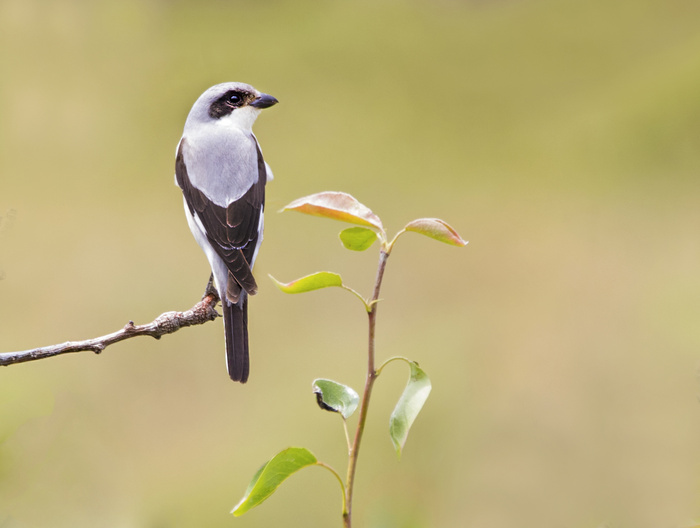
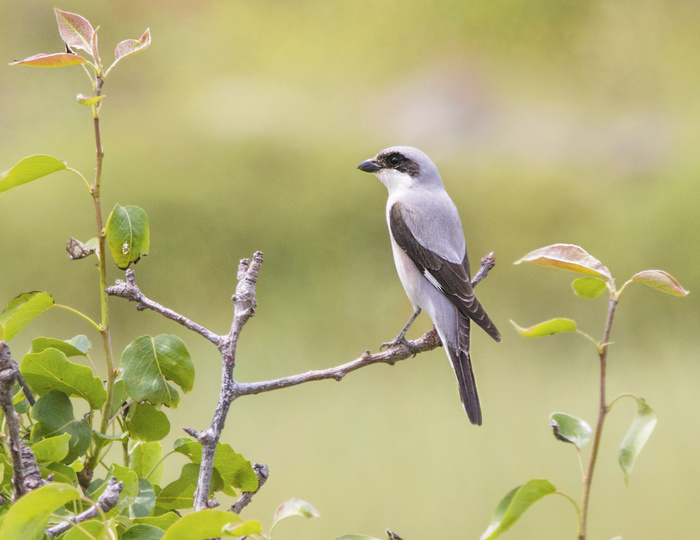
What a great drive along this valley and just as we were entering the outskirts of the town of Sigri flocks of birds were passing in front of the car. I wasn’t paying too much attention because I was concentrating on the road. I just said casually to Susan look at all those sparrows, hundreds of them. We stopped to get a closer look and incredibly we could now see they were Spotted Flycatchers! There must have been, with the birds we had seen along the track, around 500 Spotted Flycatchers - a mega fall of this species. A fine end to an eventful morning.
On we go and soon it became apparent that there had been a big fall of birds because there were Red Backed Shrikes everywhere we counted at least a hundred birds as we drove slowly along the road. There were also many Spotted Flycatchers all along the track. We also encountered a few Woodchat Shrikes as we would expect, but our main quarry was conspicuous by its absence. Black Headed Buntings were apparent and you can get a lot of these birds most springs. We reached the bottom of the valley and stopped for a belated breakfast and above us five Woodlarks were singing from overhead wires, a nicer way to enjoy breakfast is hard to imagine. Further on two Ruddy Shelduck were on the now nearly dried up river bed and a Little Bittern showed briefly from a small area of reeds while Bee Eaters constantly flew around.
Along a line of bushes we had Orphean and Icterine Warblers though they both skulked in the foliage. This is the type of birding you get on Lesvos, and back home in the UK if I had a tenth of the birds seen I would be talking about it for years. We spoke to another birder who came along and I asked him if he had had any Lesser Grey Shrikes and he answered disappointingly in the negative.
We drove on with the sound of Nightingales resonating from roadside thickets and Cretzschmar’s Buntings darting around the rocky slopes. We stopped to watch a Red Backed Shrike that was perched on a roadside fence post when Susan whispered ‘Lesser Grey Shrike ahead’ - I went into alert mode - for me this is a mixture of fear and excitement, one the prospect of getting a shot of a much wanted bird and the other the fear of missing out again. We crept closer hardly daring to move but it flew off onto a line of steel reinforcing bars that are used for fencing posts on Lesvos. I manoeuvred the car into the best possible position and just waited. It now became a war of nerves between us and the bird, but after about five minutes it started to make its way closer probably after assessing that we weren’t a threat. You have to stay put in your vehicle in these situations, once you ‘Crack’ and get out it will be all over. Closer and closer it came across the posts, it seemed interminable, but finally I had a shot, the light was still harsh, but it wasn’t too bad and I wanted more.
I let the clutch out and inched closer off the track on to a bare patch of ground about fifteen feet nearer and unbelievably the bird tolerated me and I had another shot and then he flared his tail slightly which was a better shot.
I was realising a dream now. I couldn’t get any closer without getting out so I had to accept what I had and the bird flew off and away anyway – WOW!!
I was made up after this and anything else would be a bonus but just as we were coming to the end of the track by some old farm sheds, absolutely unbelievably there was another Lesser Grey on the fence in a much better position than the previous bird. I couldn’t believe it, the famous comment from the 1966 world cup final came to mind – ‘They thought it was all over’ etc. Again it flew off out a sight but we inched forward and there it was in an even better position, conditions were also perfect now because a small cloud had moved across the sun diffusing the hitherto harsh light – a dream shot.
I’m not particularly religious but I was praying now. I stopped the engine then I tentatively put my bean bag on the door of the car and then rested my little Sigma lens on it and the bird snapped into focus, what a feeling as I took the shot, all these years and there it was ‘In the can’ to use motion picture parlance.
What a great drive along this valley and just as we were entering the outskirts of the town of Sigri flocks of birds were passing in front of the car. I wasn’t paying too much attention because I was concentrating on the road. I just said casually to Susan look at all those sparrows, hundreds of them. We stopped to get a closer look and incredibly we could now see they were Spotted Flycatchers! There must have been, with the birds we had seen along the track, around 500 Spotted Flycatchers - a mega fall of this species. A fine end to an eventful morning.
Long Eared Owls.
03rd June 2022
03rd June 2022
Long Eared Owls according to established records are thinly distributed across the island of Lesvos. This is I’m sure quite correct and they are therefore reasonably difficult to locate, but they do favour Eucalyptus and Corsican Pine trees for roosting and breeding purposes. Therefore, these trees should be the first places to look for them during the daytime. In addition Eucalyptus is also a reliable tree for finding Scops Owl.
Skalla Kalloni is the place most birders use as their base when visiting Lesvos and there is a site about a mile away where for years Long Eared Owls have been reliable but a few years ago the Eucalyptus trees there, which make up most of the site were what can only be described as butchered. Thankfully after about five years the trees are starting to recover and it looks good habitat for these secretive owls once again.
That aside these owls can be seen in the most unlikely of places and there was a female and two chicks reported roosting in a Corsican Pine next to a very busy road on the outskirts of Kalloni, which is the main town which presumably gives Skalla Kalloni its name. A few people went to try and see them and the following day we had a look and typically they were obscured by foliage, in my experience these owls do like a few leaves or twigs in front of them when they roost.
I managed a few record shots of them but it was always going to be difficult especially with my Sigma’s lack of focal length. Nevertheless it is always nice to see these secretive owls.
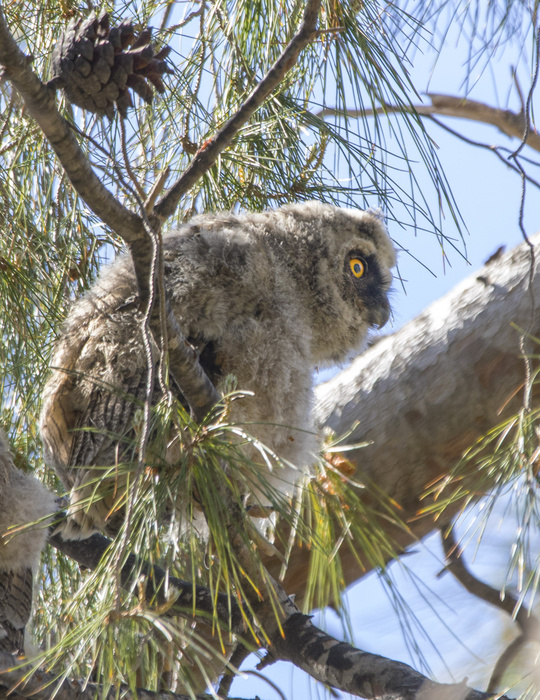
Those orange eyes are typical of a night hunting owl.
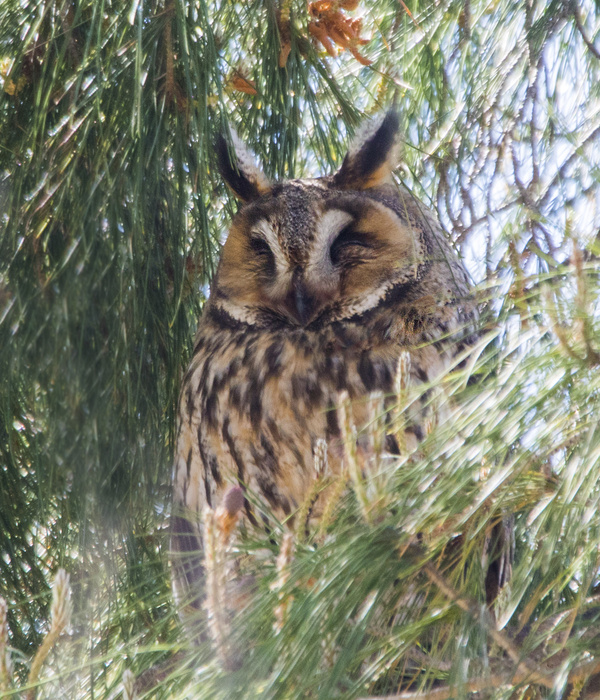
What is presumably a female.
Skalla Kalloni is the place most birders use as their base when visiting Lesvos and there is a site about a mile away where for years Long Eared Owls have been reliable but a few years ago the Eucalyptus trees there, which make up most of the site were what can only be described as butchered. Thankfully after about five years the trees are starting to recover and it looks good habitat for these secretive owls once again.
That aside these owls can be seen in the most unlikely of places and there was a female and two chicks reported roosting in a Corsican Pine next to a very busy road on the outskirts of Kalloni, which is the main town which presumably gives Skalla Kalloni its name. A few people went to try and see them and the following day we had a look and typically they were obscured by foliage, in my experience these owls do like a few leaves or twigs in front of them when they roost.
I managed a few record shots of them but it was always going to be difficult especially with my Sigma’s lack of focal length. Nevertheless it is always nice to see these secretive owls.
Those orange eyes are typical of a night hunting owl.
What is presumably a female.
Cuckoos on a Misty Morning.
01st June 2022
01st June 2022
The month of May and the first two weeks of June in the Brecon Beacons are what I consider to be the prime time for photographing Cuckoos. I have had most of my successful days out during these periods. Cuckoos are calling and are more active during this time, later into June, as a rule, Cuckoos start to become quieter and therefore more difficult to locate. However, there are no set rules and things can differ, but generally this is correct. I have been unable to try and photograph Cuckoos this spring because of holidays and other commitments during May. However, last year I was given permission from some very nice people to access some private land in an effort to get closer to where I had heard Cuckoos calling, and over the last few days I have been watching three Cuckoos on this land, two males and a female flying around a field which has many Meadow Pipits nesting. This field has some isolated trees dotted around and this is the perfect scenario for Cuckoos, a vantage point and nests to lay their eggs in, and that’s all there is to it, it’s not complicated. I could also see a tree which the males in particular were perching in regularly, the female appeared less frequently - a much shyer bird.
The weather forecast had promised fine weather for Tuesday of this week and as usual the night before I loaded all my kit into my car and got all my birding clothes, flask, sandwiches etc. all ready - my alarm was set for 04.45. The following morning when I looked out of my landing window at 04.46 I could barely see the cars parked below, some ten yards away. I cursed those weather forecasters because fog is the worst weather, cold or rain you can overcome but fog is a no go. However, it was early June and fog can burn off with a bit of sun so I went for it, though more in hope than expectation. Driving along I could hardly see anything and things didn’t look at all promising but this was supposed to be the best day of the week so I pushed on through the stygian gloom. Suddenly I could see something round in the middle of the road, I thought it was a football but as I got closer I could see it was a very large Hedgehog, probably a pregnant female. I got out to encourage her to move into the undergrowth but she scurried off under her own steam. I was very pleased at this because we can ill afford to lose any Hedgehogs especially pregnant ones.
Arriving at the site there was a hint of brightness above which looked vaguely promising. In view of this there was no time to waste getting under cover because Cuckoos are very wary and street-wise birds and if they see you they won’t come anywhere near. I had decided where I wanted my portable hide positioned previously, there’s no time to do this on the actual morning, and detailed planning always works. I set the hide up quickly and arranged a large ‘Camo’ net over the top to soften and blend it in. I set my lens and tripod up and settled in under cover ensuring all my items were under with me.
To my pleasant surprise the weather continued to brighten with the now very early morning sun starting to burn of the mist. It was now 05.45 and from my left I could hear the soft bubbling call of the female Cuckoo. After some time she flew and briefly perched in the top of a now sunlit Hawthorn tree, I managed a quick shot before she flew off when a male Cuckoo landed beneath her.
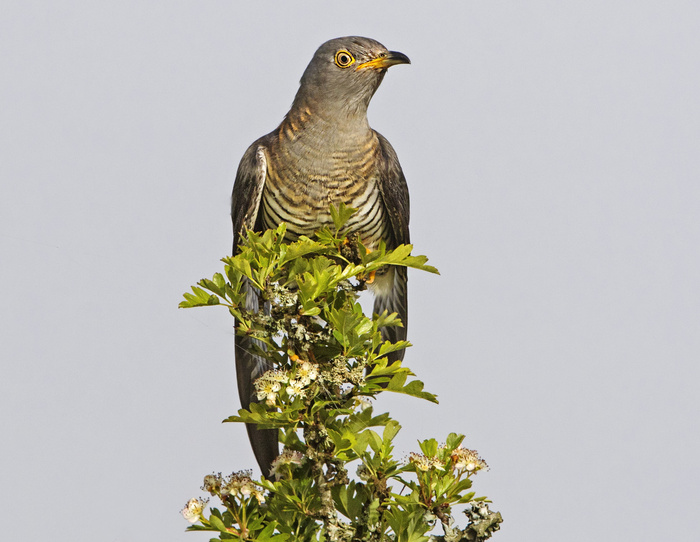
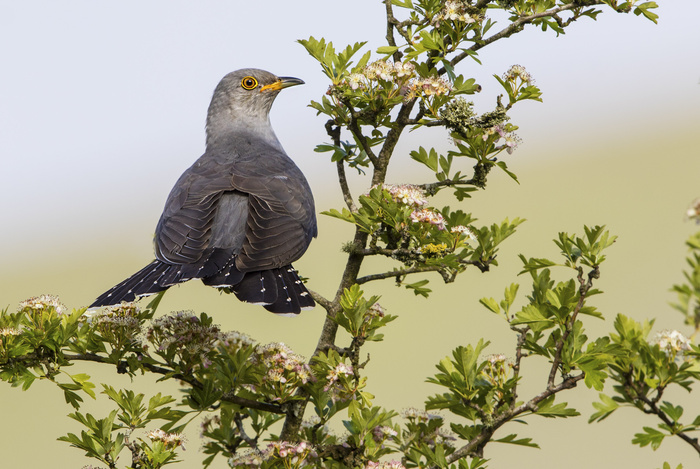
I knew from observations that she was very shy and elusive. It was an hour before I heard a male Cuckoo calling and by now it had turned into a glorious morning, those weather forecasters weren’t too bad after all! I peeled off my top coat because it was now too uncomfortable in the sunshine. These Cuckoos seem to do the rounds of their favourite trees and you just have to wait until they choose the right one for you, there’s no easy way around it.
The calls got louder and nearer and finally a male flew into ‘My’ tree and he was only thirty feet away but he was obscured by branches. This is so frustrating but you have to take it on the chin, he began calling but stayed obscured for a minute until he flew off nearby. It would have been a lovely shot in what was now improving light. I poured a cup of coffee as a consolation and settled in for what now seemed like the long haul. However, ten minutes later and here he was again but unbelievably perched again on what was obviously his favourite branch.
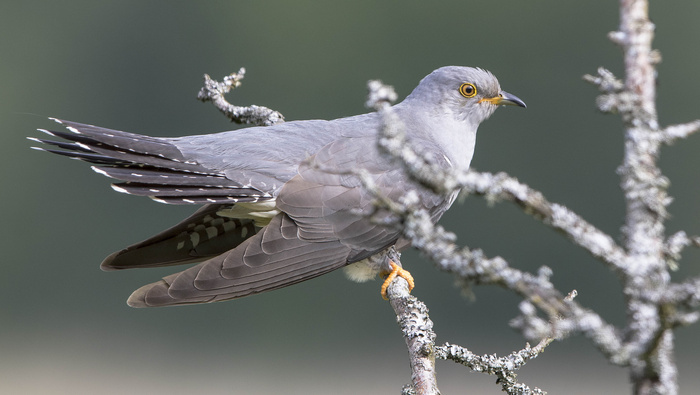
This was a potential problem for me because if this was repeated all day the shoot would be ruined, but there was nothing I could do only wait and hope. I had a sandwich – my breakfast, another coffee and waited. Déjà vu; here he comes again, but this time he perched right out in the open in a now beautiful subtle light with a lovely diffused pastel coloured background.
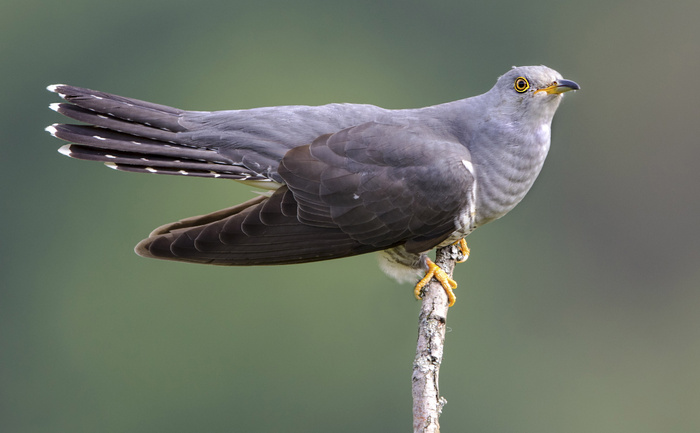
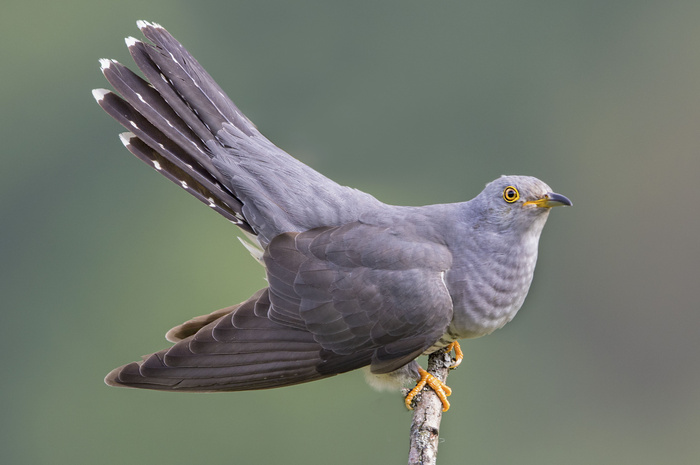
These are the situations a bird photographer dreams about, and must make the most of, because they may not happen again in their life time. I shot him from thirty feet as he posed beautifully right in front of me.
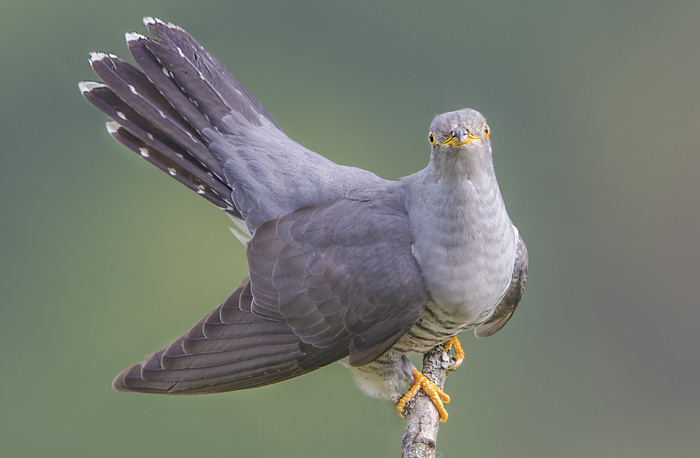
He came back another three or four times during the morning perching on various branches giving breath-taking views.
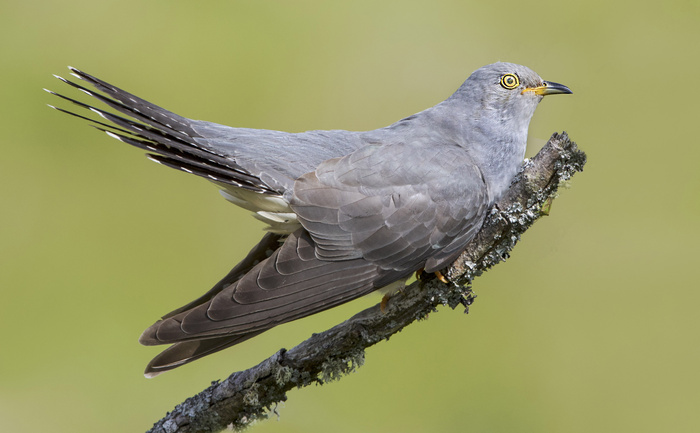
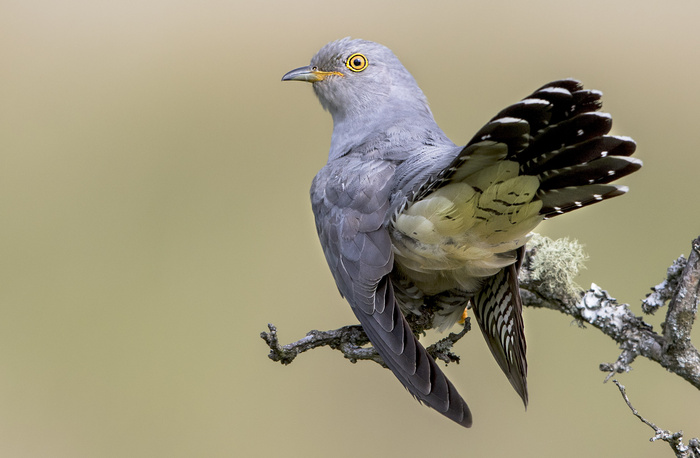
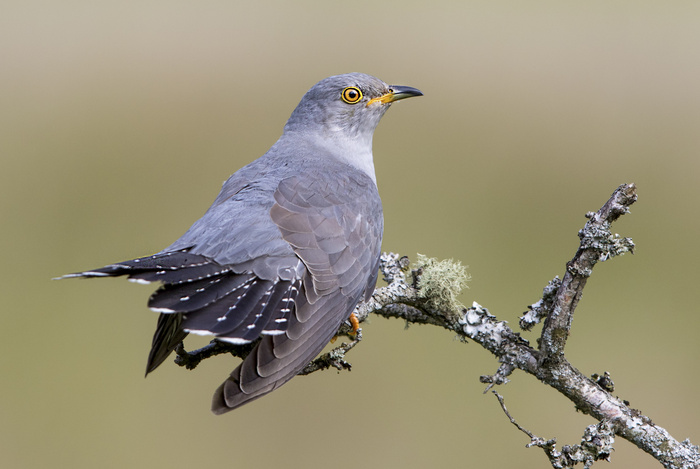
These are the golden times that make it all worthwhile, the early mornings, and the disappointments all forgotten – just sublime.
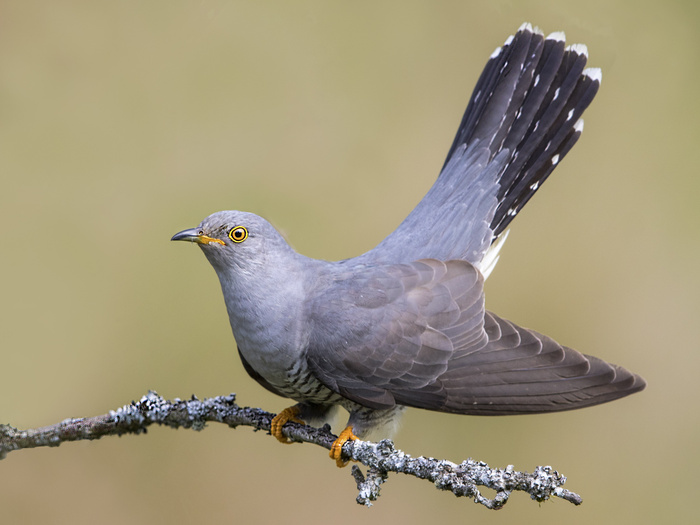
Cuckoo nirvana!!
Youtube link below of the bird calling.
https://youtu.be/J5we_mJJNt0
However, everything must come to an end and things went quiet for whatever reason and now the window of fine weather also began to disappear and light rain began to fall. I decided now was the right time to leave because the Cuckoos had also left. I packed up everything into the boot of my car and left for a very contented drive home.
The weather forecast had promised fine weather for Tuesday of this week and as usual the night before I loaded all my kit into my car and got all my birding clothes, flask, sandwiches etc. all ready - my alarm was set for 04.45. The following morning when I looked out of my landing window at 04.46 I could barely see the cars parked below, some ten yards away. I cursed those weather forecasters because fog is the worst weather, cold or rain you can overcome but fog is a no go. However, it was early June and fog can burn off with a bit of sun so I went for it, though more in hope than expectation. Driving along I could hardly see anything and things didn’t look at all promising but this was supposed to be the best day of the week so I pushed on through the stygian gloom. Suddenly I could see something round in the middle of the road, I thought it was a football but as I got closer I could see it was a very large Hedgehog, probably a pregnant female. I got out to encourage her to move into the undergrowth but she scurried off under her own steam. I was very pleased at this because we can ill afford to lose any Hedgehogs especially pregnant ones.
Arriving at the site there was a hint of brightness above which looked vaguely promising. In view of this there was no time to waste getting under cover because Cuckoos are very wary and street-wise birds and if they see you they won’t come anywhere near. I had decided where I wanted my portable hide positioned previously, there’s no time to do this on the actual morning, and detailed planning always works. I set the hide up quickly and arranged a large ‘Camo’ net over the top to soften and blend it in. I set my lens and tripod up and settled in under cover ensuring all my items were under with me.
To my pleasant surprise the weather continued to brighten with the now very early morning sun starting to burn of the mist. It was now 05.45 and from my left I could hear the soft bubbling call of the female Cuckoo. After some time she flew and briefly perched in the top of a now sunlit Hawthorn tree, I managed a quick shot before she flew off when a male Cuckoo landed beneath her.
I knew from observations that she was very shy and elusive. It was an hour before I heard a male Cuckoo calling and by now it had turned into a glorious morning, those weather forecasters weren’t too bad after all! I peeled off my top coat because it was now too uncomfortable in the sunshine. These Cuckoos seem to do the rounds of their favourite trees and you just have to wait until they choose the right one for you, there’s no easy way around it.
The calls got louder and nearer and finally a male flew into ‘My’ tree and he was only thirty feet away but he was obscured by branches. This is so frustrating but you have to take it on the chin, he began calling but stayed obscured for a minute until he flew off nearby. It would have been a lovely shot in what was now improving light. I poured a cup of coffee as a consolation and settled in for what now seemed like the long haul. However, ten minutes later and here he was again but unbelievably perched again on what was obviously his favourite branch.
This was a potential problem for me because if this was repeated all day the shoot would be ruined, but there was nothing I could do only wait and hope. I had a sandwich – my breakfast, another coffee and waited. Déjà vu; here he comes again, but this time he perched right out in the open in a now beautiful subtle light with a lovely diffused pastel coloured background.
These are the situations a bird photographer dreams about, and must make the most of, because they may not happen again in their life time. I shot him from thirty feet as he posed beautifully right in front of me.
He came back another three or four times during the morning perching on various branches giving breath-taking views.
These are the golden times that make it all worthwhile, the early mornings, and the disappointments all forgotten – just sublime.
Cuckoo nirvana!!
Youtube link below of the bird calling.
https://youtu.be/J5we_mJJNt0
However, everything must come to an end and things went quiet for whatever reason and now the window of fine weather also began to disappear and light rain began to fall. I decided now was the right time to leave because the Cuckoos had also left. I packed up everything into the boot of my car and left for a very contented drive home.
Cinereous Bunting.
29th May 2022
29th May 2022
Another bird which is a ‘Must’ on Lesvos is Cinereous Bunting. This bird lives a world away from the forest dwelling Kruper’s Nuthatch on the harsh rocky slopes on the west of the island. As you travel west from the village of Mesotopos the island gets increasingly barren and mountainous and life is obviously hard. To say people farm the land is stretching it, it’s more a case of scratching a living keeping a few sheep and goats. The land is far too rocky to take the blade of a plough or any other machinery.
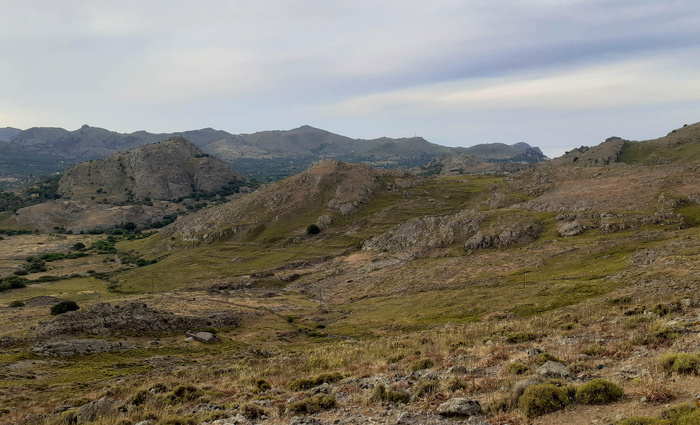
It’s a window into how the island must have been long ago – tough doesn’t really come close to describing it. These rocky slopes are baked by the sun all day long and the rocks act like radiators storing the sun’s heat making it a very inhospitable landscape. This is the realm of birds like Cretzschmar’s and the above mentioned Cinereous bunting. Most people make the trip west to Ipsilou monastery which sits atop a high rocky hill to see these birds and they are indeed virtually guaranteed to see them there. It’s a bit of a pilgrimage for some, without the obvious religious connotations. However, we have been visiting a site that is just as certain as Ipsilou for these birds and is much nearer. At this place we have never failed to see these lovely birds and this time was no exception. They flew around the rocks virtually in front of us putting on a great show once again.
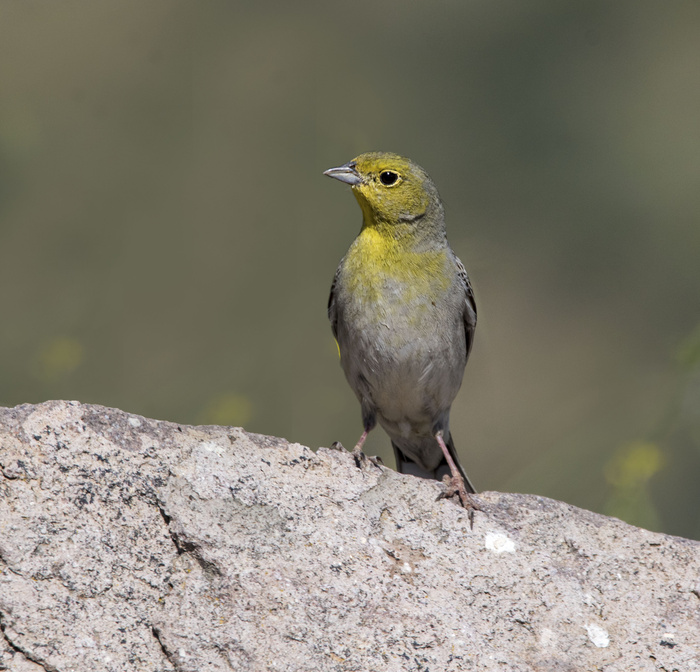
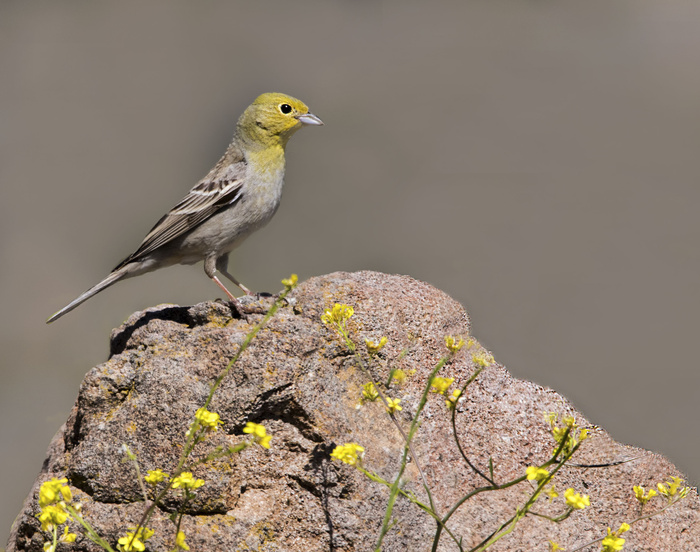
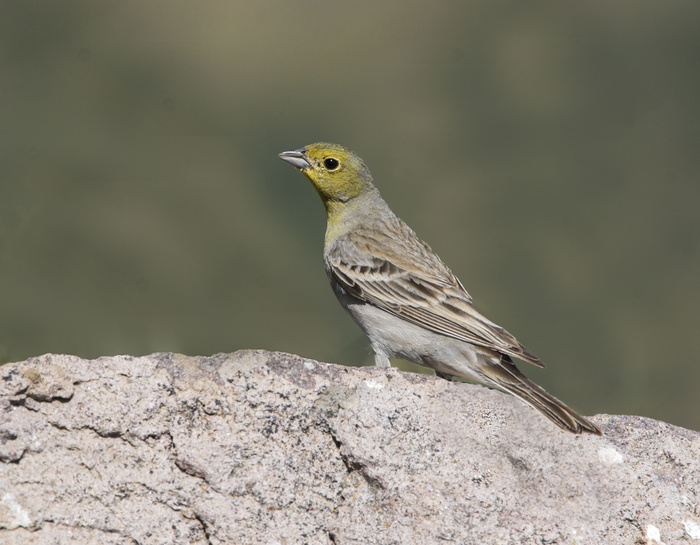
It’s a window into how the island must have been long ago – tough doesn’t really come close to describing it. These rocky slopes are baked by the sun all day long and the rocks act like radiators storing the sun’s heat making it a very inhospitable landscape. This is the realm of birds like Cretzschmar’s and the above mentioned Cinereous bunting. Most people make the trip west to Ipsilou monastery which sits atop a high rocky hill to see these birds and they are indeed virtually guaranteed to see them there. It’s a bit of a pilgrimage for some, without the obvious religious connotations. However, we have been visiting a site that is just as certain as Ipsilou for these birds and is much nearer. At this place we have never failed to see these lovely birds and this time was no exception. They flew around the rocks virtually in front of us putting on a great show once again.