News
Mountain Stream Again.
27th July 2021
27th July 2021
Thankfully the weather has become more bearable over the last few days with those sultry conditions, especially at night, disappearing. After a previously pleasant morning, photographically speaking, I found myself back at the little moorland stream, (previous blog), which more accurately should now be described as a trickle. Nevertheless, the ‘Dragons and Damsels’ don’t mind these conditions because they are out in numbers, mating and then ovipositing their eggs continuously - time is short for these aerial beauties.
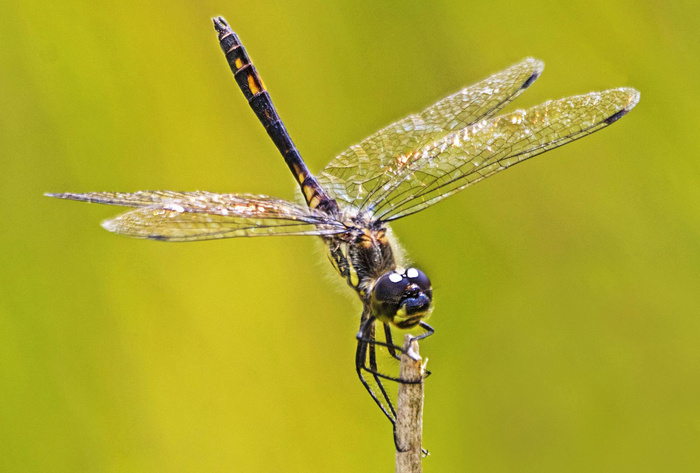
It is also now easier for me to sit on my ‘walkstool’ in the water wearing wellingtons, and wait for one of them to perch on nearby vegetation. Over the last few days the Black Darter dragonfly has emerged, this is one of my favourites, they are so small and delicate and are easily missed amongst the vegetation. They prefer the reeds and long grass to open water so that’s the best place to try and photograph them, because once located they like to return to the same perch time and time again. All a photographer has to do is be patient and keep a reasonable distance to obtain some shots. I waited for some time until I saw a male flying around some reeds and true to form he was perching continually on the same couple of reed stems.
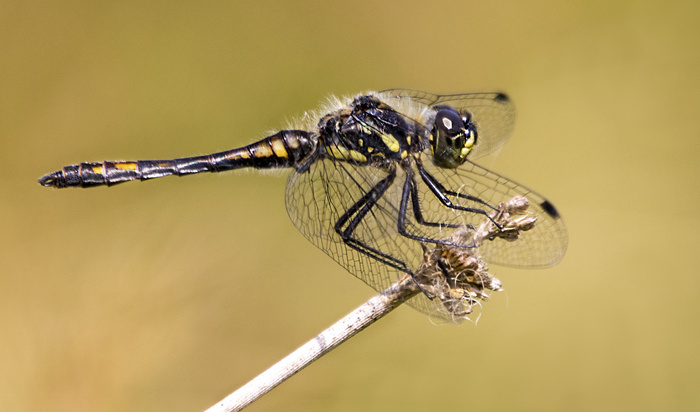
I had to use my Sigma 150-600mm C lens on my Canon 7D ii to get some shots because these dragonflies won’t tolerate close approach with a macro lens. This lens will only focus down to 2.8 metres but with a 25mm extension tube that MFD is reduced by a couple of feet. I set up by sitting on my stool with the lens on a tripod and just waited for him to return. These really are a lovely little creature with a burnt black appearance interspersed with orange markings.
Once I had taken some decent shots I moved to another part of the stream where it flows under a road through a large diameter pipe. This pipe is obviously dark inside and provides a very contrasting background with the bright sunlight outside. I picked a reasonably strong reed stem and propped it up in the stream bed using some small stones right in front of the pipe entrance so if anything perched on this reed then there would make a nice black background. You have to make these perches attractive to your potential subjects or they will just ignore them, (just like Kingfishers e.g.). Sometimes it takes a few attempts because wildlife can and often is very fickle! I again sat on my stool with the Sigma and the 7D ii on a tripod and waited but there was nothing doing. I looked at the other naturally growing reeds nearby and realised that they were all bent over at an angle and my artificially propped reed was almost vertical so I arranged it at roughly the same angle as the others and within a minute a Keeled Skimmer was perched right on it.
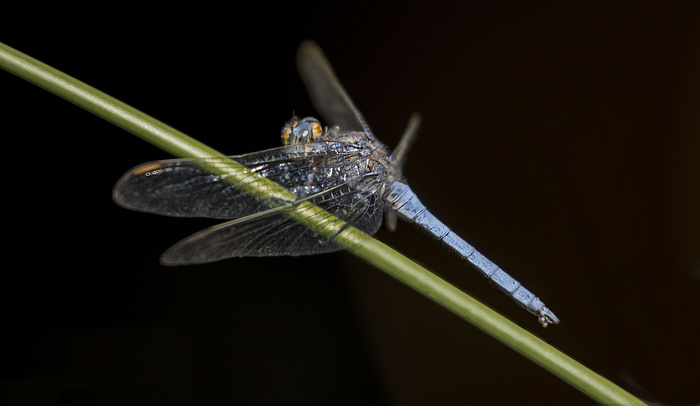
It was just at too steep an angle and therefore awkward for them to perch on! I again had some reasonable shots before there was some argy-bargy between the Keeled Skimmer and a Common Darter – the darter must also have fancied the perch. The darter triumphed and I wasn’t complaining because I had some more shots!
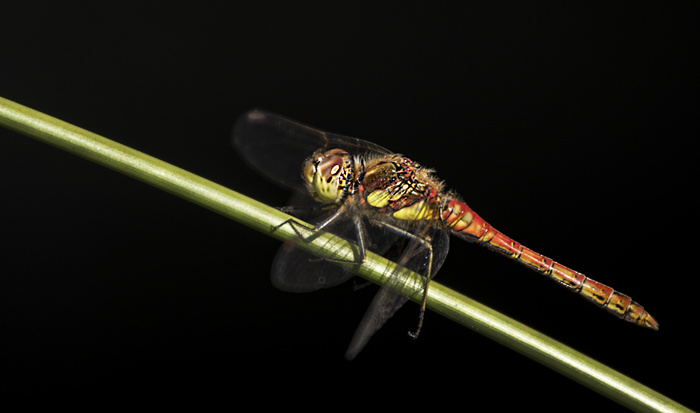
However, the Keeled Skimmer had now perched right by the side of me clinging to a tall reed, I reached over quietly for my Macro lens which I had on my Canon 5D iv and just kept leaning closer and closer until I was about six inches away and incredibly it didn’t move.
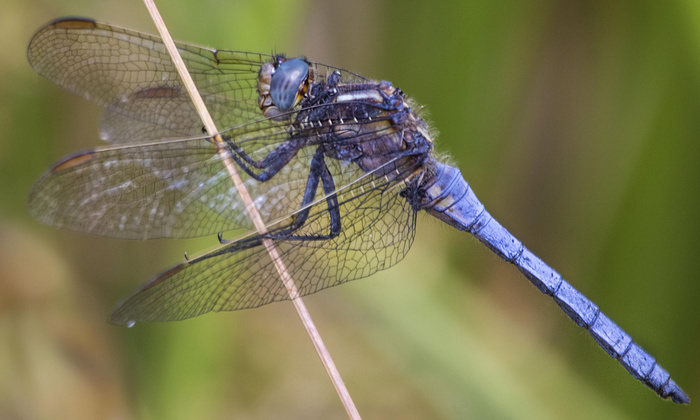
I find that as long as your movements are quiet and very gradual you can get quite close to some of these dragonflies.
It was quite an enjoyable session and I can happily spend a couple of hours at this location with nobody around but the wildlife.
Later in the day Susan came in to the house to say there was a Southern Hawker ovipositing in one of our garden ponds, a first for the garden.
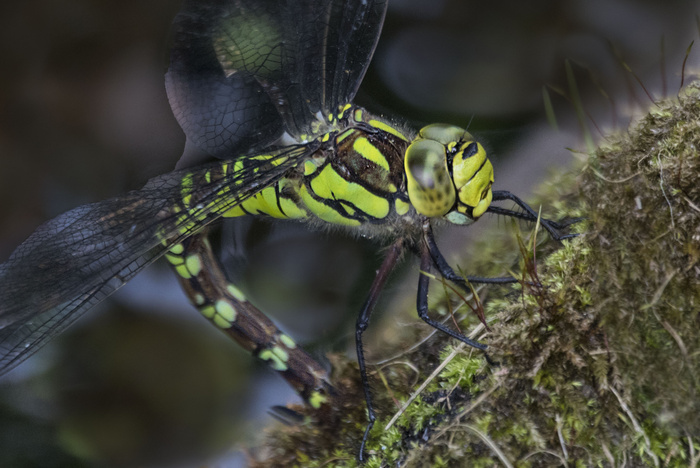
However, she didn’t stay long and I could only grab a quick shot before she disappeared up and over the trees and into the dimming evening light – a very nice end to the day.
It is also now easier for me to sit on my ‘walkstool’ in the water wearing wellingtons, and wait for one of them to perch on nearby vegetation. Over the last few days the Black Darter dragonfly has emerged, this is one of my favourites, they are so small and delicate and are easily missed amongst the vegetation. They prefer the reeds and long grass to open water so that’s the best place to try and photograph them, because once located they like to return to the same perch time and time again. All a photographer has to do is be patient and keep a reasonable distance to obtain some shots. I waited for some time until I saw a male flying around some reeds and true to form he was perching continually on the same couple of reed stems.
I had to use my Sigma 150-600mm C lens on my Canon 7D ii to get some shots because these dragonflies won’t tolerate close approach with a macro lens. This lens will only focus down to 2.8 metres but with a 25mm extension tube that MFD is reduced by a couple of feet. I set up by sitting on my stool with the lens on a tripod and just waited for him to return. These really are a lovely little creature with a burnt black appearance interspersed with orange markings.
Once I had taken some decent shots I moved to another part of the stream where it flows under a road through a large diameter pipe. This pipe is obviously dark inside and provides a very contrasting background with the bright sunlight outside. I picked a reasonably strong reed stem and propped it up in the stream bed using some small stones right in front of the pipe entrance so if anything perched on this reed then there would make a nice black background. You have to make these perches attractive to your potential subjects or they will just ignore them, (just like Kingfishers e.g.). Sometimes it takes a few attempts because wildlife can and often is very fickle! I again sat on my stool with the Sigma and the 7D ii on a tripod and waited but there was nothing doing. I looked at the other naturally growing reeds nearby and realised that they were all bent over at an angle and my artificially propped reed was almost vertical so I arranged it at roughly the same angle as the others and within a minute a Keeled Skimmer was perched right on it.
It was just at too steep an angle and therefore awkward for them to perch on! I again had some reasonable shots before there was some argy-bargy between the Keeled Skimmer and a Common Darter – the darter must also have fancied the perch. The darter triumphed and I wasn’t complaining because I had some more shots!
However, the Keeled Skimmer had now perched right by the side of me clinging to a tall reed, I reached over quietly for my Macro lens which I had on my Canon 5D iv and just kept leaning closer and closer until I was about six inches away and incredibly it didn’t move.
I find that as long as your movements are quiet and very gradual you can get quite close to some of these dragonflies.
It was quite an enjoyable session and I can happily spend a couple of hours at this location with nobody around but the wildlife.
Later in the day Susan came in to the house to say there was a Southern Hawker ovipositing in one of our garden ponds, a first for the garden.
However, she didn’t stay long and I could only grab a quick shot before she disappeared up and over the trees and into the dimming evening light – a very nice end to the day.
Photography in the Heat.
18th July 2021
18th July 2021
At last some meaningful emergence of the local Odonata. This warm weather is bringing them out in numbers, albeit about three weeks to a month behind last year for some species. On a local upland stream Golden Ringed dragonflies are now flying and also some Emperors are on the wing. On Friday in the heat there was a big emergence of Keeled Skimmers and Four Spotted Chasers. There are thousands of damselflies milling around, with Common Blue, Blue Tail, Scarce Blue Tail, Azure and Large Red in numbers. Beautiful Demoiselles are also flying in small numbers - living up to their name.
I was sat on my walk stool on the edge of the above mentioned small stream watching Large Red Damselflies going about their business. I was wearing shorts and with the cooling water running over my wellington clad feet I felt very contented. However, the sun was still fierce and unrelenting in a cloudless sky and I was really feeling it through my wide brimmed hat. A woman walker passed by about fifty yards away and stopped to look at me, seemingly amused by this strange man sat on a stool in a stream wearing shorts and wellingtons - nevertheless I was prepared to wager my feet were cooler than hers!
As I looked at a few stems of Rye grass on the stream’s edge I could see a male and female Large Red Damselfly mating. The grass stem was in isolation with no ‘clutter’ just a mellow pastel coloured background. People who read this blog know I like a smooth background, it’s just as important as the subject for me. I was using a 100mm macro lens with an extension tube on my Canon 7D2 and handholding this kit allowed me to get in quite close - if the insects allowed! Fortunately for me they were ‘preoccupied’ and I got to within a few inches of them, and when the grass stem stopped swaying in the very slight stream-side breeze I fired off a few shots. I backed off then and checked the images on the camera and they looked Ok.
Notice the classic inverted heart shape mating posture which is typical of this order of insects.
The male clasps the female behind her head and she then lifts her abdomen up so that the end segment which contains her unfertilized eggs comes into contact with the males reproductive gland and her eggs are then fertilized. She then later uses her ovipositor to lay the eggs back into typically a stream or pond, thereby starting the whole life cycle over again.
(The only sad thing is when we see these beautiful creatures flying around enriching our lives they are at the very end of their life and will die soon after. These little wisps of transient beauty last for as little as a couple of weeks).
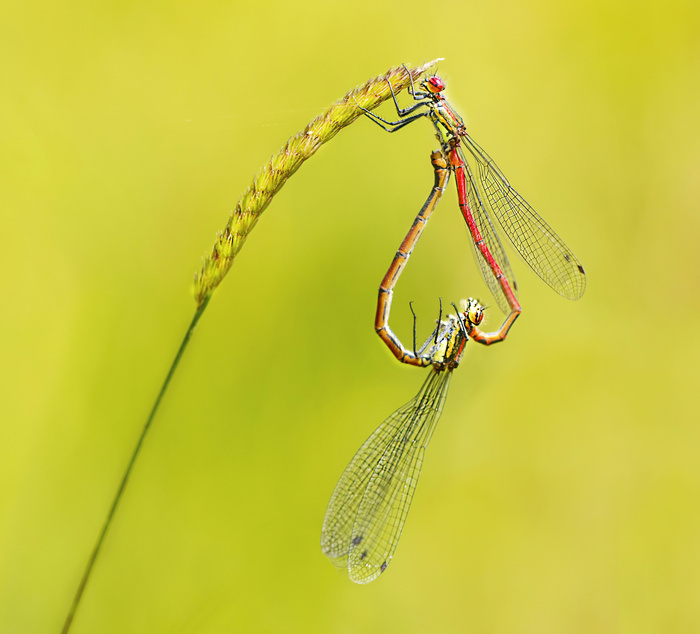
Canon 7D MK2 DSLR
Canon 100mm f2.8 Macro Lens
Canon 25mm Extension Tube
Handheld manual focus
I decided to pack in then because it was now late afternoon and the heat was becoming debilitating. When I got home and after a cool shower I still felt overheated so I forced myself to drink some cans of ice cold cider in the shade in my garden – it’s tough I know but somebodies got to do it!
I was sat on my walk stool on the edge of the above mentioned small stream watching Large Red Damselflies going about their business. I was wearing shorts and with the cooling water running over my wellington clad feet I felt very contented. However, the sun was still fierce and unrelenting in a cloudless sky and I was really feeling it through my wide brimmed hat. A woman walker passed by about fifty yards away and stopped to look at me, seemingly amused by this strange man sat on a stool in a stream wearing shorts and wellingtons - nevertheless I was prepared to wager my feet were cooler than hers!
As I looked at a few stems of Rye grass on the stream’s edge I could see a male and female Large Red Damselfly mating. The grass stem was in isolation with no ‘clutter’ just a mellow pastel coloured background. People who read this blog know I like a smooth background, it’s just as important as the subject for me. I was using a 100mm macro lens with an extension tube on my Canon 7D2 and handholding this kit allowed me to get in quite close - if the insects allowed! Fortunately for me they were ‘preoccupied’ and I got to within a few inches of them, and when the grass stem stopped swaying in the very slight stream-side breeze I fired off a few shots. I backed off then and checked the images on the camera and they looked Ok.
Notice the classic inverted heart shape mating posture which is typical of this order of insects.
The male clasps the female behind her head and she then lifts her abdomen up so that the end segment which contains her unfertilized eggs comes into contact with the males reproductive gland and her eggs are then fertilized. She then later uses her ovipositor to lay the eggs back into typically a stream or pond, thereby starting the whole life cycle over again.
(The only sad thing is when we see these beautiful creatures flying around enriching our lives they are at the very end of their life and will die soon after. These little wisps of transient beauty last for as little as a couple of weeks).
Canon 7D MK2 DSLR
Canon 100mm f2.8 Macro Lens
Canon 25mm Extension Tube
Handheld manual focus
I decided to pack in then because it was now late afternoon and the heat was becoming debilitating. When I got home and after a cool shower I still felt overheated so I forced myself to drink some cans of ice cold cider in the shade in my garden – it’s tough I know but somebodies got to do it!
Local Wildflower Meadows.
11th July 2021
11th July 2021
At last we are having the odd warm spell of weather and this has encouraged the wild flowers in the meadows that border Llangors Lake to flourish. There are large numbers of Orchids, (Common Spotted), in these meadows along with a huge growth of Meadow Buttercups.
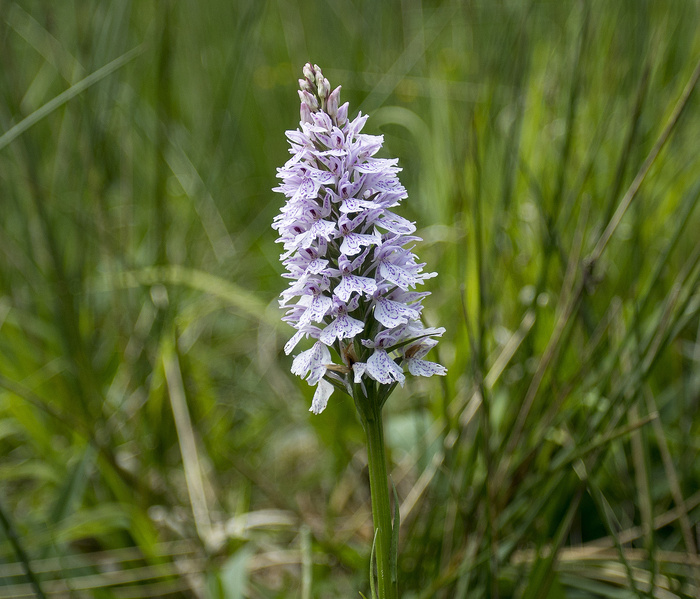
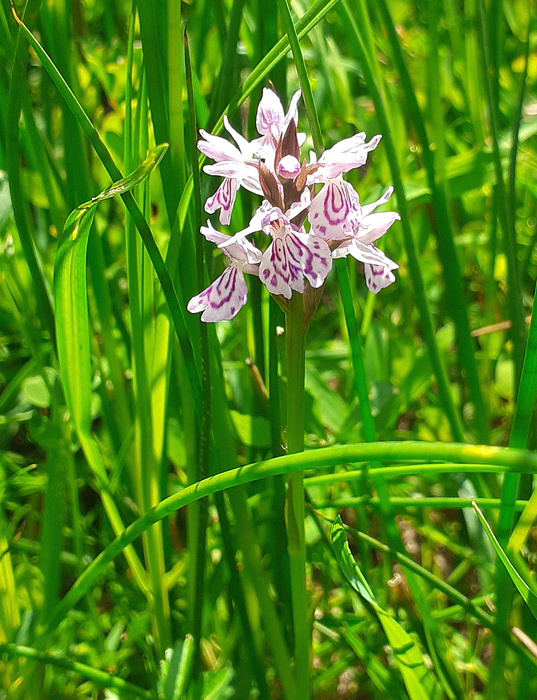
It’s been a marvellous year for Buttercups), and everywhere seems to be yellow with these lovely flowers. However, in one particular location where Globe Flowers (a member of the Buttercup family) grow annually.
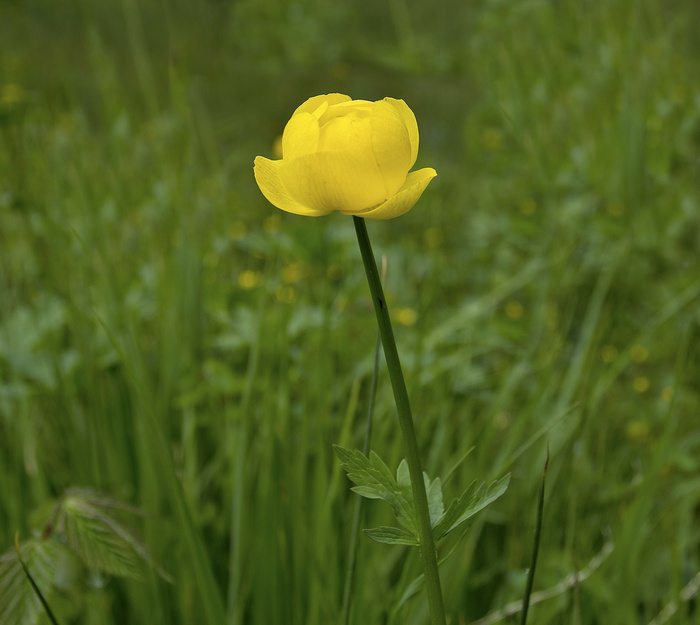
There is a disappointing display – Odd!
In the Llangasty meadows there are also Greater Knapweed, and just one or two examples of Ragged Robin.
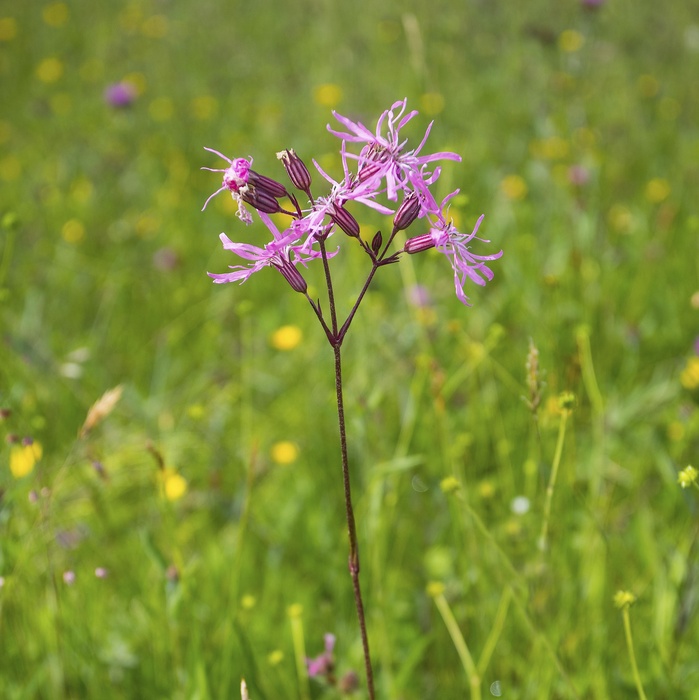
A particular favourite of mine – I just like the name!
I wondered along these meadows early in the morning this week just after sunrise with my landscape lens and took a frame or two because these lovely meadow scenes are few and far between in this area. I got down low because I wanted to frame a tree which is at the top of the meadow on the horizon which I thought added to the scene.
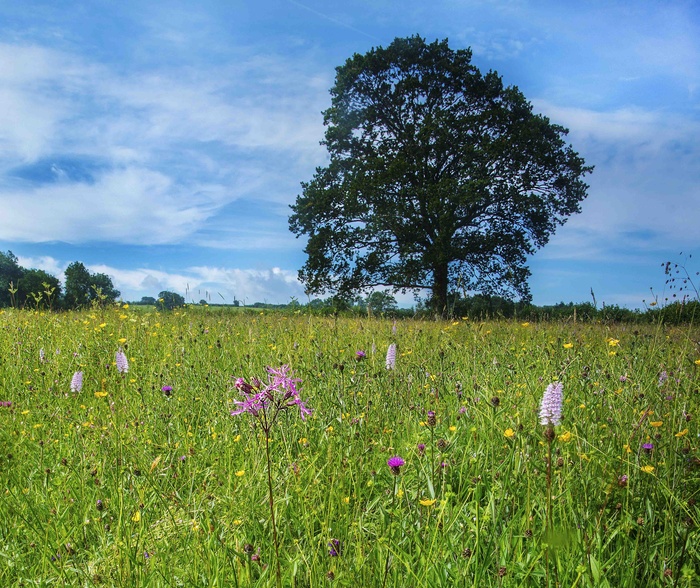
However, in doing this I did get a few insect bites, but that’s all part of the fun!
I have also seen a few other Orchids around during these past weeks.
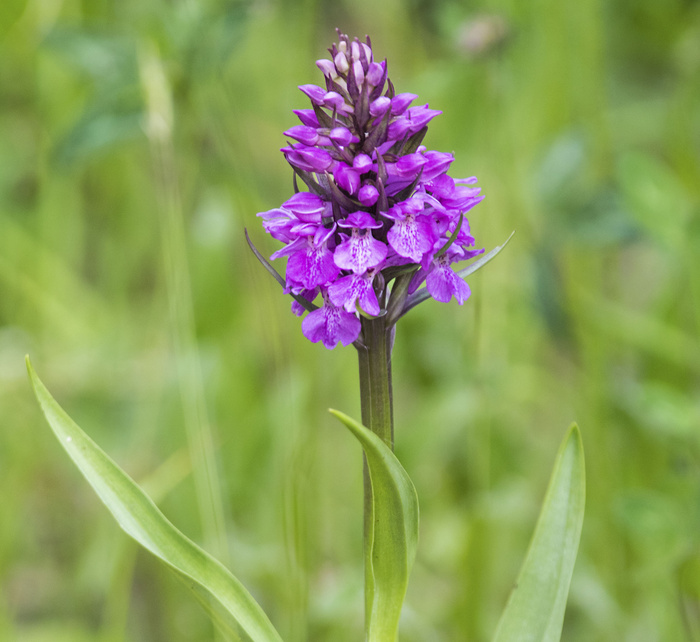
Southern Marsh Orchid.
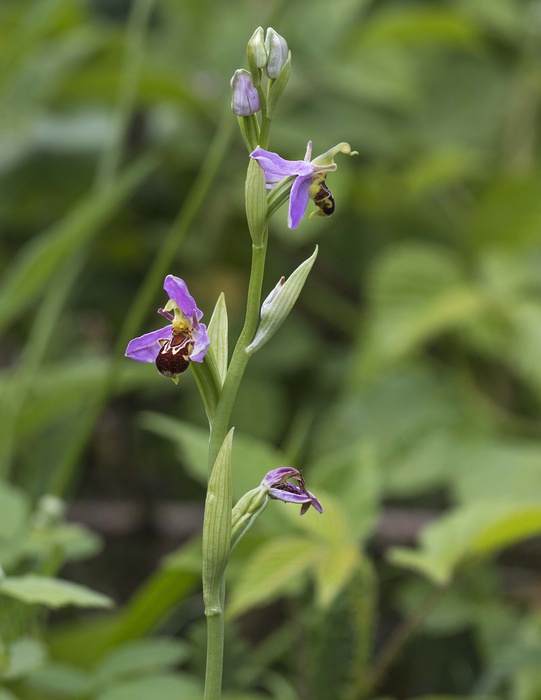
Bee Orchid.
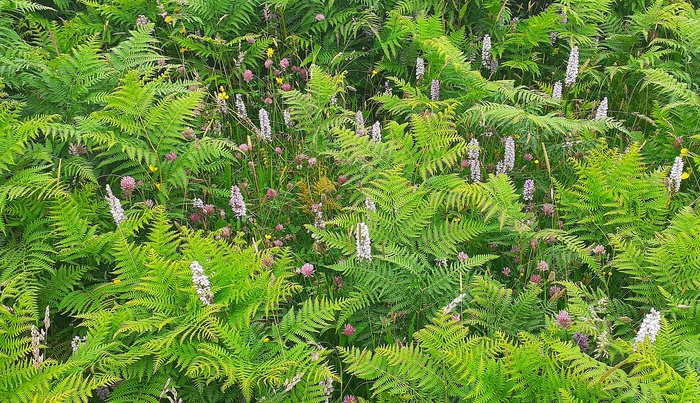
Common Spotted Orchids competing with Bracken for light and space.
The areas that support these and other wild flowers must be preserved, and the irresponsible mowing and cutting down of roadside verges and other habitats by local councils and other bodies should be stopped by legislation.
It’s been a marvellous year for Buttercups), and everywhere seems to be yellow with these lovely flowers. However, in one particular location where Globe Flowers (a member of the Buttercup family) grow annually.
There is a disappointing display – Odd!
In the Llangasty meadows there are also Greater Knapweed, and just one or two examples of Ragged Robin.
A particular favourite of mine – I just like the name!
I wondered along these meadows early in the morning this week just after sunrise with my landscape lens and took a frame or two because these lovely meadow scenes are few and far between in this area. I got down low because I wanted to frame a tree which is at the top of the meadow on the horizon which I thought added to the scene.
However, in doing this I did get a few insect bites, but that’s all part of the fun!
I have also seen a few other Orchids around during these past weeks.
Southern Marsh Orchid.
Bee Orchid.
Common Spotted Orchids competing with Bracken for light and space.
The areas that support these and other wild flowers must be preserved, and the irresponsible mowing and cutting down of roadside verges and other habitats by local councils and other bodies should be stopped by legislation.
Sedge Warblers Late Fledging.
03rd July 2021
03rd July 2021
Walking alongside the reed beds and associated vegetation at Llangors Lake yesterday in glorious sunshine it was a pleasure to see the birds busily playing catch-up with their breeding activity. This breeding season is at least three weeks later than last year because of the dreadful spring weather we endured here in the ‘Beacons’. There is still a dearth of Butterflies and Dragonflies on the wing, but things should hopefully pick up this month with a bit of warmer weather. I was watching a few pairs of Sedge Warblers bringing a large variety of food back to their nests including, Damselflies, of which there are now many.
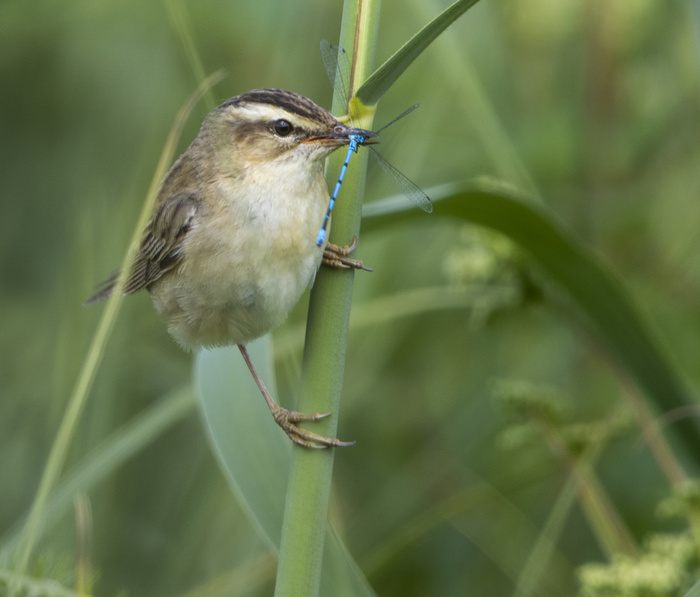
Crane Flies, Caterpillars, Spiders and many more insects that were unidentifiable to me. These birds are not as closely associated to reeds as the Reed Warbler, obviously as the name suggests, and often nest in the low vegetation which borders these reed beds. I was watching from a distance and was able to get a few frames as they hunted for food. It is always an advantage to use a big lens such as the Canon 600 f4 prime with a 1.4 tele converter and a crop sensor camera like the 7D ii which gives a focal length of 1344mm @f5.6. This enables a photographer to stand well back from the birds while still getting a reasonable quality image.
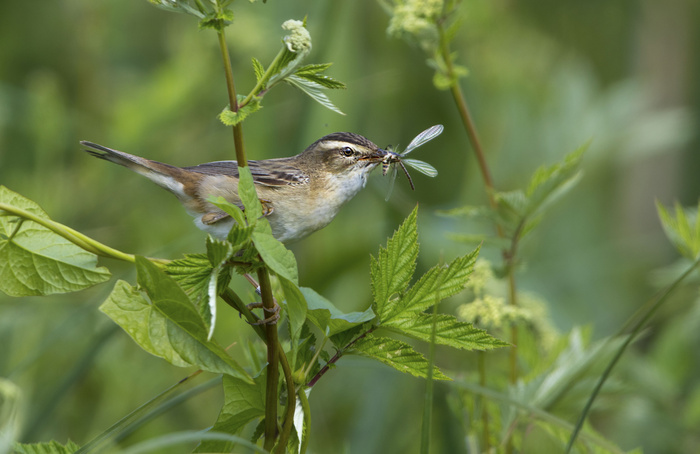
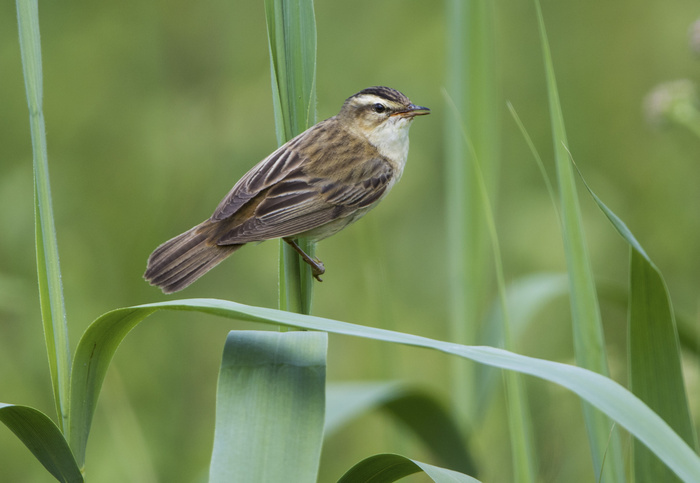
Crane Flies, Caterpillars, Spiders and many more insects that were unidentifiable to me. These birds are not as closely associated to reeds as the Reed Warbler, obviously as the name suggests, and often nest in the low vegetation which borders these reed beds. I was watching from a distance and was able to get a few frames as they hunted for food. It is always an advantage to use a big lens such as the Canon 600 f4 prime with a 1.4 tele converter and a crop sensor camera like the 7D ii which gives a focal length of 1344mm @f5.6. This enables a photographer to stand well back from the birds while still getting a reasonable quality image.
I thought it was all over – but it certainly wasn’t!!
09th June 2021
09th June 2021
Personally speaking it has been a particularly disappointing spring for Cuckoos, the best Cuckoo month in the Brecon Beacons is undoubtedly May and we all know what happened to the weather then! All my best Cuckoo sites were Cuckoo-less, if that’s how you word it. I visited all these hitherto productive habitats a number of times without hearing any calling birds and if Cuckoos are present in May anywhere then they will be calling. It was really cold and grey with frequent showers at these places, but that won’t necessarily put these birds off, they are tougher than people realise. However, the straw that broke the camel’s back was that there was no evidence of the Cuckoo’s primary food – hairy caterpillars. I put the lack of caterpillars down to the aforementioned inclement weather that pervaded during May – record rainfall and the distinct lack of warmth.
I have been driving around the local patch over the last two weeks and while passing through an area where I don’t normally hear Cuckoos I picked up what I thought was a female calling, the females have a soft and delightful ‘bubbling’ call which most people are not familiar with because unlike the male it is not far carrying. I parked up and listened and a repeat call confirmed it, it was fortunate that I heard it because the females don’t call repeatedly like the males. However, that was the easy part because after I pinpointed where she was calling from, a dense willow tree, she was very reluctant to fly from there into the open. I drove away after an hour of no sightings but returned quietly a few days later and surprised her off the grass near the same willow tree where she was feeding on, presumably caterpillars, of which thanks to the now much warmer weather there is a much greater abundance – it’s not rocket science. Frustratingly she once again became ensconced in her willow tree with very little movement and if to frustrate me even further started to call again, which now seemed like mockery. I drove away feeling like an actor in a scene from the film Groundhog Day.
Fast forward to yesterday and the same previous scenario duly played out, so I drove on after a short while to another site to look for other birds, it’s not all about Cuckoos - says the man who can’t photograph one! On my return journey passing through the same site on my way home, I couldn’t believe that I could now hear a male Cuckoo calling, where had he been when I needed him? I drove on and parked on a piece of rough ground off the road. I quickly set my tripod and lens up and unbelievably and without wishing it to sound like a scene from a film again, four Cuckoos were now suddenly flying around me, with one male astonishingly trying to land on my head or lens, I couldn’t tell which because I literally had to drop to the floor to avoid him. The reason for this frenzied behaviour was obviously the female who remarkably had now left the sanctuary of her willow tree and was being pursued by three males. I have always maintained in many previous blogs that this situation is where the photographer has the advantage over Cuckoos, insomuch as this mating frenzy leads to very unpredictable behaviour indeed, and they will frequently perch anywhere, which really is totally out of character for these very street wise birds.
Cuckoos always like isolated trees and bushes and in particular dead ones where they can survey without obstruction the surrounding area. With this in mind I could see a dead hawthorn tree just up the field so I hurried along keeping low behind a dry stone perimeter wall, but already I could see a male perched in this tree, this was disappointing because they will always fly away at the merest sight of people and he was also being harassed by the inevitable Meadow Pipits. Surprisingly he let me get reasonably close and I was able to take a couple of shots.
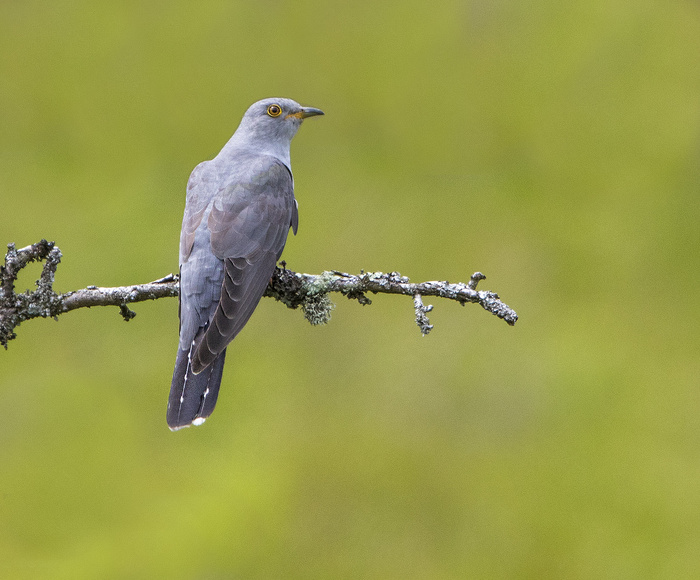
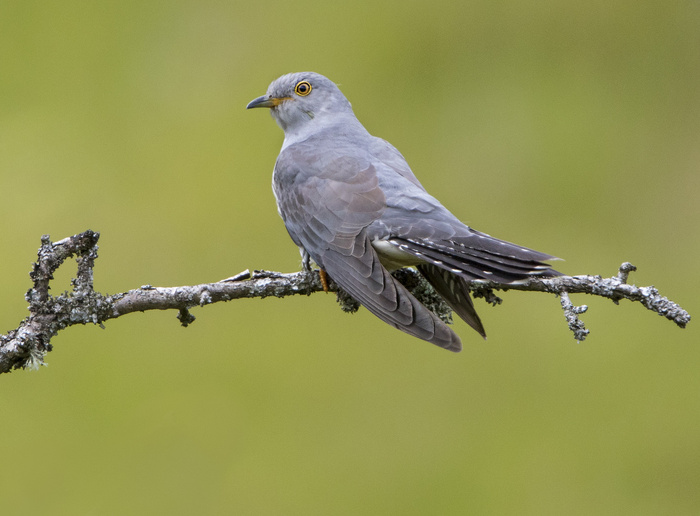
He then looked behind at me before flying off.
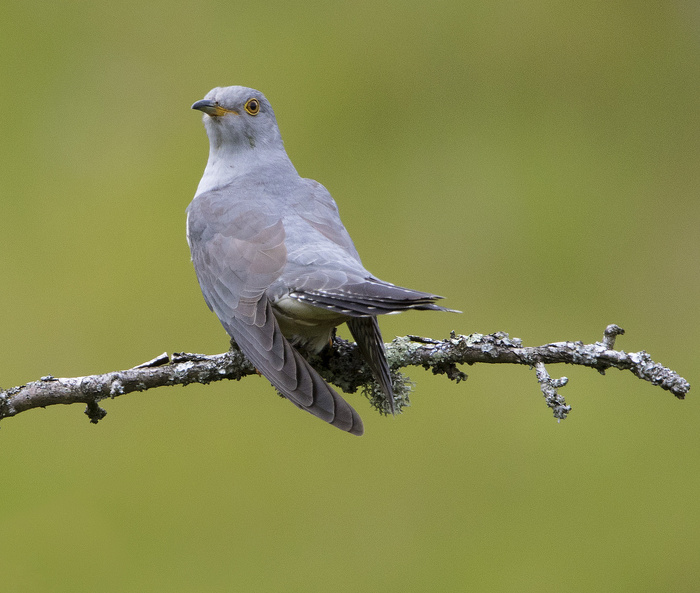
They rarely stay long in this situation.
I moved along and set up and crouched down behind the wall opposite this tree, a bit closer this time, and waited. The hullabaloo continued down field but I sat tight, this is always the best policy, it’s no good chasing around. A Cuckoo came flying up the field and I couldn’t tell if it was male or female until it perched right in the tree and I could now see it was the previously elusive female – at last!
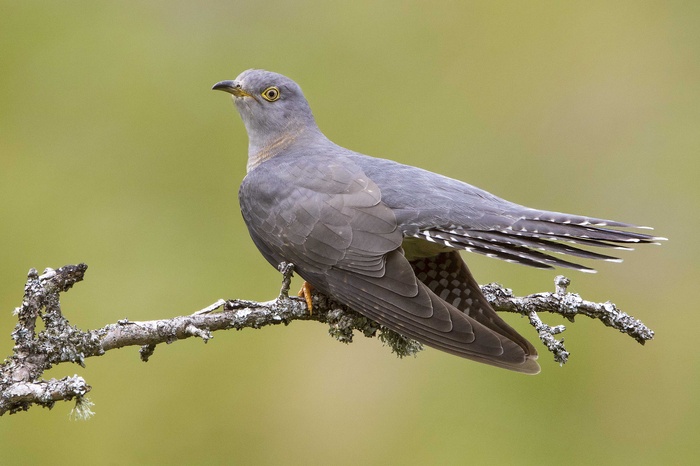
Good things come to those who wait and I had great pleasure in capturing an image of her given her previous shyness. A seemingly lost cause with the shy female had now turned into a photographic opportunity – you never know because it’s not over until the slightly overweight lady sings!
I have been driving around the local patch over the last two weeks and while passing through an area where I don’t normally hear Cuckoos I picked up what I thought was a female calling, the females have a soft and delightful ‘bubbling’ call which most people are not familiar with because unlike the male it is not far carrying. I parked up and listened and a repeat call confirmed it, it was fortunate that I heard it because the females don’t call repeatedly like the males. However, that was the easy part because after I pinpointed where she was calling from, a dense willow tree, she was very reluctant to fly from there into the open. I drove away after an hour of no sightings but returned quietly a few days later and surprised her off the grass near the same willow tree where she was feeding on, presumably caterpillars, of which thanks to the now much warmer weather there is a much greater abundance – it’s not rocket science. Frustratingly she once again became ensconced in her willow tree with very little movement and if to frustrate me even further started to call again, which now seemed like mockery. I drove away feeling like an actor in a scene from the film Groundhog Day.
Fast forward to yesterday and the same previous scenario duly played out, so I drove on after a short while to another site to look for other birds, it’s not all about Cuckoos - says the man who can’t photograph one! On my return journey passing through the same site on my way home, I couldn’t believe that I could now hear a male Cuckoo calling, where had he been when I needed him? I drove on and parked on a piece of rough ground off the road. I quickly set my tripod and lens up and unbelievably and without wishing it to sound like a scene from a film again, four Cuckoos were now suddenly flying around me, with one male astonishingly trying to land on my head or lens, I couldn’t tell which because I literally had to drop to the floor to avoid him. The reason for this frenzied behaviour was obviously the female who remarkably had now left the sanctuary of her willow tree and was being pursued by three males. I have always maintained in many previous blogs that this situation is where the photographer has the advantage over Cuckoos, insomuch as this mating frenzy leads to very unpredictable behaviour indeed, and they will frequently perch anywhere, which really is totally out of character for these very street wise birds.
Cuckoos always like isolated trees and bushes and in particular dead ones where they can survey without obstruction the surrounding area. With this in mind I could see a dead hawthorn tree just up the field so I hurried along keeping low behind a dry stone perimeter wall, but already I could see a male perched in this tree, this was disappointing because they will always fly away at the merest sight of people and he was also being harassed by the inevitable Meadow Pipits. Surprisingly he let me get reasonably close and I was able to take a couple of shots.
He then looked behind at me before flying off.
They rarely stay long in this situation.
I moved along and set up and crouched down behind the wall opposite this tree, a bit closer this time, and waited. The hullabaloo continued down field but I sat tight, this is always the best policy, it’s no good chasing around. A Cuckoo came flying up the field and I couldn’t tell if it was male or female until it perched right in the tree and I could now see it was the previously elusive female – at last!
Good things come to those who wait and I had great pleasure in capturing an image of her given her previous shyness. A seemingly lost cause with the shy female had now turned into a photographic opportunity – you never know because it’s not over until the slightly overweight lady sings!
The Garden Warbler - a top singer.
25th May 2021
25th May 2021
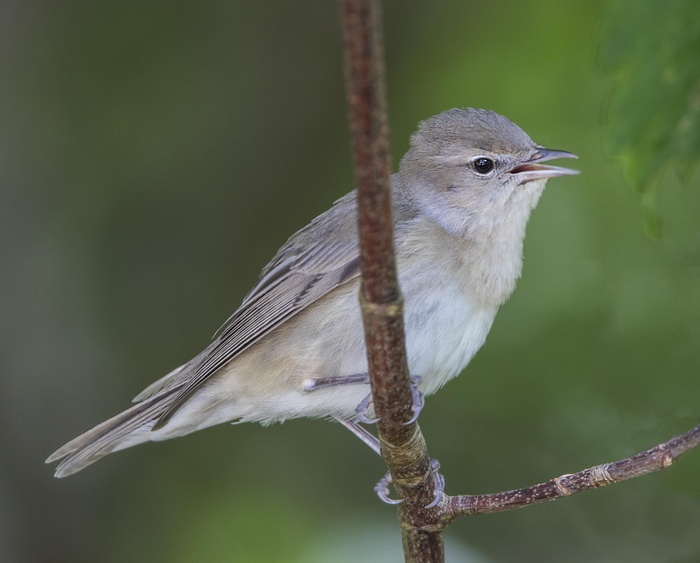
The Garden Warbler is one of the top singers that arrive in the UK in spring. However, getting good views of this songster is another matter. They can be particularly difficult to see out in the open, they dart around a dense copse or line of trees singing continually but not keeping still for too long. They have a gentle appearance with few prominent features to help with identification. The two salient ID points are the white eye ring and grey nape. The best way to locate them is by their song, but even this to the untrained ear can be difficult, being easily confused with the Blackcap, another top songster. However, with practice the Blackcap is flutier with more mellow notes and in addition the Garden Warbler’s song usually lasts longer than the Blackcap’s and is quicker and more staccato like. Early this morning I was walking near a small woodland when I could hear at least two Garden Warblers singing vociferously and as I got closer I could see that there were two birds having a singing competition announcing their territories. One bird was very close so I set up and waited in hope for a clear shot and after many failed attempts I finally located it singing from a branch out in the open.
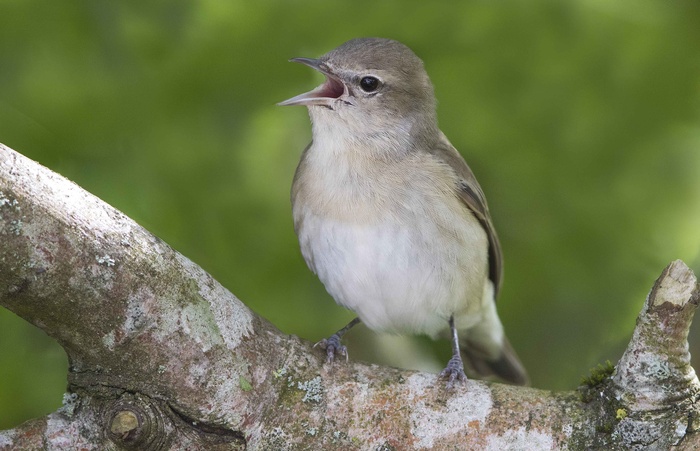
I managed a few more quick shots from different perches before it went quiet.
In the image below you can clearly see the white eye ring and grey nape patch.
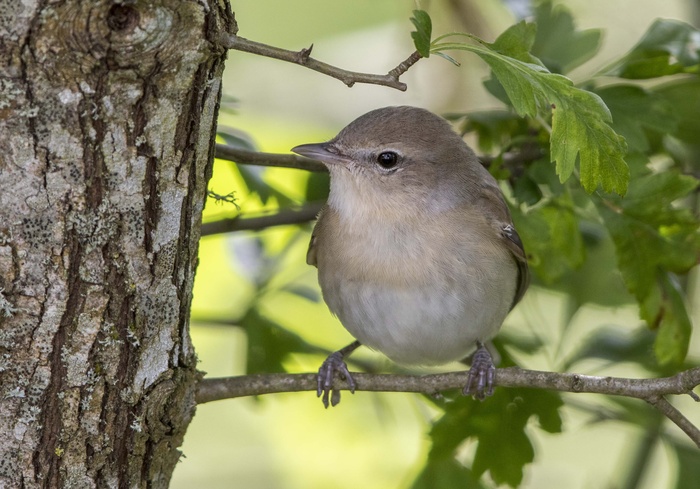
Unfortunately but predictably the rain showers started to fall again so I retreated back to the car and called it a day - Oh for some settled weather and a bit of warmth.
I managed a few more quick shots from different perches before it went quiet.
In the image below you can clearly see the white eye ring and grey nape patch.
Unfortunately but predictably the rain showers started to fall again so I retreated back to the car and called it a day - Oh for some settled weather and a bit of warmth.
The Monsoon Continues.
21st May 2021
21st May 2021
This appalling spell of stormy weather is still persisting here in the Brecon Beacons. Very strong winds and near record rainfall is ruining my favourite time of year. The apple blossom on the trees in our garden is getting battered and waterlogged and there is a marked lack of pollinators, in particular bees. It doesn’t look promising for the apple crop this autumn. Our runner beans which were planted late because of heavy frosts are hardly moving, suffering from a distinct lack of sunshine. Butterflies are not on the wing, we’ve only seen a few Orange Tips, a solitary Green Veined White and a battered Peacock - very poor for late May. I have only heard two distant Cuckoos and there are no sightings at two of my local sites – it’s quite depressing really. Thankfully all the usual spring migrants are here, enduring the weather and yesterday a few Hobbies were reported from a local lake.
We noticed a marked increase in Drinker Moth caterpillars in the roadside vegetation earlier this week.
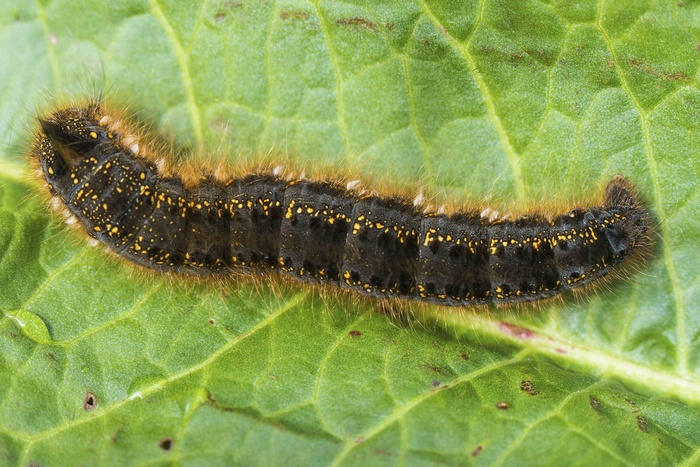
Image below taken with - (Canon 7Dii and Canon EF100 f2.8 is Macro Lens with Yongnuo twin macro flash).
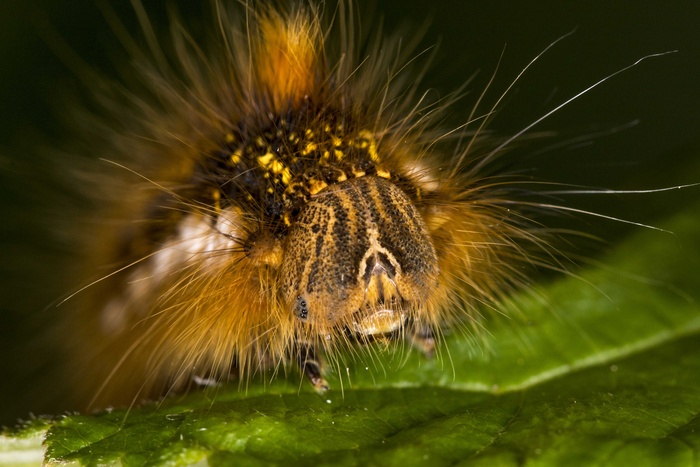
This hairy caterpillar is one of the Cuckoo’s favourite foods.
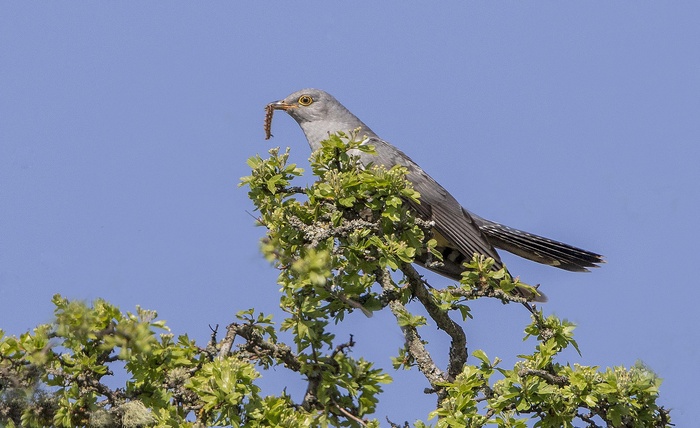
So I hope this is a good omen. The weather forecast is tentatively hinting at drier weather for next week so I’m hoping that will entice a few Cuckoos to my upland sites, nothing is guaranteed in nature but I’m keeping my fingers crossed.
We noticed a marked increase in Drinker Moth caterpillars in the roadside vegetation earlier this week.
Image below taken with - (Canon 7Dii and Canon EF100 f2.8 is Macro Lens with Yongnuo twin macro flash).
This hairy caterpillar is one of the Cuckoo’s favourite foods.
So I hope this is a good omen. The weather forecast is tentatively hinting at drier weather for next week so I’m hoping that will entice a few Cuckoos to my upland sites, nothing is guaranteed in nature but I’m keeping my fingers crossed.
Yellowhammer - a rare visitor to our garden.
07th May 2021
07th May 2021
Over the last week there has been a Yellowhammer perched in a hawthorn hedge just outside our garden singing all day long. He’s at it from dawn to dusk singing for a mate, but I don’t fancy his chances much because Yellowhammers are an uncommon bird where we live. Nevertheless it’s always nice to hear his well-documented song – ‘A little bit of bread and no cheese’. However, yesterday he decided to fly over the hedge into the garden and I was lucky enough to be sat in my permanent bird hide at the time.
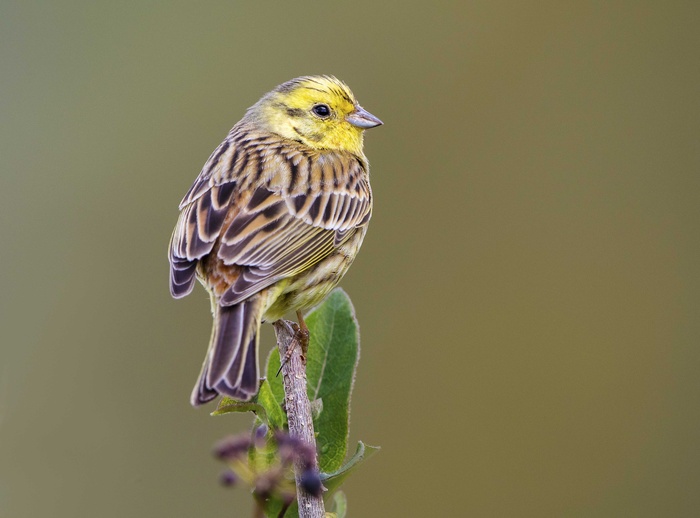
It’s a very rare occurrence for this to happen, probably only three times in twenty odd years.
He perched in various positions - in some ivy.
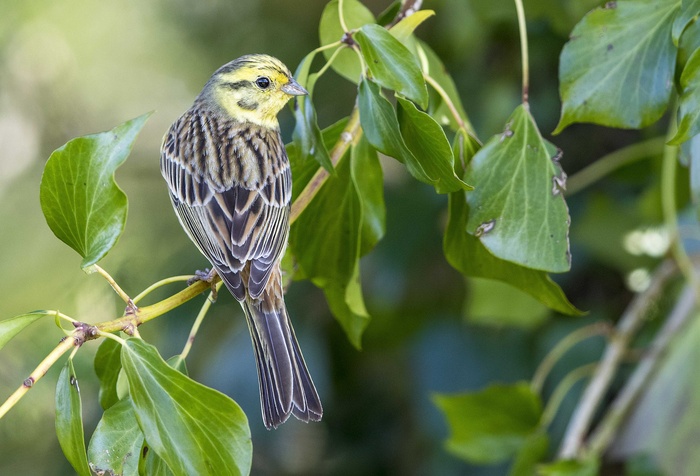
And looking for food among the grass and flowers.
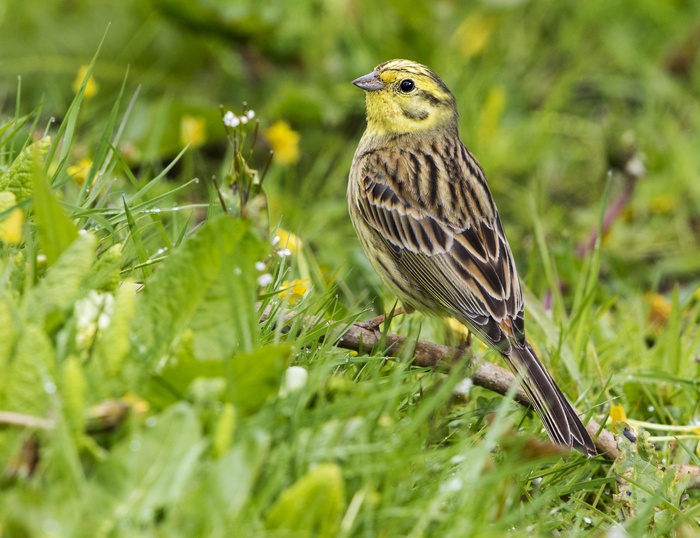
I also took a quick video of him singing,
https://youtu.be/JFUAsfE_gr4
They are such a nice little bird and are welcome anytime.
It’s a very rare occurrence for this to happen, probably only three times in twenty odd years.
He perched in various positions - in some ivy.
And looking for food among the grass and flowers.
I also took a quick video of him singing,
https://youtu.be/JFUAsfE_gr4
They are such a nice little bird and are welcome anytime.
A Spring Morning around Llangors Lake.
02nd May 2021
02nd May 2021
Yesterday I was out walking early, strolling around the trees and bushes which surround Llangors Lake which is about three miles from where I live. I was the only one around at this time which is what I wanted – peace and quiet, two of my favourite things. This area is populated with Blackthorn, Hawthorn, Hazel, Birch etc. and it is a magnet for migrating birds. This time of year there are typical birds of this environment - Chiffchaffs, Willow Warblers, Blackcaps, Redstarts, Blackbirds, Song Thrushes etc. The reed beds which this environment backs onto is also full of Reed and Sedge Warblers with a smattering of Cetti’s Warblers which also frequent the bushes. As I walked along I could hear the distant scratchy song of a Sedge Warbler, which I thought was coming from the reed beds but as I turned a corner here he was in a Blackthorn thicket singing for all he was worth.
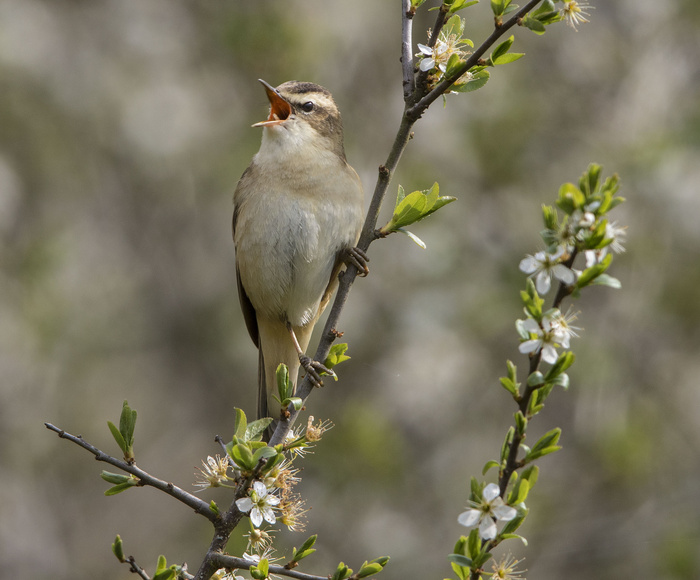
He paid little regard to me he was too preoccupied with finding a mate and I gratefully accepted the image that was on offer. I was looking for Garden Warbler and I could hear one or two but couldn’t get any good views which is typical with these birds. However, as I was making my way back to my vehicle I could hear a song coming from a bramble patch and as I approached closer I could hear a Common Whitethroat. These are another migrant attracted to this type of environment, but these birds can be really awkward to pin down – they like to skulk. I watched for about twenty minutes and finally I could see a dead reed stem moving in the middle of the bramble patch and then for a couple of seconds it appeared half way up the stem and I shot it immediately.
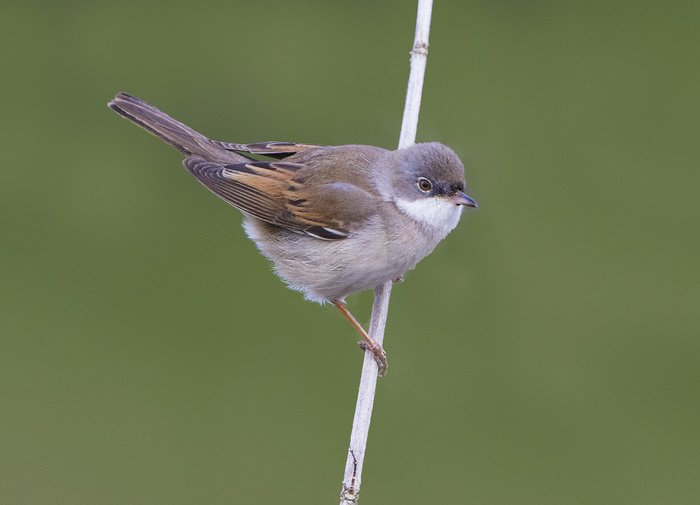
You have no time for messing around - and this was my one and only clear view of the bird. My original target – Garden Warbler didn’t appear, but there were two unexpected alternatives, that’s how it goes sometimes.
He paid little regard to me he was too preoccupied with finding a mate and I gratefully accepted the image that was on offer. I was looking for Garden Warbler and I could hear one or two but couldn’t get any good views which is typical with these birds. However, as I was making my way back to my vehicle I could hear a song coming from a bramble patch and as I approached closer I could hear a Common Whitethroat. These are another migrant attracted to this type of environment, but these birds can be really awkward to pin down – they like to skulk. I watched for about twenty minutes and finally I could see a dead reed stem moving in the middle of the bramble patch and then for a couple of seconds it appeared half way up the stem and I shot it immediately.
You have no time for messing around - and this was my one and only clear view of the bird. My original target – Garden Warbler didn’t appear, but there were two unexpected alternatives, that’s how it goes sometimes.
Death on the bird feeders.
01st May 2021
01st May 2021
The male Sparrowhawk that visits our garden is a beautiful bird, that is not a matter for conjecture, but behind those good looks he is a ruthless and consummate killer - of that there can be no doubt.
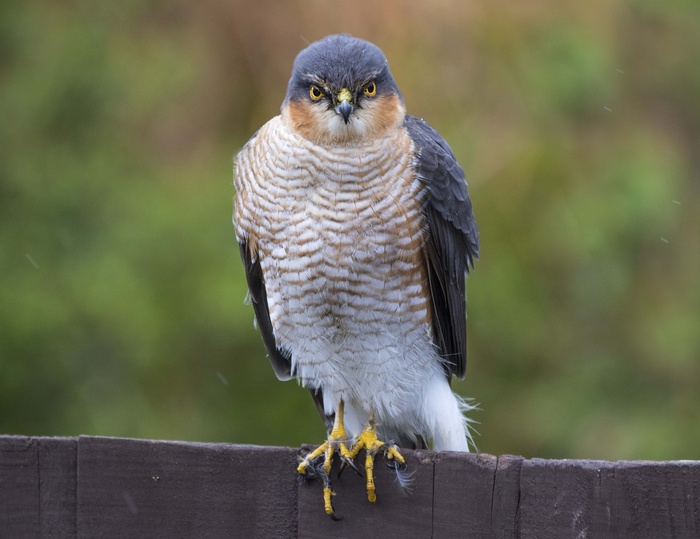
Yesterday I witnessed this first hand – a few Siskins were coming to feed on a sunflower feeder in my front garden and I was watching this pleasant scene through my kitchen window. Suddenly and seemingly out of nowhere the Sparrowhawk flashed over the wooden garden fence and snatched one of the Siskins off the feeder before they realised what was happening – absolutely no warning or time to react whatsoever. The Siskin was killed in a fraction of a second and that was the only mitigating factor in the whole affair.
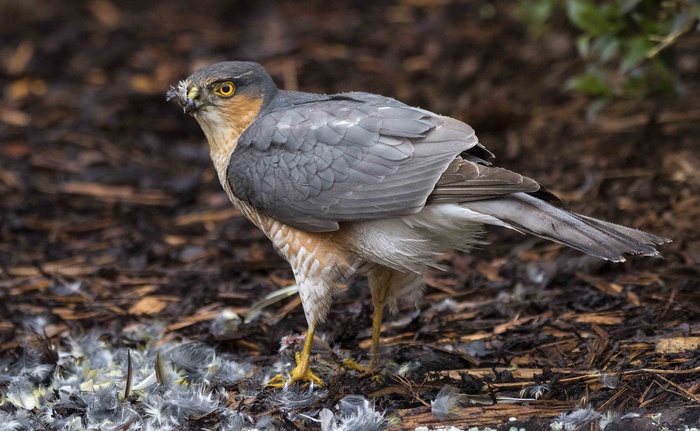
The Sparrowhawk’s modus operandi is to fly along the lane below the hedges so he can’t be seen and then at the prime time for him, swoop up over the garden fence and if there are any birds around he has a chance of snatching one of them. There is a low hit rate for this method because obviously if there are no birds on the feeder then it fails. If this type of attack ends in failure he next flies round and round the bushes the birds are hiding in trying to spook them out. However, they know this and they will not move and he then gives up. I don’t like the fact that he kills these and other small birds, but that’s the scheme of things and part of the cycle of both their lives.
Yesterday I witnessed this first hand – a few Siskins were coming to feed on a sunflower feeder in my front garden and I was watching this pleasant scene through my kitchen window. Suddenly and seemingly out of nowhere the Sparrowhawk flashed over the wooden garden fence and snatched one of the Siskins off the feeder before they realised what was happening – absolutely no warning or time to react whatsoever. The Siskin was killed in a fraction of a second and that was the only mitigating factor in the whole affair.
The Sparrowhawk’s modus operandi is to fly along the lane below the hedges so he can’t be seen and then at the prime time for him, swoop up over the garden fence and if there are any birds around he has a chance of snatching one of them. There is a low hit rate for this method because obviously if there are no birds on the feeder then it fails. If this type of attack ends in failure he next flies round and round the bushes the birds are hiding in trying to spook them out. However, they know this and they will not move and he then gives up. I don’t like the fact that he kills these and other small birds, but that’s the scheme of things and part of the cycle of both their lives.
Pied Flycatchers on a Spring Morning.
20th April 2021
20th April 2021
What a glorious spell of weather we are having in the Brecon Beacons now, the cold north easterly winds have gone and although the early mornings are still a little frosty, once the sun comes up it is absolutely beautiful. Susan and I were out early this morning travelling up to mid – Wales to the lovely RSPB Dinas reserve below the Llyn Brianne dam up the valley from the market town of Llandovery. This reserve is well known for its Pied Flycatchers which readily take to the many nest boxes that are erected there. If you want close-ups of these lovely little birds this is the place to go NOW! They are busy in and out of the nest boxes and are very confident around people. You must keep to the board walks in this reserve to avoid any disturbance, but that is fine because you can get superb views of the birds from there anyway. There is also going to be a fine showing of Bluebells there this spring going by the leaves showing through, it should be spectacular in a few weeks’ time. What a lovely place Dinas is, it was so tranquil there this morning with the gentle little stream bubbling through the undergrowth and the flycatchers singing and flitting through the trees above, what a pleasant way to spend a spring morning.
Male.

Female.
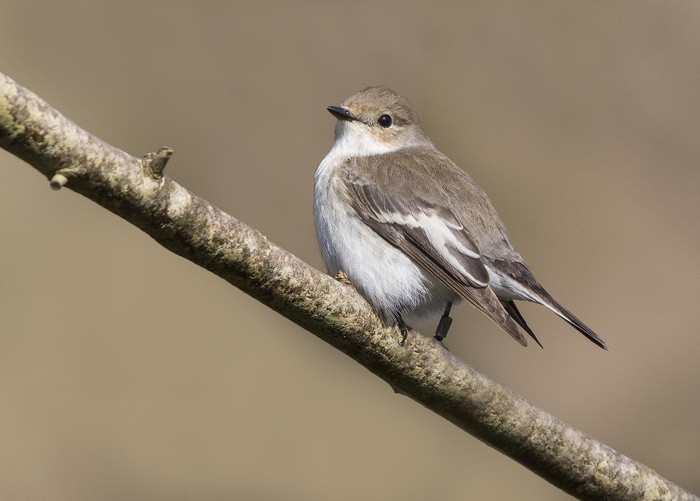
Male.
Female.
King Alfred's Cakes.
17th April 2021
17th April 2021
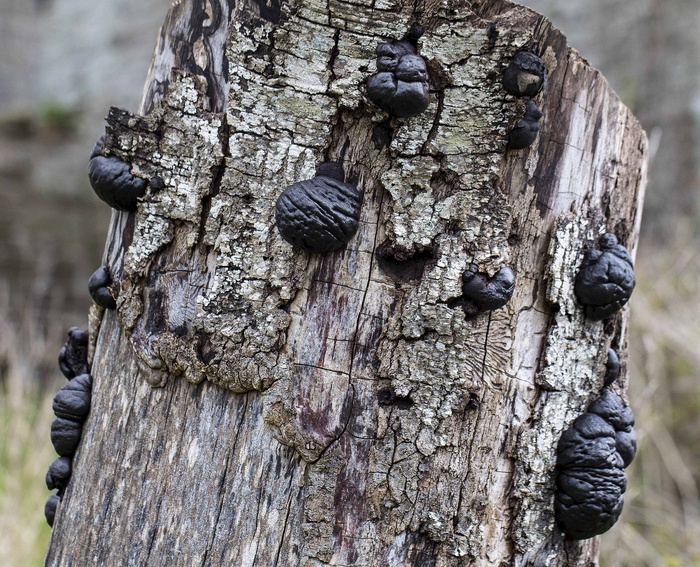
Susan and I came across a fine show of King Alfred's Cakes fungi on an ash stump while out walking this week. Apart from the well-known legend where this fungus got its name, it can also be used as kindling to start fires. When dried out it will ignite from typically a flint spark and will continue to glow for a long time. Archaeological excavations have shown that it was used to start fires by people living over 7000 years ago and may have even been used in prehistoric times. It is thought that it was used to transport fire when people moved to a different location - an important survival tool!!
A difficult situation.
05th April 2021
05th April 2021
A few weeks ago during this horrible pandemic a rare bird was found by a local birder. It was quite difficult for that person to decide whether or not to release any information about the sighting. A lot of people don’t like so called suppression and if as a birder/photographer you have previously reacted and subsequently benefited from other people’s findings, it can understandably be quite annoying when you suppress your bird sightings. However, in this very dangerous situation we find ourselves in there must be suppression occurring all over the country, and rightly so in my opinion because there are always some people who will break the current travel restrictions to see these birds. Consequently if people became ill or worse as a result of these activities then the person who had released the information could find themselves in a very unpleasant personal situation. The bird found was a Little Bunting, not a mega by any means and an annual visitor to the UK, albeit in very small numbers, nevertheless a bird a number of people would like to see. It was only a short distance from where I live and was, (at the time, within the current welsh assembly guidelines for travel), however, I was still a little reticent about going to see it. The finder of the bird acted very responsibly in this matter as did the other very small number of birders, (which included Susan and me), who lived locally enough to see it. The whole viewing experience of the bird for those involved was over very quickly while keeping, (to use current parlance), socially distant, and no further visits were made.
Suppression is a very delicate matter; from a personnel perspective I am guilty of the suppression of various birds, Cuckoo, Barn Owl, Kingfisher etc. etc. I keep the location of these birds to myself to stop them being disturbed unnecessarily - or do I? If conversationally e.g. I found a Red Backed Shrike or some other rarity, I would immediately put the information out because I would feel morally bound to do so having previously gone to see other people’s findings. This is where it gets awkward – what is the difference between a rarity and one of the above mentioned birds I suppress? Why am I protecting a Cuckoo e.g. while exposing a Red Backed Shrike to potential harassment? The answer is, I am without doubt, acting selfishly by keeping the location of these birds to myself so I can get images for the promotion of my website. (Although the fact that these birds can be found by anybody if they put some effort in, possibly goes someway to mitigating my actions).
Perhaps the only solution would be to never react to other people’s findings and keep your own finds to yourself, you are then exempt from any logical criticism.
It's not an easy decision!
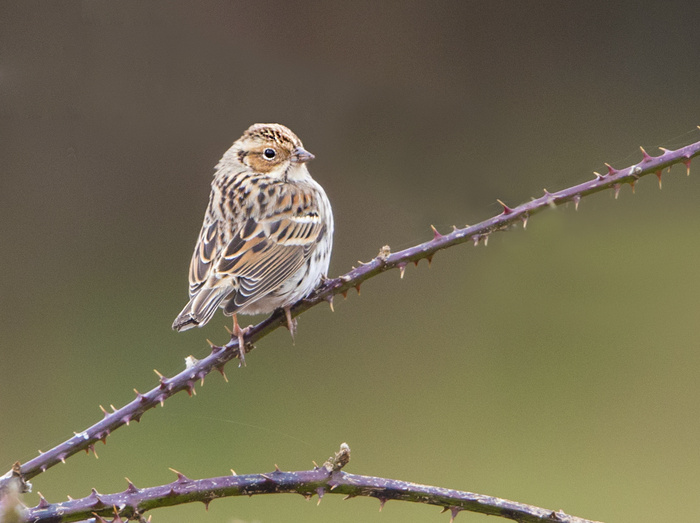
Below is a record shot of the Little Bunting.
Suppression is a very delicate matter; from a personnel perspective I am guilty of the suppression of various birds, Cuckoo, Barn Owl, Kingfisher etc. etc. I keep the location of these birds to myself to stop them being disturbed unnecessarily - or do I? If conversationally e.g. I found a Red Backed Shrike or some other rarity, I would immediately put the information out because I would feel morally bound to do so having previously gone to see other people’s findings. This is where it gets awkward – what is the difference between a rarity and one of the above mentioned birds I suppress? Why am I protecting a Cuckoo e.g. while exposing a Red Backed Shrike to potential harassment? The answer is, I am without doubt, acting selfishly by keeping the location of these birds to myself so I can get images for the promotion of my website. (Although the fact that these birds can be found by anybody if they put some effort in, possibly goes someway to mitigating my actions).
Perhaps the only solution would be to never react to other people’s findings and keep your own finds to yourself, you are then exempt from any logical criticism.
It's not an easy decision!
Below is a record shot of the Little Bunting.
Mistle and Song - two good singers.
05th April 2021
05th April 2021
Now is the time of year to see and hear Song Thrush but also Mistle Thrush. One is an established singer and is often lauded as so, the other, although not recognized as such is still a very capable vocalist. It’s easy to separate the two by identification and also by their calls. The Song Thrush’s call is a very discreet ‘Zit’ barely noticeable and largely unheard because of this. The Mistle Thrush’s call contrastingly is a very loud and prolonged rattle which is very diagnostic. However, with regard to their respective songs, I’m quite sure many people hear a Mistle Thrush singing and assume it’s a Song Thrush.
The Mistle Thrush’s song is clear and loud with quite harsh tones with sharp short notes and verses interspersed with quite long pauses, (these pauses are a good way to separate the two birds)! It’s also a little more monotonous than the Song Thrush with fewer squeaky embellishments. Nevertheless it is a very accomplished singer and to the unpractised ear could easily be mistaken for a Song Thrush.
The Song Thrush, however, has a bold announcing song which is much more varied than the Mistle Thrush, with squeaky and shrill cascading notes repeated multiple times with hardly any pauses. It’s logical therefore to assume that the difference in songs is straightforward, but it’s also easy to become complacent and to assume that it must be a Song Thrush because it's singing - but it isn’t always the case.
With regard to identification; the Mistle Thrush is a bigger bird with a longer tail and it’s also a much stronger flier than the Song Thrush.
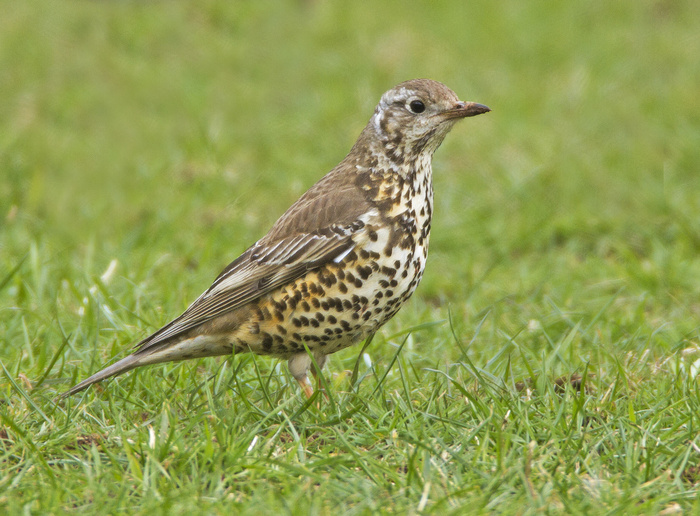
Plumage – wise it has round spotting on its belly and flanks which almost always form a diffused smudging on its upper breast. The throat has irregular spotting and it has a conspicuous pale cheeck patch.
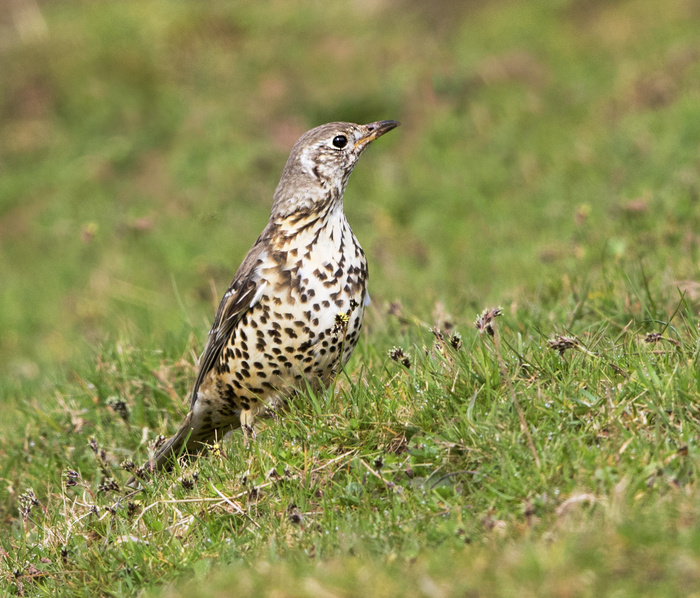
The Song Thrush is a much smaller, rounder bird with a short tail, it hops around on the ground looking for food and in flight, although fast, has a more undulating and less direct flight.
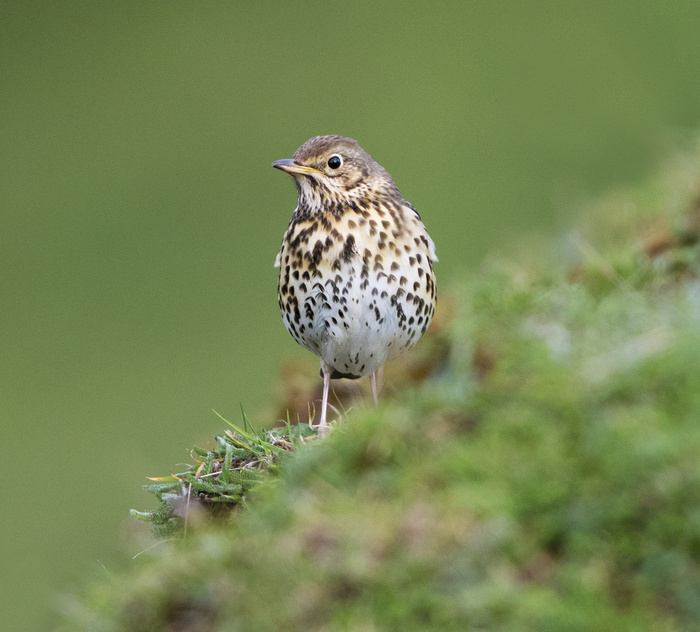
It has much more uniform ‘Arrow Head’ type markings on its belly, breast and flanks and a broad yellow / buff band on its flanks and breast. It is also much more plain brown on its back.
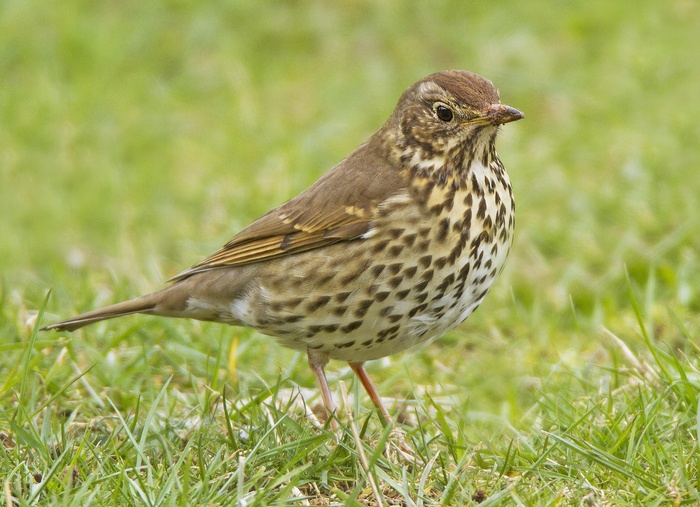
These birds although quite different when examined by song, call and plumage can still easily, without clear views, be confused in the field.
The Mistle Thrush’s song is clear and loud with quite harsh tones with sharp short notes and verses interspersed with quite long pauses, (these pauses are a good way to separate the two birds)! It’s also a little more monotonous than the Song Thrush with fewer squeaky embellishments. Nevertheless it is a very accomplished singer and to the unpractised ear could easily be mistaken for a Song Thrush.
The Song Thrush, however, has a bold announcing song which is much more varied than the Mistle Thrush, with squeaky and shrill cascading notes repeated multiple times with hardly any pauses. It’s logical therefore to assume that the difference in songs is straightforward, but it’s also easy to become complacent and to assume that it must be a Song Thrush because it's singing - but it isn’t always the case.
With regard to identification; the Mistle Thrush is a bigger bird with a longer tail and it’s also a much stronger flier than the Song Thrush.
Plumage – wise it has round spotting on its belly and flanks which almost always form a diffused smudging on its upper breast. The throat has irregular spotting and it has a conspicuous pale cheeck patch.
The Song Thrush is a much smaller, rounder bird with a short tail, it hops around on the ground looking for food and in flight, although fast, has a more undulating and less direct flight.
It has much more uniform ‘Arrow Head’ type markings on its belly, breast and flanks and a broad yellow / buff band on its flanks and breast. It is also much more plain brown on its back.
These birds although quite different when examined by song, call and plumage can still easily, without clear views, be confused in the field.
Nant Menascin.
01st April 2021
01st April 2021
There is a small but beautiful little stream named Nant Menascin that originates on the foothills of the Brecon Beacons and flows down through the pretty village of Llanfrynach. It then meanders across farmland and under a bridge on the Monmouth and Brecon canal before crossing the Usk valley to join the river of the same name just north of the village of Pencelli. Alongside the Menascin there is a SSSI named Coed Nant Menascin where many plants and trees exist in various habitats. Coed Nant translated means wooded stream or brook, the word Menascin is somewhat more difficult to translate, one possibility offered is by RJ Thomas in ‘The Names of Welsh Rivers and Streams’, suggests that it was a combination of ma-, meaning 'place, flat', and the personal name Hesgyn. Whatever it means will never be known with any confidence, that will be lost in the mists of time. Where this little jewel flows through damp habitat, the Marsh Marigold, the ‘King of Buttercups’ grows in profusion.
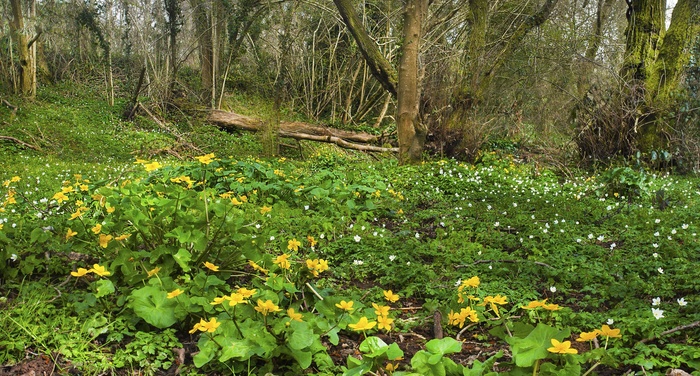
The Marigolds are interspersed with the beautiful Wood Anemone, sparkling white with a delicate pink blush, and also the Lesser Celandine that ubiquitous yellow flower of spring. It’s uplifting to be amongst all this natural beauty on a fine spring morning while the scene is embellished with the song of Chiffchaff, Willow Warbler and Blackcap.
Dippers populate the Menascin - totally at home as they forage for food and raise their young in its fast flowing crystal clear watery habitat.
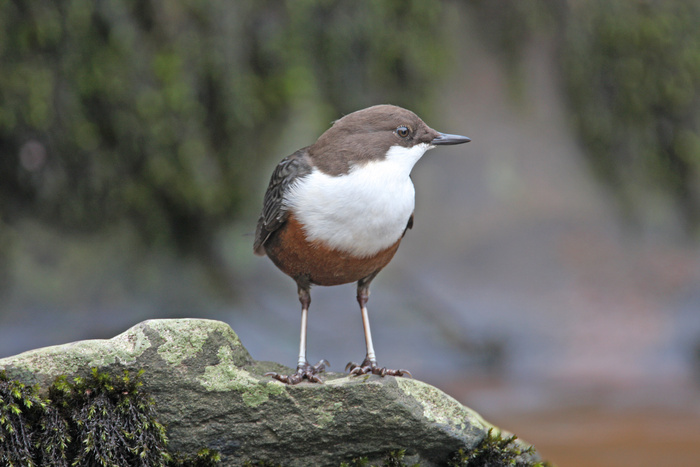
Places like this are as good as any medical help for people feeling low in these difficult times and I highly recommend a visit.
The Marigolds are interspersed with the beautiful Wood Anemone, sparkling white with a delicate pink blush, and also the Lesser Celandine that ubiquitous yellow flower of spring. It’s uplifting to be amongst all this natural beauty on a fine spring morning while the scene is embellished with the song of Chiffchaff, Willow Warbler and Blackcap.
Dippers populate the Menascin - totally at home as they forage for food and raise their young in its fast flowing crystal clear watery habitat.
Places like this are as good as any medical help for people feeling low in these difficult times and I highly recommend a visit.
Brazen Sparrowhawk.
20th March 2021
20th March 2021
There is a Sparrowhawk that has been visiting our garden for a couple of years now, at least I think it is the same bird. He is very confident, sometimes just perching on fences and looking into the house at us moving around. I opened the back door of the house last week to get something from my car and he was perched on some wooden boards that surround a flower bed that is about ten feet away. I expected him to fly off immediately but he just stayed there looking at me. He was soaking wet and indeed it was still raining heavily but he didn’t seem to care so I closed the door and waited until he left in his own time. This set me thinking because we have seen him do this on a number of times since. Two days ago I decided to try my luck and photograph him because as he has got older he has become a very handsome bird and well worth getting an image of. I left the back door open about two feet so if he perched in his usual position I might be able to get a shot. I took some shots of the wood he normally perches on before he hopefully arrived, just to see what the minimum focussing distance was and where I would have to stand to get him in focus and in the frame. I decided to use my Canon 600 f4 prime which I left ready in our kitchen, sometime later Susan was making some pikelets in the kitchen when she said ‘he’s here’. I quietly positioned myself in the spot I had marked and handheld the lens to take a shot, he didn’t flinch, he just looked at me. However, I had misjudged things, I thought I could frame him as a landscape but he was too close so I had to rotate the lens and camera to portrait which is a bit more awkward when hand holding, but a lot easier if you have a battery grip on your camera because you can access the focus/shutter button without having to wrap your hand over the top of the camera. I took a few shots as he just perched there and as the light began to fade he just flew off presumably to roost, what a lovely bird he is.
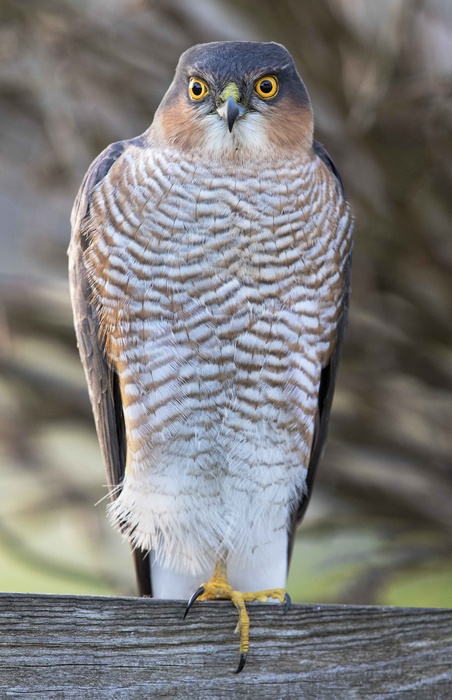
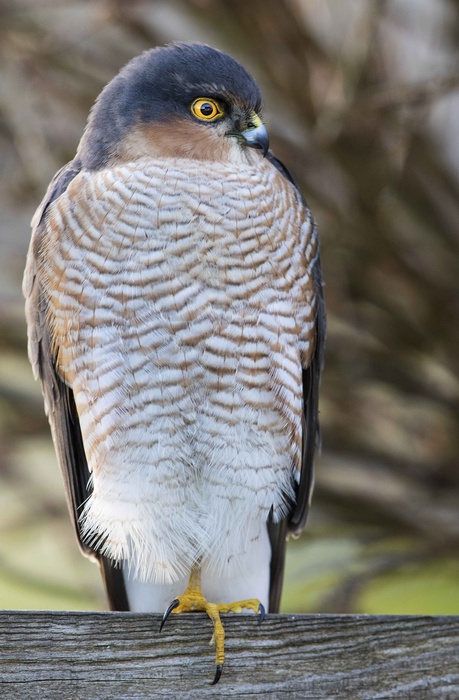
Confident Brambling.
10th March 2021
10th March 2021
We have had a male Brambling in our garden for at least three weeks now, at least that’s when I first saw him. He usually appears around the feeders every day for a few minutes, but the last couple of days he has taken to what can only be described as sun bathing. He basks in the sun by sitting in the grass in front of the house for ten minutes sometimes. We had just arrived back home from our walk and Susan said ‘look! There he is again’ so I thought I’d try him out for a photo. I quickly got my Canon 600 and got down low on the grass and to my surprise he didn’t move at all, I really thought he’d fly away but instead he just looked at me with complete indifference. I have never seen a Brambling be so confident before, usually they are quite spooky. The sunlight was quite harsh but that was what the bird obviously wanted – warmth. I took a few shots with the bare lens and he was almost filling the frame then.
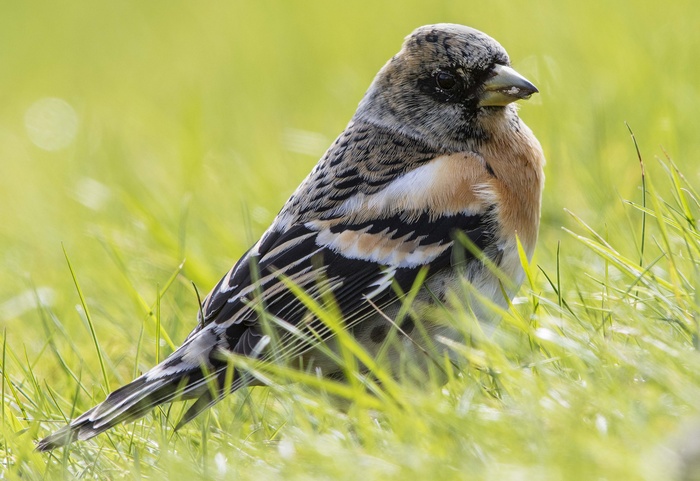
But unbelievably he started to walk towards me to the extent that I could no longer focus because he was below the minimum focussing distance of the lens which is under fifteen feet – ridiculous!! To be out in full view at that distance to a Brambling is a first for me. I had no alternative but to move back and after refocussing I could just see him staring at me quizzically.
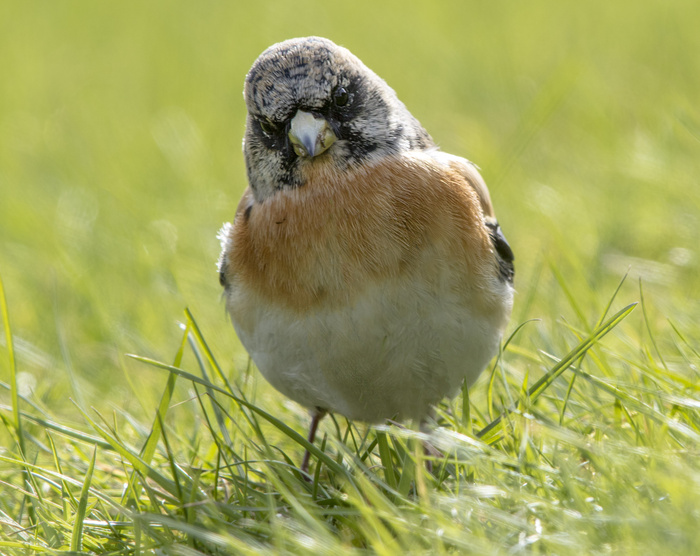
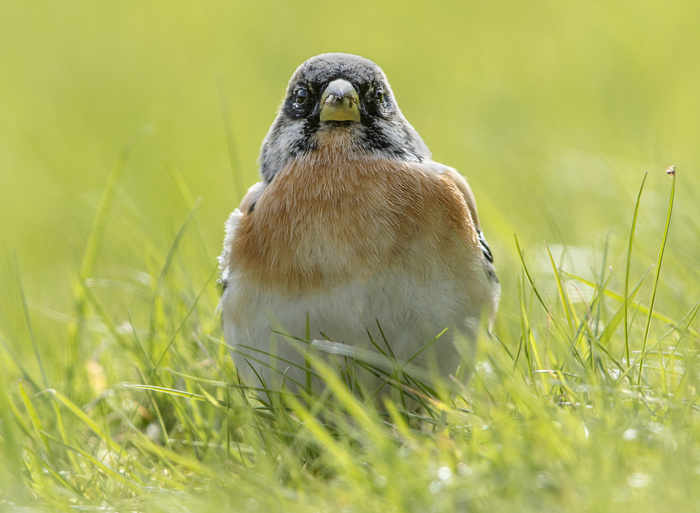
What a strange experience. Then he just decided to fly away into a garden hedge - tanning session obviously over. I wish him luck on his northerly journey back home whenever he decides to go.
But unbelievably he started to walk towards me to the extent that I could no longer focus because he was below the minimum focussing distance of the lens which is under fifteen feet – ridiculous!! To be out in full view at that distance to a Brambling is a first for me. I had no alternative but to move back and after refocussing I could just see him staring at me quizzically.
What a strange experience. Then he just decided to fly away into a garden hedge - tanning session obviously over. I wish him luck on his northerly journey back home whenever he decides to go.
Siskins about to depart.
09th March 2021
09th March 2021
In the next couple of weeks the Siskins that have been in our garden in numbers will leave to go to their breeding grounds in the local conifer plantations. I will be sorry to see them go, because not only are they so colourful, but the lovely sounds they make fill the garden, especially when I am filling up the sunflower feeders in the morning. I know they are watching me from up in the large ash tree that is above the feeders because I can hear the volume increasing and when I look back as I’m walking away I can see them dropping down to feed. I have tried photographing them on a few different perches as detailed in previous blogs and I am always on the lookout for new perches when Susan and I are out walking. This week when we walking up the usual path behind our house we could see some fallen oak branches that had come down in the high winds a couple of weeks ago. Interestingly on one twig there were some ‘Galls’, these are formed when a particular type of wasp lays its eggs into an oak bud via its ovipositor. The chemicals in the oak bud react with chemicals laid by the wasp and these galls are formed. There are many varieties of these galls but these particular ones were formed because of the Oak Marble Gall Wasp and are consequently named Oak Marble Galls. They are about two cms in diameter and form a protective shell around the eggs. When the wasp’s eggs become grubs they bore out of this protective gall and then obviously in time become new wasps. I thought they would make a nice perch along with the dead copper coloured oak leaves that were on the same twig.
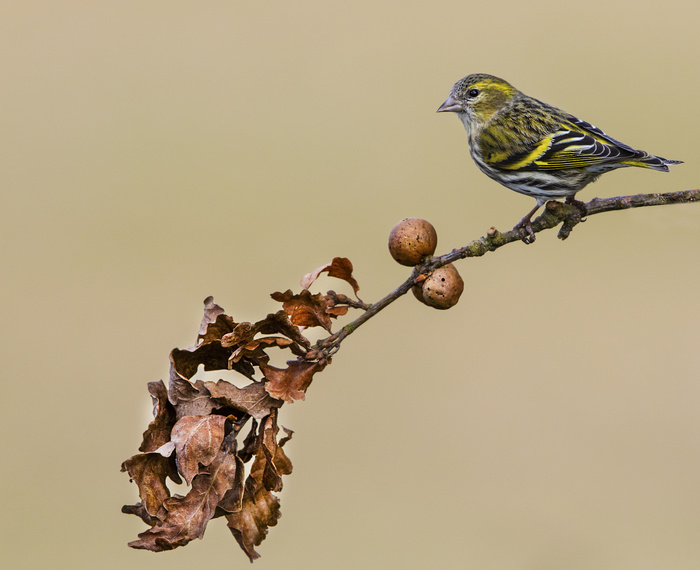
I also used some larch cones for another perch.
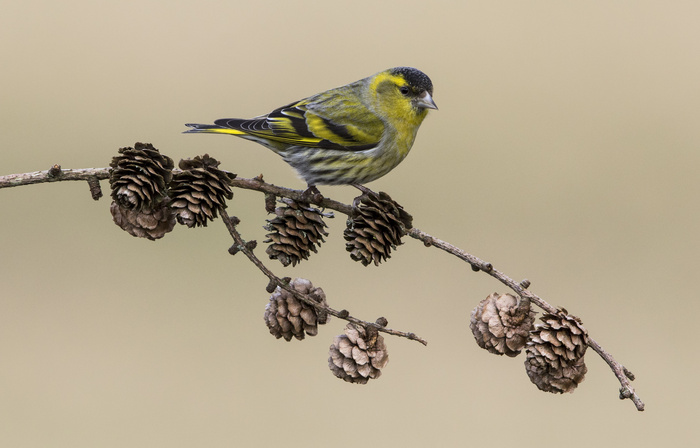
After that session I removed the perches and metal tubes,(previous blog), in anticipation for some quite bad weather that is forecasted for the rest of this week. My next perches will be hawthorn and blackthorn twigs when the time comes.
I also used some larch cones for another perch.
After that session I removed the perches and metal tubes,(previous blog), in anticipation for some quite bad weather that is forecasted for the rest of this week. My next perches will be hawthorn and blackthorn twigs when the time comes.
Emerging out of a Torpor.
18th February 2021
18th February 2021
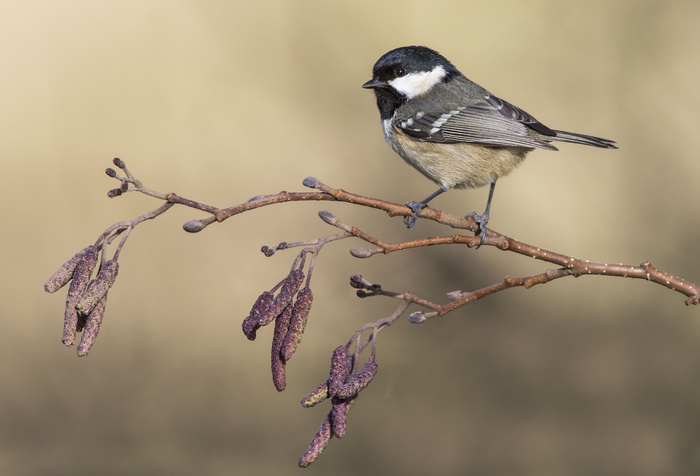
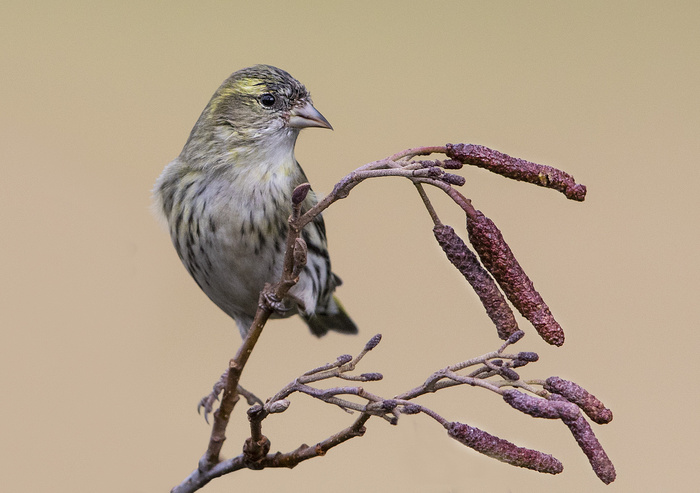
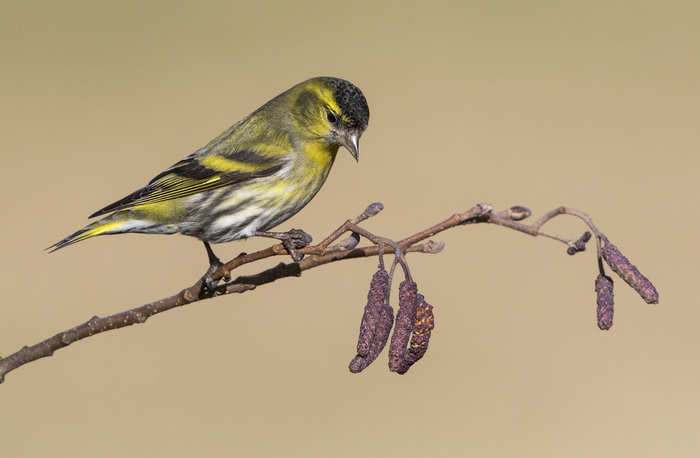
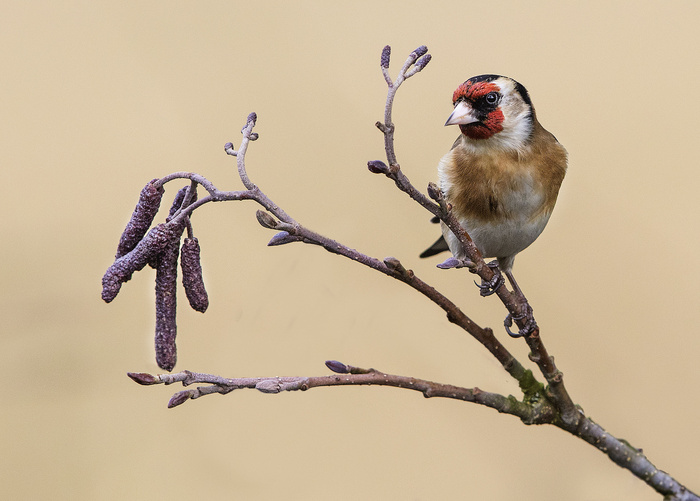
I thought it was about time I made an effort to overcome this bout of torpor I have been enduring. This horrible time we are living through has had a way of creeping up on me, and the old saying ‘The less you do, the less you want to do’ is very appropriate currently. I therefore decided to blow the cobwebs off my Canon 600 and try and find some images. Walking along the roads locally the trees are now laden with catkins predominately hazel and alder. The hazels are a greenish yellow but the alders are vivid purple which I find are far more photogenic. They tend to be much more colourful on the one side, I presume that’s the side that gets the most light. I jumped over my garden fence and walked down to a line of alders in my neighbour’s field and cut a number of small branch ends that were laden with catkins. I intended to use these cuttings as perches to photograph the garden birds we have been feeding throughout this winter.
I’m always chopping and changing the perches that we view from our bird hide which we built about ten years ago and I mentioned in a previous blog that I thinned out the tree canopy above these perches to allow much more light in, and indeed the photographic opportunities have been much improved. I constructed these perches so that there are no obstructions, like tree branches or hedge growth directly behind them, thereby avoiding the dreaded ‘Sphagetti Backgrounds ‘and therefore any background of the photographs hopefully is fairly smooth, and depending on the light on a given day is various shades of golden yellow and light green with only a few darkish shades of distant trees. These shades of colour are in fact my neighbour’s field which is barley stubble at the moment, which has been rendered buttery smooth by a big prime lens, (Canon ef600 f4), – it makes a huge difference!
The background of an image is as important as the subject itself and a cluttered background takes the viewer’s eye away from the important aspects of said image. In order to achieve any decent results I tied some small hollow metal tubes at various angles to the main supports of my perches with cable ties, and then inserted the alder catkin twigs into these hollow tubes. These tubes were cut from an old garden canvas chair which I knew would come in handy one day! This enables me to change the twigs at any time to freshen up any future images. There are about a hundred birds feeding regularly around the feeding stations in the garden - many Siskins, Goldfinches, Chaffinches, Robins, Blue Tits, Great Tits and Blackbirds, also a few Wren, Dunnock, Greenfinch, Coal Tit, Marsh Tit, Long Tailed Tit, House Sparrow, Song Thrush, Treecreeper and Nuthatch.
The main target for the alder catkin photographs were the small birds namely, Siskin, Blue Tit, Coal Tit and Goldfinch because of the delicate nature of the twigs. The twigs have to be placed in a particular way so the birds will perch on them to enhance the look of the image, it’s not easy and a few attempts were necessary because you don’t know which perch the birds will favour and how they want to land on that perch.
In the end I managed a few half decent shots of these four birds but I will continue to experiment after the forecasted bad weather has passed over this weekend – stay safe everyone!!
Blue Tit.
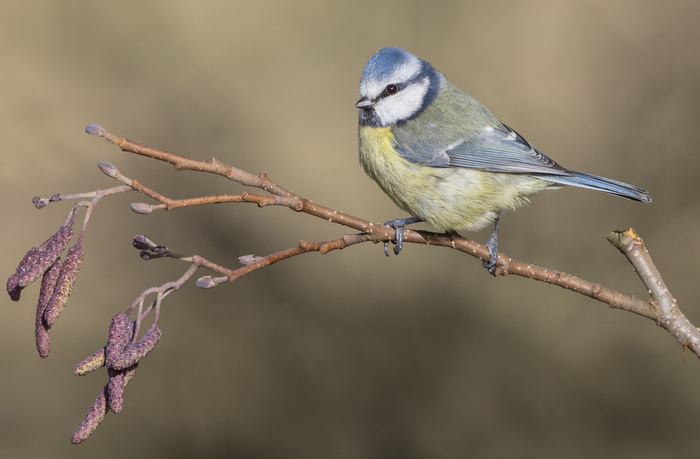
Coal Tit - very difficult to photograph - such a busy little bird.
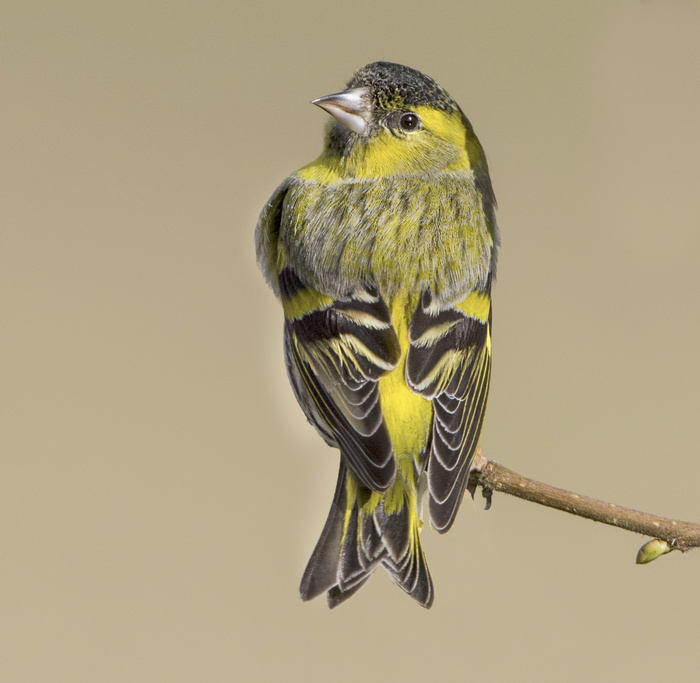
Siskin.
Siskin.
Goldfinch.
Siskin
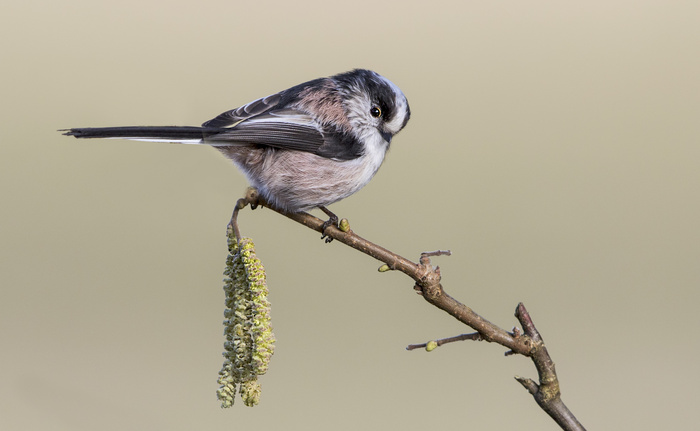
Long Tailed Tit - another very busy bird.
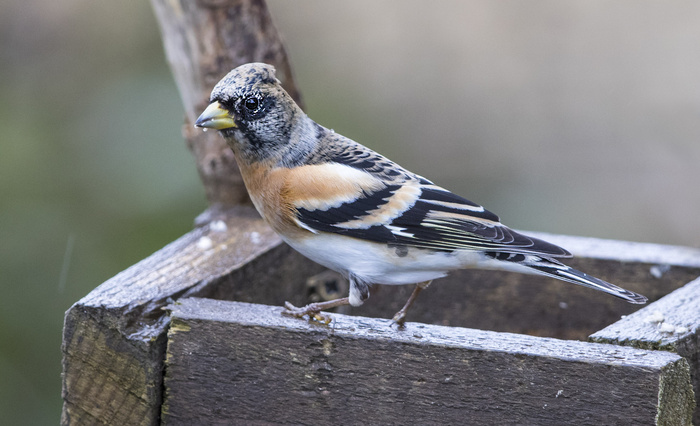
However, it's not all about good light because this very infrequent visitor
to the garden just dropped in last week during heavy rain. He stayed for
five minutes and then just disappeared - just lucky to be there at the time.
Male Brambling
I’m always chopping and changing the perches that we view from our bird hide which we built about ten years ago and I mentioned in a previous blog that I thinned out the tree canopy above these perches to allow much more light in, and indeed the photographic opportunities have been much improved. I constructed these perches so that there are no obstructions, like tree branches or hedge growth directly behind them, thereby avoiding the dreaded ‘Sphagetti Backgrounds ‘and therefore any background of the photographs hopefully is fairly smooth, and depending on the light on a given day is various shades of golden yellow and light green with only a few darkish shades of distant trees. These shades of colour are in fact my neighbour’s field which is barley stubble at the moment, which has been rendered buttery smooth by a big prime lens, (Canon ef600 f4), – it makes a huge difference!
The background of an image is as important as the subject itself and a cluttered background takes the viewer’s eye away from the important aspects of said image. In order to achieve any decent results I tied some small hollow metal tubes at various angles to the main supports of my perches with cable ties, and then inserted the alder catkin twigs into these hollow tubes. These tubes were cut from an old garden canvas chair which I knew would come in handy one day! This enables me to change the twigs at any time to freshen up any future images. There are about a hundred birds feeding regularly around the feeding stations in the garden - many Siskins, Goldfinches, Chaffinches, Robins, Blue Tits, Great Tits and Blackbirds, also a few Wren, Dunnock, Greenfinch, Coal Tit, Marsh Tit, Long Tailed Tit, House Sparrow, Song Thrush, Treecreeper and Nuthatch.
The main target for the alder catkin photographs were the small birds namely, Siskin, Blue Tit, Coal Tit and Goldfinch because of the delicate nature of the twigs. The twigs have to be placed in a particular way so the birds will perch on them to enhance the look of the image, it’s not easy and a few attempts were necessary because you don’t know which perch the birds will favour and how they want to land on that perch.
In the end I managed a few half decent shots of these four birds but I will continue to experiment after the forecasted bad weather has passed over this weekend – stay safe everyone!!
Blue Tit.
Coal Tit - very difficult to photograph - such a busy little bird.
Siskin.
Siskin.
Goldfinch.
Siskin
Long Tailed Tit - another very busy bird.
However, it's not all about good light because this very infrequent visitor
to the garden just dropped in last week during heavy rain. He stayed for
five minutes and then just disappeared - just lucky to be there at the time.
Male Brambling
Bitter Wind Blowing.
07th February 2021
07th February 2021
Here we are again, still on ‘Lockdown’ but it looks like there is light at the end of the proverbial tunnel with the vaccine roll-out programme proceeding at a pace. All credit to a superb effort by the NHS!!
There was a bitter wind blowing this morning as we walked up onto a local hill side so it’s a good job the path we were walking is enclosed by tall hedges giving us some cover because these very cold conditions are set to persist for the rest of this week. We noticed a distant flock of what looked like thrushes trying to feed in a horse pasture and as we approached we were pleased to see about fifty Redwings. They must have been pushed west by the cold easterly wind and also a small flock of ten Blackbirds similarly brought in by the weather. The hedges that line this path at one time must have been almost totally made up of Elder, which is very unusual around here. The branches of these old Elder trees, many of which are on their last legs, grow into some wonderful shapes and the fallen ones make great perches for photography. Elder is a very weak wood and therefore there are many fallen branches broken off by the wind. There is a fungi which we call Jelly Ear which has a particular liking for Elder and these hedges as a result are festooned with this fungi at the moment.
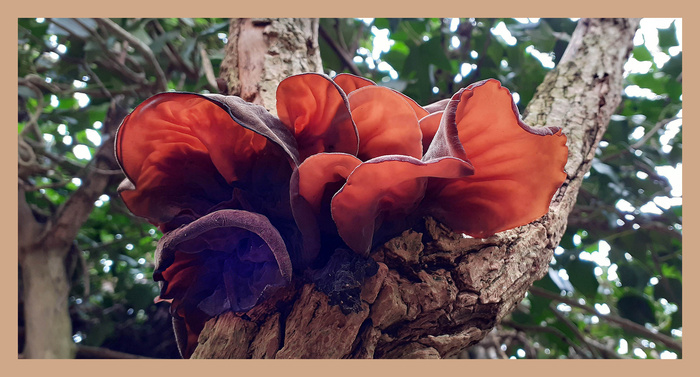
This fungus has many other names, Wood Ear, Jew’s Ear, and Judas’s Ear, the latter two named so because supposedly Judas Iscariot hanged himself from an elder tree. Over time these hedges have become interspersed, mainly with Hawthorn, Blackthorn, Hazel and Birch. When Elder was in profusion along this path the flowers in spring must have been quite a spectacle.
In anticipation of this cold weather I cleaned out the little reflection pond in our garden and increased the amount of seed we put out in the hope of photographing some birds. Last week I thinned out the canopy of the small wood that backs onto our garden using a telescopic chain saw attachment which was hard work but well worth it because the amount of light now pervading the feeding station is vastly increased. I have also bought a small parabolic gas heater for my bird photography hide because it gets really cold in there in winter. This little heater really gives out a huge amount of heat for its size and it should make it far more comfortable in there.
I’ll leave it for another day to get the birds used to the new feeders and then see what comes in - you never know.
There was a bitter wind blowing this morning as we walked up onto a local hill side so it’s a good job the path we were walking is enclosed by tall hedges giving us some cover because these very cold conditions are set to persist for the rest of this week. We noticed a distant flock of what looked like thrushes trying to feed in a horse pasture and as we approached we were pleased to see about fifty Redwings. They must have been pushed west by the cold easterly wind and also a small flock of ten Blackbirds similarly brought in by the weather. The hedges that line this path at one time must have been almost totally made up of Elder, which is very unusual around here. The branches of these old Elder trees, many of which are on their last legs, grow into some wonderful shapes and the fallen ones make great perches for photography. Elder is a very weak wood and therefore there are many fallen branches broken off by the wind. There is a fungi which we call Jelly Ear which has a particular liking for Elder and these hedges as a result are festooned with this fungi at the moment.
This fungus has many other names, Wood Ear, Jew’s Ear, and Judas’s Ear, the latter two named so because supposedly Judas Iscariot hanged himself from an elder tree. Over time these hedges have become interspersed, mainly with Hawthorn, Blackthorn, Hazel and Birch. When Elder was in profusion along this path the flowers in spring must have been quite a spectacle.
In anticipation of this cold weather I cleaned out the little reflection pond in our garden and increased the amount of seed we put out in the hope of photographing some birds. Last week I thinned out the canopy of the small wood that backs onto our garden using a telescopic chain saw attachment which was hard work but well worth it because the amount of light now pervading the feeding station is vastly increased. I have also bought a small parabolic gas heater for my bird photography hide because it gets really cold in there in winter. This little heater really gives out a huge amount of heat for its size and it should make it far more comfortable in there.
I’ll leave it for another day to get the birds used to the new feeders and then see what comes in - you never know.