News
The Five Owls of the UK.
27th March 2020
27th March 2020
There are five owls that inhabit the UK, they have differing life patterns, some are almost totally nocturnal, some are crepuscular in nature and one can often be seen in broad daylight. The nocturnal owls are obviously more difficult to see and indeed to photograph and they are usually only seen at their roost. The best evidence that owls are present at any location is an accumulation of owl pellets that have been regurgitated to the ground beneath a tree or building.
Owls are much loved by most people, this is probably because they have an almost human-like appearance; in other words they have a face, sometimes looking like a wise old man. However, in some cultures, particularly in third world countries they are seen as harbingers of bad luck or even death and are persecuted accordingly. Speaking personally, I am a big fan of owls, there is just something about them that fascinates me.
Let’s start with the smallest:
Little Owl
This small owl doesn’t look like it could do much damage but if you look closer it has quite a fierce appearance which fits quite well with its character.
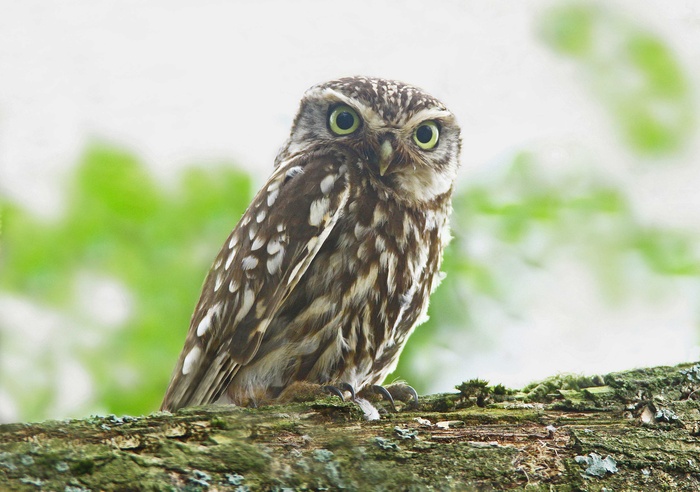
This little bird is a fierce hunter and small bird and rodent numbers near to Little Owl populations are much reduced. They will sit out on prominent perches in broad daylight and if you know where they are living – an old ivy covered tree or old building then it’s not too difficult to see them, it’s just a matter of waiting because they can be quite active.
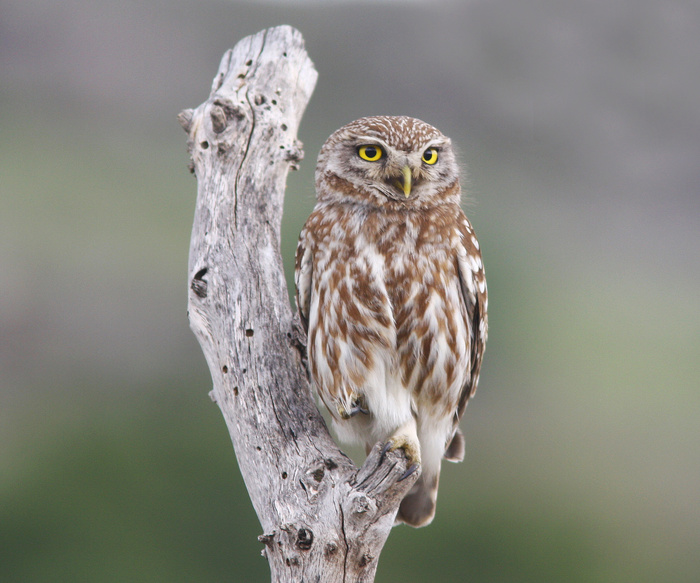
To exemplify their ferocity; Susan and I were driving along a remote track in Cyprus many years ago and we could see a commotion about twenty yards ahead. We stopped to investigate and we could see a fight between a Little Owl and a Blunt Nosed Viper – the deadliest snake in Cyprus. This snake is much feared by Cypriots because its bite can be fatal. However, it held no fear for the Little Owl and after as little as a minute the snake was quickly dispatched and carried away, no doubt to be torn apart and eaten at leisure.
Tawny Owl
Without doubt the most iconic sound any of our owls make – the characteristic background noise of many a good ghost story or horror film. These birds are very nocturnal and are usually seen only near their roosts during daylight hours.
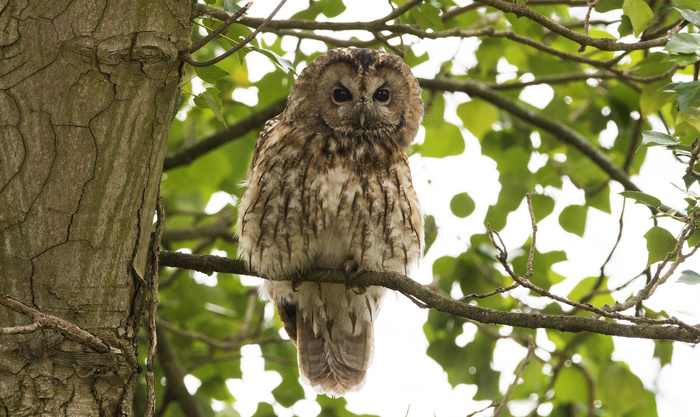
These owls are quite aggressive and can bully other owls in territorial disputes. They are probably the most tied to human habitation and can regularly be heard just after dark in towns and villages. They are lazy hunters and don’t fly great distances to catch their prey. If there is a Tawny Owl present in a wood then there is usually a cacophony of noise from the resident small birds as they try to mob it. This mobbing can be useful for a bird watcher to locate them in a wood. Owlets can also be seen sometimes perching near the nest site as they learn to fly short distances.
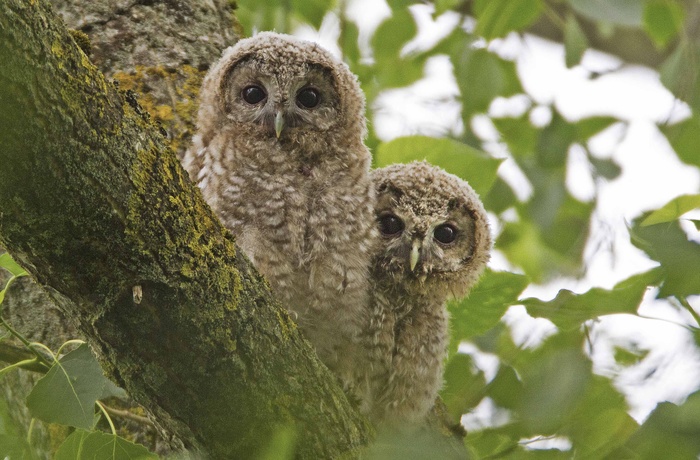
I find these owls very attractive with their rufous plumage.
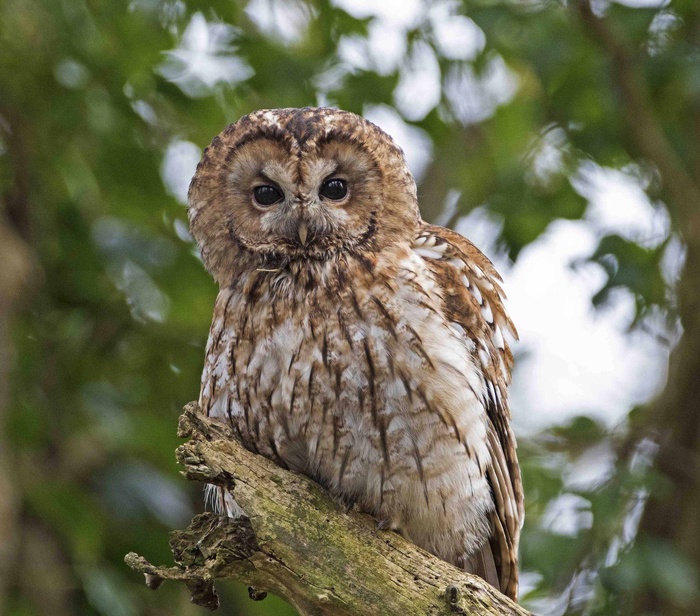
I love to hear their calls around our house in the nights.
Barn Owl
Probably peoples favourite owl, with their heart shaped face and from a distance a white plumage.
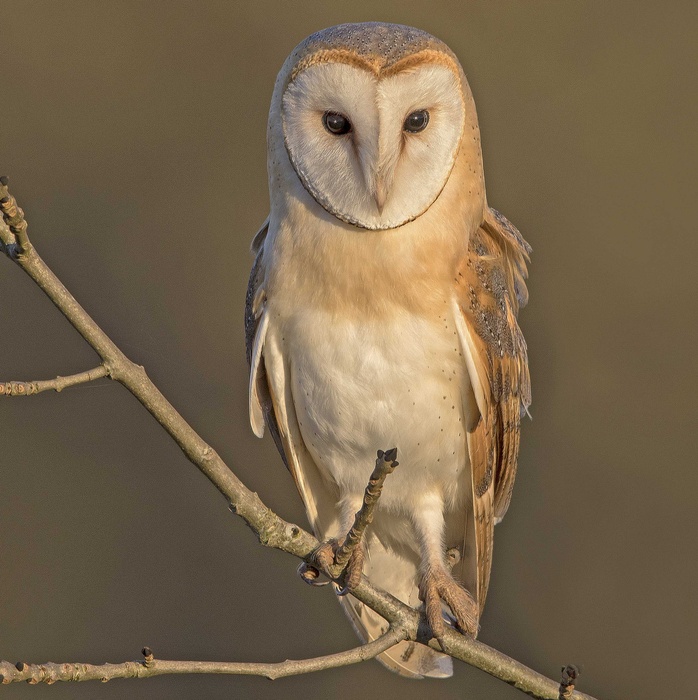
These owls suddenly appear, typically on a winter’s afternoon, about an hour before dusk. They fly like an apparition over rough meadows and farm land quartering back and fore in search of prey.
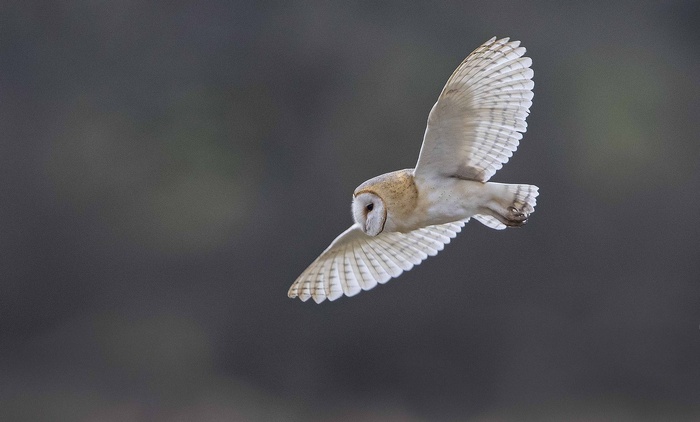
Like all owls they have acute hearing and totally silent flight and these combinations rather than eyesight are used to locate prey. I remember waiting in my portable bird hide one afternoon hoping to see a bird that was regularly hunting a particular area and landing on a favourite perch.
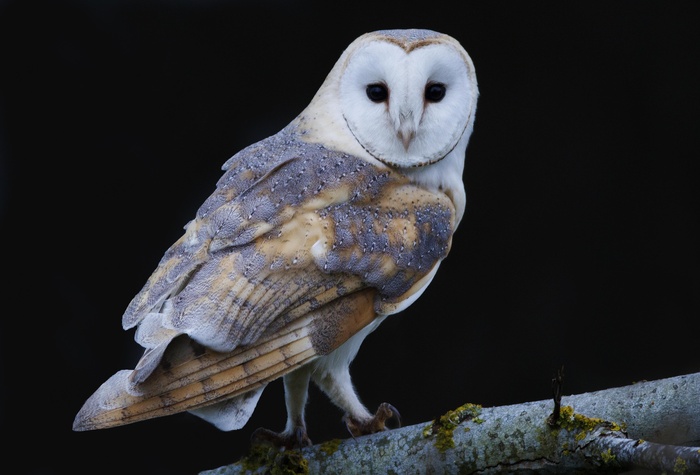
I was just sitting there when this large white shape passed within three feet of me in total silence. I didn’t really expect it to make any noise but to experience that totally silent flight was very memorable. The Barn Owls biggest enemy is wet weather which prevents them from flying because their wings don’t repel water and subsequently become waterlogged.
Short Eared Owl
Essentially a bird of upland moors in spring and summer and coastal marshes in winter. Migrant birds come to the UK in late autumn to spend the winter in the UK and these migrants can swell the numbers of UK Short Eared Owls. If there has been a good vole breeding year where the migrant owls have bred then it’s called a ‘Good Owl Year’ because populations of these owls are linked with good and bad vole years. In good years it’s possible to see double figures of these owls hunting the same coastal marsh.
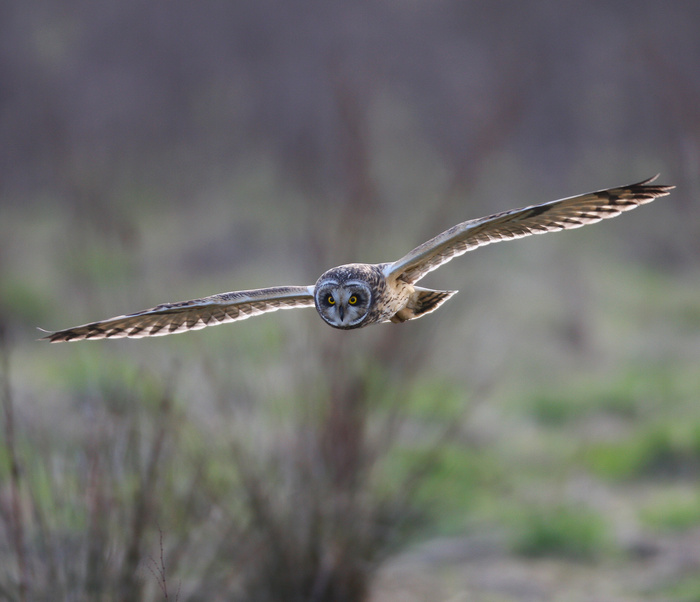
These owls are the most likely to be confused with Long Eared Owls, but time of day should rule out Long Eared which are very nocturnal. However, I have seen Long Eared Owls out, albeit very infrequently, in daytime. Long Eared don’t always show their ear tufts and can look like a Short Eared at distance. If better views are obtained there are a few marked differences; in flight the Short Eared Owl has long wings with white trailing edges and black tips. They have an abrupt demarcation between a dark head and pale belly, this is very noticeable! They also have very conspicuous piercing yellow eyes surrounded with black shadowing.
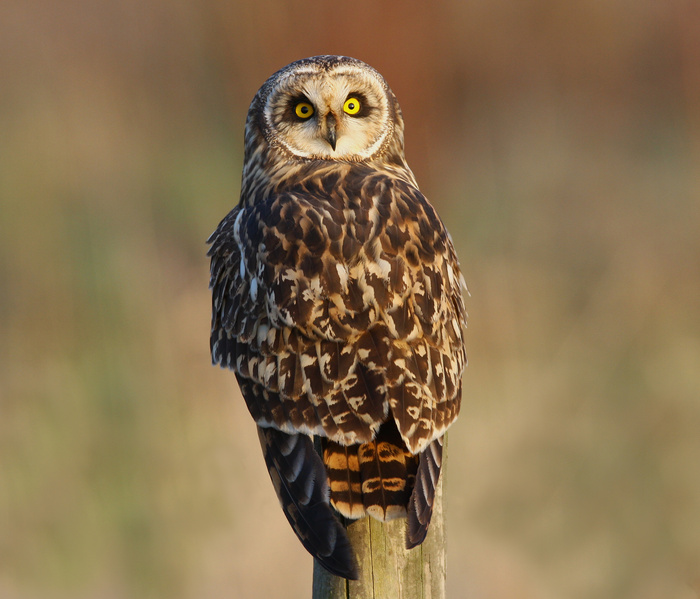
Back in the day sea watching on the North Norfolk coast in October we would see migrant Short Eared Owls coming in off the sea – it was always the highlight of the day.
Long Eared Owl.
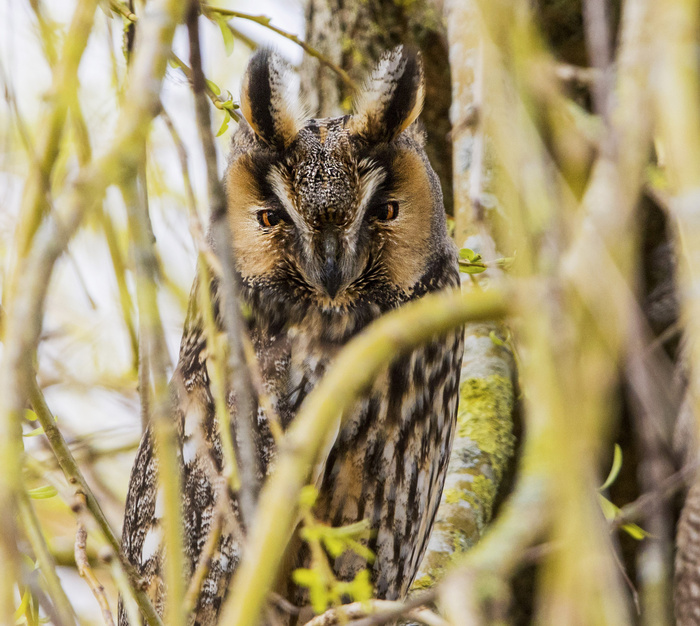
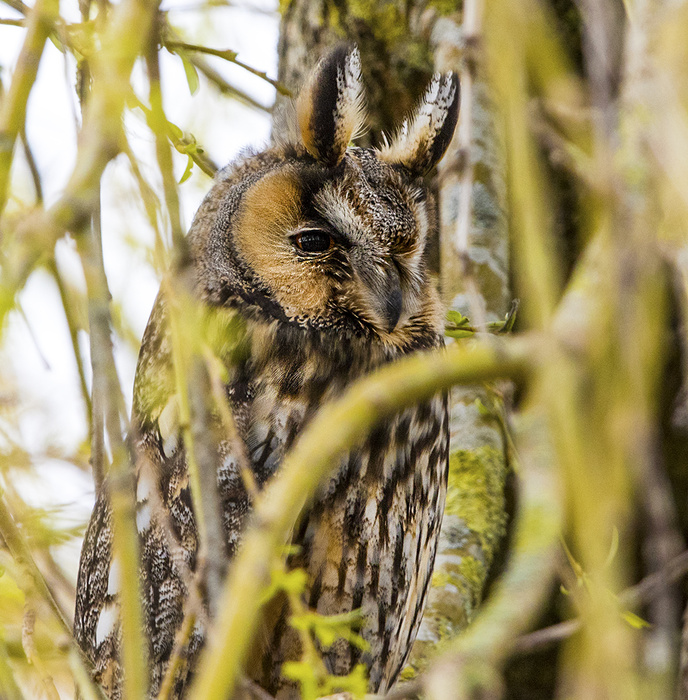
Without doubt the most difficult Owl of the five to see. They are very nocturnal and can usually only be seen during daylight in their winter roosts. These owls roost communally in winter where a few birds share the same tree or thicket and these roosts can be used for many years. However, even at roost they can still be difficult to locate. Their plumage is very cryptic and they can camouflage very well in a dense thicket or against the trunk of a tree always having a few branches in front of them for cover.
Their call is a deep single hoot which is very far reaching.
The young bird’s call is like a squeaky gate opening.
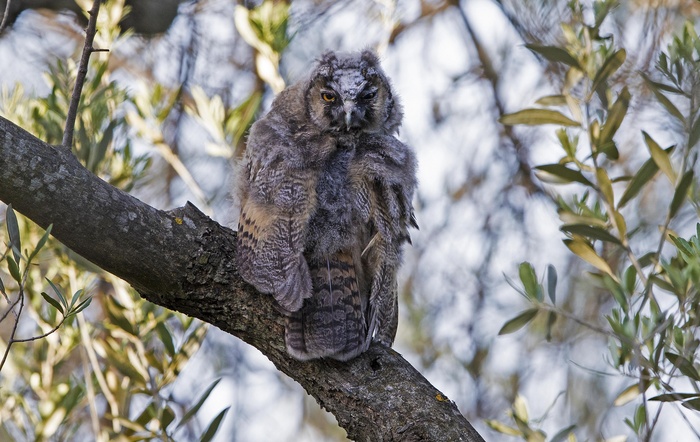
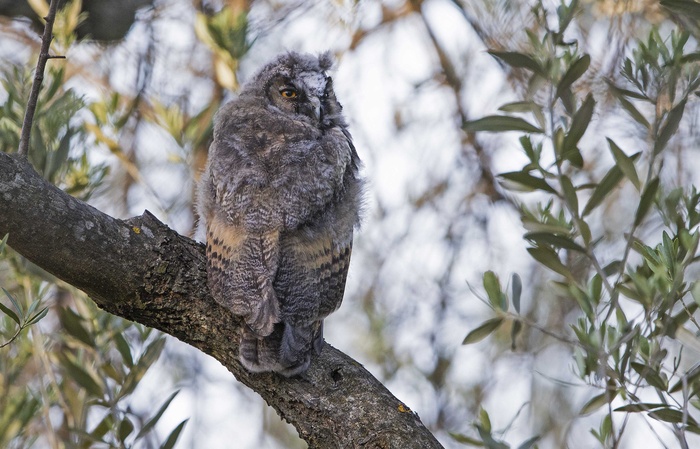
They like mature woodland adjacent to open country in which they will typically use an old crow’s nest or similar to breed. If seen in flight, (which is unlikely), they are not quite as long winged as a Short Eared Owl. There is no white trailing edge to the wings which also have fine black barring near the wing tips, wings also have a large yellow/buff patch on the base of the outer primaries which accentuates a dark carpal patch. Close views, (unlikely), will show deep orange eyes and vertical black and white lines to the face. These owls can also be seen in October, although rare these days, coming in off the sea, in typically North Norfolk. I remember back in the halcyon days in Norfolk a report of a bird flying in off the sea exhausted and landing on the wing mirror of a parked car to rest before flying off into cover.
It’s not hard to see why Owls are regarded so fondly - their elusive nature and the perceived mystery that surrounds them endears these birds to many people and I am one of the many.
Owls are much loved by most people, this is probably because they have an almost human-like appearance; in other words they have a face, sometimes looking like a wise old man. However, in some cultures, particularly in third world countries they are seen as harbingers of bad luck or even death and are persecuted accordingly. Speaking personally, I am a big fan of owls, there is just something about them that fascinates me.
Let’s start with the smallest:
Little Owl
This small owl doesn’t look like it could do much damage but if you look closer it has quite a fierce appearance which fits quite well with its character.
This little bird is a fierce hunter and small bird and rodent numbers near to Little Owl populations are much reduced. They will sit out on prominent perches in broad daylight and if you know where they are living – an old ivy covered tree or old building then it’s not too difficult to see them, it’s just a matter of waiting because they can be quite active.
To exemplify their ferocity; Susan and I were driving along a remote track in Cyprus many years ago and we could see a commotion about twenty yards ahead. We stopped to investigate and we could see a fight between a Little Owl and a Blunt Nosed Viper – the deadliest snake in Cyprus. This snake is much feared by Cypriots because its bite can be fatal. However, it held no fear for the Little Owl and after as little as a minute the snake was quickly dispatched and carried away, no doubt to be torn apart and eaten at leisure.
Tawny Owl
Without doubt the most iconic sound any of our owls make – the characteristic background noise of many a good ghost story or horror film. These birds are very nocturnal and are usually seen only near their roosts during daylight hours.
These owls are quite aggressive and can bully other owls in territorial disputes. They are probably the most tied to human habitation and can regularly be heard just after dark in towns and villages. They are lazy hunters and don’t fly great distances to catch their prey. If there is a Tawny Owl present in a wood then there is usually a cacophony of noise from the resident small birds as they try to mob it. This mobbing can be useful for a bird watcher to locate them in a wood. Owlets can also be seen sometimes perching near the nest site as they learn to fly short distances.
I find these owls very attractive with their rufous plumage.
I love to hear their calls around our house in the nights.
Barn Owl
Probably peoples favourite owl, with their heart shaped face and from a distance a white plumage.
These owls suddenly appear, typically on a winter’s afternoon, about an hour before dusk. They fly like an apparition over rough meadows and farm land quartering back and fore in search of prey.
Like all owls they have acute hearing and totally silent flight and these combinations rather than eyesight are used to locate prey. I remember waiting in my portable bird hide one afternoon hoping to see a bird that was regularly hunting a particular area and landing on a favourite perch.
I was just sitting there when this large white shape passed within three feet of me in total silence. I didn’t really expect it to make any noise but to experience that totally silent flight was very memorable. The Barn Owls biggest enemy is wet weather which prevents them from flying because their wings don’t repel water and subsequently become waterlogged.
Short Eared Owl
Essentially a bird of upland moors in spring and summer and coastal marshes in winter. Migrant birds come to the UK in late autumn to spend the winter in the UK and these migrants can swell the numbers of UK Short Eared Owls. If there has been a good vole breeding year where the migrant owls have bred then it’s called a ‘Good Owl Year’ because populations of these owls are linked with good and bad vole years. In good years it’s possible to see double figures of these owls hunting the same coastal marsh.
These owls are the most likely to be confused with Long Eared Owls, but time of day should rule out Long Eared which are very nocturnal. However, I have seen Long Eared Owls out, albeit very infrequently, in daytime. Long Eared don’t always show their ear tufts and can look like a Short Eared at distance. If better views are obtained there are a few marked differences; in flight the Short Eared Owl has long wings with white trailing edges and black tips. They have an abrupt demarcation between a dark head and pale belly, this is very noticeable! They also have very conspicuous piercing yellow eyes surrounded with black shadowing.
Back in the day sea watching on the North Norfolk coast in October we would see migrant Short Eared Owls coming in off the sea – it was always the highlight of the day.
Long Eared Owl.
Without doubt the most difficult Owl of the five to see. They are very nocturnal and can usually only be seen during daylight in their winter roosts. These owls roost communally in winter where a few birds share the same tree or thicket and these roosts can be used for many years. However, even at roost they can still be difficult to locate. Their plumage is very cryptic and they can camouflage very well in a dense thicket or against the trunk of a tree always having a few branches in front of them for cover.
Their call is a deep single hoot which is very far reaching.
The young bird’s call is like a squeaky gate opening.
They like mature woodland adjacent to open country in which they will typically use an old crow’s nest or similar to breed. If seen in flight, (which is unlikely), they are not quite as long winged as a Short Eared Owl. There is no white trailing edge to the wings which also have fine black barring near the wing tips, wings also have a large yellow/buff patch on the base of the outer primaries which accentuates a dark carpal patch. Close views, (unlikely), will show deep orange eyes and vertical black and white lines to the face. These owls can also be seen in October, although rare these days, coming in off the sea, in typically North Norfolk. I remember back in the halcyon days in Norfolk a report of a bird flying in off the sea exhausted and landing on the wing mirror of a parked car to rest before flying off into cover.
It’s not hard to see why Owls are regarded so fondly - their elusive nature and the perceived mystery that surrounds them endears these birds to many people and I am one of the many.
Winter feeding stations.
11th March 2020
11th March 2020
I have been feeding Common Buzzards in a woodland near to where I live for a few weeks but it's been very much hit and miss especially with the appalling weather we have been experiencing. I have hidden my little trail camera on a nearby tree, housed in a wooden box I made to protect it from the wind and rain. The camera is supposed to be waterproof but I wasn't taking any chances. The shelter is just like a nest box with an open front and it works very well as the camera has remained totally dry even in the very worst of weather.
A few Buzzards have been visiting, albeit infrequently.
https://www.youtube.com/watch?v=5-U9IEQZUcI
And there was a brief visit from a Badger the other night, always nice to see. The Badger is shot in infra red as expected with their nocturnal habits.
https://www.youtube.com/watch?v=OmA_kGydhOk
The weather forecast next week is better - at last!! so maybe things will pick up on the wildlife front - lets hope!
A few Buzzards have been visiting, albeit infrequently.
https://www.youtube.com/watch?v=5-U9IEQZUcI
And there was a brief visit from a Badger the other night, always nice to see. The Badger is shot in infra red as expected with their nocturnal habits.
https://www.youtube.com/watch?v=OmA_kGydhOk
The weather forecast next week is better - at last!! so maybe things will pick up on the wildlife front - lets hope!
Partrishow Church in The Black Mountains.
02nd February 2020
02nd February 2020
Yesterday on a cold and blustery day Susan and I visited one of our favourite churches. The church of St Issui situated on a steep and remote hillside in the Grwyne valley in the Black Mountains between Crickhowell and Abergavenny.
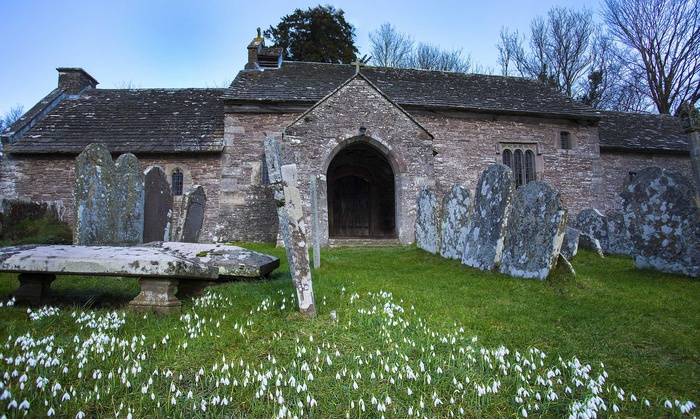
The church was originally named Merthyr Issui after Issui a 6th Century hermit who existed in a cell beside a small mountain stream which flows near the hillside on which the church now stands. The name has changed over the years to be called Patricio among others then finally Partrishow as it is today. Issui’s mission in life was basically to offer comfort to weary travellers and to then baptise and convert them to Christianity. Appallingly he was robbed and murdered by a traveller, ironically one of the very people he was trying to offer comfort to. Who knows what happened on that day, his meagre possessions were of little value that much was obvious! Perhaps the culprit took offence at the Hermit’s attempts to convert him – whatever occurred is lost in the mists of time.
Some good however, did become of this tragedy, because his murder attracted pilgrims to the site in the Middle Ages, believing the water held healing powers, and one pilgrim left some gold at the site of the cell in the 11th C to help finance the building of a church. This was originally a simple stone structure but a more substantial church was built at the site in the 14th C. Subsequently the church was sympathetically restored around 1908.
The interior of the church is very pleasant indeed with a simply decorated altar and a magnificent ornately carved wooden screen above it.
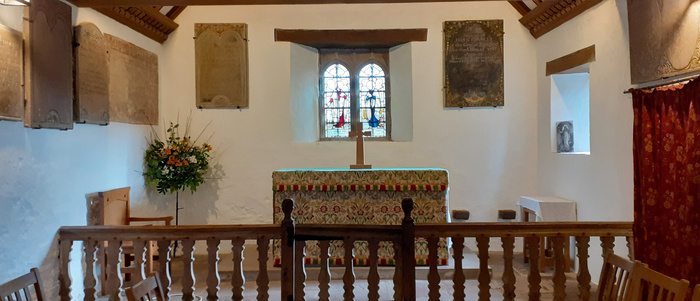
On one wall is a very old painting of a skeleton, symbolizing man’s mortality.
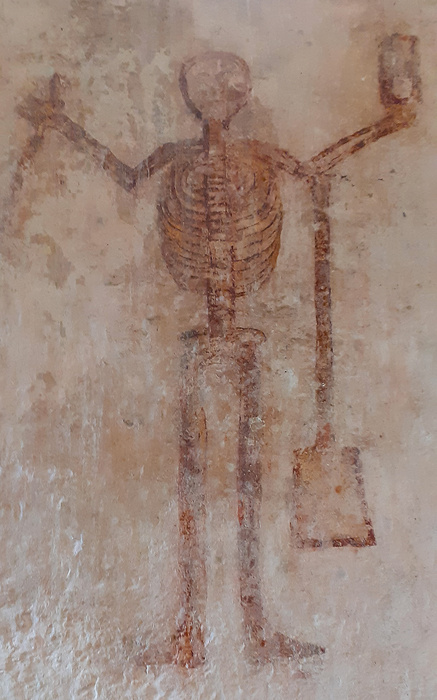
The skeleton is depicted with a knife in one hand and an hour glass in the other. In addition it also holds a shovel as a stark reminder of what lies ahead.
To this day people visit the site of the cell and church to feel this history and there is most definitely something about this place that can be deeply thought provoking but also therapeutic. Perhaps it is the remoteness of the location combined with the aforementioned series of events that led to the construction of the church. Who knows why people come, it’s a personal thing. All I do know is that it’s just a nice place to spend some time away from everyday life and I get a feeling of contentment whenever I visit.
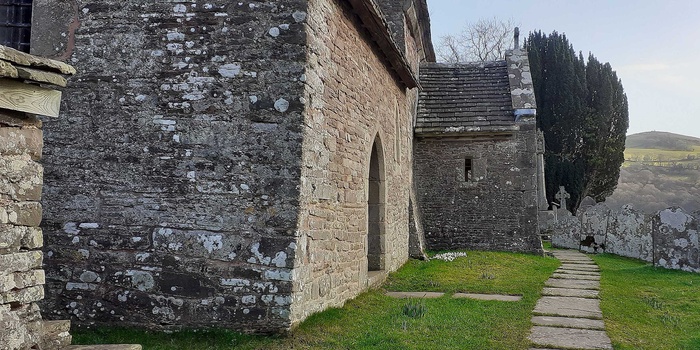
Most of these hillside churches suffer from subsidence.
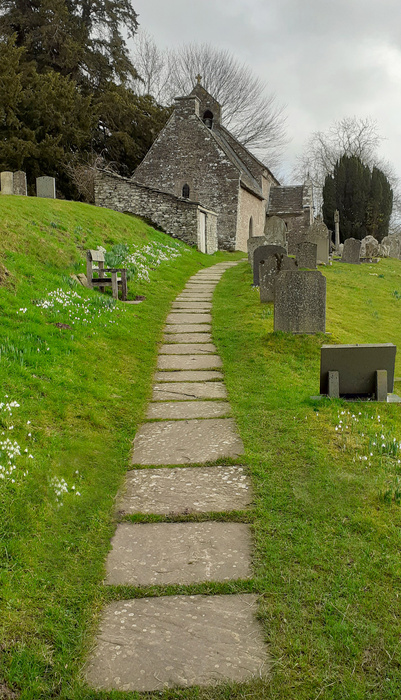
The path leading up to the church.
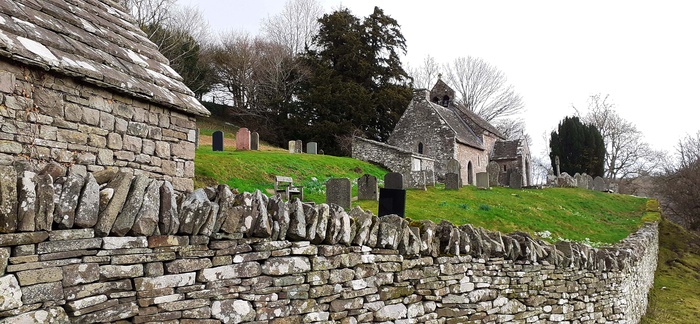
The church from the boundary wall.
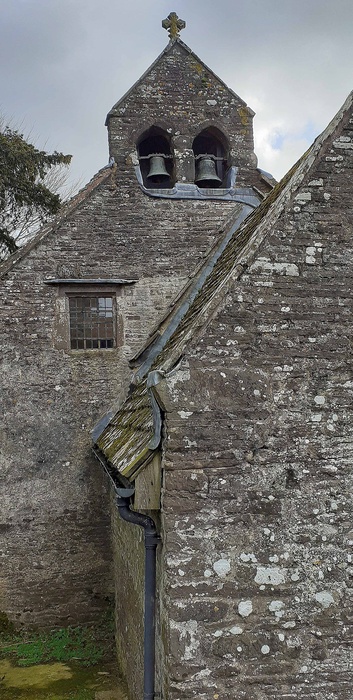
The open bell tower, ravaged by centuries of weather.
The church was originally named Merthyr Issui after Issui a 6th Century hermit who existed in a cell beside a small mountain stream which flows near the hillside on which the church now stands. The name has changed over the years to be called Patricio among others then finally Partrishow as it is today. Issui’s mission in life was basically to offer comfort to weary travellers and to then baptise and convert them to Christianity. Appallingly he was robbed and murdered by a traveller, ironically one of the very people he was trying to offer comfort to. Who knows what happened on that day, his meagre possessions were of little value that much was obvious! Perhaps the culprit took offence at the Hermit’s attempts to convert him – whatever occurred is lost in the mists of time.
Some good however, did become of this tragedy, because his murder attracted pilgrims to the site in the Middle Ages, believing the water held healing powers, and one pilgrim left some gold at the site of the cell in the 11th C to help finance the building of a church. This was originally a simple stone structure but a more substantial church was built at the site in the 14th C. Subsequently the church was sympathetically restored around 1908.
The interior of the church is very pleasant indeed with a simply decorated altar and a magnificent ornately carved wooden screen above it.
On one wall is a very old painting of a skeleton, symbolizing man’s mortality.
The skeleton is depicted with a knife in one hand and an hour glass in the other. In addition it also holds a shovel as a stark reminder of what lies ahead.
To this day people visit the site of the cell and church to feel this history and there is most definitely something about this place that can be deeply thought provoking but also therapeutic. Perhaps it is the remoteness of the location combined with the aforementioned series of events that led to the construction of the church. Who knows why people come, it’s a personal thing. All I do know is that it’s just a nice place to spend some time away from everyday life and I get a feeling of contentment whenever I visit.
Most of these hillside churches suffer from subsidence.
The path leading up to the church.
The church from the boundary wall.
The open bell tower, ravaged by centuries of weather.
A flooded Llangors lake.
22nd January 2020
22nd January 2020
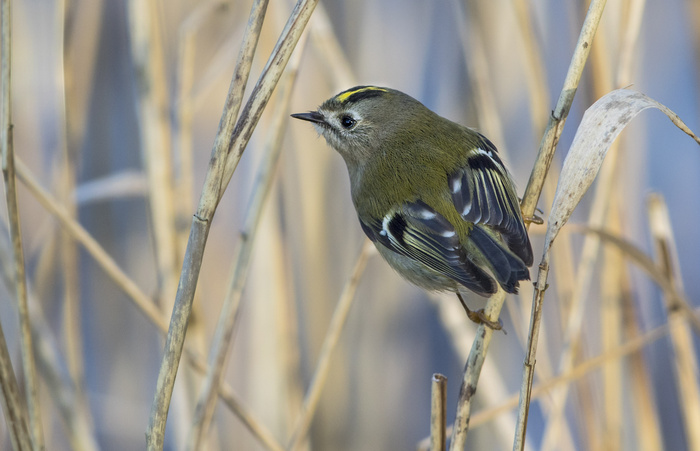
I spent a cold and largely unrewarding two hours in the bird hide at Llangors lake yesterday, this lake is near to where I live and is quite convenient for me. The lake reedbeds are totally flooded out after the horrendous rain we have been subjected to over the past weeks. I think that the Bittern I saw back in the autumn that was intending to winter there has unfortunately been displaced by these floods, it’s difficult for a bird like that to spend the winter in those conditions. Similarly the resident Water Rails have been pushed out of their natural habitat in the reed bed and have sought refuge in a small woodland adjacent to the lake. That is also flooded out but there are fallen logs in there that provide somewhere to stand on above the water. It’s tough for all birds but worse for some - Kingfishers suffer particularly badly in the floods and there are two birds fishing near the above mentioned bird hide that have probably been displaced from local rivers. They are surviving thankfully because they are seen from time to time, and I have seen them catching small fish from the flooded lake margins. An Otter has also been seen once or twice near this hide and now is s good time to see one at the lake because they can fish nearer in these conditions. The only bird I saw in my time at the hide was a little Goldcrest searching for food in the reeds, trying to eat seeds from the reed heads. It didn’t stay still for more than five seconds, as is the norm, but I managed to pin it down for a shot. I hope conditions improve for these birds – we don’t need any more rain that is certain!
Cold and Frosty days at last!
19th January 2020
19th January 2020
After another week of thrashing rain and howling winds at last we have some beautiful cold and frosty mornings. The weather is set fair for a few days and it was a pleasure to be out walking yesterday. The day broke with a heavy frost which was most welcome so I filled up the bird feeders around my elevated pool, (see previous blogs), in addition to the other garden feeders. All the water in the garden is frozen so the only available water is in the elevated pool which I melted with a kettle of boiling water. Hopefully the birds will now drink from there allowing me to take a few pics. I’ll give it a couple of days to get the birds feeding regularly and then set up and wait.
As it was such a nice day we decided to go for a drive up to the Elan Valley in mid Wales where it was obvious there would be an abundance of water after the recent weeks.
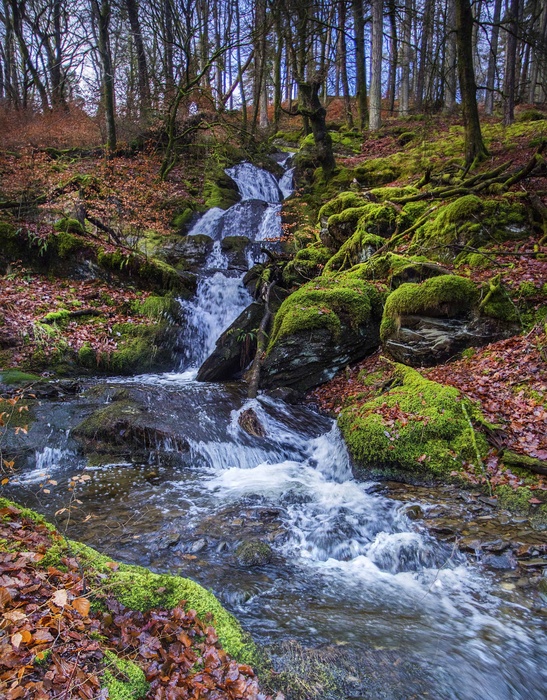
There are a myriad of crystal clear feeder streams tumbling over moss covered boulders as they navigate their path through coppered hillsides.
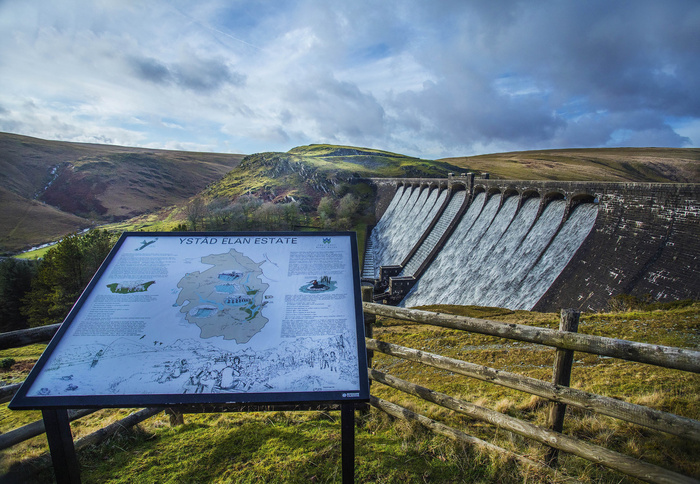
There were a few people around but nothing compared to the summer, where quite frankly the heavy motor traffic is intolerable for us. We stopped at various locations on the circular route around the dams and the water cascading over was spectacular.
In the sun it was quite pleasant but standing in any shade was bitterly cold, but still miles better than rain and wind!
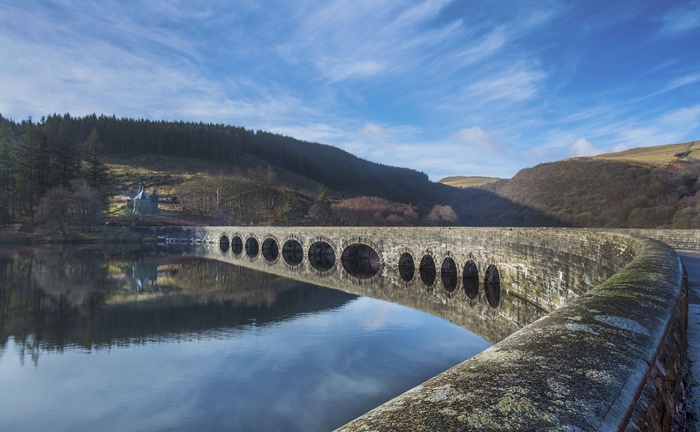
We were glad we had brought a thermos flask of coffee and a biscuit, especially when in the afternoon the now watery sun was further diffused behind the winter clouds as the bitter cold enveloped the moorlands above the reservoirs.
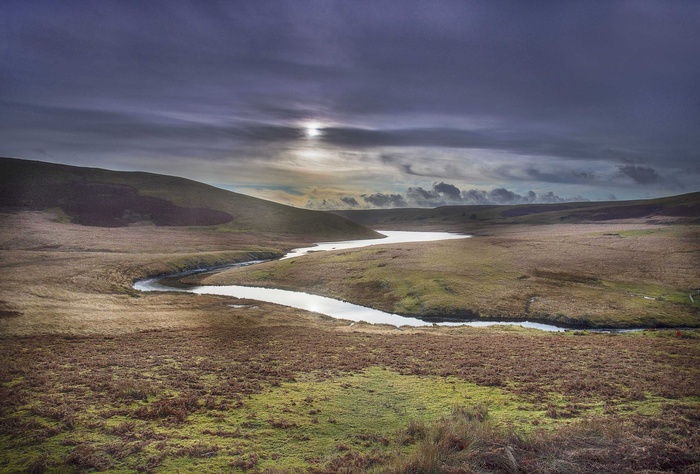
As it was such a nice day we decided to go for a drive up to the Elan Valley in mid Wales where it was obvious there would be an abundance of water after the recent weeks.
There are a myriad of crystal clear feeder streams tumbling over moss covered boulders as they navigate their path through coppered hillsides.
There were a few people around but nothing compared to the summer, where quite frankly the heavy motor traffic is intolerable for us. We stopped at various locations on the circular route around the dams and the water cascading over was spectacular.
In the sun it was quite pleasant but standing in any shade was bitterly cold, but still miles better than rain and wind!
We were glad we had brought a thermos flask of coffee and a biscuit, especially when in the afternoon the now watery sun was further diffused behind the winter clouds as the bitter cold enveloped the moorlands above the reservoirs.
Golden Plovers on a cold winter's afternoon.
12th January 2020
12th January 2020
Birding has been very difficult in the Brecon Beacons during the autumn of 2019 because of a period of quite appalling weather. From October onwards we have had long spells of very wet weather resulting in flooding in many areas and this has been compounded with heavy grey skies, some days descending into a stygian gloom. At the end of December and into the first week of January the weather perked up a little with a short brighter spell but the weather has again become unsettled and yesterday was a dismal day with heavy drizzle and blustery winds all day.
However, in the middle of the aforementioned ‘Brighter’ spell I paid a couple of visits to a local upland to try and see a traditional Golden Plover roost that is established there. Unfortunately this area is plagued with dog walkers and my first efforts were ruined by a stupid and thoughtless woman letting her dog run straight through the roost of about eighty birds. I was amazed that she couldn’t see the roosting birds that were about thirty yards in front of her and also me standing there with a lens on a tripod, it’s not difficult to make an association that there might just be something there - but she probably didn’t care anyway because their dogs take precedence over everything - I despair at these people, they haven’t got a clue!
On my second attempt the following day it looked much more promising, there were none of the dreaded dog walkers around and more importantly the birds were in the same place - and of course they would be, it’s their roosting spot. A bitterly cold wind swept across the open upland as I walked in a wide arc to get the sun behind me and then I slowly inched closer taking shots every five yards. A few birds started to move around as I got nearer, (this is the sign that all birders and photographers should recognize) – if the birds are becoming restless you are too close! I took my last shots and retraced my steps and the birds settled back down again. If you go too close they will fly and you have disturbed them and made things more difficult in what is already a difficult situation for them, trying to find shelter on a cold winter’s afternoon. I made my way back to the warmth of my vehicle for a cup of coffee and then packed up and left for home with the light fading as the clouds rolled in once more.
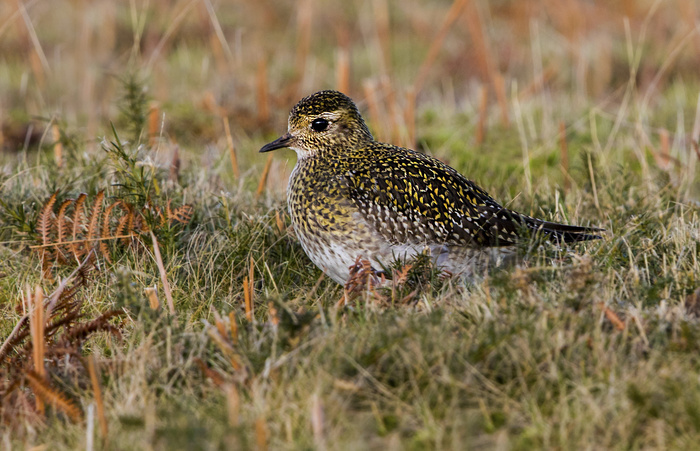
Pretty little birds.
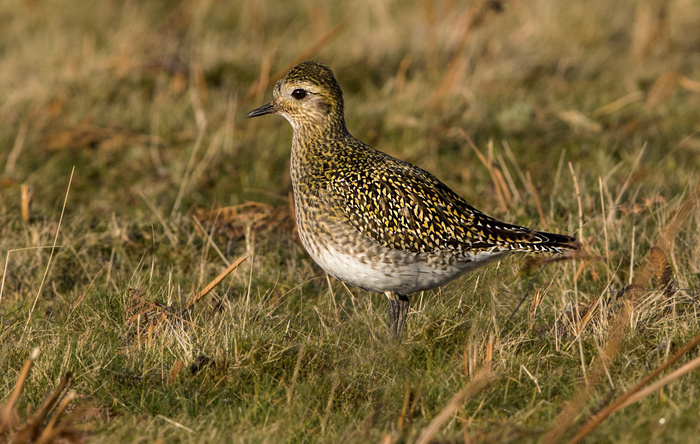
However, in the middle of the aforementioned ‘Brighter’ spell I paid a couple of visits to a local upland to try and see a traditional Golden Plover roost that is established there. Unfortunately this area is plagued with dog walkers and my first efforts were ruined by a stupid and thoughtless woman letting her dog run straight through the roost of about eighty birds. I was amazed that she couldn’t see the roosting birds that were about thirty yards in front of her and also me standing there with a lens on a tripod, it’s not difficult to make an association that there might just be something there - but she probably didn’t care anyway because their dogs take precedence over everything - I despair at these people, they haven’t got a clue!
On my second attempt the following day it looked much more promising, there were none of the dreaded dog walkers around and more importantly the birds were in the same place - and of course they would be, it’s their roosting spot. A bitterly cold wind swept across the open upland as I walked in a wide arc to get the sun behind me and then I slowly inched closer taking shots every five yards. A few birds started to move around as I got nearer, (this is the sign that all birders and photographers should recognize) – if the birds are becoming restless you are too close! I took my last shots and retraced my steps and the birds settled back down again. If you go too close they will fly and you have disturbed them and made things more difficult in what is already a difficult situation for them, trying to find shelter on a cold winter’s afternoon. I made my way back to the warmth of my vehicle for a cup of coffee and then packed up and left for home with the light fading as the clouds rolled in once more.
Pretty little birds.
Slim Pickings on the bird front.
11th December 2019
11th December 2019
Disappointingly, after a brief hiatus, which at the time gave me reason for optimism that the weather was on the turn, it's all gone pear shaped again with high winds and relentless rain. This truly is an appalling spell of weather, it has absolutely ruined the autumn for me photography-wise and in addition it doesn't foster any enthusiasm within me to even go and look for birds. Nearby, Llangors lake is totally waterlogged and any walk taken around the lake is through inches of mud. Nevertheless I have spent five sessions at the bird hide there, about two hours at a time, and my rewards were absolutely nothing! I have given up for the time being, and wait, or more like pray for some cold frosty weather - a fall of snow would be wonderful, just to break this depressing cycle of grey miserable weather, and as I type in my little office the rain is again beating against the window!
I have been spending some time in the bird photography hide in my garden - I'm seeing more birds there, albeit of the common variety, but at least there are birds! I have bought some artificial grass from ebay to cover the frame of my elevated drinking pool because the Blackbirds were continually pulling up the Sphagnum moss I was using. However, even at said pool there is not much happening because the birds can get water anywhere at the moment, but as the winter progresses and hopefully things get colder and water becomes more of a premium there will be more photographic opportunities.
I have not been to North Norfolk this autumn either, the first time for many years, because the weather there was also dreadful. I do miss my trips there and I may resort to having a winter visit because it's the best time to see Barn Owls as they like to hunt in the short daylight hours. There might also be a fall of Waxwings which would really make my mind up - we'll wait and see.
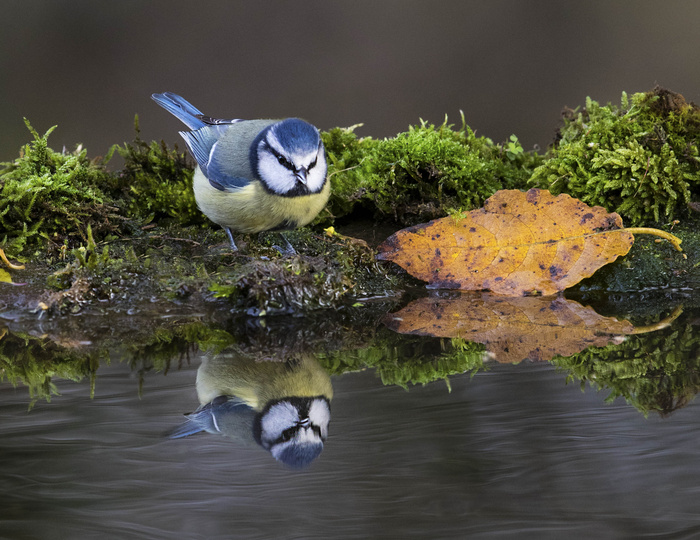
Blue Tit at my elevated drinking pool.
I have been spending some time in the bird photography hide in my garden - I'm seeing more birds there, albeit of the common variety, but at least there are birds! I have bought some artificial grass from ebay to cover the frame of my elevated drinking pool because the Blackbirds were continually pulling up the Sphagnum moss I was using. However, even at said pool there is not much happening because the birds can get water anywhere at the moment, but as the winter progresses and hopefully things get colder and water becomes more of a premium there will be more photographic opportunities.
I have not been to North Norfolk this autumn either, the first time for many years, because the weather there was also dreadful. I do miss my trips there and I may resort to having a winter visit because it's the best time to see Barn Owls as they like to hunt in the short daylight hours. There might also be a fall of Waxwings which would really make my mind up - we'll wait and see.
Blue Tit at my elevated drinking pool.
Talybont Reservoir in a Blue Light.
18th November 2019
18th November 2019
After what can only be described as a period of abysmal weather where there has been day after day of grey skies, mist and heavy rain showers - finally we have a hiatus. It was cold early this morning but with no frost, contrary to the weather forecast. At first light there was a patchy mist with a bright sky breaking through in places which looked very nice – quite ethereal and much better than a clear blue sky, from a photographic point of view. I was on the dam of Talybont Reservoir in the Brecon Beacons just as the morning mist was lifting, the water was very calm, not quite like a mill pond, but close.
These reservoirs can give some nice reflections on mornings like these and as a bonus there was a delicate blue light surrounding the area. I wasted no time setting up my gear because these conditions can disappear in minutes. I attached a circular polarizer to my lens just to take any glare of the water and to emphasize the clouds a little and also a 0.3 graduated filter, (1 stop), because the sky was just a little bit brighter than the water. I switched to manual mode and focussed while viewing the scene using mirror lock-up. If you use the info button you can then also view the histogram displayed on the screen which helps you to balance the light correctly. Using a two second timer I took a few shots with a few different settings and then true to form the blue light began to disappear and the shot was gone – light is so fickle!
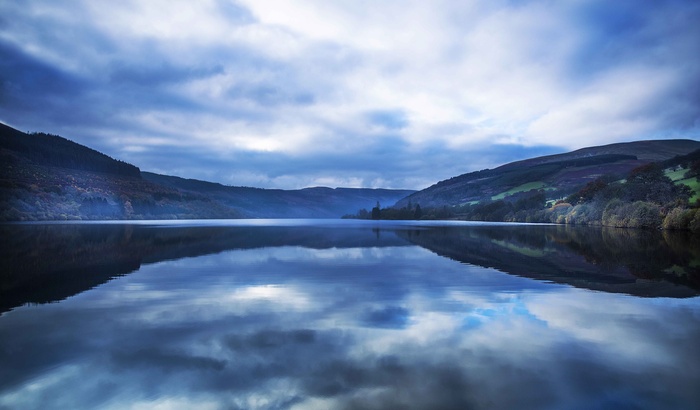
These reservoirs can give some nice reflections on mornings like these and as a bonus there was a delicate blue light surrounding the area. I wasted no time setting up my gear because these conditions can disappear in minutes. I attached a circular polarizer to my lens just to take any glare of the water and to emphasize the clouds a little and also a 0.3 graduated filter, (1 stop), because the sky was just a little bit brighter than the water. I switched to manual mode and focussed while viewing the scene using mirror lock-up. If you use the info button you can then also view the histogram displayed on the screen which helps you to balance the light correctly. Using a two second timer I took a few shots with a few different settings and then true to form the blue light began to disappear and the shot was gone – light is so fickle!
Three Cliffs Bay on the Gower Peninsular, South Wales.
29th October 2019
29th October 2019
Yesterday Susan and I went for a drive down to the Gower peninsular situated just west of Swansea Bay. This area is only just over an hour’s drive away from the Brecon Beacons and it really is an area of outstanding natural beauty, much visited by tourists and locals alike. However, now that all the holiday makers have dissipated, the beaches and headlands are much quieter and there is more chance of a photograph without people.
At the little hamlet of Parkmill there is a small shop and tea rooms called Shepherds and you can park in their parking area outside the shop at a cost of three pounds for the day - this is better than searching around for a place to park. We bought two cheese and onion pasties there, which looked quite tasty and after packing everything into my rucksack we started our walk to Three Cliffs Bay. This bay is very famous and popular and rightly so because it is very beautiful there – but it is best avoided in the summer months if you want any solitude!
When we arrived it felt quite cold but after walking for about half a mile the weather had really warmed up and we both took a layer of clothes off. We didn’t want to walk to the beach because there would be too many people there and it is awkward to take a photograph, so we made our way up onto the hill where the old Pennard Castle stands looking out over the bay.
It was nearly lunchtime by the time we were up on the headland so we sat on a very convenient bench and ate our pasties, which were every bit as good as they looked and washed down with a cup of coffee were very welcome indeed.
We walked on about another half a mile until we were right up on top of a rocky outcrop looking down on the three cliffs which give the bay its name.
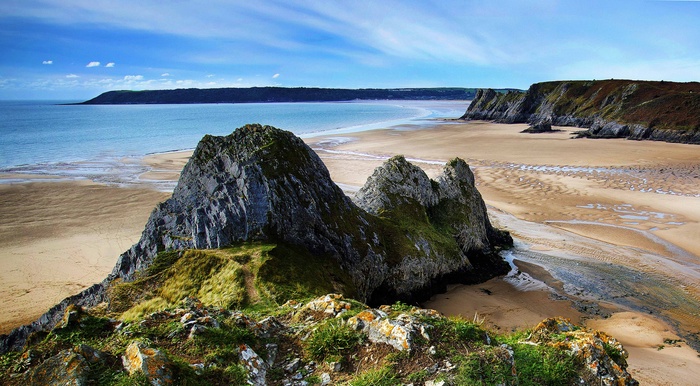
I took a couple of photographs and we admired the view for half an hour before retracing our steps back as more and more people started to arrive.
We walked back to the car in about forty minutes and had another coffee and a mince pie there, which was also very nice and we then took a leisurely drive home before the Swansea ‘rush hour‘ started - a very nice day.
At the little hamlet of Parkmill there is a small shop and tea rooms called Shepherds and you can park in their parking area outside the shop at a cost of three pounds for the day - this is better than searching around for a place to park. We bought two cheese and onion pasties there, which looked quite tasty and after packing everything into my rucksack we started our walk to Three Cliffs Bay. This bay is very famous and popular and rightly so because it is very beautiful there – but it is best avoided in the summer months if you want any solitude!
When we arrived it felt quite cold but after walking for about half a mile the weather had really warmed up and we both took a layer of clothes off. We didn’t want to walk to the beach because there would be too many people there and it is awkward to take a photograph, so we made our way up onto the hill where the old Pennard Castle stands looking out over the bay.
It was nearly lunchtime by the time we were up on the headland so we sat on a very convenient bench and ate our pasties, which were every bit as good as they looked and washed down with a cup of coffee were very welcome indeed.
We walked on about another half a mile until we were right up on top of a rocky outcrop looking down on the three cliffs which give the bay its name.
I took a couple of photographs and we admired the view for half an hour before retracing our steps back as more and more people started to arrive.
We walked back to the car in about forty minutes and had another coffee and a mince pie there, which was also very nice and we then took a leisurely drive home before the Swansea ‘rush hour‘ started - a very nice day.
Snow Bunting and Autumn.
25th October 2019
25th October 2019
Autumn has truly arrived in the Brecon Beacons, the trees are starting to change colour and there is a noticeably colder feel to the mornings and evenings. I have started the oil stove in our living room as the evenings have become colder and what a fabulous heat it provides, it will now stay running continuously up until April.
We had an excellent crop of runner beans this summer and the bean plants have now gone into my recycling area to be composted. We have also had a reasonable apple crop and they are in storage and will last us up until Xmas. I have been busy cutting back hedges and giving what I hope is a final cut to the grass. We have had, as indeed many others have, an awful spell of wet weather since mid-September and it had been a struggle to get the outside work completed, and as I type it is raining again! Soon though I will be able to lubricate and put away the garden tools for another year.
There is a nice crop of hazelnuts in the hedgerows and it also looks like a good year for sloe berries. I am waiting for the leaves to fall before I set up my elevated photography pool, (see previous blog), for the winter and I hope to tempt some nice birds in to feed and drink there in the harsher weather.
Two days ago we heard some Tawny Owls hooting outside as soon as it had gone dark and when we investigated we were treated to three birds flying around us from our Ash tree in the garden onto a telecommunications pole. These were probably young birds that had been driven away by the adults and encouraged to find their own territories – it happens every year. A few weeks ago I went out to my car about 11.00pm to put something away and I shone a torch up into the same Ash tree to see if there were any Tawnies perched on the branches, but I couldn’t see anything. However, as I lowered the torch beam down it shone accidentally on the garden fence and there to my astonishment was a Barn Owl just looking at me. It didn’t like the torch beam and it flew off towards the woods nearby – a rare occurrence indeed in this area!
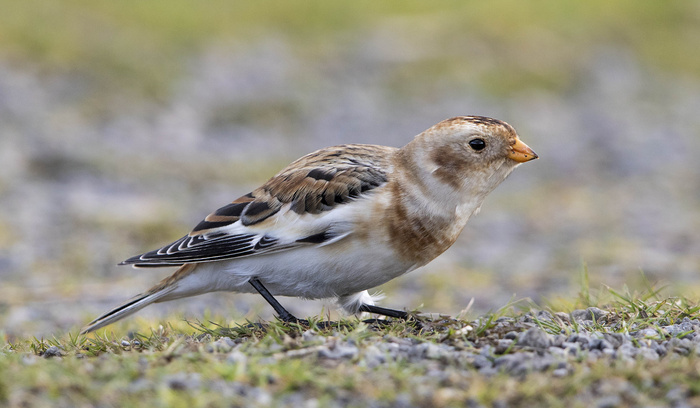
Yesterday Susan and I took the opportunity of a rare fine day to go and try to see a Snow Bunting that was showing quite well on a local moorland. Although rarely encountered these birds pass through the Beacons every year, coming south to lower ground. A place where they can typically be seen is on a beach in north Norfolk, where they will spend the winter. This is a very nice spectacle as a flock of these lovely birds behave like pieces of white foam being blown along the tide line.
Thirty years ago Susan and I were on a birding trip touring Scotland and we had walked up to the top of Ben Nevis, the UK’s highest mountain. It was a hard climb and a party of Germans in front of us turned back because it was too cold. We had to navigate a very steep sheet of ice about a hundred yards long in order to get to the top and this was in June! However, we got tucked in, sheltering from the biting cold in the ruins of the old observatory on the top. We were having a cup of coffee and a sandwich when I noticed something move out of the corner of my eye. Intrigued, I kept watching and amazingly a Snow Bunting hopped onto a rock just by the side of us. I broke off some bread from my sandwich and put it on the rock and the bird gratefully ate it and disappeared into the mist – a lovely encounter!
Snow Buntings are not shy birds. However, the bird on the local hillside that we went to see yesterday was one of the most confiding birds we have ever seen, it was walking right up to us and feeding less than six feet away. It was no challenge to photograph, it was just very nice to be that close to a lovely little bird.
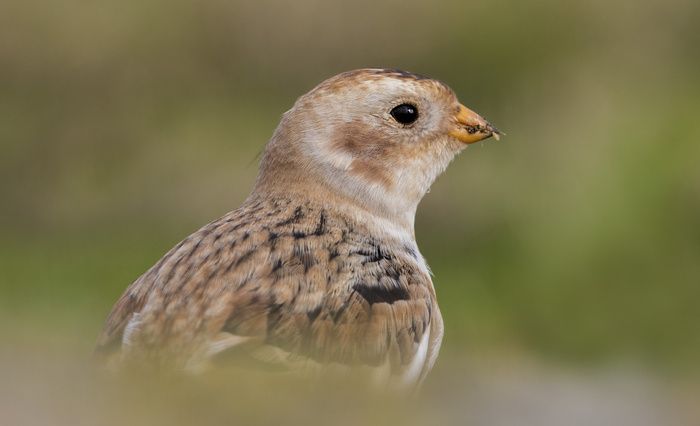
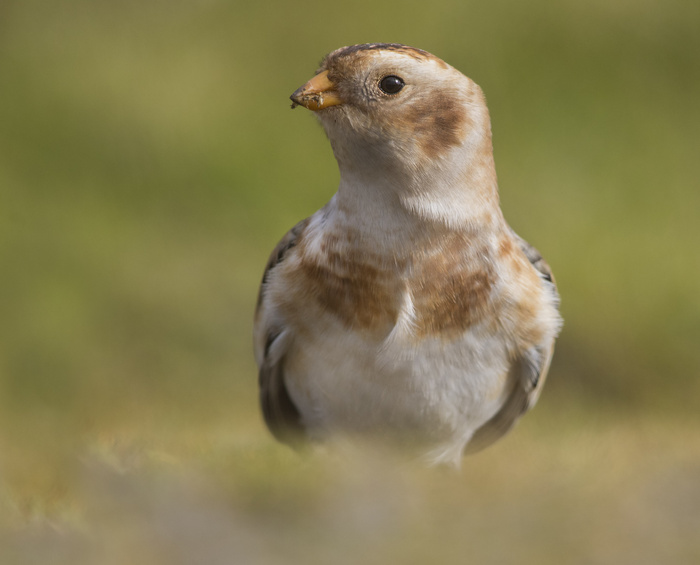
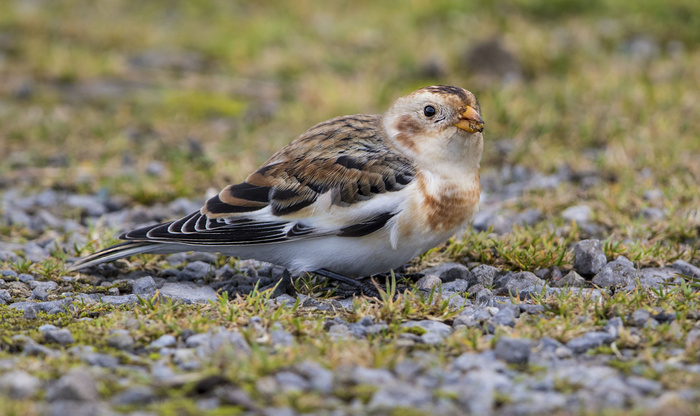
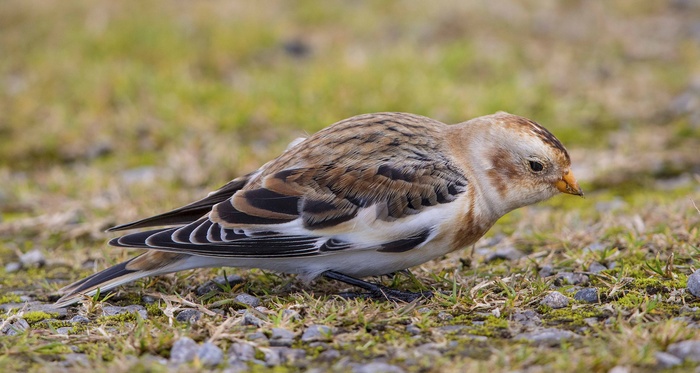
Wintering Thrushes are starting to arrive now, with Fieldfares, Redwings and hopefully a few Ring Ouzels among them and who knows perhaps a Waxwing later on, and as always the Swallows, Swifts, Sand and House Martins which are part of our daily lives, have just faded away, one morning they are just not there any longer. We now have to embrace the autumn and winter just as we do spring and summer, I will try and photograph a few landscapes during this time and hopefully encounter some nice bird along the way.
We had an excellent crop of runner beans this summer and the bean plants have now gone into my recycling area to be composted. We have also had a reasonable apple crop and they are in storage and will last us up until Xmas. I have been busy cutting back hedges and giving what I hope is a final cut to the grass. We have had, as indeed many others have, an awful spell of wet weather since mid-September and it had been a struggle to get the outside work completed, and as I type it is raining again! Soon though I will be able to lubricate and put away the garden tools for another year.
There is a nice crop of hazelnuts in the hedgerows and it also looks like a good year for sloe berries. I am waiting for the leaves to fall before I set up my elevated photography pool, (see previous blog), for the winter and I hope to tempt some nice birds in to feed and drink there in the harsher weather.
Two days ago we heard some Tawny Owls hooting outside as soon as it had gone dark and when we investigated we were treated to three birds flying around us from our Ash tree in the garden onto a telecommunications pole. These were probably young birds that had been driven away by the adults and encouraged to find their own territories – it happens every year. A few weeks ago I went out to my car about 11.00pm to put something away and I shone a torch up into the same Ash tree to see if there were any Tawnies perched on the branches, but I couldn’t see anything. However, as I lowered the torch beam down it shone accidentally on the garden fence and there to my astonishment was a Barn Owl just looking at me. It didn’t like the torch beam and it flew off towards the woods nearby – a rare occurrence indeed in this area!
Yesterday Susan and I took the opportunity of a rare fine day to go and try to see a Snow Bunting that was showing quite well on a local moorland. Although rarely encountered these birds pass through the Beacons every year, coming south to lower ground. A place where they can typically be seen is on a beach in north Norfolk, where they will spend the winter. This is a very nice spectacle as a flock of these lovely birds behave like pieces of white foam being blown along the tide line.
Thirty years ago Susan and I were on a birding trip touring Scotland and we had walked up to the top of Ben Nevis, the UK’s highest mountain. It was a hard climb and a party of Germans in front of us turned back because it was too cold. We had to navigate a very steep sheet of ice about a hundred yards long in order to get to the top and this was in June! However, we got tucked in, sheltering from the biting cold in the ruins of the old observatory on the top. We were having a cup of coffee and a sandwich when I noticed something move out of the corner of my eye. Intrigued, I kept watching and amazingly a Snow Bunting hopped onto a rock just by the side of us. I broke off some bread from my sandwich and put it on the rock and the bird gratefully ate it and disappeared into the mist – a lovely encounter!
Snow Buntings are not shy birds. However, the bird on the local hillside that we went to see yesterday was one of the most confiding birds we have ever seen, it was walking right up to us and feeding less than six feet away. It was no challenge to photograph, it was just very nice to be that close to a lovely little bird.
Wintering Thrushes are starting to arrive now, with Fieldfares, Redwings and hopefully a few Ring Ouzels among them and who knows perhaps a Waxwing later on, and as always the Swallows, Swifts, Sand and House Martins which are part of our daily lives, have just faded away, one morning they are just not there any longer. We now have to embrace the autumn and winter just as we do spring and summer, I will try and photograph a few landscapes during this time and hopefully encounter some nice bird along the way.
Bulgaria and Romania 2019.
19th August 2019
19th August 2019
Please see Latest Images, Bulgaria and Romania 2019 for a small selection of images from our trip. Other images are also in the 'full trip report' in the 'Trip Reports' section on the front page of this website. In addition, there are selected images in the news section, also on the front page of this website.
Water Pipit in the Romanian mountains.
12th August 2019
12th August 2019
Another bird that breeds in the high mountains is the Water Pipit. This somewhat inconspicuous little bird can sometimes be seen wintering in the UK down near water or in coastal meadows. In the Brecon Beacons there have been birds wintering regularly on the wet spillway and dam of a local reservoir. It’s humbling to imagine the journey these flimsy little birds make from their high altitude breeding grounds right down to damp areas in the UK. We could see one bird regularly singing from a rocky outcrop at the same site as the Alpine Accentor. We were again in the High Carpathian mountains in Romania, so you get an idea of the elevation they breed at. It was coming to look for insects in the low vegetation near the roadside. We again parked the vehicle close to this vegetation, using it as a hide – it had worked before! It wasn’t long before the Water Pipit began to forage for food and we had great close – up views.
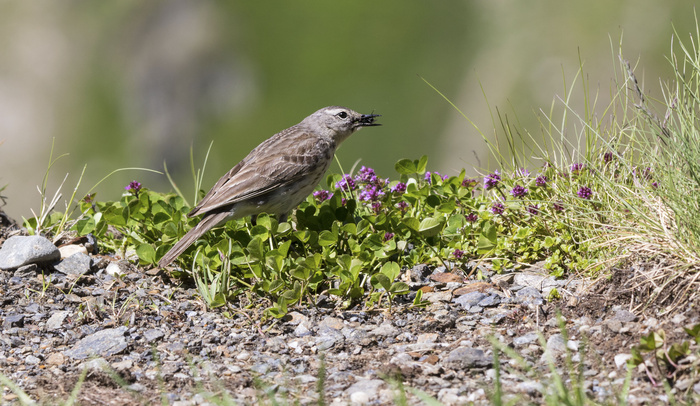
Feeding on insects amongst wild sage growing near the road side.
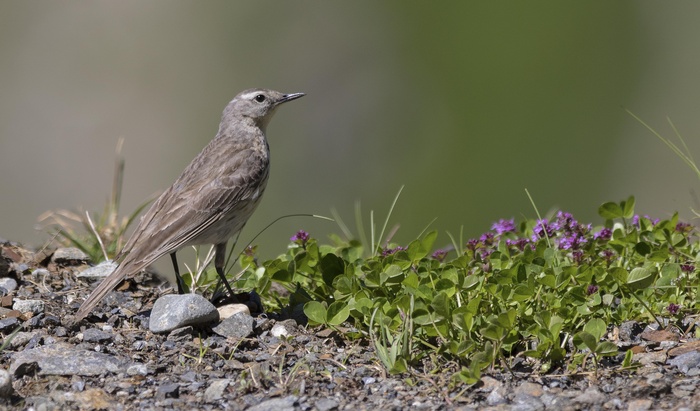
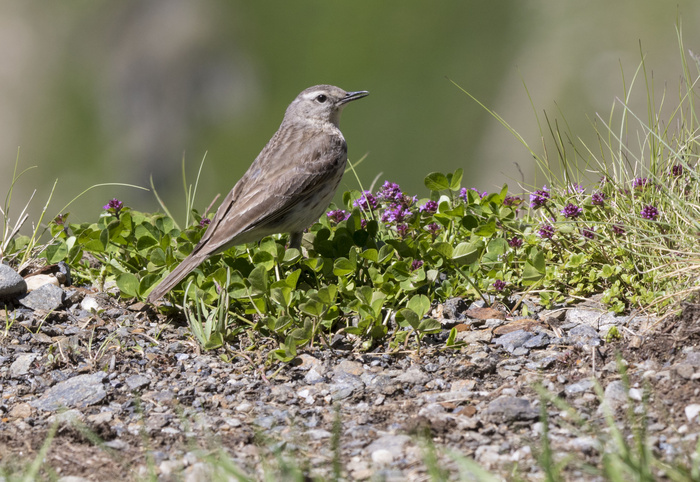
I wonder if this little wanderer will come anywhere near the Brecon Beacons this winter – you never know!!
Feeding on insects amongst wild sage growing near the road side.
I wonder if this little wanderer will come anywhere near the Brecon Beacons this winter – you never know!!
Alpine Accentor - bird of the high mountains.
11th August 2019
11th August 2019
A classic bird of the high mountains is the Alpine Accentor, it’s not called that for nothing! These pretty little birds really like it up high, breeding amongst the rocks and vegetation on remote mountain slopes. These were a big target bird for us and as a result we were right up in the High Carpathian mountains in Romania looking for them. The snow had melted and the road was now passable - it's usually blocked until at least mid - June most years! We drove around hairpin after hairpin as we climbed right up to the top of the ridge.
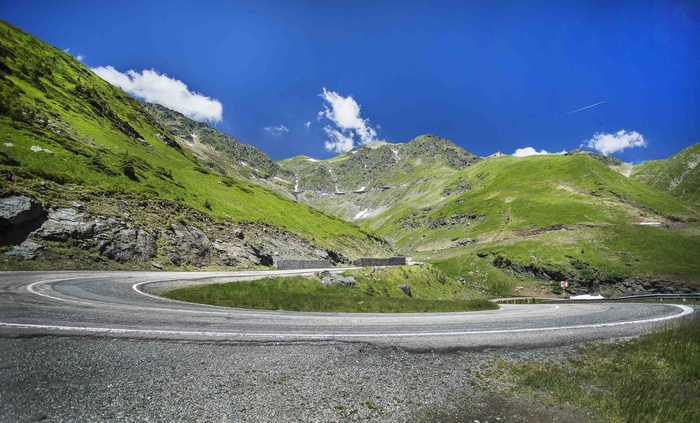
We had located two birds flying around, high up in the rocks above us - but not giving good views. They frustratingly remained distant for most of the time we were there and i thought that the chance of a shot was remote at best. As the day progressed we had decided to walk lower down to look at the views across the valley.
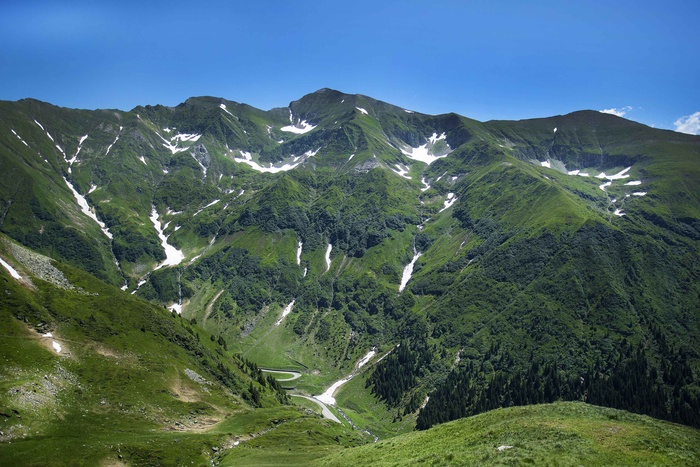
As we approached an old derelict building on the side of the road two birds were flitting around the ruins. Unbelievably, when I looked through my bins I could see they were two Accentors - all that time spent waiting for them to come nearer up on the rocks and here they were down near the roadside – typical!!
They were feeding amongst the rocks and vegetation and were taking no notice of me whatsoever. Closer and closer they came – even attempting to mate at one stage, and I was able to get a few shots – at last!
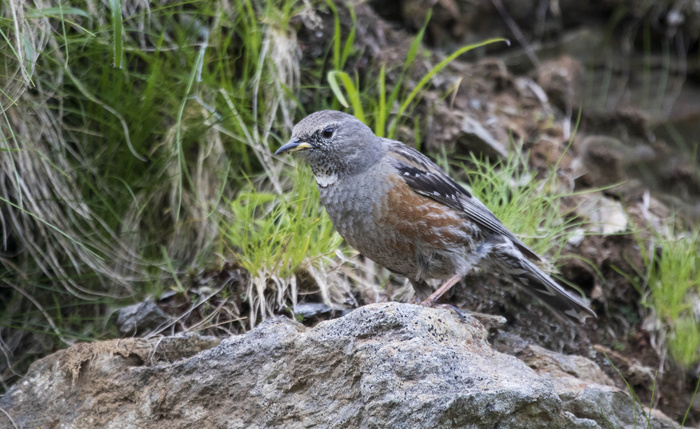
Notice the white throat patch and yellow base to the beak.
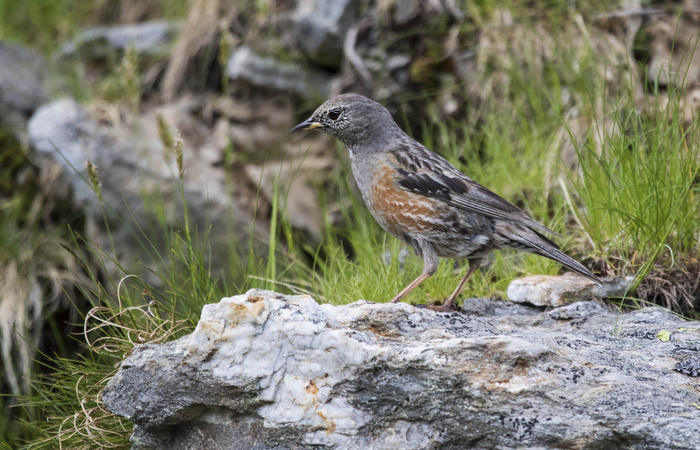
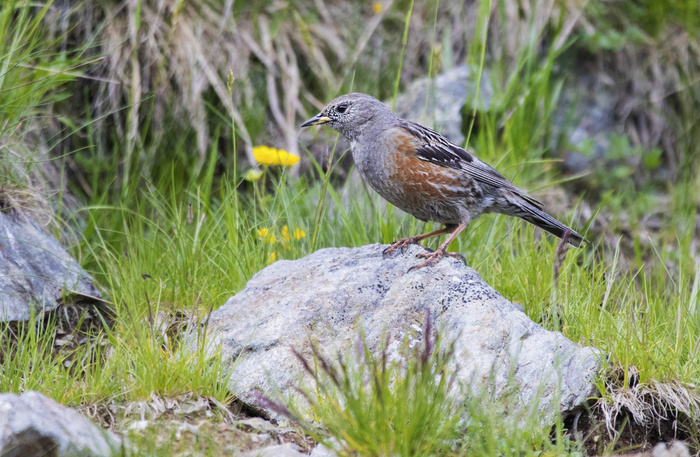
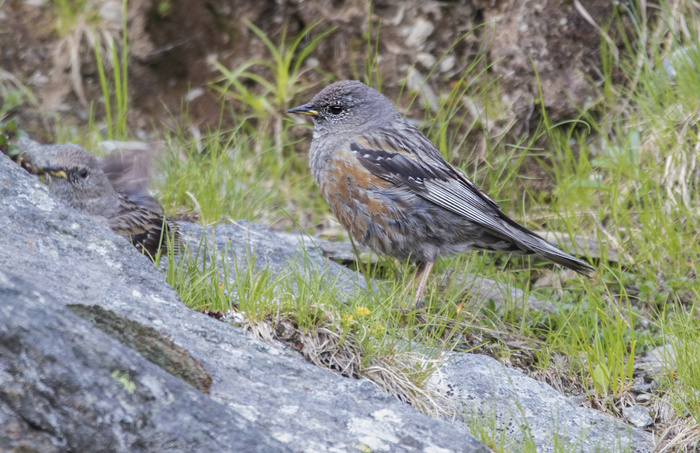
They really are a very nice little bird and it was worth the effort to see them.
We had located two birds flying around, high up in the rocks above us - but not giving good views. They frustratingly remained distant for most of the time we were there and i thought that the chance of a shot was remote at best. As the day progressed we had decided to walk lower down to look at the views across the valley.
As we approached an old derelict building on the side of the road two birds were flitting around the ruins. Unbelievably, when I looked through my bins I could see they were two Accentors - all that time spent waiting for them to come nearer up on the rocks and here they were down near the roadside – typical!!
They were feeding amongst the rocks and vegetation and were taking no notice of me whatsoever. Closer and closer they came – even attempting to mate at one stage, and I was able to get a few shots – at last!
Notice the white throat patch and yellow base to the beak.
They really are a very nice little bird and it was worth the effort to see them.
Marsh Harrier - Bulgaria / Romania border.
06th August 2019
06th August 2019
In the steppe – like country on the Bulgaria / Romania border there is a multitude of birdlife. The area is farmed in a very low key manner, mostly by hand – scything the crops and using horse and cart for transportation. Eagles and Harriers regularly hunt the area and typically Hoopoes and Shrikes can be seen throughout the farmland. We obtained the permission of the reed cutters (who live in small caravans near the reed beds while the harvesting is taking place), to drive onto the land where there was an area of water. As we approached we could see a colony of white Pelicans with a few Dalmatian Pelicans amongst them. We stopped and stood behind the vehicle to observe them because they can be quite spooky and they were lifting off the ground continuously, seemingly unable to settle.
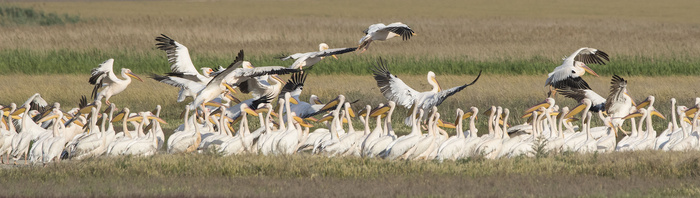
We were enjoying watching them when I noticed a male Marsh Harrier quartering the ground nearby and slowly but surely it was coming closer. I thought it would turn away when it got too near us, but it continued on its course. I made Susan and Dimiter aware of this and they stood quite still so as not to spook it and on it came right past the vehicle and I managed to get some fairly close – up shots. They don’t usually come that close in the UK so it was a refreshing change.
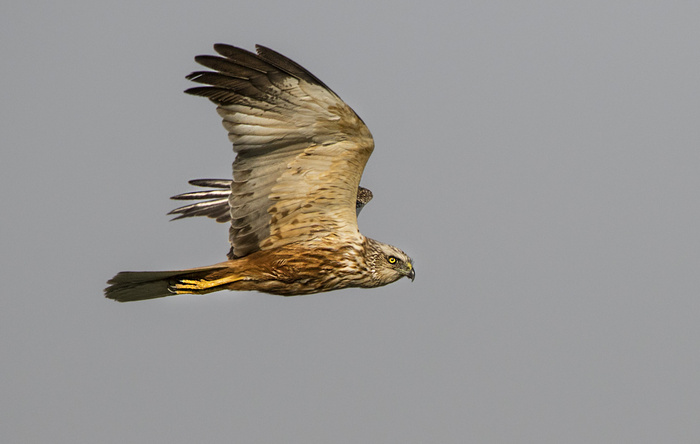
Still keeping one eye on us!
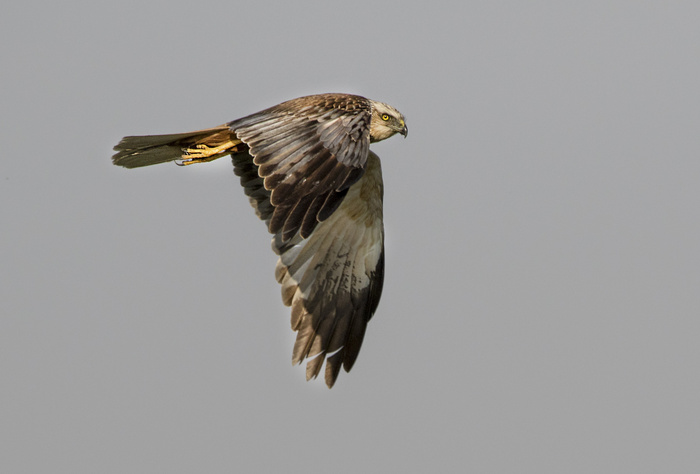
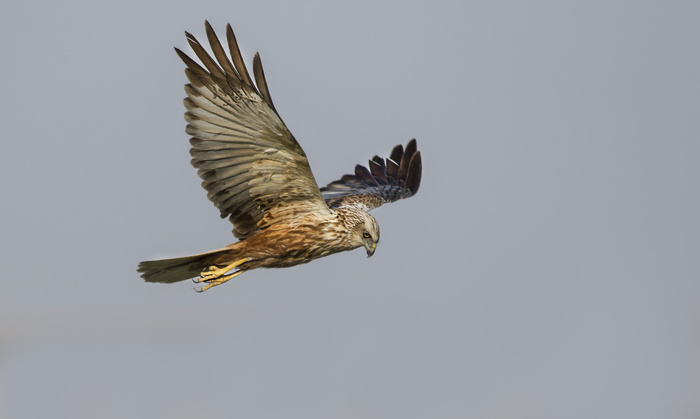
We were enjoying watching them when I noticed a male Marsh Harrier quartering the ground nearby and slowly but surely it was coming closer. I thought it would turn away when it got too near us, but it continued on its course. I made Susan and Dimiter aware of this and they stood quite still so as not to spook it and on it came right past the vehicle and I managed to get some fairly close – up shots. They don’t usually come that close in the UK so it was a refreshing change.
Still keeping one eye on us!
Purple Heron, Spoonbill and the heat!
02nd August 2019
02nd August 2019
The heat in Bulgaria and also Romania, while we were there in June really was quite debilitating and health precautions became necessary. Copious amounts of water had to be consumed and sun cream had to be applied every morning first thing. Both of these become tedious after a time – sun cream can get in your eyes when you sweat and we were sweating big time! And water becomes particularly unpalatable after you are drinking it by the litre! However, both were very necessary if you were staying out in temperatures of thirty degrees plus - every day. Although having taken these precautions I was still suffering from some heat exhaustion on one particular day. These symptoms manifested themselves in the form of a really upset stomach and I had to disappear into some bushes very quickly one morning (much to the amusement of Susan and Dimiter). This was bad enough but it was accompanied with feelings of extreme lethargy when I just wanted to curl up and fall asleep. Thankfully these horrible feelings had passed by the following day and afterwards I increased my water intake and found shade whenever I could.
Previously I had mentioned to Dimiter that it would be good to see a Purple Heron if possible, and in fairness everything we asked about he did his best to find. Unfortunately on the day mentioned above that I was below par we were out on an extremely hot and humid morning in a very arid area with hardly any shelter. We had parked the jeep under the only tree around to try and escape the heat and I was sat inside resting. Although the sky was overcast and quite grey in places, the weather was still hugely oppressive. There was a reed bed about two hundred yards away which was supposed to hold breeding Purple Herons and we were waiting to try and catch a bird in flight. Susan and Dimiter were looking at some dragonflies and I was sat there with my lens on my lap just in case. I was drifting off to sleep when suddenly a shout came - ‘Steve a Purple Heron’ I jumped out of the vehicle, half asleep and saw a bird flying overhead.
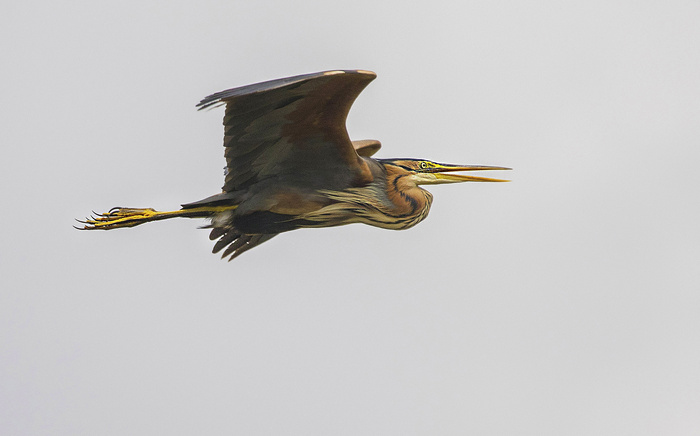
I took a few shots and retreated back to my seat - I felt as rough as a Badgers bum to be honest! After a couple of minutes had passed I was drifting back to sleep – when the call came again - ‘Steve it’s coming back’ - I was back out again trying to take a few shots.
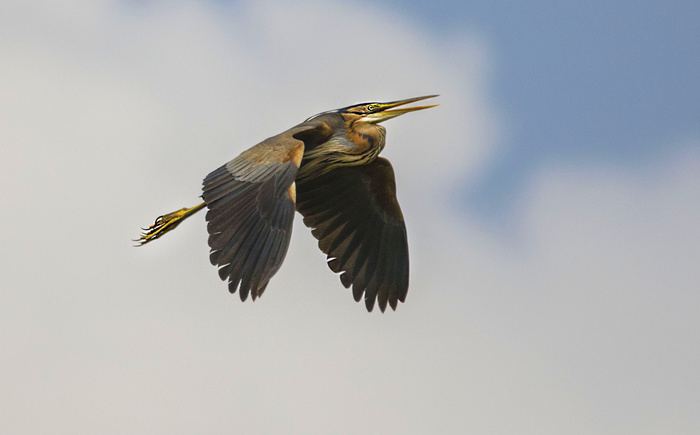
I had to try because I really wanted to see this bird.
The sky had by now become totally clear and it was now even more hot. As the Heron drifted away back to the reed bed I resumed my position and I thought that was it because Susan and Dimiter were coming back to the jeep. Then like an alarm clock – ‘Steve, Spoonbill coming over’ it was like something from a nightmare – out again and took more shots.
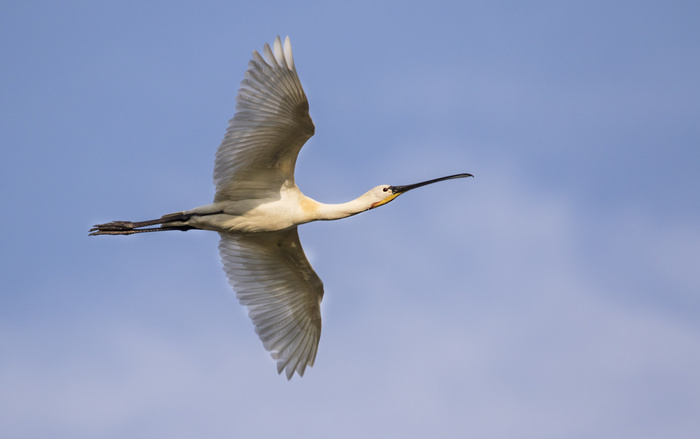
Although it was great to see these lovely birds, especially the Heron because we don't see many of those anywhere, I was thinking to myself, ‘please don’t find anything else’! I felt so ungrateful but it was really tough going, then at last we drove off with the air-conditioning on. I was glad to escape the oppressive heat and head for our much needed lunch stop.
Previously I had mentioned to Dimiter that it would be good to see a Purple Heron if possible, and in fairness everything we asked about he did his best to find. Unfortunately on the day mentioned above that I was below par we were out on an extremely hot and humid morning in a very arid area with hardly any shelter. We had parked the jeep under the only tree around to try and escape the heat and I was sat inside resting. Although the sky was overcast and quite grey in places, the weather was still hugely oppressive. There was a reed bed about two hundred yards away which was supposed to hold breeding Purple Herons and we were waiting to try and catch a bird in flight. Susan and Dimiter were looking at some dragonflies and I was sat there with my lens on my lap just in case. I was drifting off to sleep when suddenly a shout came - ‘Steve a Purple Heron’ I jumped out of the vehicle, half asleep and saw a bird flying overhead.
I took a few shots and retreated back to my seat - I felt as rough as a Badgers bum to be honest! After a couple of minutes had passed I was drifting back to sleep – when the call came again - ‘Steve it’s coming back’ - I was back out again trying to take a few shots.
I had to try because I really wanted to see this bird.
The sky had by now become totally clear and it was now even more hot. As the Heron drifted away back to the reed bed I resumed my position and I thought that was it because Susan and Dimiter were coming back to the jeep. Then like an alarm clock – ‘Steve, Spoonbill coming over’ it was like something from a nightmare – out again and took more shots.
Although it was great to see these lovely birds, especially the Heron because we don't see many of those anywhere, I was thinking to myself, ‘please don’t find anything else’! I felt so ungrateful but it was really tough going, then at last we drove off with the air-conditioning on. I was glad to escape the oppressive heat and head for our much needed lunch stop.
Paddyfield Warbler, Bulgaria - Romania border.
27th July 2019
27th July 2019
Today, unbelievably we were on the trail of the Paddyfield Warbler. This little Warbler breeds in temperate central Asia. It is migratory, wintering in Pakistan and India. It is a rare vagrant to western Europe although there are small breeding populations along the western shores of the Black Sea around the border between Bulgaria and Romania. Dimiter knew where to find these little birds - I won't say it again about local knowledge, we found ourselves on a track which bordered a small reed bed and as we walked along we could hear their song - somewhat weaker than Reed Warbler and with less mimicry than Marsh Warbler. (I add that we only recognized this after Dimiter pointing these songs out). These birds nest low down in the reeds but on a sunny day like like today they were showing from time to time.
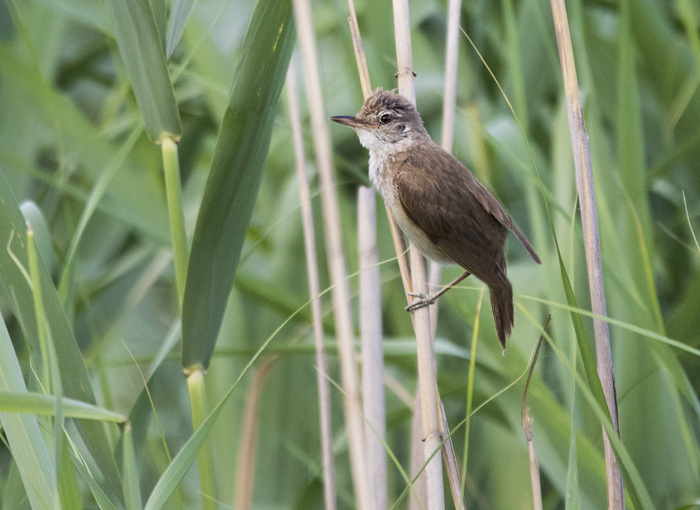
Notice the pale lower mandible with a black tip and also the distinct supercillium.
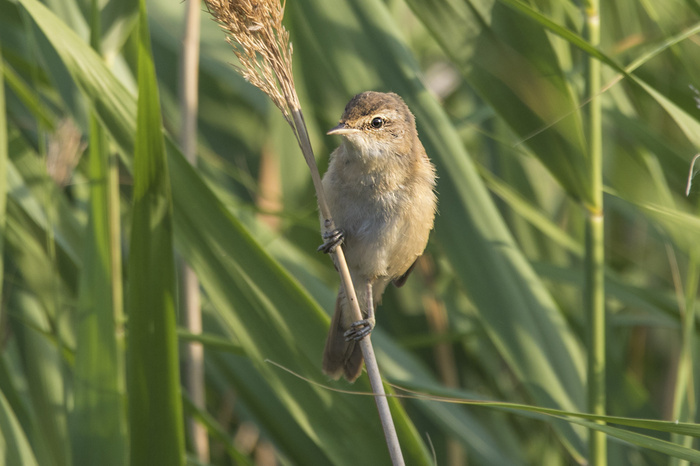
Notice the pale lower mandible with a black tip and also the distinct supercillium.
Olive Tree Warblers - a real bogey bird - until Romania!!
27th July 2019
27th July 2019
If there’s one bird that’s been an absolute nightmare to see on our travels it’s the Olive Tree Warbler. It is another biggish warbler but if anything is even more frustrating than the Barred Warbler (See previous blog). I’ve lost count of the times we’ve tried just to get a glimpse of one, particularly in Lesvos. They have a distinctive scratchy and quite discordant song, so you know where they are, but they are extremely reluctant to show. Again Dimiter knew where there were birds - with the risk of repeating myself - you will never find typically difficult birds like these without local knowledge! We were parked up alongside some bushes, again using the jeep as a hide, but this time the birds started to show fairly well. I could hardly believe that we were seeing these birds that are so difficult to see on e.g. Lesvos, where their sites, (exclusively olive groves there), are so well documented. I have been asked numerous times by other birders on Lesvos if I have seen any and I have indeed asked others the same question - It’s always the same answer – heard them singing but no views! It was therefore, after literally years of frustration, a huge pleasure to get superb views, and an even greater sense of satisfaction to unbelievably photograph what really are very awkward birds indeed.
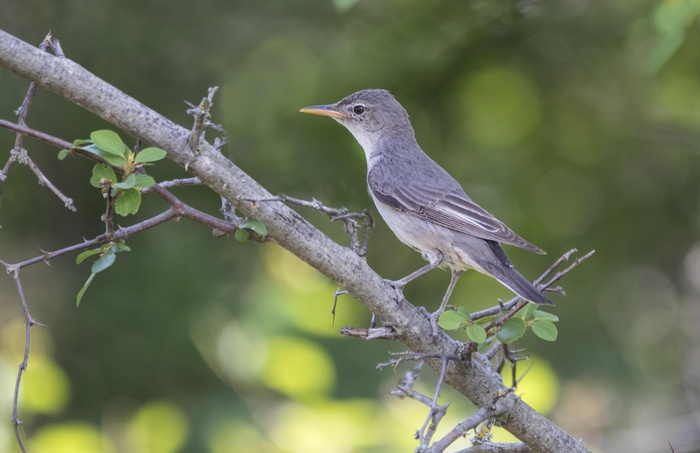
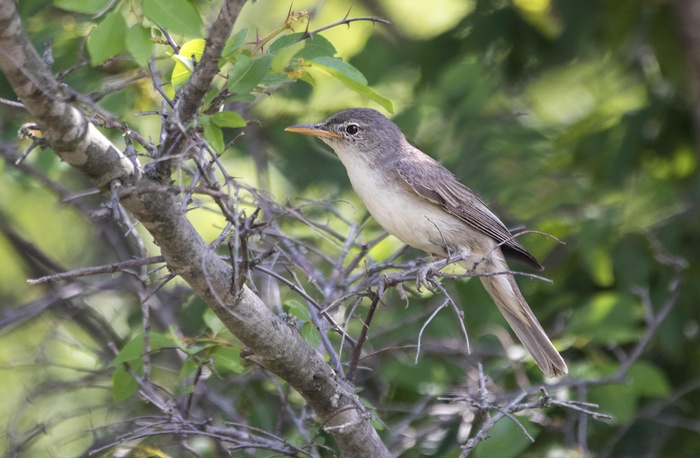
Barred Warblers in Romania.
27th July 2019
27th July 2019
Barred Warbler is a very difficult bird to see, although it is a large warbler it is frequently skulking and shy and can be very frustrating to pin down. We had tried using Dimiter’s expert local knowledge to see one and we had a few brief glimpses of birds from a few sites that he knew, but because their breeding had finished they weren’t showing very much. We were in the last site that he knew birds had been seen and we could see two birds just flitting around the bushes but it didn’t look like there was any chance of a decent sighting. It was again blisteringly hot as we sat in the jeep using it as a hide and we were seriously thinking of giving it up as a bad job, but Dimiter, who was very dogged in his approach to seeing birds just wanted to give it a bit more time. We could see a bird low down in some dense bushes and then surprisingly it popped out briefly into view and I had about ten seconds to take a few shots, it wasn’t much time but at least we had a half decent view of a bird. Goodness only knows if we will ever see another so it was good to get at least a record shot.
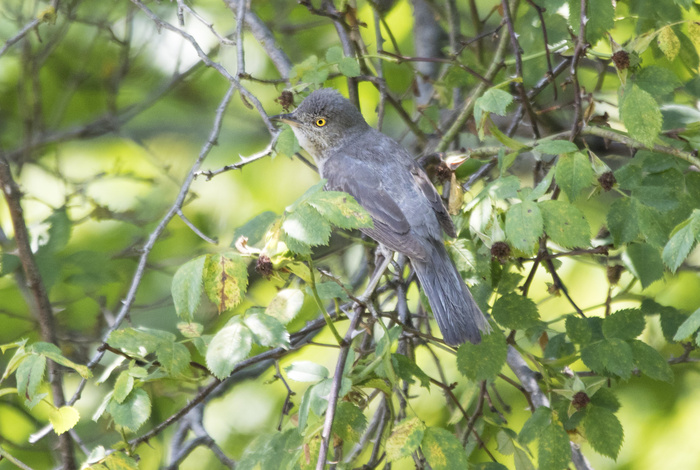
A very distinctive bright golden yellow eye!
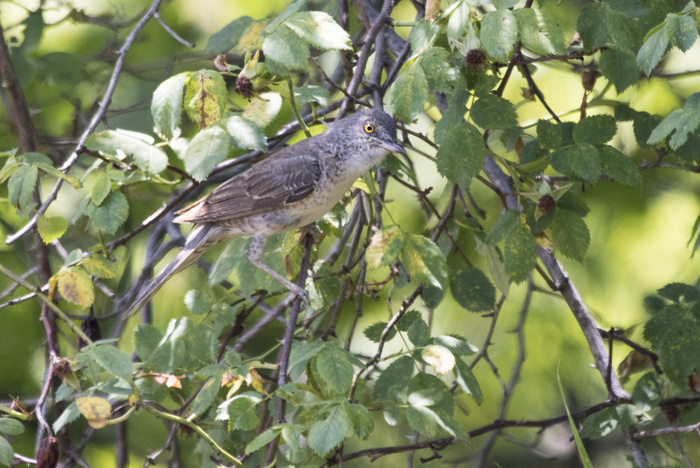
A very distinctive bright golden yellow eye!
Marsh Warblers in Bulgaria.
24th July 2019
24th July 2019
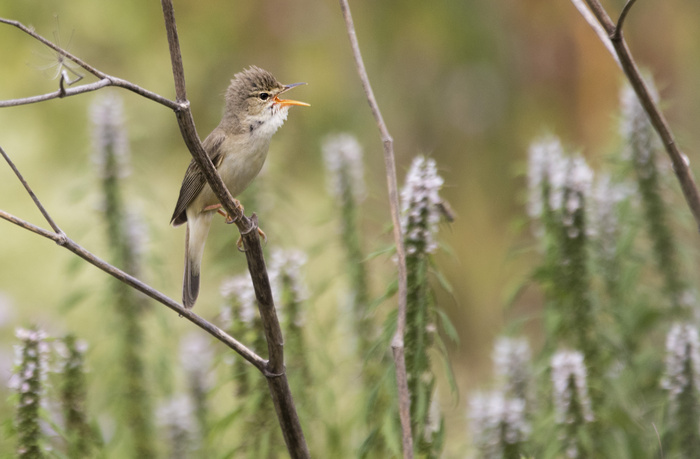
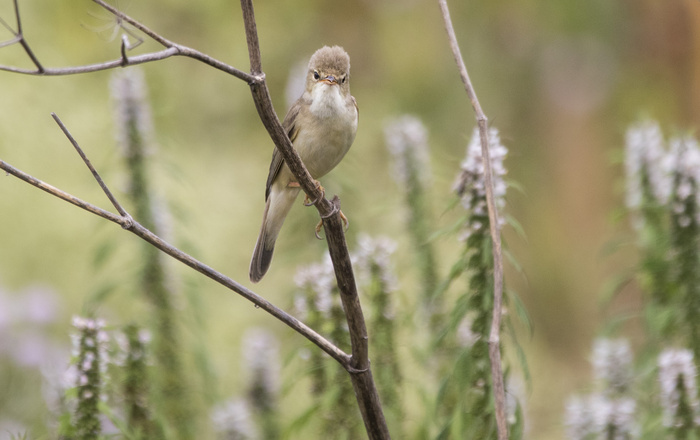
One morning we travelled with Dimiter our Bulgarian bird guide to a location he knew where Marsh Warblers were sometimes seen. These birds are very difficult to see in the UK, they do not breed here anymore and are confined to a few small locations around the country. Using id only they can be very difficult to separate from Reed Warblers. In non - worn plumage they have a pale eye ring and in addition are slightly more olive above, a little whiter below and have paler legs than the Reed Warbler. However, the best way to separate these two species is by song. The Marsh Warbler’s song is almost totally based on mimicry and it is a world away from the song of the Reed Warbler. It is estimated that their song mimics around seventy five other bird songs.
Below is a recording of a Marsh Warblers song from Xeno Canto - please press play after clicking the link.
https://www.xeno-canto.org/486919
Another way to separate them from Reed Warblers is that they avoid reed beds.
When we arrived at the location the plant growth was up to six feet high with a few breaks in between which were around five feet. We were, therefore, stood up to our chests in vegetation, thankfully none of which was irritating or stinging. The Marsh Warblers were in full song and you could immediately tell the difference from a Reed Warbler’s song. We waited for some time, getting only quick flashes of the birds as they zipped around the foliage. Then I picked out a bird low down on a bare plant stem and slowly it inched its way up to the top giving great and prolonged views as it delivered its song. Well worth the wait to see and photograph this difficult to see little bird.
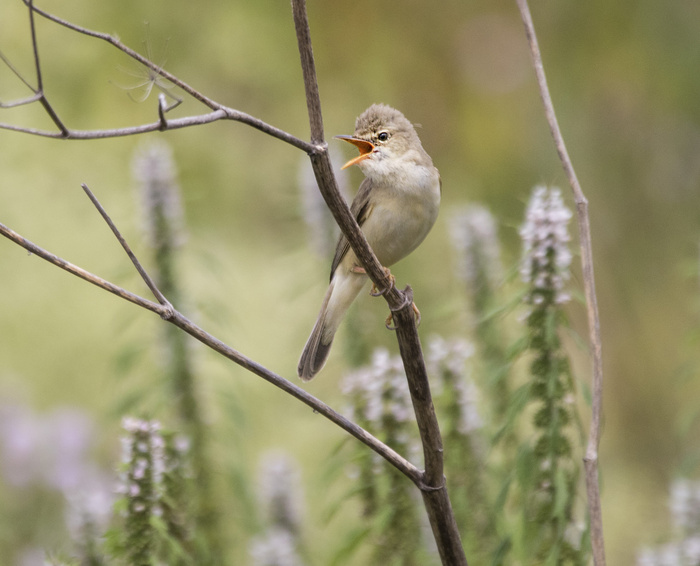
Below is a recording of a Marsh Warblers song from Xeno Canto - please press play after clicking the link.
https://www.xeno-canto.org/486919
Another way to separate them from Reed Warblers is that they avoid reed beds.
When we arrived at the location the plant growth was up to six feet high with a few breaks in between which were around five feet. We were, therefore, stood up to our chests in vegetation, thankfully none of which was irritating or stinging. The Marsh Warblers were in full song and you could immediately tell the difference from a Reed Warbler’s song. We waited for some time, getting only quick flashes of the birds as they zipped around the foliage. Then I picked out a bird low down on a bare plant stem and slowly it inched its way up to the top giving great and prolonged views as it delivered its song. Well worth the wait to see and photograph this difficult to see little bird.
Woodland stream in Bulgaria - a brief return visit.
20th July 2019
20th July 2019
Early the following morning we paid a brief return visit to the same woodland stream, (previous blog,) such was its attraction. We couldn't stay long because we were travelling the countryside. Usually, the old saying goes, ‘You should have been here yesterday’ meaning that someone has missed out because two days are never the same – well it doesn’t apply to this location because it was like the film ‘Groundhog Day’. All the birds seen previously were still bathing and drinking, but in addition the Hawfinches were also out on the forest track feeding youngsters in front of our vehicle.
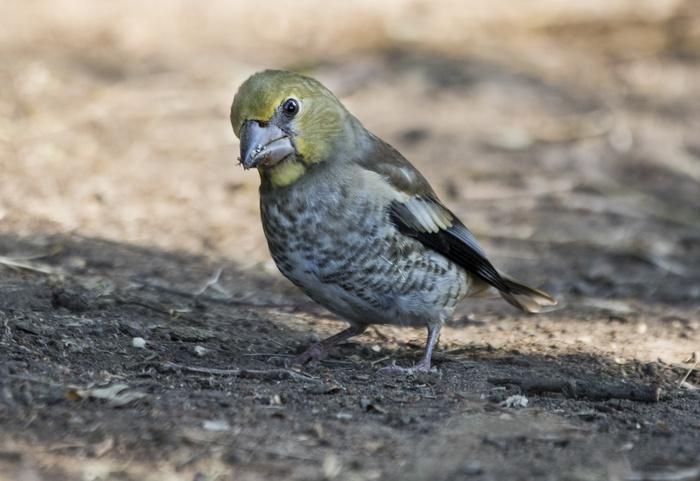
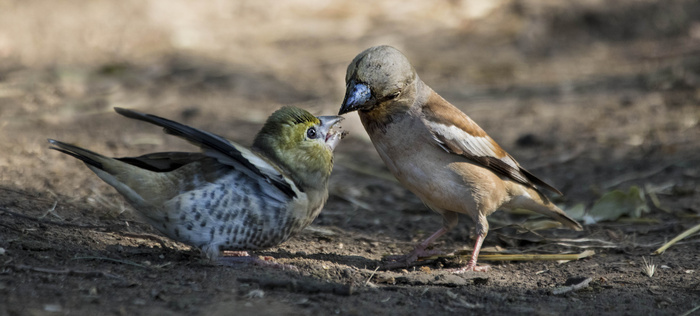
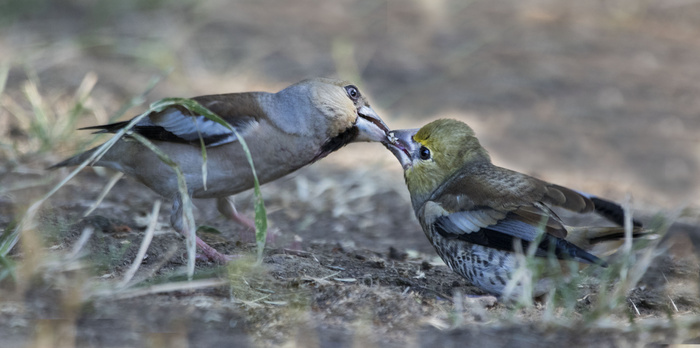
I’m confident that there are good things to see every day at this site.
I’m really envious about the birding there and I do so wish we had locations like this back home. They are so unaffected by people - it's quite remarkable but nevertheless a true statement when I say that we didn't, throughout our whole time in Bulgaria and Romania, see a single birder at any of these bird - filled locations.
Can you imagine that in the UK?
I’m confident that there are good things to see every day at this site.
I’m really envious about the birding there and I do so wish we had locations like this back home. They are so unaffected by people - it's quite remarkable but nevertheless a true statement when I say that we didn't, throughout our whole time in Bulgaria and Romania, see a single birder at any of these bird - filled locations.
Can you imagine that in the UK?