News
Whinchats in Cwm Llia, Brecon Beacons.
25th June 2017
25th June 2017
I don't visit the Senni valley and Cwm Llia, (Llia valley), very often because although they are very attractive they are unfortunately plagued by outdoor pursuits companies. These people disturb everything with their convoys of mini buses and crowds of people, and wherever they are - I'm not!! Also Maen Llia, (the thought to be Bronze age), standing stone in Cwm Llia is a tourist attraction and once late morning comes traffic builds up and it's time to go!
However, I was passing through this valley a few days ago early in the early morning during the heat-wave we experienced, it was necessary to be out very early before the sun became too strong and ruined the light. I had stopped on the roadside and the only sounds were the birds singing and it was pleasantly mild in the gentle early morning breeze. I thought I could hear a Northern Wheatear calling, nothing surprising there, this is a breeding area for them, but as I looked I could now see it was a Whinchat. These are quite widespread summer migrants to the Uk but I don't see many locally so I was pleased. I stayed in my car and I could now see two birds, male and female, going back and fore an obvious nest - even better!
I shot a few images and drove on twenty or thirty yards not to disturb them, they had a nest in the base of a Hawthorn tree and both birds were taking food in. I'm certain the youngsters will be out very soon so I will probably go back next week 'early' one morning to try and see them, they are pretty little birds.
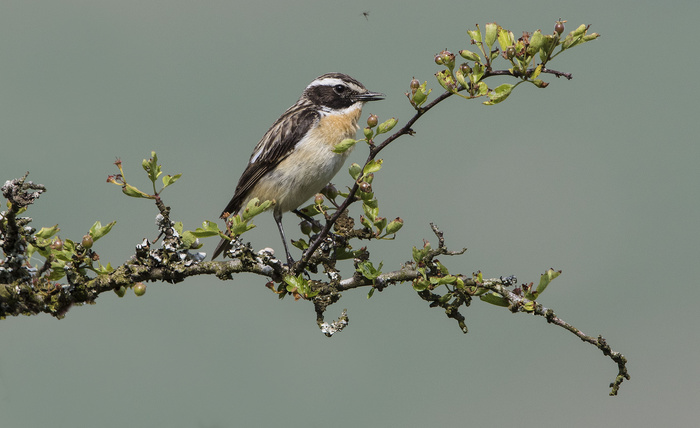
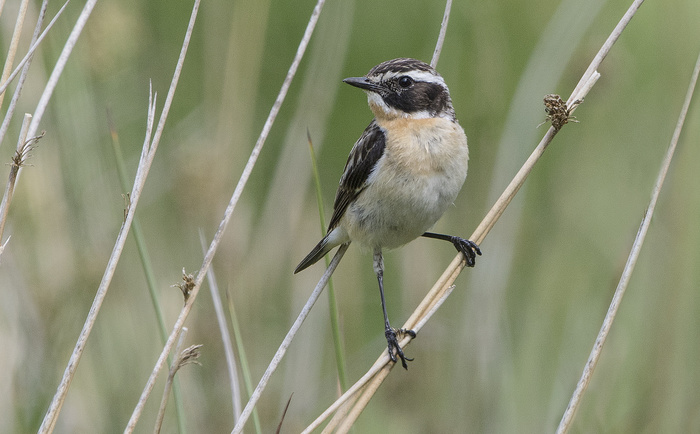
However, I was passing through this valley a few days ago early in the early morning during the heat-wave we experienced, it was necessary to be out very early before the sun became too strong and ruined the light. I had stopped on the roadside and the only sounds were the birds singing and it was pleasantly mild in the gentle early morning breeze. I thought I could hear a Northern Wheatear calling, nothing surprising there, this is a breeding area for them, but as I looked I could now see it was a Whinchat. These are quite widespread summer migrants to the Uk but I don't see many locally so I was pleased. I stayed in my car and I could now see two birds, male and female, going back and fore an obvious nest - even better!
I shot a few images and drove on twenty or thirty yards not to disturb them, they had a nest in the base of a Hawthorn tree and both birds were taking food in. I'm certain the youngsters will be out very soon so I will probably go back next week 'early' one morning to try and see them, they are pretty little birds.
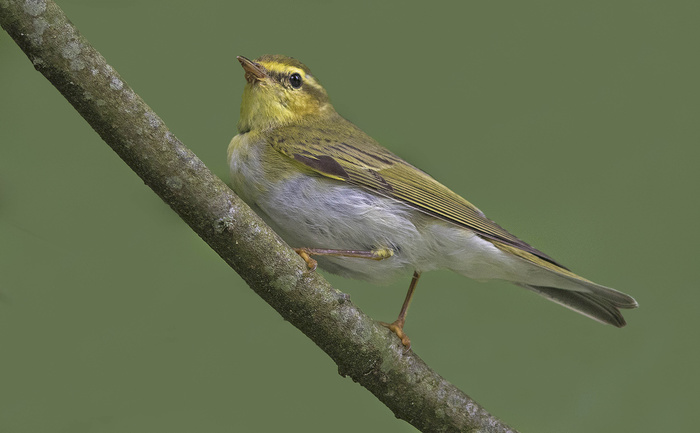
Wood Warblers.
16th June 2017
16th June 2017
If there's one little bird that makes my spring it's the Wood Warbler. This tiny little jewel usually arrives in the Brecon Beacons in late April where they are often overlooked unless you are familiar with their call and song. Their call is a series of single peeping notes which are quite penetrating and their song is the characteristic 'Spinning Coin'. They favour light open areas of Oak and Beech where with patience they can be seen flitting restlessly from branch to branch as they search for insects. For such an arborial bird they unusually make their nests on the ground typically under fallen branches. They are quite difficult to photograph because they are so small and very restless. There is a particular area I visit in May and June where I know they will be present and it has never failed to turn up these lovely little birds. Yesterday I was there early morning and sure enough I could hear their calls and I identified three birds flying around. Exercising a considerable amount of patience I finally managed to get a record shot of what is my favourite spring warbler.
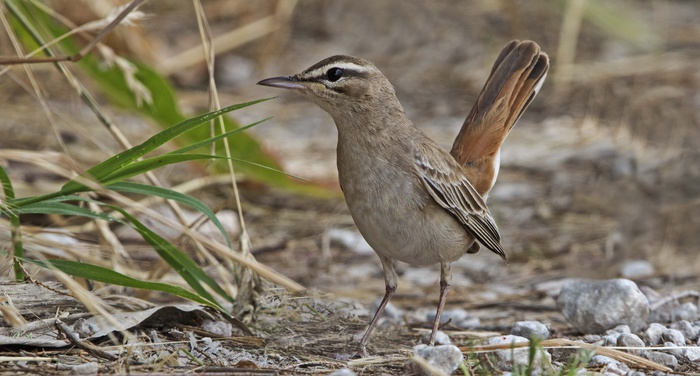
Rufous Bush Chat, Lesvos.
01st June 2017
01st June 2017
Another enigmatic bird that has eluded me photographically is the Rufous Bush Chat, now called Rufous Scrub Robin. They can be very elusive indeed just hiding in a patch of scrub or a few bushes and only popping out occasionally to give brief and tantalising views. Along a quiet stretch of track we had seen two birds flying back and fore some bushes a few times as we were driving past. These were obviously a breeding pair, so one afternoon we decided to park under an overhanging tree in the shade to have some lunch, this also gave us a potential opportunity to view them. As we sat there on this quiet track almost falling asleep in the dappled shade. Suddenly - a male bird was on the track twenty yards away, we thought that was the only views we were getting but he came hopping along nearer and nearer until he was only five yards away! We couldn’t believe this bird was behaving like this and I was able to take a few shots of what is normally a very awkward bird.
Please see Latest Images, Lesvos.
Please see Latest Images, Lesvos.
Night Herons, Lesvos.
01st June 2017
01st June 2017
If there is one bird that I have struggled to get any decent images of on Lesvos it is the Night Heron. This has been frustrating because I must admit to them being my favourite Herons. I have seen many in flight, sometimes up to twenty birds flying back to roost, usually in the very early morning. However, this time I noticed a couple of birds sitting out on branches above the east river, again early in the morning. These lovely but enigmatic birds are mostly active by night and then spend the day communally roosting in the tops of pine tree plantations. They are usually, like any Heron quite shy, and you have to be careful when trying to photograph them or they will just climb further into the undergrowth or even fly away. I could see one bird favouring a particular area on a few mornings so again one morning very early I drove down river and turned around so I was facing the right way and then crawled back up with my lens mounted on a bean bag on the car window sill. I stopped opposite him and switched the engine off, he thankfully tolerated me and I was able to take many shots of him until he decided it was time to fly to roost and off he went, you have to be there early to catch these birds!
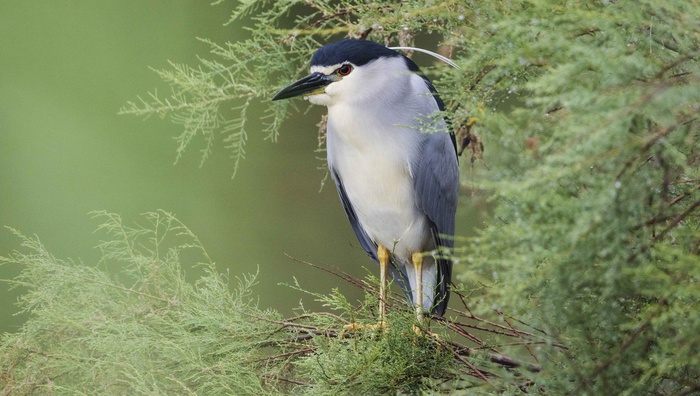
Please see Latest Images, Lesvos.
Please see Latest Images, Lesvos.
Bee Eaters, Lesvos.
01st June 2017
01st June 2017
Every morning we were up at first light and were leaving our hotel for the first port of call which was the Tsiknias or (East river), which is a five minute drive away. Most birders do this to try and see the birds of the river before any disturbance from farmers and other tourists happens.
You don’t know what you are going to see this early and it’s really worth getting up for, we are early birds ourselves anyway and what’s the point of lying in bed on holidays!
On a couple of mornings we could see some European Bee Eaters flying around a particular area and very occasionally they were landing on some nice looking perches on the river bank. With the east river you have to be on a particular side of the river bank in the early morning before the sun gets up and makes the light too harsh. Therefore, one morning we were in place in the car right opposite these perches before anyone was around and to be fair there weren’t many people around anyway because it is considered late to be in Lesvos for birding. We waited for a while until the Bee Eaters began to fly after the airborne insects and luckily a bird flew around a couple of times and then landed right in front of us. It didn’t last long but just enough to get a few frames off capturing this beautiful bird, if you are tired of Bee Eaters then you must be tired of life!!
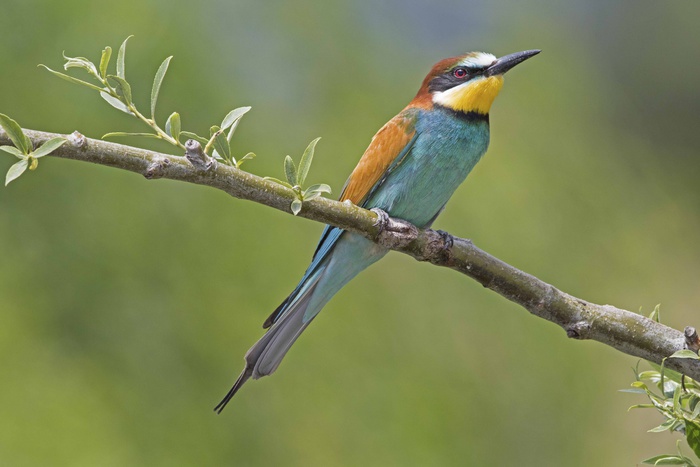
Please see Latest Images, Lesvos.
You don’t know what you are going to see this early and it’s really worth getting up for, we are early birds ourselves anyway and what’s the point of lying in bed on holidays!
On a couple of mornings we could see some European Bee Eaters flying around a particular area and very occasionally they were landing on some nice looking perches on the river bank. With the east river you have to be on a particular side of the river bank in the early morning before the sun gets up and makes the light too harsh. Therefore, one morning we were in place in the car right opposite these perches before anyone was around and to be fair there weren’t many people around anyway because it is considered late to be in Lesvos for birding. We waited for a while until the Bee Eaters began to fly after the airborne insects and luckily a bird flew around a couple of times and then landed right in front of us. It didn’t last long but just enough to get a few frames off capturing this beautiful bird, if you are tired of Bee Eaters then you must be tired of life!!
Please see Latest Images, Lesvos.
Lesvos 2017.
01st June 2017
01st June 2017
We’ve just returned from a mini break in Lesvos, although the bird migration was essentially over, and we knew that prior to leaving, there were still some nice birds to see.
After a very eventful journey there enduring airport delays caused by a passenger and then a nightmare drive through Mytilini avoiding Kamikaze pizza delivery riders and compounded by a really badly designed one way system we finally arrived in darkness at our hotel around 22.00. Our flight times were not the most amenable anyway but delays on top are most unwelcome!
We didn’t seek out any birds in particular we just visited different areas of the island and took what came along. The weather was superb with wall to wall sunshine every day and we spent the week in shorts and tee shirts basking in 30+ C sunshine. At this time of year, however, you have to be up at first light to take advantage of the mellow light and the birds because by 11.00 it is too hot to bird and the sun is too strong for taking any decent shots. After this time we became regular tourists and just chilled out driving around and stopping at little tavernas for lunch etc. We returned to our hotel by mid-afternoon and had a rest on the balcony before strolling down to the local harbour to enjoy a nice dinner and a glass or two of the local wines and beers in the many restaurants and bars.
Please see the trip reports section.
After a very eventful journey there enduring airport delays caused by a passenger and then a nightmare drive through Mytilini avoiding Kamikaze pizza delivery riders and compounded by a really badly designed one way system we finally arrived in darkness at our hotel around 22.00. Our flight times were not the most amenable anyway but delays on top are most unwelcome!
We didn’t seek out any birds in particular we just visited different areas of the island and took what came along. The weather was superb with wall to wall sunshine every day and we spent the week in shorts and tee shirts basking in 30+ C sunshine. At this time of year, however, you have to be up at first light to take advantage of the mellow light and the birds because by 11.00 it is too hot to bird and the sun is too strong for taking any decent shots. After this time we became regular tourists and just chilled out driving around and stopping at little tavernas for lunch etc. We returned to our hotel by mid-afternoon and had a rest on the balcony before strolling down to the local harbour to enjoy a nice dinner and a glass or two of the local wines and beers in the many restaurants and bars.
Please see the trip reports section.
Musings on a rainy day.
15th May 2017
15th May 2017
While briefly browsing one of the birding websites earlier today I was really surprised to read that large amounts of birders/photographers have been travelling long distances to photograph a Common Cuckoo. This bird is located at a place called Thursley Common in West Sussex and apparently it is showing itself quite well. Incredibly one man travelling on a 230 mile round trip to photograph the bird. Other ‘Birders’ were saying they had never seen a Cuckoo, with one woman declaring that she had never heard one!!
When I read accounts like this I really begin to question what these people are doing in this hobby. As a birder if you can’t find a Common Cuckoo in May in the UK then you need to try harder. I accept, however, that photographing these birds can be difficult and herein lies the problem. This new breed of birders/photographers are not prepared to try and find their own birds, they want everything put on a plate in front of them! It's little wonder that people are vague about their findings and in particular their locations. In reality all it takes is for someone to get up at first light, stake out a likely Cuckoo territory, watch for a couple of hours to see what the bird’s favourite perches are and then return in the next few days and wait in a hide until hopefully the bird perches in a photographically suitable position and if it doesn't - then try again!
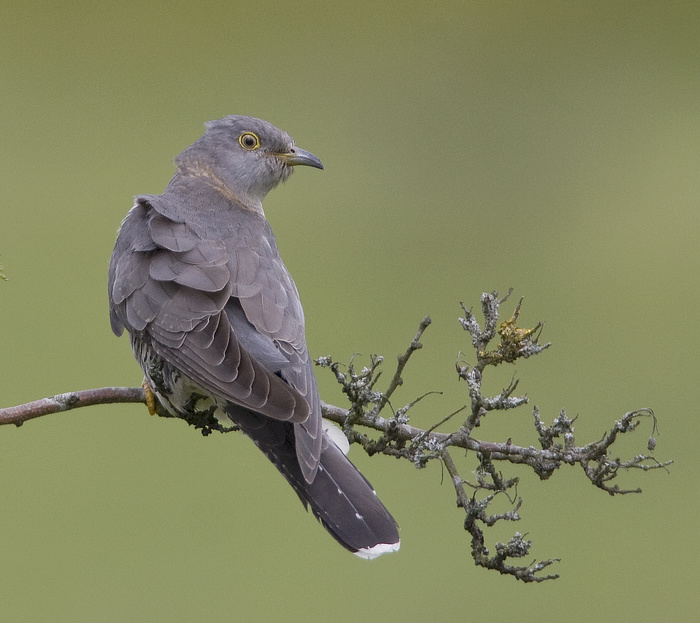
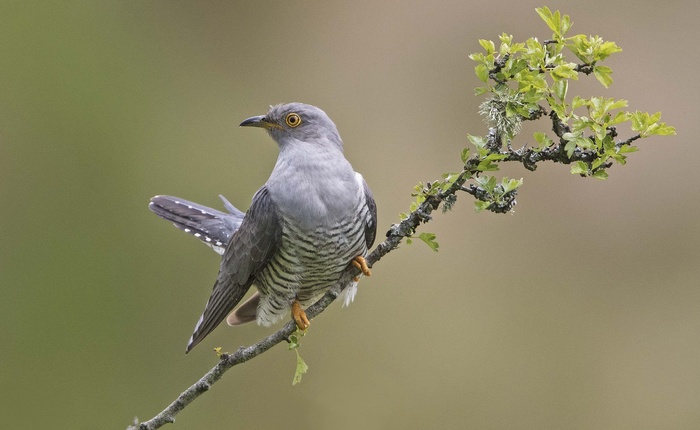
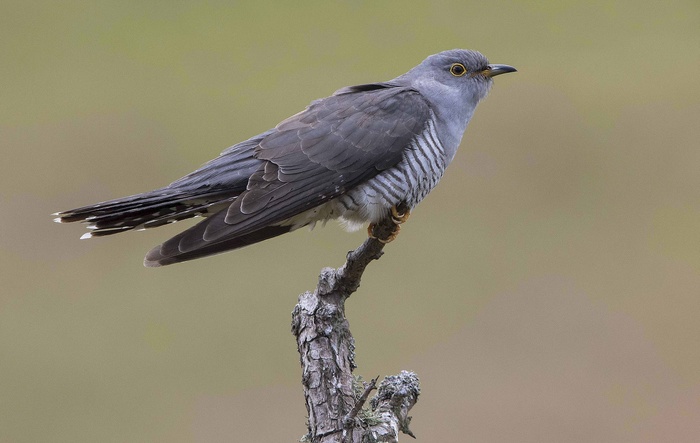

Unfortunately these days people would rather search the wildlife blogs, websites and other social media platforms for other people’s findings and then capitalise on their hard work. They are in fact a human form of Cuckoo themselves. I wouldn’t mind so much if they showed some sort of humility towards the hobby, instead they just see this behaviour as the norm. Please read one of my previous blogs on the appalling behaviour and attitude of the man in the Forest of Dean. I am not saying the people going for this Cuckoo are badly behaved but they are still typical of modern birding/photography, they are just plain trophy hunters.
Kingfishers are another subject that gets me going, people would rather pay £100 to go to a set-up site than get out and find birds on their local river etc.
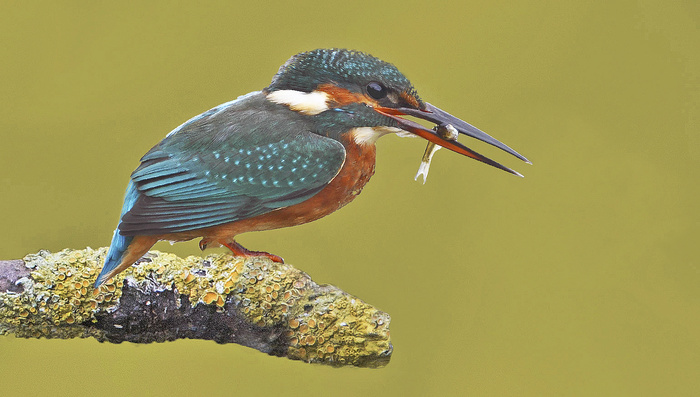
I’m all for sharing rare bird’s info when it comes around, we all want to see those but come on, ‘Birders’ should at least try and find some of their own birds!!
I think the rain is stopping, I must get out more and find some birds, LOL.
When I read accounts like this I really begin to question what these people are doing in this hobby. As a birder if you can’t find a Common Cuckoo in May in the UK then you need to try harder. I accept, however, that photographing these birds can be difficult and herein lies the problem. This new breed of birders/photographers are not prepared to try and find their own birds, they want everything put on a plate in front of them! It's little wonder that people are vague about their findings and in particular their locations. In reality all it takes is for someone to get up at first light, stake out a likely Cuckoo territory, watch for a couple of hours to see what the bird’s favourite perches are and then return in the next few days and wait in a hide until hopefully the bird perches in a photographically suitable position and if it doesn't - then try again!
Unfortunately these days people would rather search the wildlife blogs, websites and other social media platforms for other people’s findings and then capitalise on their hard work. They are in fact a human form of Cuckoo themselves. I wouldn’t mind so much if they showed some sort of humility towards the hobby, instead they just see this behaviour as the norm. Please read one of my previous blogs on the appalling behaviour and attitude of the man in the Forest of Dean. I am not saying the people going for this Cuckoo are badly behaved but they are still typical of modern birding/photography, they are just plain trophy hunters.
Kingfishers are another subject that gets me going, people would rather pay £100 to go to a set-up site than get out and find birds on their local river etc.
I’m all for sharing rare bird’s info when it comes around, we all want to see those but come on, ‘Birders’ should at least try and find some of their own birds!!
I think the rain is stopping, I must get out more and find some birds, LOL.
A cold spring morning on the River Usk.
10th May 2017
10th May 2017
I have been wondering how the Kingfishers have been getting on down on the river Usk near Brecon. I haven’t seen them since last autumn but it has been a mild and quite dry winter so I was hopeful they were OK. I was up at 04.30 yesterday on a clear and very cold morning with that nagging north east wind still refusing to release its grip.
I had packed all my gear into my car’s boot the night before to save time and after a quick breakfast I was on my way by 05.00. I arrived at the Kingfisher site by 05.30 and set my hide up on the river bank under some overhanging willows. I have a store of perches I keep at the river and I just dug one of them into the river bed and retreated under cover. I was very glad I had put on a couple of extra layers because it was so cold. The sun came up over the horizon and illuminated the river with a bright early morning light but although quite harsh the sunshine contained very little warmth. I zipped up all the side openings on my hide leaving only the forward aperture to look at my perch in the river.
An hour passed and I was huddled in the chair of my hide drinking a cup of coffee when I thought I’d just open one of the side flaps for a minute to look up river. In the distance I could see a large shape break the surface of the river. My first thoughts of a large fish were quickly dispelled as I could now see two Otters playing in the middle of the river. I was side on to them so I knew there wouldn’t be much chance of a photograph without disturbing them by turning the whole hide ninety degrees clockwise so I opted for a quick shot at an awkward angle and cut my losses.
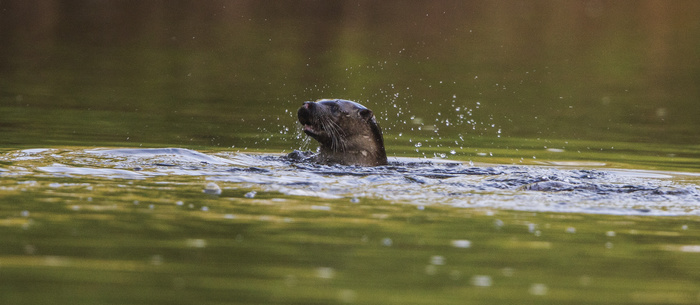
I then watched as they swept past me hardly breaking the surface of the water and within a few seconds they were gone down river and out of sight. A great start to the day, any day you see Otters is a good day!
I settled back down and after some time I could now hear the familiar ‘Peeping’ of a Kingfisher as a bird flashed past my hide at speed and disappeared around the river bend. This is typical Kingfisher behaviour and this was repeated several times over the next half an hour. At this time of year the first brood of Kingfishers should be very close to fledging, typically early May, and this is what I was hoping to see, however, if there are any young birds at this site they do not appear to be out yet. There are a few reasons for this, the adults may just have been late pairing-up or indeed they may not have mated, I hope it’s the former.
Sometime later I was eating a sandwich and again looking out of the side flap on my hide when I could see a female Goosander and her young coming this time up-river, and some of the ducklings were sitting on her back to avoid paddling against the current.
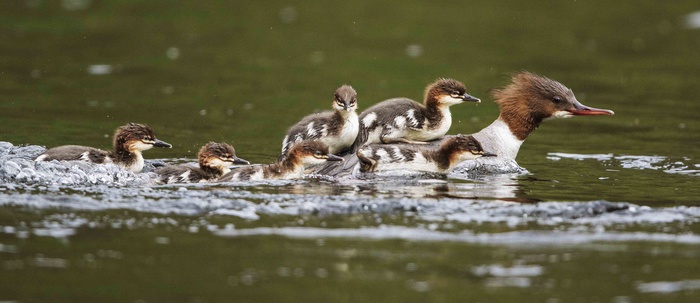
This is the first time I have witnessed Goosanders doing this. It was a lovely sight because the ducklings are very cute indeed. They swam past totally oblivious of me, if you are not under cover you won’t get near these birds because they are so shy.
I was about to leave the site when I heard a Kingfisher call again and then suddenly there was an adult bird on the perch. It happens like this with Kingfishers, you hear a brief call and suddenly they are on your perch, sometimes there is no call and they just appear, you have to keep looking. This can be quite tiring over a period of hours because if you don’t concentrate all of the time you can miss the shot for the sake of a few seconds. It was an adult bird and I took the shot quickly before it flew off,
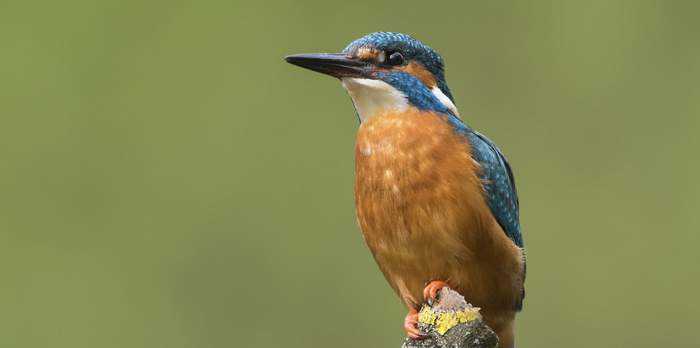
there should be more action as the breeding season unfolds if there are youngsters fledged. I packed-up and left as the day had turned quite warm, what a contrast from first thing.
I am going to leave it for a few weeks and then come back and see if there are any young Kingfishers around, I hope so.
I had packed all my gear into my car’s boot the night before to save time and after a quick breakfast I was on my way by 05.00. I arrived at the Kingfisher site by 05.30 and set my hide up on the river bank under some overhanging willows. I have a store of perches I keep at the river and I just dug one of them into the river bed and retreated under cover. I was very glad I had put on a couple of extra layers because it was so cold. The sun came up over the horizon and illuminated the river with a bright early morning light but although quite harsh the sunshine contained very little warmth. I zipped up all the side openings on my hide leaving only the forward aperture to look at my perch in the river.
An hour passed and I was huddled in the chair of my hide drinking a cup of coffee when I thought I’d just open one of the side flaps for a minute to look up river. In the distance I could see a large shape break the surface of the river. My first thoughts of a large fish were quickly dispelled as I could now see two Otters playing in the middle of the river. I was side on to them so I knew there wouldn’t be much chance of a photograph without disturbing them by turning the whole hide ninety degrees clockwise so I opted for a quick shot at an awkward angle and cut my losses.
I then watched as they swept past me hardly breaking the surface of the water and within a few seconds they were gone down river and out of sight. A great start to the day, any day you see Otters is a good day!
I settled back down and after some time I could now hear the familiar ‘Peeping’ of a Kingfisher as a bird flashed past my hide at speed and disappeared around the river bend. This is typical Kingfisher behaviour and this was repeated several times over the next half an hour. At this time of year the first brood of Kingfishers should be very close to fledging, typically early May, and this is what I was hoping to see, however, if there are any young birds at this site they do not appear to be out yet. There are a few reasons for this, the adults may just have been late pairing-up or indeed they may not have mated, I hope it’s the former.
Sometime later I was eating a sandwich and again looking out of the side flap on my hide when I could see a female Goosander and her young coming this time up-river, and some of the ducklings were sitting on her back to avoid paddling against the current.
This is the first time I have witnessed Goosanders doing this. It was a lovely sight because the ducklings are very cute indeed. They swam past totally oblivious of me, if you are not under cover you won’t get near these birds because they are so shy.
I was about to leave the site when I heard a Kingfisher call again and then suddenly there was an adult bird on the perch. It happens like this with Kingfishers, you hear a brief call and suddenly they are on your perch, sometimes there is no call and they just appear, you have to keep looking. This can be quite tiring over a period of hours because if you don’t concentrate all of the time you can miss the shot for the sake of a few seconds. It was an adult bird and I took the shot quickly before it flew off,
there should be more action as the breeding season unfolds if there are youngsters fledged. I packed-up and left as the day had turned quite warm, what a contrast from first thing.
I am going to leave it for a few weeks and then come back and see if there are any young Kingfishers around, I hope so.
More Cuckoos arriving in the Beacons.
28th April 2017
28th April 2017
More Cuckoos are coming into the Brecon Beacons and I have now seen four birds, all males. Their arrival is a bit earlier than in the previous few years as I mentioned in an earlier blog. It’s normally the middle of May or later before I see and hopefully photograph them. I went up to another site I watch in spring time and I was pleased to find another two male birds. One, however, disappeared quite quickly but one stayed on the territory, you get this happening quite often, they are quite territorial.
Last week there were hardly any Meadow Pipits there but this week they were everywhere. This is not a bad thing because they harass the Cuckoos and cause them to fly and perch on awkward branches
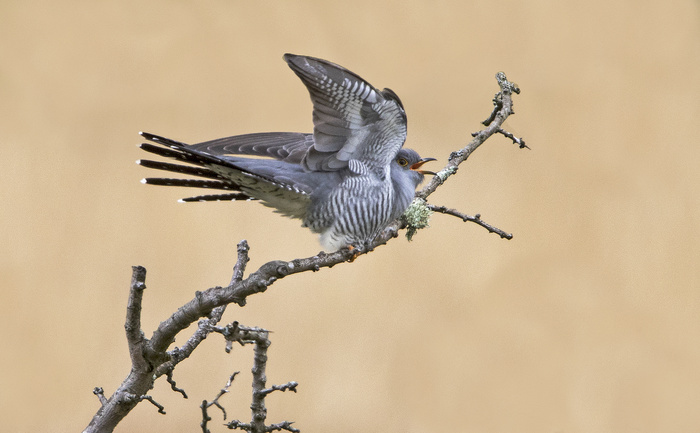
and sometimes, in the Cuckoo’s panic, this can be quite near to a bird watcher. These Meadow Pipits are very persistent and they will sit next to a Cuckoo on a branch and pull at its tail and wings to upset it.
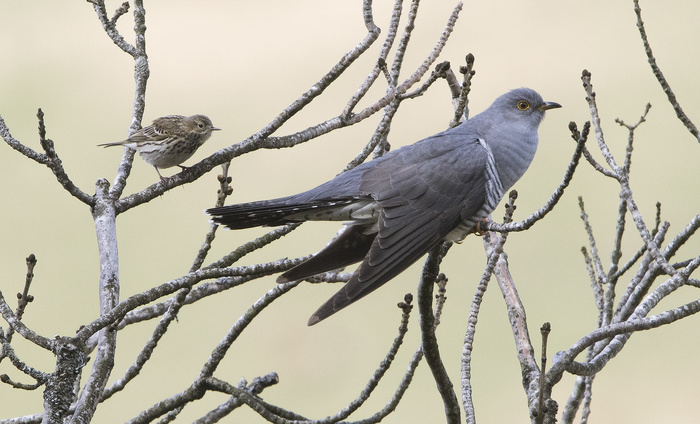
However, the Cuckoo is also very persistent and they will usually stick it out for as long as it takes.
I watched this age old scenario be repeated yesterday and it is quite amusing for the spectator but not for either of the players. The Pipits were dive-bombing the Cuckoo
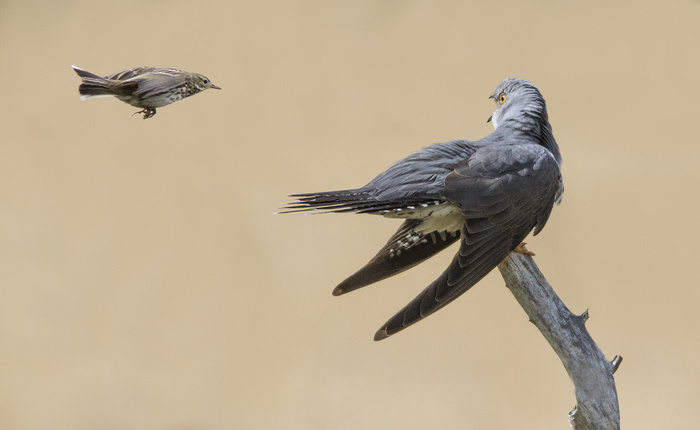
until he flew off to another perch and then the process was repeated again and again. I am waiting for a female Cuckoo to appear and that will really set things off. You have the male Cuckoo pursuing the female and the Pipits harassing both of them!
The Cuckoos emit a huge variety of sounds that you don’t hear normally, people just hear the male ‘Cuckooing’ and most don’t recognize the female’s bubbling call. There is also a variety of snorts, hisses and cackles that the male makes when under duress from other birds harassing him. It’s quite an experience to hear these noises and also the interaction between the male and female. I look forward to more encounters with these charismatic birds as the spring progresses.
Last week there were hardly any Meadow Pipits there but this week they were everywhere. This is not a bad thing because they harass the Cuckoos and cause them to fly and perch on awkward branches
and sometimes, in the Cuckoo’s panic, this can be quite near to a bird watcher. These Meadow Pipits are very persistent and they will sit next to a Cuckoo on a branch and pull at its tail and wings to upset it.
However, the Cuckoo is also very persistent and they will usually stick it out for as long as it takes.
I watched this age old scenario be repeated yesterday and it is quite amusing for the spectator but not for either of the players. The Pipits were dive-bombing the Cuckoo
until he flew off to another perch and then the process was repeated again and again. I am waiting for a female Cuckoo to appear and that will really set things off. You have the male Cuckoo pursuing the female and the Pipits harassing both of them!
The Cuckoos emit a huge variety of sounds that you don’t hear normally, people just hear the male ‘Cuckooing’ and most don’t recognize the female’s bubbling call. There is also a variety of snorts, hisses and cackles that the male makes when under duress from other birds harassing him. It’s quite an experience to hear these noises and also the interaction between the male and female. I look forward to more encounters with these charismatic birds as the spring progresses.
Cuckoo on a cold spring morning.
23rd April 2017
23rd April 2017
In my previous blog post I mentioned that Susan and I had seen a male Cuckoo on an upland site in the Beacons. After seeing him and getting a quick shot while having a coffee in the car. I decided to try and see him again and I came back very early yesterday morning.
In this area Cuckoos favour upland sites as opposed to the marshes and other lowland areas in other parts of the country. They obviously choose Meadow Pipits as the surrogate parents for their young.
Unfortunately it can still be very cold on these upland areas in April and even in May sometimes. Yesterday exemplified this as a bitter wind blew early on and I was really feeling it despite having four layers on. I tucked in low under a copse of trees with a hat, scarf and gloves on and just waited.
This male bird is an early arrival because I don’t normally see Cuckoos until late April or early May and indeed most of my photos of them are in May and June. I was positioned right by where he had been perching previously and like most birds Cuckoos have their favourite areas and indeed perches, be it a post or branch etc.
It’s just a matter of being patient and if you have done your homework hopefully your waiting time will be reduced, especially in a cold wind!
After some time he was back in his area and I could see him perching on the branches of a hawthorn tree. However, he was obscured by a tangle of small branches so I had to wait, it’s no good moving around to get a better angle because Cuckoos are very wary and he would have flown off immediately. Experience with these birds dictates that you must be patient if you want any sort of shot.
Slowly but surely he made his way out onto a favoured branch and I shot him immediately,
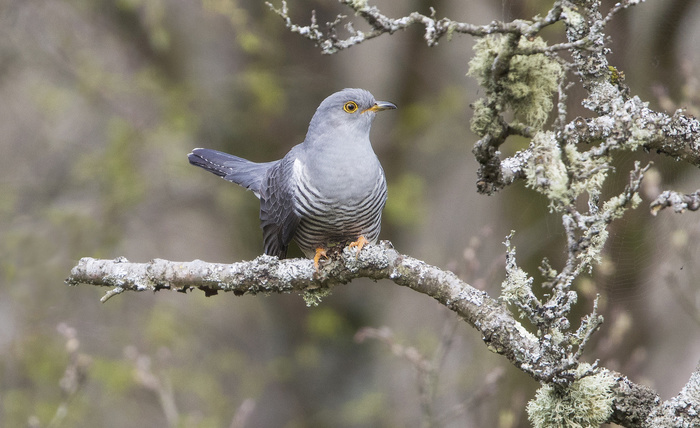
he was a bit further away than I would have liked but more opportunities may come as the spring progresses. He didn’t stay long and he was moving around and calling from various perches as the morning went on. I came out from under the trees and moved around myself as the morning warmed up. I was walking back to my car and I could now see him perched on a branch seemingly enjoying the now pleasant sunshine.
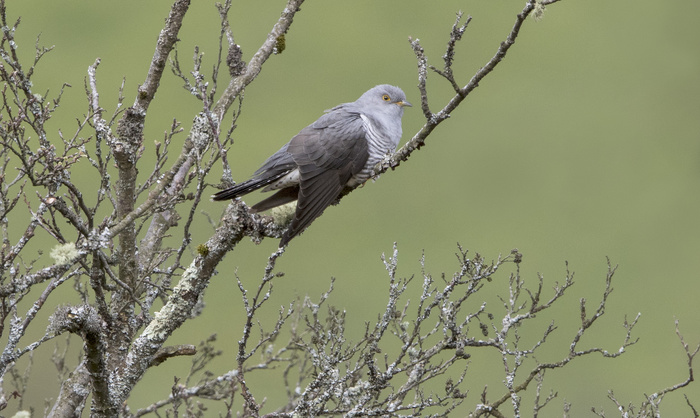
These birds obviously feel the cold, wouldn’t you if you had just come from Africa?
He is not being harassed by small birds at the moment but that will come as they build their nests and that is when sometimes photographs can be obtained. The Cuckoos fly around to escape these birds and sometimes they will perch quite close to a birder/photographer in their efforts to escape.
I will be checking my preferred upland sites more frequently as the spring evolves in the hope of seeing more of these charismatic birds.
In this area Cuckoos favour upland sites as opposed to the marshes and other lowland areas in other parts of the country. They obviously choose Meadow Pipits as the surrogate parents for their young.
Unfortunately it can still be very cold on these upland areas in April and even in May sometimes. Yesterday exemplified this as a bitter wind blew early on and I was really feeling it despite having four layers on. I tucked in low under a copse of trees with a hat, scarf and gloves on and just waited.
This male bird is an early arrival because I don’t normally see Cuckoos until late April or early May and indeed most of my photos of them are in May and June. I was positioned right by where he had been perching previously and like most birds Cuckoos have their favourite areas and indeed perches, be it a post or branch etc.
It’s just a matter of being patient and if you have done your homework hopefully your waiting time will be reduced, especially in a cold wind!
After some time he was back in his area and I could see him perching on the branches of a hawthorn tree. However, he was obscured by a tangle of small branches so I had to wait, it’s no good moving around to get a better angle because Cuckoos are very wary and he would have flown off immediately. Experience with these birds dictates that you must be patient if you want any sort of shot.
Slowly but surely he made his way out onto a favoured branch and I shot him immediately,
he was a bit further away than I would have liked but more opportunities may come as the spring progresses. He didn’t stay long and he was moving around and calling from various perches as the morning went on. I came out from under the trees and moved around myself as the morning warmed up. I was walking back to my car and I could now see him perched on a branch seemingly enjoying the now pleasant sunshine.
These birds obviously feel the cold, wouldn’t you if you had just come from Africa?
He is not being harassed by small birds at the moment but that will come as they build their nests and that is when sometimes photographs can be obtained. The Cuckoos fly around to escape these birds and sometimes they will perch quite close to a birder/photographer in their efforts to escape.
I will be checking my preferred upland sites more frequently as the spring evolves in the hope of seeing more of these charismatic birds.
Swings and Roundabouts.
20th April 2017
20th April 2017
I have been out looking for Ring Ouzels since early April and I have all but drawn a blank. This spring looks like a real bad one for Ouzels around here! I have paid six visits to an upland area called Craig Cerrig Gleisiad, which is supposed to be a breeding habitat for these birds and I have only seen one male bird. That viewing was on April 7th, a horrible cold and misty morning and he showed distantly for ten seconds and then flew off and was not seen by me again.
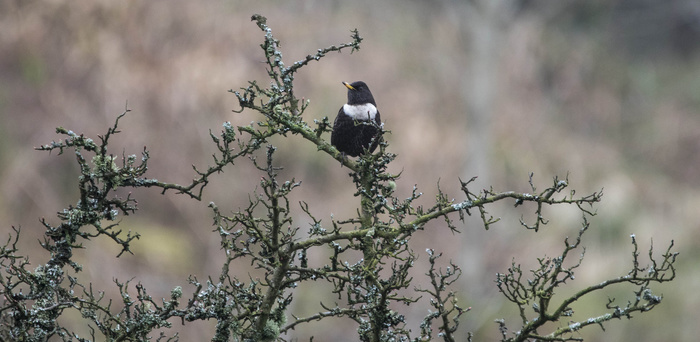
It's frustrating because there are plenty of Ouzels being reported on the UK coasts but they don't appear to have made their way up onto the Beacons. I will have to accept this as my only viewing this spring which is very disappointing but that's birding and it's time to move on.
There are reports of Cuckoos in the local areas and that is early for the Beacons. With this in mind Susan and I went out for a drive this morning and while we were parked up on a mountain road having a cup of coffee we could hear a male bird calling and as we scanned the nearby hawthorn trees we could see him sat out. I managed to take a record shot of him from the car before he flew off.
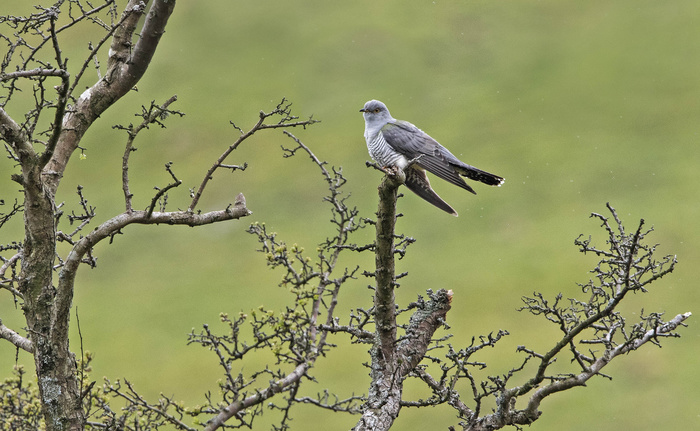
I will be back for another look next week perhaps a female will have joined him by then.
You lose some you win some!!
It's frustrating because there are plenty of Ouzels being reported on the UK coasts but they don't appear to have made their way up onto the Beacons. I will have to accept this as my only viewing this spring which is very disappointing but that's birding and it's time to move on.
There are reports of Cuckoos in the local areas and that is early for the Beacons. With this in mind Susan and I went out for a drive this morning and while we were parked up on a mountain road having a cup of coffee we could hear a male bird calling and as we scanned the nearby hawthorn trees we could see him sat out. I managed to take a record shot of him from the car before he flew off.
I will be back for another look next week perhaps a female will have joined him by then.
You lose some you win some!!
New Custom Page.
21st March 2017
21st March 2017
I have added a new Custom Page to the home screen entitled 'Video Clips' this is next to the Guestbook page.
This page contains video clips (linked to Youtube).
Hopefully I can add more as time goes on.
This page contains video clips (linked to Youtube).
Hopefully I can add more as time goes on.
Black Grouse at the 'End Of The World'
17th March 2017
17th March 2017
It’s been many a long year since we have seen any Black Grouse in the UK, in fact it was around thirty years ago on a tour of Scotland. They are birds that have always intrigued us with their behaviour, with the male birds ‘Lekking’ pre-dawn on some lonely moorland. Showing off and posturing to attract females using their magnificent plumage, what’s not to like about them?
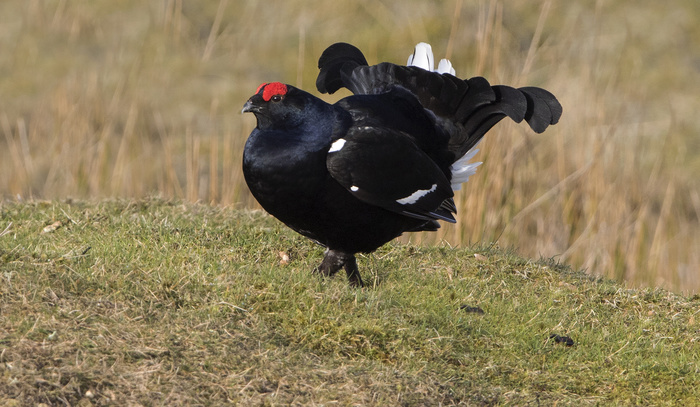
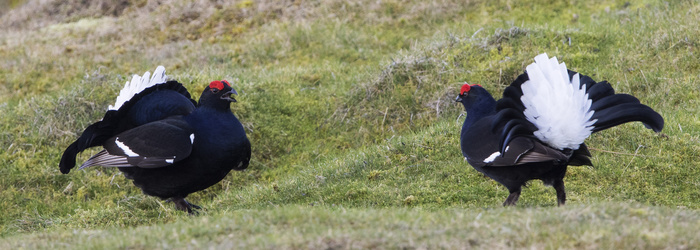
Basically you have to travel if you want to see these enigmatic birds and it’s either Scotland or the north of England if you want to be sure of at least seeing them. Photographing them is an entirely different matter, they are a ‘Schedule 1’ bird and therefore you cannot approach them in the breeding season. They shouldn’t be approached at any time really because they are easily disturbed and they are an endangered bird in this country. Their numbers have crashed in the UK and it is only through managed schemes that they have any chance of recovery. With this firmly in mind we booked a short break to north Wales near to Wrexham where there is one such scheme in place. The RSPB organises walks to see Black Grouse from one of their hides in the Llandegla forest but this usually results in seeing birds from a distance of a couple of hundred yards. This is not much use for someone wishing to photograph them.
However, there is in that particular area a solution to this photographic problem without, I’m glad to say, disturbing the birds. Opposite Llandegla forest there is a place called World’s End, this place is reached by a narrow moorland road that runs between Minera and Llangollen. This road bisects the moorland and runs through prime Grouse habitat. The male Black Grouse have their favourite Lekking areas and if one of the areas being used is relatively close to this road then it is possible to photograph these beautiful birds from the confines of your vehicle.
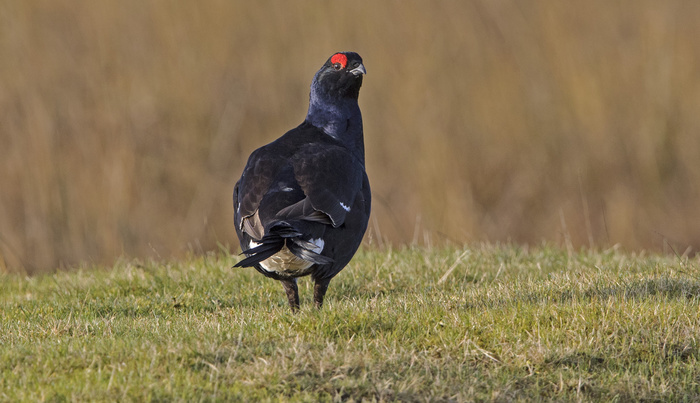
What you mustn’t do under any circumstances is get out of your car, or even worse walk the moor to try and see these birds. They will absolutely not tolerate people outside their cars and they will fly away great distances when disturbed and this would obviously impact drastically on their breeding etc. People have been seen walking through the bird’s habitat trying to photograph them, this type of behaviour is not only a criminal offence but it is ridiculously selfish and these people need to take a good look in the mirror and try and justify their actions.
On a lighter note, on Monday Susan and I arrived at our accommodation on a small farm near Minera, this was literally five minutes from the World’s End moorland road. We had researched a place to stay deliberately close to this area because of the very early time you have to be at any Grouse Lekking site. The accommodation was very nice indeed and was a cut above the usual places for the money involved. We paid £75.00 for a night with a continental breakfast. In addition there were fresh flowers, cereals, eggs, milk, orange and grapefruit juices provided. All bed linen, towels, heating and a plasma television included in the price. The owners Graham and Kath couldn’t be more helpful and made our stay very pleasant indeed.
Once we had unpacked, which didn’t take long, because this was a smash and grab attempt to photograph Black Grouse, we drove up onto the moor. As I have always maintained, planning is one of the five pillars of my bird photography mantra. The other four would hopefully be put into place the next day. We drove along the moor near to dusk and on a bare area of moorland very close to the road we counted sixteen male Black Grouse!
We couldn’t believe what we were seeing, we drove past them quite slowly and carried on along the road and they didn’t even acknowledge we were there. This was a very good omen for the following morning! However, when we were looking back at them from an elevated area some three hundred yds’ away we could see a man walking his dog along the road and when the Grouse saw him, at a distance of about a hundred yds’ they all exploded into the air and flew off immediately. This exemplifies my previous statement about getting out of your car to view these birds.
We packed all our gear into the car ready for a very early start the next morning, there’s no time for messing about that early! We dined on a portion of Susan’s excellent shepherd’s pie, I set the alarm on my phone for 04.00 and we retired to bed quite early. I must admit that I didn’t sleep well that night, I never do when I’m in a strange bed and of course when I’m hoping to get images of an elusive bird it makes it worse. I am always anxious about failure when I have made a special effort to get a special bird.
We were both up before the alarm and after a cup of tea and a very small bowl of cereal we made a flask of coffee and left. It was pitch black up on the moor and freezing cold and after stopping to arrange my lenses on the passenger seat, get our hats, scarves and gloves on and Susan getting onto the back seat we drove on. We parked up at the area we had seen the Grouse the previous evening and just waited with our binoculars at the ready. I crossed over onto the front passenger seat inside the car even in the dark to eliminate any form of disturbance. After about half an hour we thought we could hear some birds calling faintly and then through the open windows there were definitely the sounds of Black Grouse nearby. Slowly through the gloom, invisible to the naked eye, but in our binoculars we could see their white tail feathers as they displayed in the Lek.
Slowly the dawn broke and these magnificent birds manifested themselves in the glorious morning light.

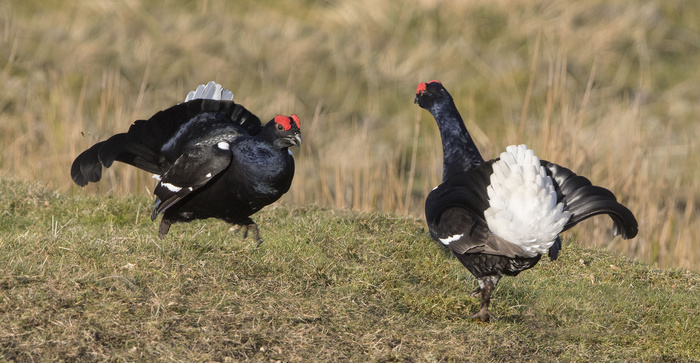
They were strutting around on their own little patch of ground showing their white tail feathers and facing up to any other birds that encroached into their space. This posturing can result in quite nasty fights when beaks and claws are used. Females are attracted to male birds that are engaged in the most fights.
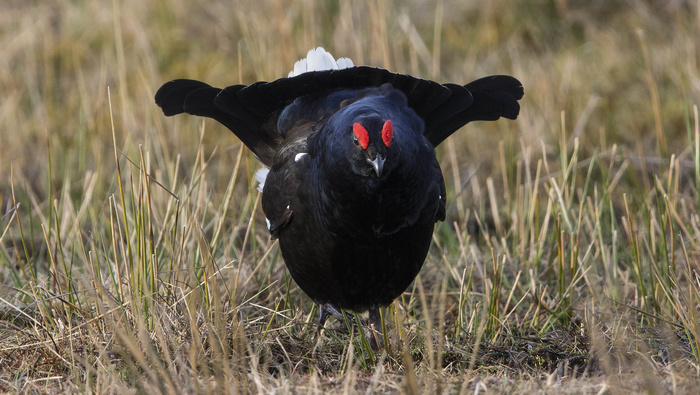
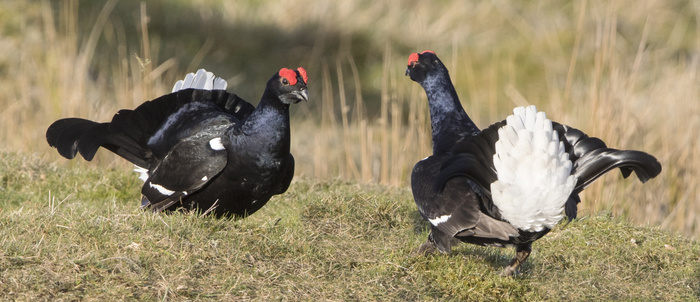
There was a fascinating array of calls, hissing, bubbling and croaking. It was pure theatre and we were mesmerised, I had to wait until the light built-up before I could take any decent photographs and this seemed interminable. I was praying the birds would stay for me to get some reasonable shots. Thankfully I managed to get some half decent images in addition to some lengthy video footage from this wonderful spectacle.
After about ninety minutes the birds went quiet and just dispersed and flew away. This behaviour is just part of the Lek, they perform, go quiet and then just fly away.
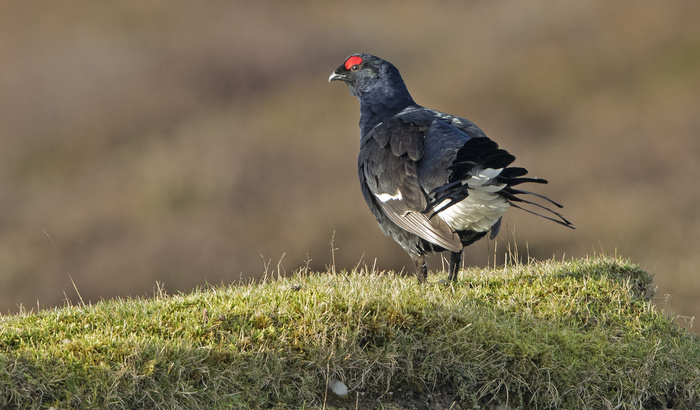
What an incredible experience and we were the only observers to witness it! We drove away and the coffee tasted very nice indeed after the performance we had just been treated to. In total we counted twenty male birds at the early morning Lek.
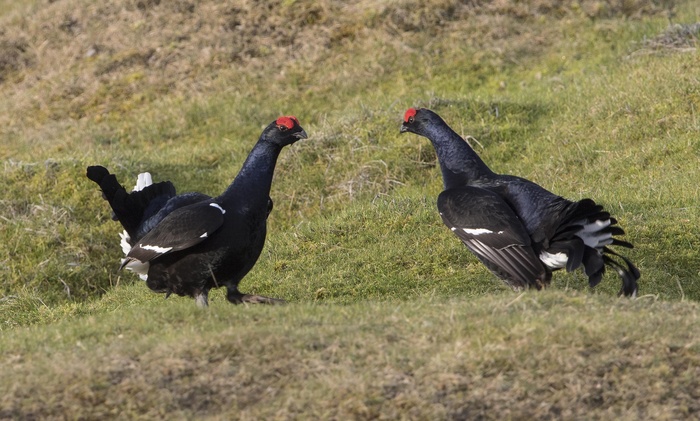
We spent the rest of the morning exploring the area, had some lunch in Llangollen and just generally chilled out. We returned to our accommodation and packed up, said goodbye to our hosts, set the Sat-Nav for home and left very contented indeed.
It’s great when plans come to fruition.
For more photos please see Latest Images / Black Grouse.
Some short video clips of the Lek below.
https://youtu.be/cfMN1bmGia4
https://youtu.be/VaEWU9_wL2k
Basically you have to travel if you want to see these enigmatic birds and it’s either Scotland or the north of England if you want to be sure of at least seeing them. Photographing them is an entirely different matter, they are a ‘Schedule 1’ bird and therefore you cannot approach them in the breeding season. They shouldn’t be approached at any time really because they are easily disturbed and they are an endangered bird in this country. Their numbers have crashed in the UK and it is only through managed schemes that they have any chance of recovery. With this firmly in mind we booked a short break to north Wales near to Wrexham where there is one such scheme in place. The RSPB organises walks to see Black Grouse from one of their hides in the Llandegla forest but this usually results in seeing birds from a distance of a couple of hundred yards. This is not much use for someone wishing to photograph them.
However, there is in that particular area a solution to this photographic problem without, I’m glad to say, disturbing the birds. Opposite Llandegla forest there is a place called World’s End, this place is reached by a narrow moorland road that runs between Minera and Llangollen. This road bisects the moorland and runs through prime Grouse habitat. The male Black Grouse have their favourite Lekking areas and if one of the areas being used is relatively close to this road then it is possible to photograph these beautiful birds from the confines of your vehicle.
What you mustn’t do under any circumstances is get out of your car, or even worse walk the moor to try and see these birds. They will absolutely not tolerate people outside their cars and they will fly away great distances when disturbed and this would obviously impact drastically on their breeding etc. People have been seen walking through the bird’s habitat trying to photograph them, this type of behaviour is not only a criminal offence but it is ridiculously selfish and these people need to take a good look in the mirror and try and justify their actions.
On a lighter note, on Monday Susan and I arrived at our accommodation on a small farm near Minera, this was literally five minutes from the World’s End moorland road. We had researched a place to stay deliberately close to this area because of the very early time you have to be at any Grouse Lekking site. The accommodation was very nice indeed and was a cut above the usual places for the money involved. We paid £75.00 for a night with a continental breakfast. In addition there were fresh flowers, cereals, eggs, milk, orange and grapefruit juices provided. All bed linen, towels, heating and a plasma television included in the price. The owners Graham and Kath couldn’t be more helpful and made our stay very pleasant indeed.
Once we had unpacked, which didn’t take long, because this was a smash and grab attempt to photograph Black Grouse, we drove up onto the moor. As I have always maintained, planning is one of the five pillars of my bird photography mantra. The other four would hopefully be put into place the next day. We drove along the moor near to dusk and on a bare area of moorland very close to the road we counted sixteen male Black Grouse!
We couldn’t believe what we were seeing, we drove past them quite slowly and carried on along the road and they didn’t even acknowledge we were there. This was a very good omen for the following morning! However, when we were looking back at them from an elevated area some three hundred yds’ away we could see a man walking his dog along the road and when the Grouse saw him, at a distance of about a hundred yds’ they all exploded into the air and flew off immediately. This exemplifies my previous statement about getting out of your car to view these birds.
We packed all our gear into the car ready for a very early start the next morning, there’s no time for messing about that early! We dined on a portion of Susan’s excellent shepherd’s pie, I set the alarm on my phone for 04.00 and we retired to bed quite early. I must admit that I didn’t sleep well that night, I never do when I’m in a strange bed and of course when I’m hoping to get images of an elusive bird it makes it worse. I am always anxious about failure when I have made a special effort to get a special bird.
We were both up before the alarm and after a cup of tea and a very small bowl of cereal we made a flask of coffee and left. It was pitch black up on the moor and freezing cold and after stopping to arrange my lenses on the passenger seat, get our hats, scarves and gloves on and Susan getting onto the back seat we drove on. We parked up at the area we had seen the Grouse the previous evening and just waited with our binoculars at the ready. I crossed over onto the front passenger seat inside the car even in the dark to eliminate any form of disturbance. After about half an hour we thought we could hear some birds calling faintly and then through the open windows there were definitely the sounds of Black Grouse nearby. Slowly through the gloom, invisible to the naked eye, but in our binoculars we could see their white tail feathers as they displayed in the Lek.
Slowly the dawn broke and these magnificent birds manifested themselves in the glorious morning light.
They were strutting around on their own little patch of ground showing their white tail feathers and facing up to any other birds that encroached into their space. This posturing can result in quite nasty fights when beaks and claws are used. Females are attracted to male birds that are engaged in the most fights.
There was a fascinating array of calls, hissing, bubbling and croaking. It was pure theatre and we were mesmerised, I had to wait until the light built-up before I could take any decent photographs and this seemed interminable. I was praying the birds would stay for me to get some reasonable shots. Thankfully I managed to get some half decent images in addition to some lengthy video footage from this wonderful spectacle.
After about ninety minutes the birds went quiet and just dispersed and flew away. This behaviour is just part of the Lek, they perform, go quiet and then just fly away.
What an incredible experience and we were the only observers to witness it! We drove away and the coffee tasted very nice indeed after the performance we had just been treated to. In total we counted twenty male birds at the early morning Lek.
We spent the rest of the morning exploring the area, had some lunch in Llangollen and just generally chilled out. We returned to our accommodation and packed up, said goodbye to our hosts, set the Sat-Nav for home and left very contented indeed.
It’s great when plans come to fruition.
For more photos please see Latest Images / Black Grouse.
Some short video clips of the Lek below.
https://youtu.be/cfMN1bmGia4
https://youtu.be/VaEWU9_wL2k
Spring-like morning in the woods.
07th March 2017
07th March 2017
After a very bright moon-lit night last night I was up early and out today on a glorious spring-like morning walking in a local deciduous woodland. I had my new Sigma Contemporary lens, (See Review), in my small rucksack and my new Vortex Razor, binoculars, (See Review), around my neck, both so lightweight! I know this woodland and there have been Tawny Owls roosting there for as long as I can remember. As I entered the woods there was a big commotion principally from Blackbirds, this usually means one thing, a Grey Squirrel, a Raptor, (Buzzard usually) or a Tawny Owl. I was hoping for a Tawny and my hopes were realised as I saw a bird flying through the woods. I immediately walked to a place where I know these Owls sometimes perch on some broken tree stumps to get some relief when they are being mobbed. I stood up against a tree to break my outline up and waited.
There was more commotion and sure enough a beautiful Tawny Owl flew and perched on one of these tree stumps right where I have seen them previously. I had my little Contemporary lens ready, this lens may be small in stature but it packs a real focal punch. I waited for the Owl to steady and then shot it right out in the open, it looked at me and appeared unconcerned. Then it flew onto the next perch and I shot it again. It’s great when your knowledge gets you results, and as the Owl was pushed around by the Blackbirds I get a load more shots, thank you Blackbirds!!
I was able to zoom in and out to frame this stunning bird as it perched quite close to me at times, something I couldn’t have done with my 600.
This little lens is already proving to be very useful indeed!!
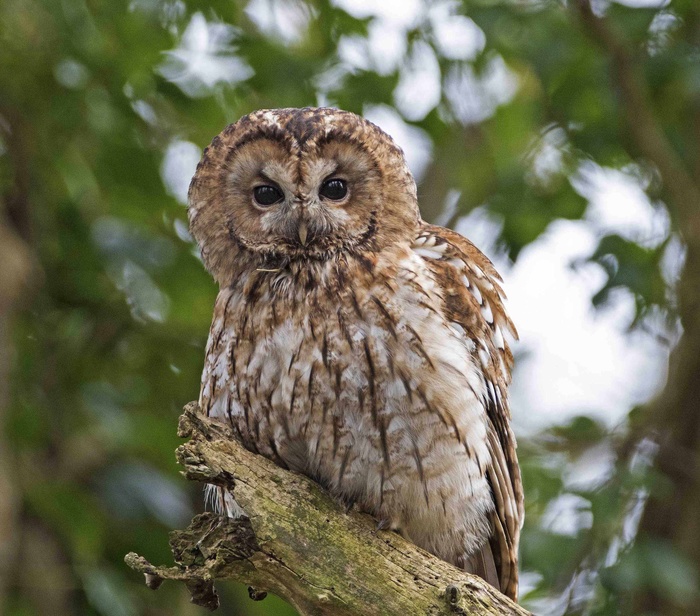
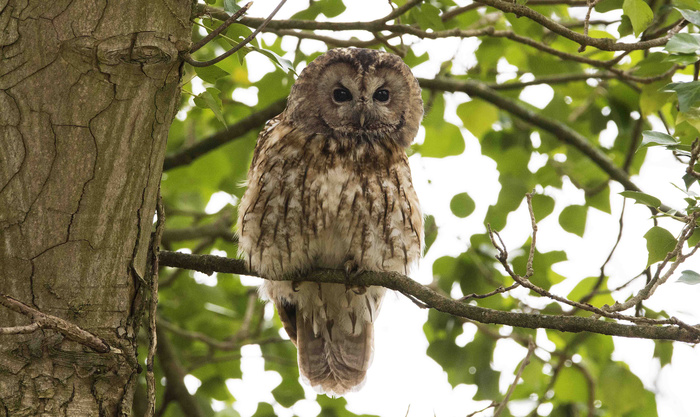
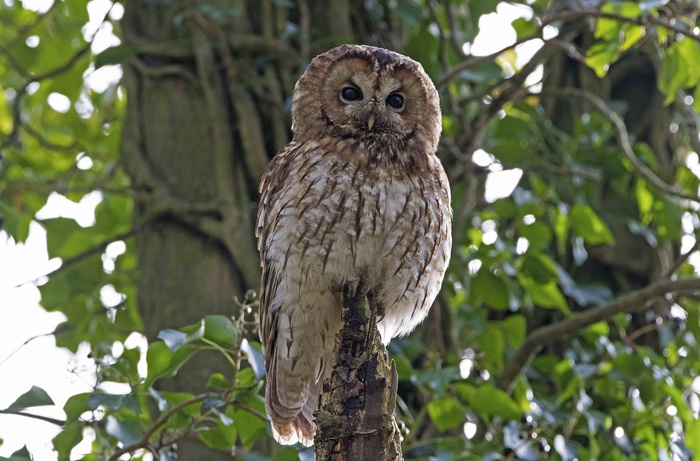
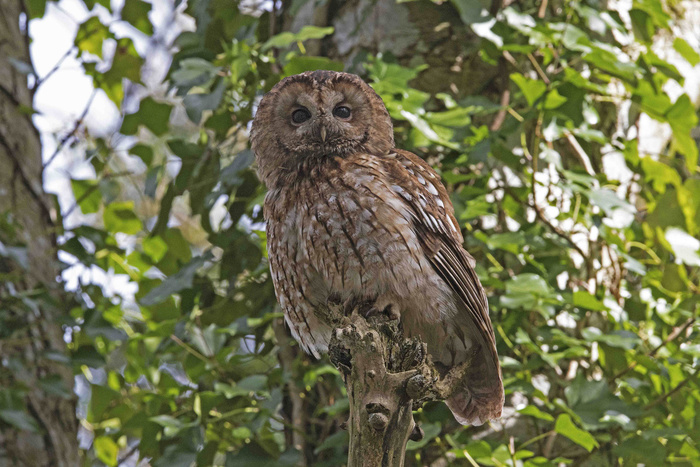
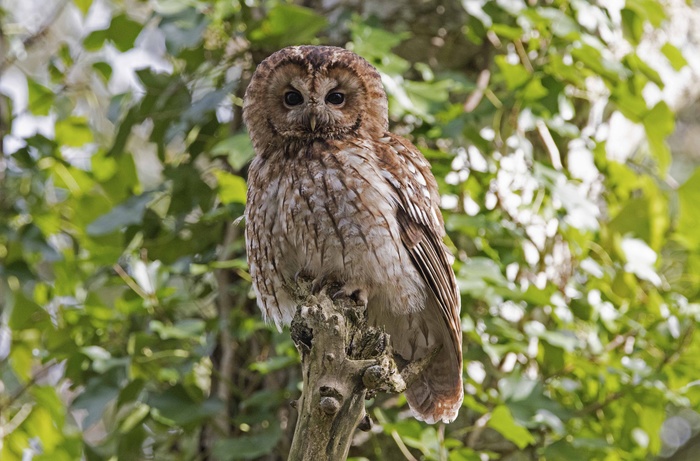
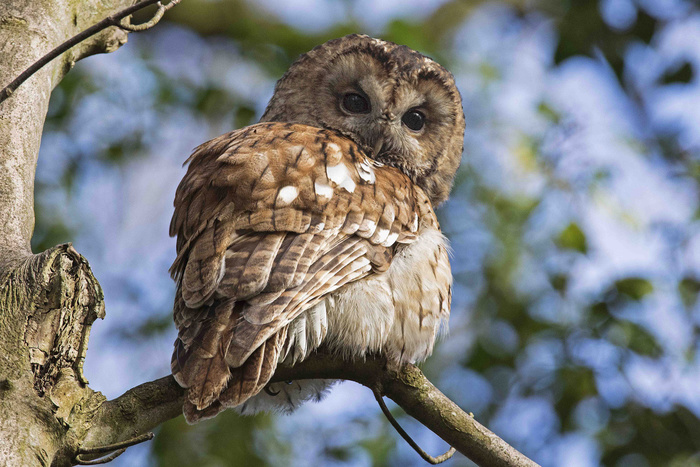
There was more commotion and sure enough a beautiful Tawny Owl flew and perched on one of these tree stumps right where I have seen them previously. I had my little Contemporary lens ready, this lens may be small in stature but it packs a real focal punch. I waited for the Owl to steady and then shot it right out in the open, it looked at me and appeared unconcerned. Then it flew onto the next perch and I shot it again. It’s great when your knowledge gets you results, and as the Owl was pushed around by the Blackbirds I get a load more shots, thank you Blackbirds!!
I was able to zoom in and out to frame this stunning bird as it perched quite close to me at times, something I couldn’t have done with my 600.
This little lens is already proving to be very useful indeed!!
Appalling new breed of so-called bird watchers.
03rd March 2017
03rd March 2017
It was a beautiful spring-like day yesterday contrary to what the weather forecast predicted. Susan and I were out early with the intention of seeing some Hawfinches in the Forest of Dean in Gloucestershire. We arrived at Parkend to find two cars already in place near the Hawfinch site so we drove past and got my kit out further on down the lane so as not to disturb the other two people that were already set-up. This is just common courtesy but you would be surprised by the amount of people who park their cars and just get out and spend time talking and setting up while disturbing other people, they have no manners or common sense, a really annoying combination!!
We quickly got ready, me in the front seat and Susan behind and then slowly and quietly drove up, parked and switched the engine off. I crossed over seats while inside the car and we settled in quickly. I have seen people pull up and leave their engines running and the radio playing for some time, they then get out, slam the doors and walk around their cars, they are so rude, it’s no wonder there are arguments at sites.
After about half an hour we could hear Hawfinches squeaking and ticking up in the Yew trees and then one bird dropped down to the ground and we had great views and a few photographs. However, a few more cars arrived and the noise level started to increase with people slamming car doors and talking loudly. These so called birders have no idea about how to approach Hawfinches, these birds are so shy and wary, and they will fly up into the tree tops at the least disturbance. In total there were six people making the noise and we knew it was all over once they then proceeded to walk on to the field and stand there waiting for these birds to come down. They have no chance whatsoever of a Hawfinch coming down when there are people out in the open, they will stay up in the tree-tops all day or even fly to another location. The situation then worsened when one so-called photographer among them walked over and stood right underneath the trees about twenty feet from the birds prime feeding area. He could see three cars parked with people quietly waiting for the Hawfinches to come down but that didn’t seem to matter to him. He displayed a total lack of understanding of Hawfinch protocol and even less regard for other people’s enjoyment, in short he was a total idiot!
He, I’m afraid exemplifies the new breed of bird watcher that is proliferating in the bird watching/photography hobby. They have absolutely no field craft or knowledge of their subject and no regard for anyone but themselves. You can always tell them they don’t carry binoculars, (there would be little point anyway because they don’t know what they are looking at). They have swerved no birding apprenticeship, getting better by learning from their mistakes like most people, they just buy a big lens and try to photograph birds at any cost.
The man in the car facing us finally got out to remonstrate quite politely with this man, and was not as you would think met with an apology and recognition of his behaviour, but with a tirade of foul language and abuse telling him he didn’t know what he was talking about. I also asked him to back-off and was met with the same barrage of abuse and the man behind me asked him to move back and he was threatened with violence.
At this point we all left and decided we were wasting our time trying to reason with this meat-head. I’m sure by this time the Hawfinches were long departed, thankfully I had some images from my time there. The man who got out of his car had come from Bristol and hadn’t got any decent images because of this man's behaviour.
Despite this unsavoury incident it was still a lovely day and we went walking and had very nice views of a Northern Grey Shrike and we also saw some Goshawks displaying.
It’s little wonder that people keep sites and sightings to themselves when people like that are around. Thankfully Susan and I watch wildlife together and I always photograph alone whenever possible. I want no part of this modern bird watching and photography scene because whatever your behaviour you will be tarred with the same brush as these people. I have photographed Hawfinches from various sites in the forest from my portable hide and had great results.
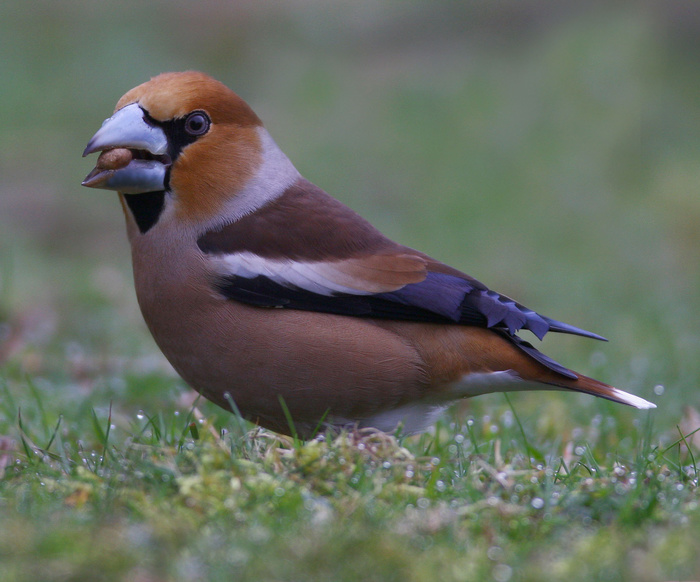
They will never get any decent shots until they understand the protocol you need to adopt to photograph Hawfinches.
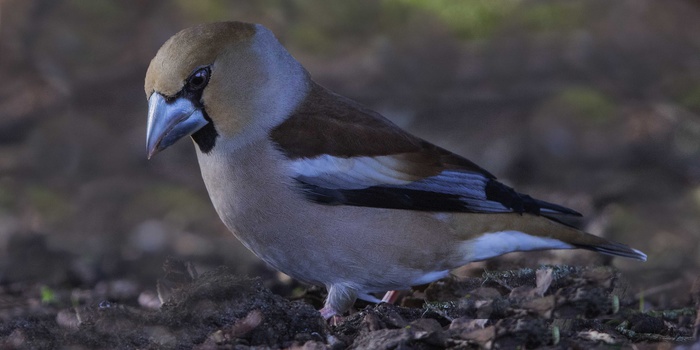
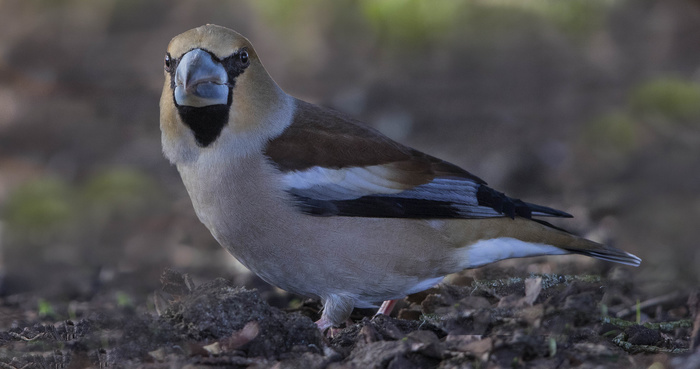
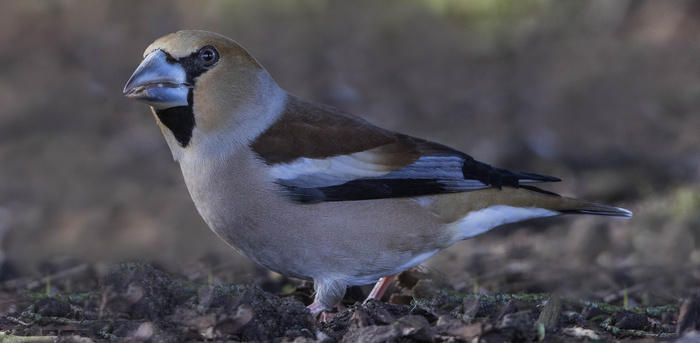
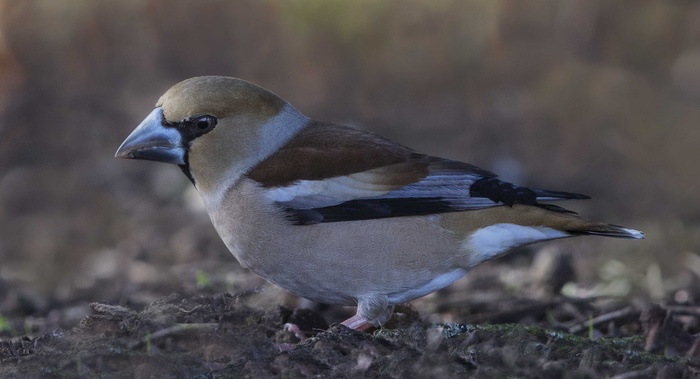
Taken in winter in long grass which coincidently complimented the birds plumage.
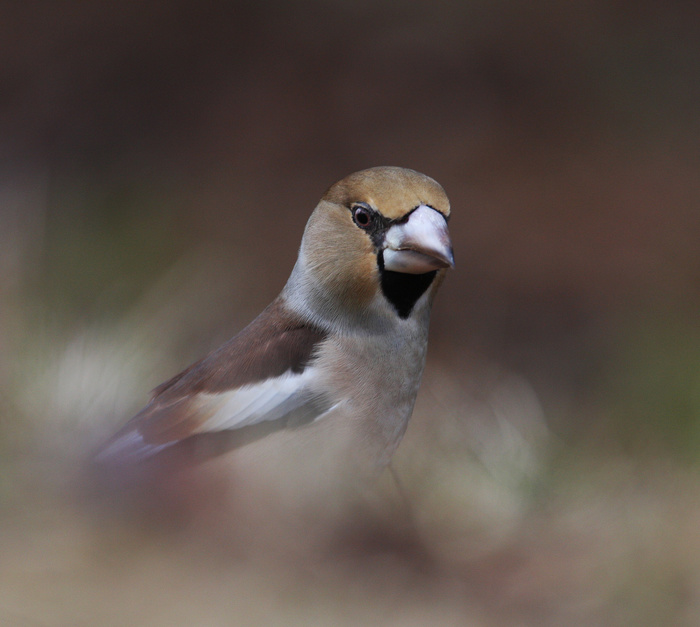
However, this was when the forest didn’t have this current breed of so-called bird watchers.
Below are a few images taken prior to the incident.
See how their beak has changed from a straw colour in winter to a beautiful pewter-like affair coming into spring, this happens in late February into March as they come into their breeding plumage.
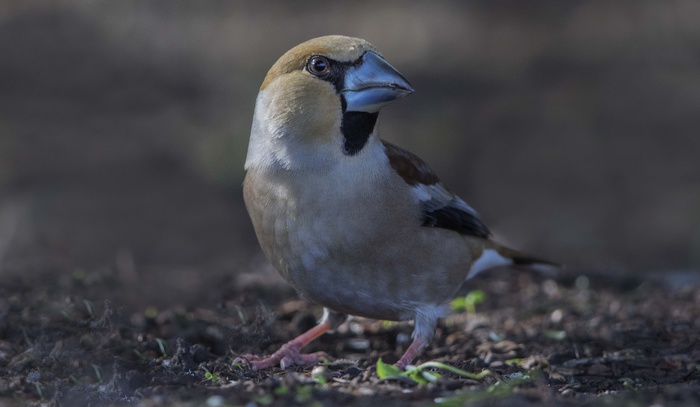
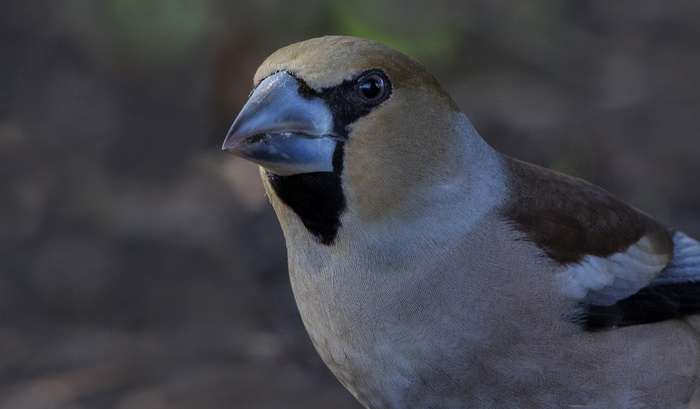
We quickly got ready, me in the front seat and Susan behind and then slowly and quietly drove up, parked and switched the engine off. I crossed over seats while inside the car and we settled in quickly. I have seen people pull up and leave their engines running and the radio playing for some time, they then get out, slam the doors and walk around their cars, they are so rude, it’s no wonder there are arguments at sites.
After about half an hour we could hear Hawfinches squeaking and ticking up in the Yew trees and then one bird dropped down to the ground and we had great views and a few photographs. However, a few more cars arrived and the noise level started to increase with people slamming car doors and talking loudly. These so called birders have no idea about how to approach Hawfinches, these birds are so shy and wary, and they will fly up into the tree tops at the least disturbance. In total there were six people making the noise and we knew it was all over once they then proceeded to walk on to the field and stand there waiting for these birds to come down. They have no chance whatsoever of a Hawfinch coming down when there are people out in the open, they will stay up in the tree-tops all day or even fly to another location. The situation then worsened when one so-called photographer among them walked over and stood right underneath the trees about twenty feet from the birds prime feeding area. He could see three cars parked with people quietly waiting for the Hawfinches to come down but that didn’t seem to matter to him. He displayed a total lack of understanding of Hawfinch protocol and even less regard for other people’s enjoyment, in short he was a total idiot!
He, I’m afraid exemplifies the new breed of bird watcher that is proliferating in the bird watching/photography hobby. They have absolutely no field craft or knowledge of their subject and no regard for anyone but themselves. You can always tell them they don’t carry binoculars, (there would be little point anyway because they don’t know what they are looking at). They have swerved no birding apprenticeship, getting better by learning from their mistakes like most people, they just buy a big lens and try to photograph birds at any cost.
The man in the car facing us finally got out to remonstrate quite politely with this man, and was not as you would think met with an apology and recognition of his behaviour, but with a tirade of foul language and abuse telling him he didn’t know what he was talking about. I also asked him to back-off and was met with the same barrage of abuse and the man behind me asked him to move back and he was threatened with violence.
At this point we all left and decided we were wasting our time trying to reason with this meat-head. I’m sure by this time the Hawfinches were long departed, thankfully I had some images from my time there. The man who got out of his car had come from Bristol and hadn’t got any decent images because of this man's behaviour.
Despite this unsavoury incident it was still a lovely day and we went walking and had very nice views of a Northern Grey Shrike and we also saw some Goshawks displaying.
It’s little wonder that people keep sites and sightings to themselves when people like that are around. Thankfully Susan and I watch wildlife together and I always photograph alone whenever possible. I want no part of this modern bird watching and photography scene because whatever your behaviour you will be tarred with the same brush as these people. I have photographed Hawfinches from various sites in the forest from my portable hide and had great results.
They will never get any decent shots until they understand the protocol you need to adopt to photograph Hawfinches.
Taken in winter in long grass which coincidently complimented the birds plumage.
However, this was when the forest didn’t have this current breed of so-called bird watchers.
Below are a few images taken prior to the incident.
See how their beak has changed from a straw colour in winter to a beautiful pewter-like affair coming into spring, this happens in late February into March as they come into their breeding plumage.
Red Deer Stag.
23rd February 2017
23rd February 2017
It's quiet on the birding front at the moment, this time of year is always the same in the Beacons. One bonus this winter has been the very mild and quite calm weather we have been experiencing, although grey skies have been the norm which are frustrating for a photographer, it's better than a harsh winter, especially for the wildlife. Most birds and animals should have been able to survive this year with no long cold spells and no real flooding either. The Red Legged Partridges are now coming running for their breakfast as soon as we rattle the tray of seed put out in the morning, they are so comical. It just goes to show that most wildlife can and does become accustomed to a routine, especially when there's food involved. One lovely spectacle has been four Red Deer stags that have spent the winter in the field next to my garden, they used to run away when they first saw us but now they come right up to the fence. Sometimes we throw a few apples over the fence to them and they seem to enjoy them and it's obvious they have become totally at ease living next to humans. In the evenings they always have a playful locking of antlers and in the gloom it's an evocative sound and is quite addictive. They will be moved soon and in a way we will miss them, I hope they are there again next winter.
Here is the biggest of the four, you can see how strong he is and I wouldn't like to get on the sharp end of those antlers when he's being playful or not!!
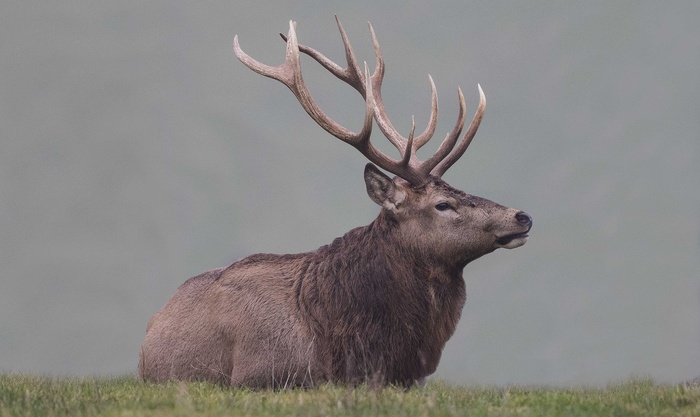
Here is the biggest of the four, you can see how strong he is and I wouldn't like to get on the sharp end of those antlers when he's being playful or not!!
Y Barcud, (The Kite).
20th January 2017
20th January 2017
This publication comes with the RSPB's Nature's Home magazine and is dedicated to bird related topics in Wales.
My wife Susan entered an image on my behalf in the 'Food Glorious Food' photographic competition and I had forgotten all about it until I opened up the magazine today.
I was really surprised to see my image on the front cover confirming I had won the competition. I am not competitive about my images at all, I just enjoy capturing images of nature. This image was taken while I was sat on an 'Armco' road barrier. I could see the birds feeding in a Rowan tree nearby and I just waited until they briefly perched in the top for a feed.
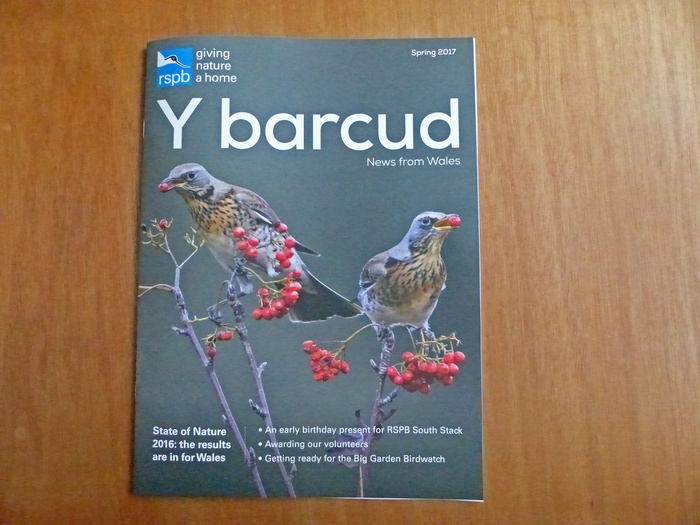
My wife Susan entered an image on my behalf in the 'Food Glorious Food' photographic competition and I had forgotten all about it until I opened up the magazine today.
I was really surprised to see my image on the front cover confirming I had won the competition. I am not competitive about my images at all, I just enjoy capturing images of nature. This image was taken while I was sat on an 'Armco' road barrier. I could see the birds feeding in a Rowan tree nearby and I just waited until they briefly perched in the top for a feed.
Waxwings, Episode Three.
20th January 2017
20th January 2017
Here we go again!
A text from a local birding friend alerted me to thirty Waxwings at the driving centre in Brecon on Wednesday evening. What a winter this is for these birds, I have heard people say they come every four years but you can't rely on that, it may be ten years before they come to a place like Brecon again because we are usually last in the queue for Waxwings. In view of this early Thursday on a bitterly cold and misty morning I arrived and I could see them high up in a Birch tree. I set my kit up knowing that sooner or later they would come down to feed in a berry tree close by.
Sure enough down they came and fed right in front of me, I was absolutely freezing because there was no sunlight and I was in a very shaded area.
A woman came walking past and asked me what I was looking at so I gave her my binoculars to see the Waxwings, she couldn't believe how beautiful they were and telephoned her husband immediately and ten minutes later he arrived and we froze together watching these lovely birds feeding in front of us.
After a good feed they just flew off high and wide, this again exemplifies the fact that you have to react quickly if you want to see these gorgeous birds.
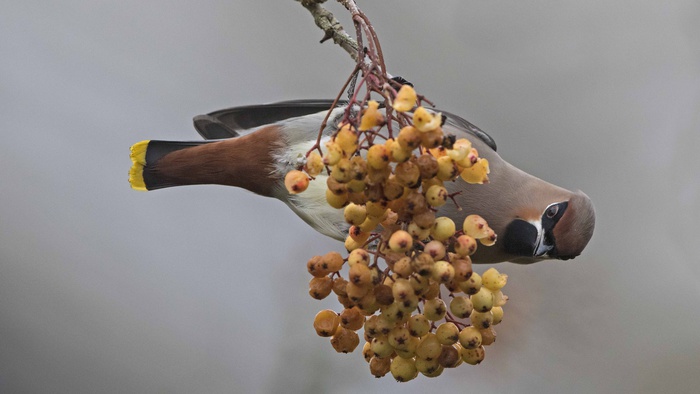
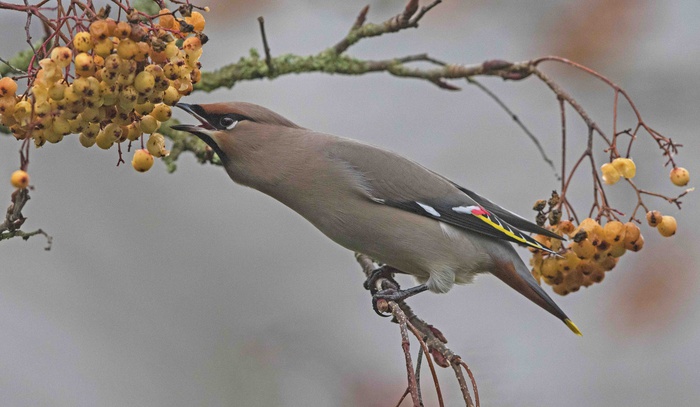
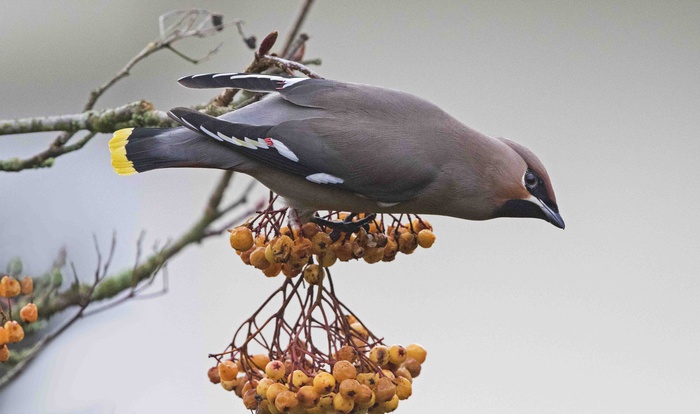
A text from a local birding friend alerted me to thirty Waxwings at the driving centre in Brecon on Wednesday evening. What a winter this is for these birds, I have heard people say they come every four years but you can't rely on that, it may be ten years before they come to a place like Brecon again because we are usually last in the queue for Waxwings. In view of this early Thursday on a bitterly cold and misty morning I arrived and I could see them high up in a Birch tree. I set my kit up knowing that sooner or later they would come down to feed in a berry tree close by.
Sure enough down they came and fed right in front of me, I was absolutely freezing because there was no sunlight and I was in a very shaded area.
A woman came walking past and asked me what I was looking at so I gave her my binoculars to see the Waxwings, she couldn't believe how beautiful they were and telephoned her husband immediately and ten minutes later he arrived and we froze together watching these lovely birds feeding in front of us.
After a good feed they just flew off high and wide, this again exemplifies the fact that you have to react quickly if you want to see these gorgeous birds.
More Waxwings.
17th January 2017
17th January 2017
I thought the Waxwings had finished for me this winter after photographing them in Brecon, but I was wrong. I knew there were a lot more around the country but I didn't think they would come to this area. However, the county bird recorder for Breconshire was driving through a small village nearby and by chance he saw eight birds in a hedgerow and that's how it is with this current irruption, they can literally be anywhere!
The following morning my wife Susan and I were out first thing looking for them, they were not in the same area where he had seen them the previous afternoon but after some searching I found them near the small village primary school. Thankfully it was a Saturday and I was able to set up my gear right outside the playground. On a schoolday I wouldn't have gone near there, you can't be too careful these days, (a sad reflection on the society we all live in).
The same eight birds were perched up high in a Birch tree but after a couple of minutes they swooped down to land in berry trees right by the side of us. They were no more than ten feet away and we could almost reach out and touch them. These lovely birds are so confident that it's quite amazing but also quite lovely.
I had to back off to get them in the camera frame and they were also continually singing their lovely jingling song which made it even more enjoyable. I took many shots before another three birders joined us and we all enjoyed the spectacle. The day after they were all gone, it's that fleeting and that's why you have to react straight away if you want to see and in particular photograph birds, don't wait, they wont!!
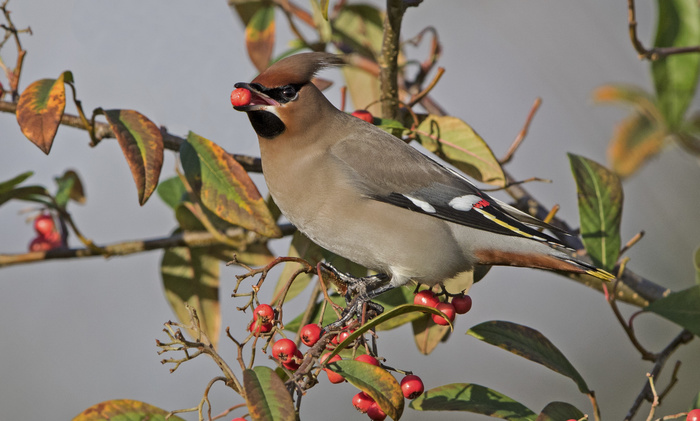
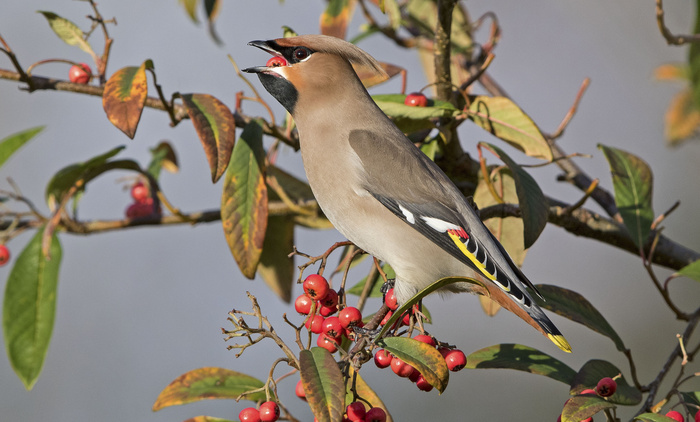
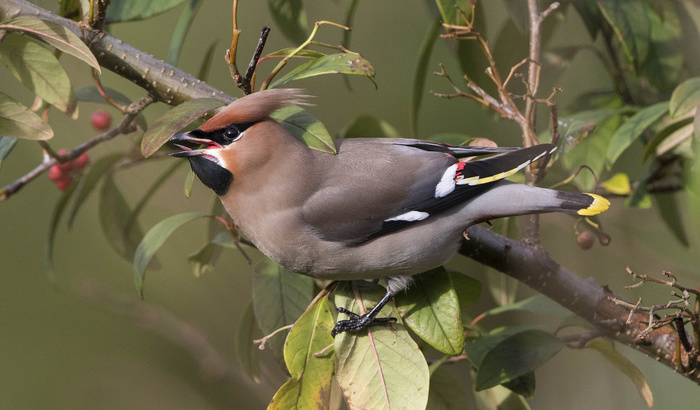
The following morning my wife Susan and I were out first thing looking for them, they were not in the same area where he had seen them the previous afternoon but after some searching I found them near the small village primary school. Thankfully it was a Saturday and I was able to set up my gear right outside the playground. On a schoolday I wouldn't have gone near there, you can't be too careful these days, (a sad reflection on the society we all live in).
The same eight birds were perched up high in a Birch tree but after a couple of minutes they swooped down to land in berry trees right by the side of us. They were no more than ten feet away and we could almost reach out and touch them. These lovely birds are so confident that it's quite amazing but also quite lovely.
I had to back off to get them in the camera frame and they were also continually singing their lovely jingling song which made it even more enjoyable. I took many shots before another three birders joined us and we all enjoyed the spectacle. The day after they were all gone, it's that fleeting and that's why you have to react straight away if you want to see and in particular photograph birds, don't wait, they wont!!
Waxwings at last!
03rd January 2017
03rd January 2017
The winter of 2016/2017 has seen a huge number of Waxwings come into the UK. This is predominately caused by a food shortage in their wintering territories in Scandinavia and the very north and east of Europe and Russia. Most winters only a small number make the journey to the UK, usually in the north of the country, but in other years, such as 2016/2017 thousands arrive. The descriptive term for this mass movement of birds is an irruption and irrupt they certainly have.
The north of Scotland first saw large flocks in the hundreds appearing and there are still a large number of birds there but inevitably they move south and west. It is geographically impossible for them to do anything else, because they are not going back home to a food shortage, and indeed the north of England next saw large numbers, Cumbria, Northumberland, Yorkshire and also Norfolk.
Next small flocks started to appear in north Wales and that made me hope that some birds would move south as food became more scarce. it doesn't follow that they would come south to the Brecon Beacons because they may pass the mountains and go either side. In fact this is often the case with birds appearing in Cardiff and not in the Beacons. However, I remained hopeful and on new years eve two birds were seen in Brecon town centre. I immediately dropped everything and drove there but the weather was grim and I didn't see them. New years day was a dreadful affair with grey skies, wind and incessant rain but I was hopeful that the weather would keep them in Brecon.
January the second dawned and I was off again in search of these beautiful birds and much to my delight I found five birds in the grounds of the local hospital. They were flying back and fore some berry trees in the car park and the local houses which fortunately contained further berry laden trees. After asking a very nice elderly lady for access to her garden I was able to get some shots against a bright sky with these confident birds perching virtually in front of me. It is not difficult to photograph Waxwings because as a rule they don't fear humans, the difficulty lies in finding them in the first place.
It was a real thriil to find these birds once again in Brecon.
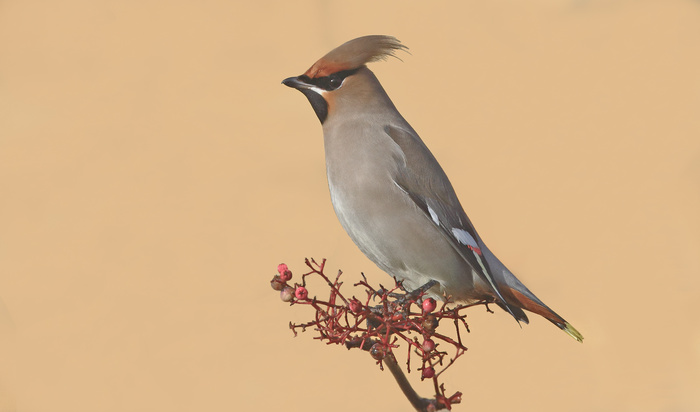
Please see Latest Images, Waxwings.
The north of Scotland first saw large flocks in the hundreds appearing and there are still a large number of birds there but inevitably they move south and west. It is geographically impossible for them to do anything else, because they are not going back home to a food shortage, and indeed the north of England next saw large numbers, Cumbria, Northumberland, Yorkshire and also Norfolk.
Next small flocks started to appear in north Wales and that made me hope that some birds would move south as food became more scarce. it doesn't follow that they would come south to the Brecon Beacons because they may pass the mountains and go either side. In fact this is often the case with birds appearing in Cardiff and not in the Beacons. However, I remained hopeful and on new years eve two birds were seen in Brecon town centre. I immediately dropped everything and drove there but the weather was grim and I didn't see them. New years day was a dreadful affair with grey skies, wind and incessant rain but I was hopeful that the weather would keep them in Brecon.
January the second dawned and I was off again in search of these beautiful birds and much to my delight I found five birds in the grounds of the local hospital. They were flying back and fore some berry trees in the car park and the local houses which fortunately contained further berry laden trees. After asking a very nice elderly lady for access to her garden I was able to get some shots against a bright sky with these confident birds perching virtually in front of me. It is not difficult to photograph Waxwings because as a rule they don't fear humans, the difficulty lies in finding them in the first place.
It was a real thriil to find these birds once again in Brecon.
Please see Latest Images, Waxwings.