News
Bath Time in the woods in Bulgaria
20th July 2019
20th July 2019
It was the changeover day for our bird guides and Susan and I were watching a few birds in a quiet woodland with a small stream running through it. We were waiting for Dimiter our second guide and the owner of Neophron Tours. He was to be our guide for a couple of days in Bulgaria and then on to Romania for the rest of the trip. We reluctantly said goodbye to Vlado who we had become quite friendly with, this was difficult because he is a very engaging and nice young man. Before Dimiter’s arrival Vlado told us that Dimiter was probably the most experienced birder in the Balkan Peninsula with a huge knowledge of the area’s geography and top notch id skills – both of which proved to be correct.
Prior to Dimiter’s arrival we had been watching a good number of birds coming down to drink and bathe from this little stream and not being one to miss a photographic opportunity I asked him to park his jeep up close to the stream to see if the birds would continue to show. He wasn’t sure that being so close would work but I said it was worth a try and we all sat quietly waiting. After a few minutes, just as I thought, the birds started to appear and what followed next was a very productive photo session.
Around this little stream we saw Jay, Ortolan Bunting, Sombre Tit, Black Caps, Corn Bunting, Semi Collared Flycatcher and Nightingale most of which came down to bathe and drink and all the while we were being serenaded by the gorgeous sound of Turtle Doves and Nightingales singing - what more could you want?
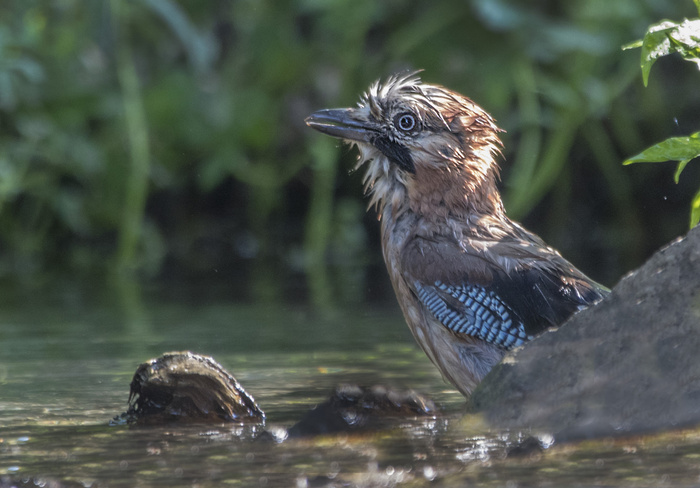
Jay.
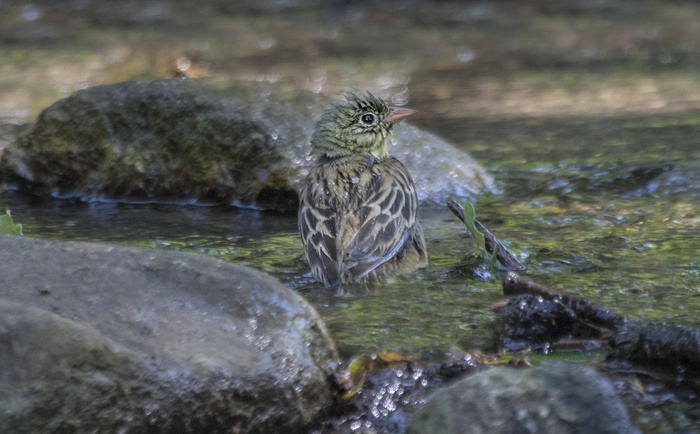
Ortolan Bunting.
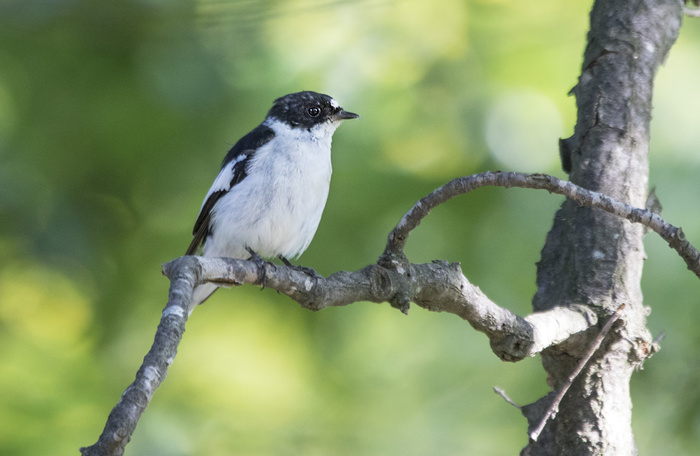
Semi Collared Flycatcher. (Sought after bird).
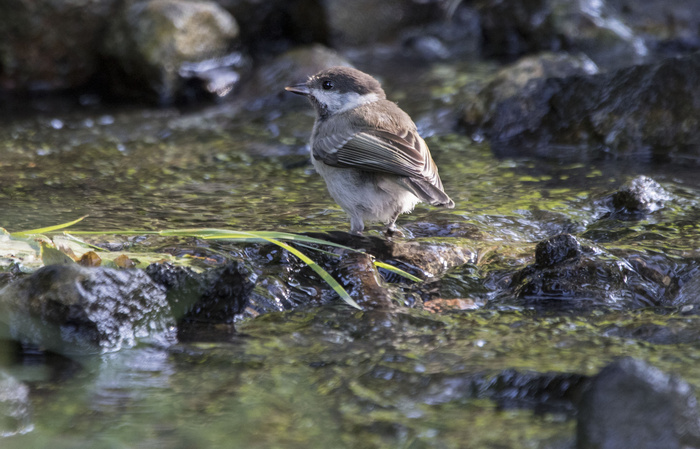
Sombre Tit.
Nightingale.
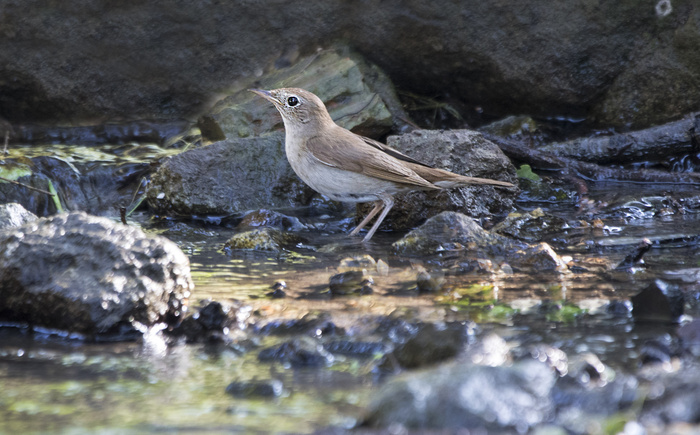
But best of all a family of Hawfinches bathing and drinking.
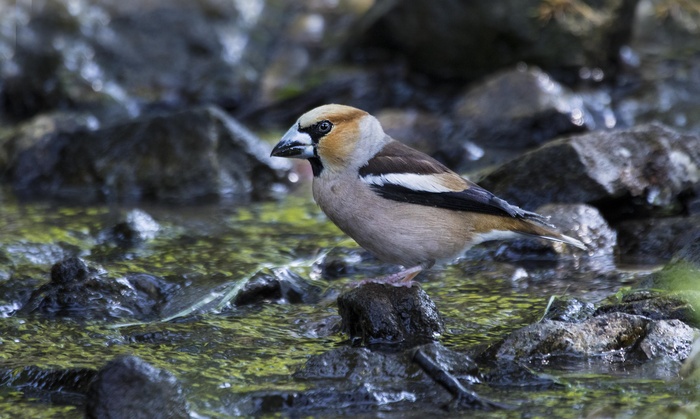
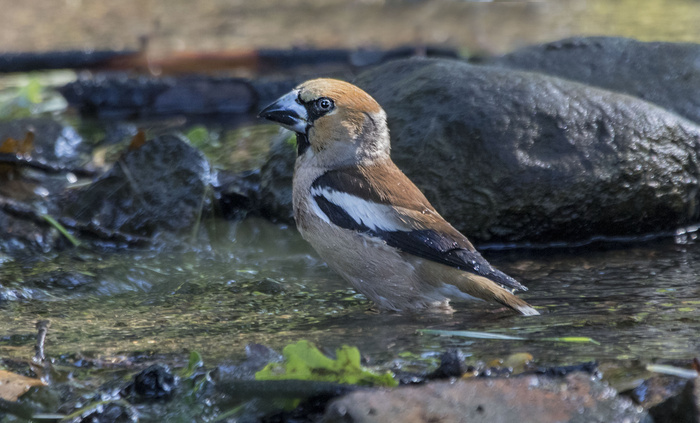
The first time for us to see young Hawfinches - and up close too!!
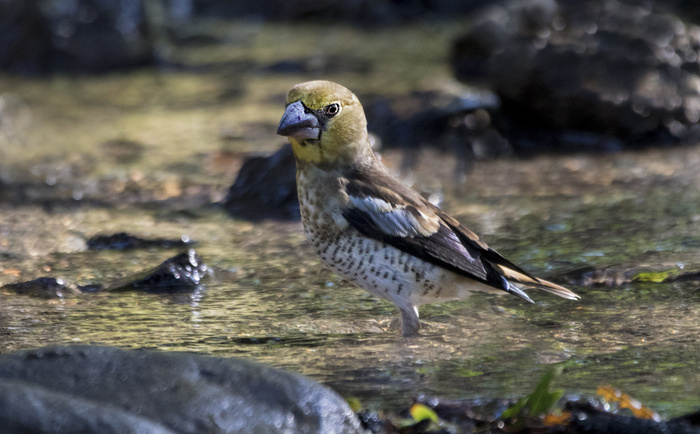
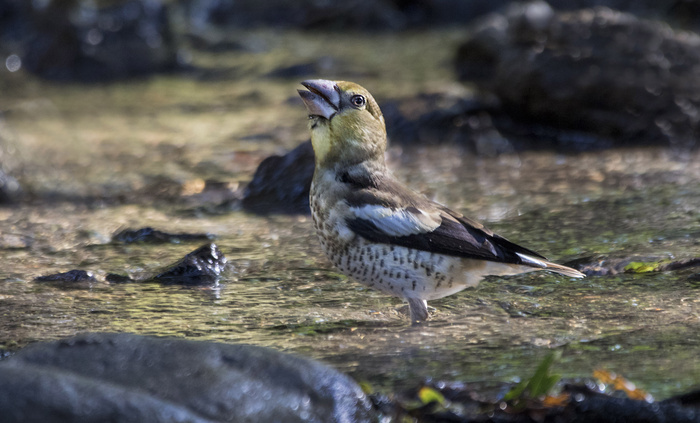
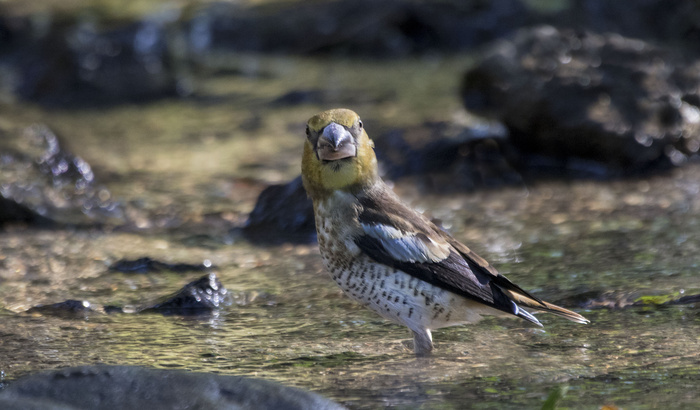
This was a delightful setting and if I had access to a place like this back home I would arrange the stones in the stream to make small natural bathing pools and also put some nice wood and stones around for perches. Then wait for some cloud cover to eliminate the highlights and shadows that were caused by the strong sunshine. If this place was local to me I would be spending large amounts of time there, because anything could drop in, and it was also very quiet, the only person we saw was a shepherd leading a flock of sheep down the track.
Dimiter was clearly impressed by this location and he tells us he has been back to visit again after our trip had finished and I’m sure this location will pay a part in his future photo tours.
Here is a very short video clip of some of the Hawfinches bathing.
https://youtu.be/894Euva1CKg
Prior to Dimiter’s arrival we had been watching a good number of birds coming down to drink and bathe from this little stream and not being one to miss a photographic opportunity I asked him to park his jeep up close to the stream to see if the birds would continue to show. He wasn’t sure that being so close would work but I said it was worth a try and we all sat quietly waiting. After a few minutes, just as I thought, the birds started to appear and what followed next was a very productive photo session.
Around this little stream we saw Jay, Ortolan Bunting, Sombre Tit, Black Caps, Corn Bunting, Semi Collared Flycatcher and Nightingale most of which came down to bathe and drink and all the while we were being serenaded by the gorgeous sound of Turtle Doves and Nightingales singing - what more could you want?
Jay.
Ortolan Bunting.
Semi Collared Flycatcher. (Sought after bird).
Sombre Tit.
Nightingale.
But best of all a family of Hawfinches bathing and drinking.
The first time for us to see young Hawfinches - and up close too!!
This was a delightful setting and if I had access to a place like this back home I would arrange the stones in the stream to make small natural bathing pools and also put some nice wood and stones around for perches. Then wait for some cloud cover to eliminate the highlights and shadows that were caused by the strong sunshine. If this place was local to me I would be spending large amounts of time there, because anything could drop in, and it was also very quiet, the only person we saw was a shepherd leading a flock of sheep down the track.
Dimiter was clearly impressed by this location and he tells us he has been back to visit again after our trip had finished and I’m sure this location will pay a part in his future photo tours.
Here is a very short video clip of some of the Hawfinches bathing.
https://youtu.be/894Euva1CKg
RAW really is best.
15th July 2019
15th July 2019
If there’s two birds that epitomise the warm sunny days in southern Europe it’s the Bee Eater and Roller. They both have a tendency to perch out in the open – Bee Eaters are quite easy to approach but Rollers are much more difficult. In the spring in Bulgaria and Romania both these birds often use the same nest sites – excavating holes in sandy bankings. However, when the nesting period is over Bee Eaters tend to stay relatively close to their nest sites, where they hunt flying insects and often perch on the side of the road as you drive by. This can make it relatively easy, if you are careful, to approach them and get a photo. Rollers will never do this, they too will perch besides roads and tracks but as soon as they see you coming, as far away as a hundred yards, they will always fly off. We were driving along a remote dirt track out in steppe – like country when we could see Bee eaters perching on some sticks right by the side of the track, we drove up near to them very slowly, cut the engine and free – wheeled up close. I was able to take one or two shots before they flew off.
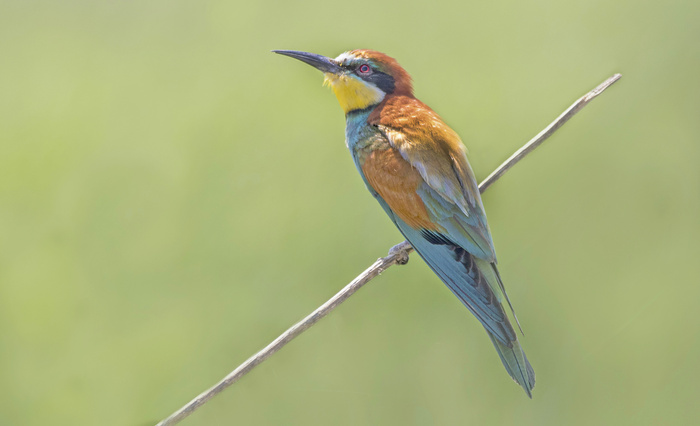
As soon as we had passed they landed again – typical behaviour.
Later that day we had stopped on an old disused bridge over a tributary of the main river where we knew there was a Levant Sparrowhawk’s nest. As we were watching these birds flying around, a pair of Kingfishers flew up the river underneath the bridge and in the distance out on the main river a Caspian Tern fished. This was a good area for birds but it was blisteringly hot in the midday sun and typically in the heat, a pair of Rollers were perched in the river – side trees just too far away for a photo – frustrating!
We reluctantly left the site and drove on to have our lunch and something cool to drink and also to escape the heat. After a couple of hours just chilling out we drove to a roadside reed - bed to see if there were any birds on view, typically birds like Great Reed and Savi’s Warbler. Just as we were approaching the area I looked to the side and unbelievably I could see a Roller on a stick just off the road. I asked our guide Dimiter to stop quickly and reverse back slowly and quietly. The Roller was unaware of us and I took a few shots as it was just perched there, after a few seconds it saw us and flew off but it didn’t matter I had it – or so I thought. When I looked at the images on the back of the camera to my horror I could see they were grossly over – exposed.
Below is the RAW image just converted to Tiff with no processing.
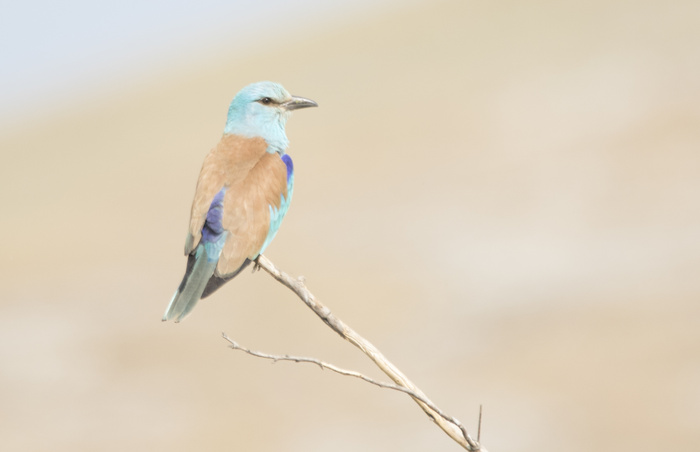
On examination of my camera I could see that the exposure compensation dial had obviously turned clockwise, probably with the movement as we drove along, and this had over – exposed the image by three stops – the maximum. I was really upset, you can see Rollers up high on telegraph wires etc. but rarely low down in better light and with no silhouetting. However, I had to move on and be positive and see if I could get a Roller image at some other point on the trip, but deep down I knew this wasn’t going to happen.
After arriving home I was processing the bird images from the trip and I had a look at the Roller shots and they looked really bad, totally washed out. However, I had shot them in RAW and as I moved the exposure sliders I was amazed, the details that looked washed out now began to appear. I was staggered at the amount of detail that was still retained in the image - now I really know why I shoot in RAW!!
If this image had been shot in jpeg it really would have been lost, because those details that allowed me to recover this image would have been deleted automatically by the camera's processor.
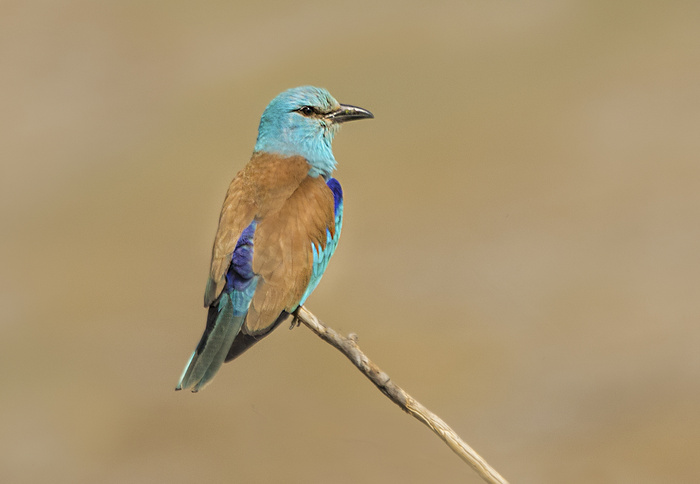
I cropped the image in a bit and cloned out the light sky in the top left corner of the image and the straggly twig on the bottom of the main branch.
It was really pleasing to see that all was not lost, it’s not the greatest image – but what a relief!!
As soon as we had passed they landed again – typical behaviour.
Later that day we had stopped on an old disused bridge over a tributary of the main river where we knew there was a Levant Sparrowhawk’s nest. As we were watching these birds flying around, a pair of Kingfishers flew up the river underneath the bridge and in the distance out on the main river a Caspian Tern fished. This was a good area for birds but it was blisteringly hot in the midday sun and typically in the heat, a pair of Rollers were perched in the river – side trees just too far away for a photo – frustrating!
We reluctantly left the site and drove on to have our lunch and something cool to drink and also to escape the heat. After a couple of hours just chilling out we drove to a roadside reed - bed to see if there were any birds on view, typically birds like Great Reed and Savi’s Warbler. Just as we were approaching the area I looked to the side and unbelievably I could see a Roller on a stick just off the road. I asked our guide Dimiter to stop quickly and reverse back slowly and quietly. The Roller was unaware of us and I took a few shots as it was just perched there, after a few seconds it saw us and flew off but it didn’t matter I had it – or so I thought. When I looked at the images on the back of the camera to my horror I could see they were grossly over – exposed.
Below is the RAW image just converted to Tiff with no processing.
On examination of my camera I could see that the exposure compensation dial had obviously turned clockwise, probably with the movement as we drove along, and this had over – exposed the image by three stops – the maximum. I was really upset, you can see Rollers up high on telegraph wires etc. but rarely low down in better light and with no silhouetting. However, I had to move on and be positive and see if I could get a Roller image at some other point on the trip, but deep down I knew this wasn’t going to happen.
After arriving home I was processing the bird images from the trip and I had a look at the Roller shots and they looked really bad, totally washed out. However, I had shot them in RAW and as I moved the exposure sliders I was amazed, the details that looked washed out now began to appear. I was staggered at the amount of detail that was still retained in the image - now I really know why I shoot in RAW!!
If this image had been shot in jpeg it really would have been lost, because those details that allowed me to recover this image would have been deleted automatically by the camera's processor.
I cropped the image in a bit and cloned out the light sky in the top left corner of the image and the straggly twig on the bottom of the main branch.
It was really pleasing to see that all was not lost, it’s not the greatest image – but what a relief!!
Wrynecks - a special encounter.
12th July 2019
12th July 2019
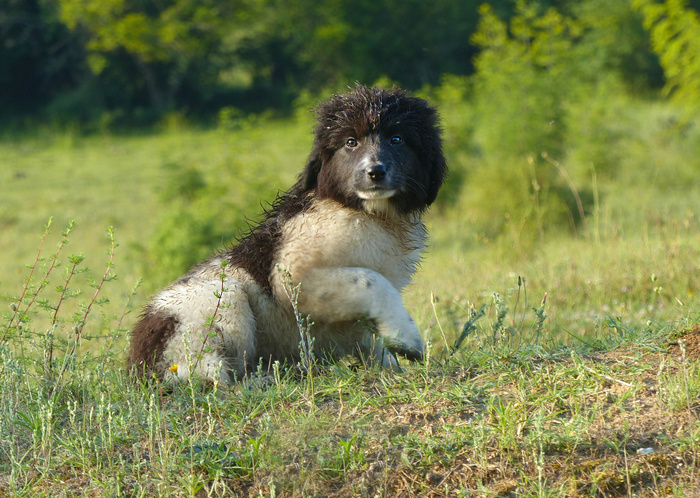
Later in the day that we saw the Lesser Spotted Woodpecker in Bulgaria, (previous blog), we walked further along the track while Vlado went back to get the vehicle. As we walked along we were being followed by a very cute little puppy who seemed to take an interest in us, probably because it didn't see many people there.
When Vlado returned Susan and I were watching Bee Eaters flying around the river about a hundred yards away. Just out of curiosity I said ‘Do you get many Wrynecks here Vlado?’ ‘Of course’ was his casual reply, ‘Would you like to see one’? He really was, without realising it, a master of the rhetorical question. In anticipation we drove to another location about a mile away and parked - up. ‘We may see some here’ Vlado indicated to a few bushes – (It was the plurality of his comment that intrigued us)! Then suddenly we saw movement and unbelievably we could now see four Wrynecks in a single small bush, an adult and three juveniles and above them, in the same bush, a Cirl Bunting and by the side of that a Red Backed Shrike!! If you saw that in the UK you would be dining out on that encounter for many years. I decided to concentrate on the Wrynecks, which were a bit obscured by branches, but one obligingly moved into the open and I gratefully took a shot.
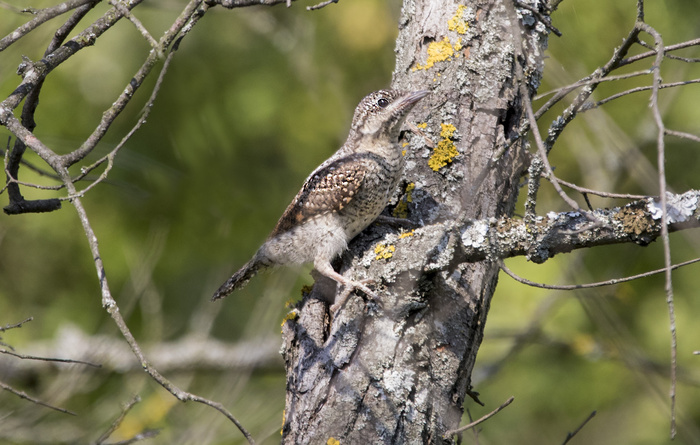
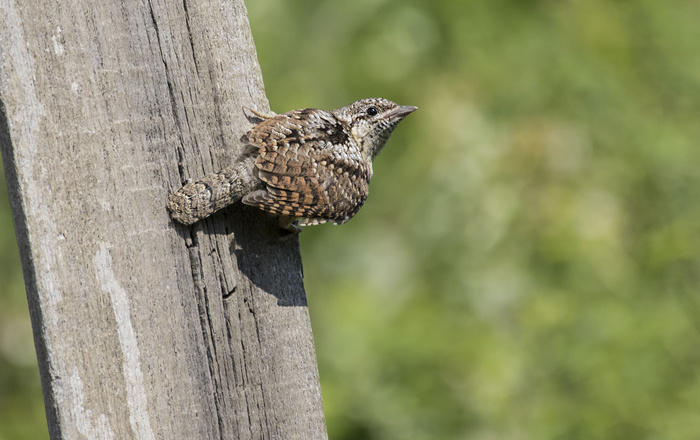
One of the Wrynecks then flew out of the bush into the open and I carefully followed it until I could see it clinging to an old wooden post. I approached it very carefully - keeping hidden behind a dense thicket until I could get a few shots. It stayed there and was surprisingly quite confiding - I gratefully spent some time admiring this fascinating bird because you never know when the next one will come along.
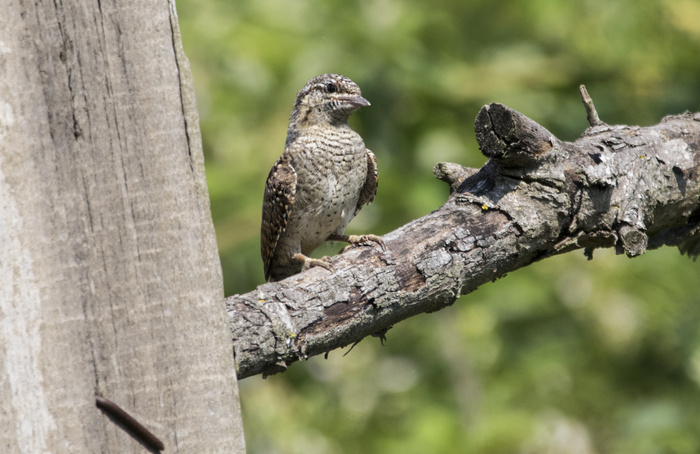
There was great birding in this area and how I wished things could be like it back home!
When Vlado returned Susan and I were watching Bee Eaters flying around the river about a hundred yards away. Just out of curiosity I said ‘Do you get many Wrynecks here Vlado?’ ‘Of course’ was his casual reply, ‘Would you like to see one’? He really was, without realising it, a master of the rhetorical question. In anticipation we drove to another location about a mile away and parked - up. ‘We may see some here’ Vlado indicated to a few bushes – (It was the plurality of his comment that intrigued us)! Then suddenly we saw movement and unbelievably we could now see four Wrynecks in a single small bush, an adult and three juveniles and above them, in the same bush, a Cirl Bunting and by the side of that a Red Backed Shrike!! If you saw that in the UK you would be dining out on that encounter for many years. I decided to concentrate on the Wrynecks, which were a bit obscured by branches, but one obligingly moved into the open and I gratefully took a shot.
One of the Wrynecks then flew out of the bush into the open and I carefully followed it until I could see it clinging to an old wooden post. I approached it very carefully - keeping hidden behind a dense thicket until I could get a few shots. It stayed there and was surprisingly quite confiding - I gratefully spent some time admiring this fascinating bird because you never know when the next one will come along.
There was great birding in this area and how I wished things could be like it back home!
Elevated pool in Middlewood nature reserve.
11th July 2019
11th July 2019
After being back home from our trip to the Balkans we are now back on an even keel, because it takes a week or so to get back to normal. I’m in the middle of processing many images and there are some great moments to look back on. However, I needed a break so I spent a couple of hours in the bird hide in the garden overlooking my little nature reserve with its newly constructed elevated pool, (see previous blog). I’m pleased to say it seems to be working well and there are many birds coming to drink and giving photographic opportunities. It’s mostly common birds but there are some nice reflections and that is what I hoped to achieve.
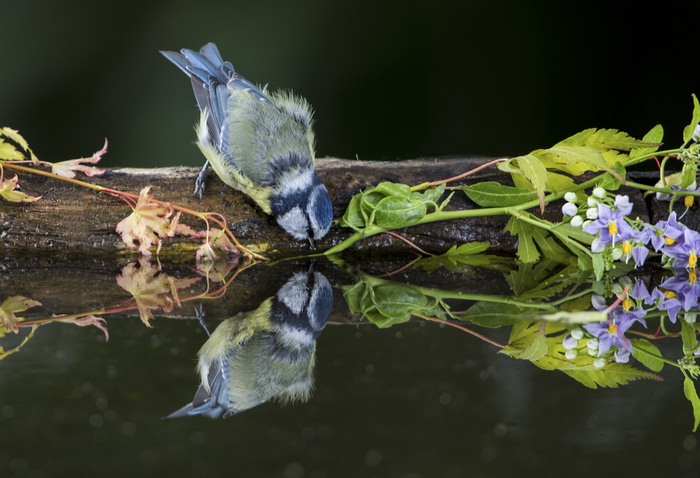
Blue Tit.
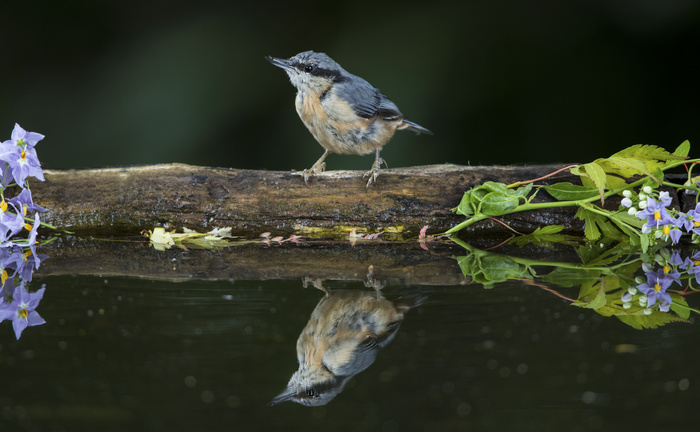
Nuthatch.
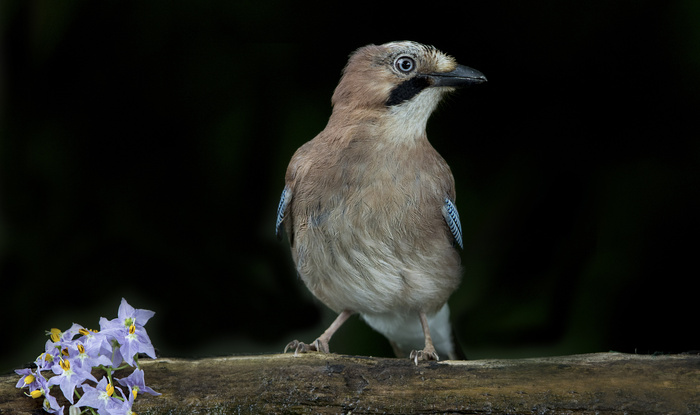
Jay.
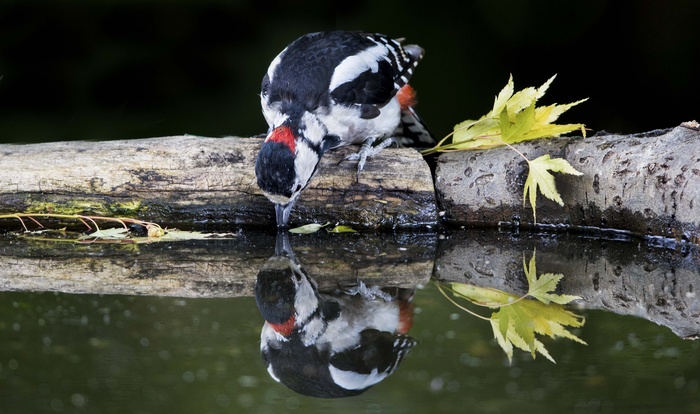
G S Woodpecker.
Blue Tit.
Nuthatch.
Jay.
G S Woodpecker.
Spotted Nutcracker a Bogey Bird - at last!!!
05th July 2019
05th July 2019
If there is one bird that has eluded us on our travels it is the Spotted Nutcracker, we frustratingly missed one in Poland and since then it has been a bird we have wanted to see. We outlined this to our guide Vlado, (short for Vladimir), and he took us to a site in the Vitosha mountains above Sofia to try and locate these enigmatic birds. Enigmatic because in winter when there are irruptions, albeit infrequently, of the Macrorhynchos - (Siberian race) into Europe, they can be very tame, but in summer the resident Caryocatactes race are not so confiding - therein laid the problem, it was mid – June!!
However, after some searching we could hear their rasping calls, similar but exaggerated and much louder than our Jay. We waited patiently until we could see a pair low down in a Norway spruce and at last a Spotted Nutcracker in front of my lens, what a great feeling!!
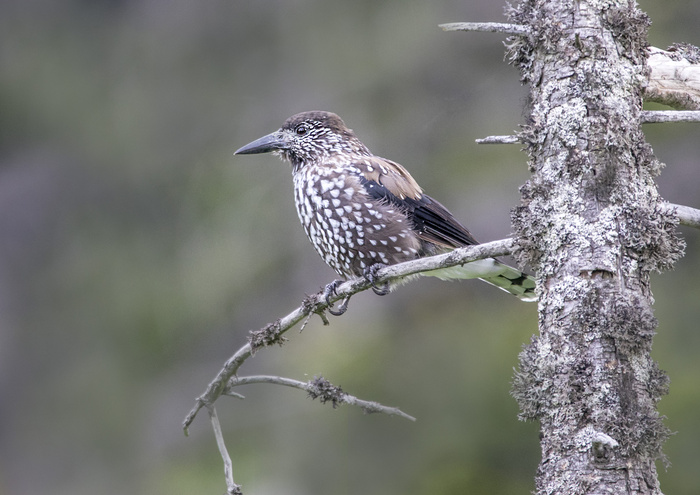
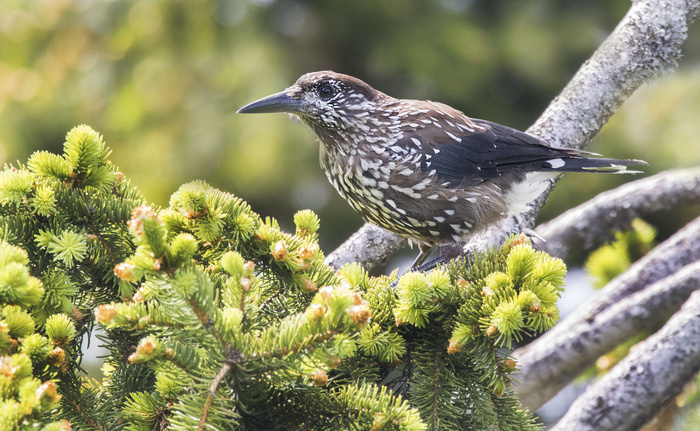
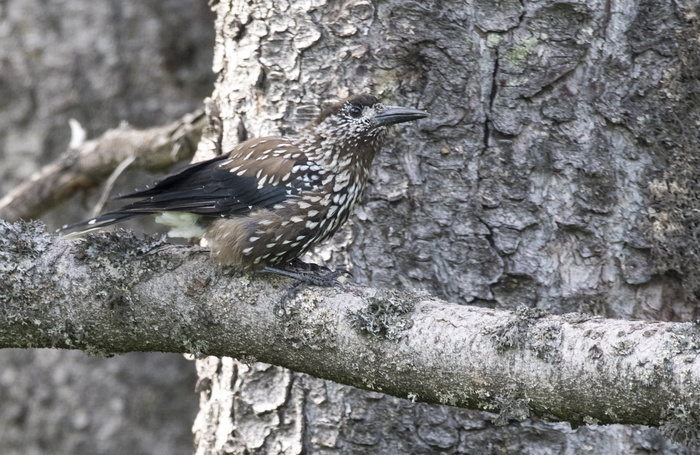
However, after some searching we could hear their rasping calls, similar but exaggerated and much louder than our Jay. We waited patiently until we could see a pair low down in a Norway spruce and at last a Spotted Nutcracker in front of my lens, what a great feeling!!
Birding trip to the Balkans 2019.
05th July 2019
05th July 2019
Susan and I have just arrived home after a road/birding trip through Bulgaria and Romania. We visited a diverse selection of habitats ranging from deeply forested valleys to expansive steppes and high alpine-like meadows and mountains. We sampled many different local cuisines, which in the main were very good indeed. We were in the company of our own private guides who knew the countries and their terrain in minute detail, enabling us to see many species that otherwise would have been impossible to locate. Both our guides Vlado and Dimiter were expert birders, and a great many thanks must go to them for their hard work, both in terms of navigation and finding a variety of difficult species. The company we booked with was Neophron Tours based in Bulgaria who have been providing wildlife tours in the Balkans since 1996 and we can highly recommend them. Everything was taken care of, from a seamless pick-up at Sofia airport in Bulgaria, accommodation, transport to all locations, all food - (and plenty of it), and drop off at Bucharest airport in Romania. In short anything we requested was provided without hesitation, so if you want to see the Balkans from a cultural point, or Birds, Dragonflies and Butterflies then they have an expert to guide you.
A series of blogs will follow and as usual a full trip report will be available in due course.
In order to lighten our equipment load while travelling, all images within these blogs and the subsequent birding trip report were taken hand - held with a Sigma 150-600 f5 -6.3 contemporary lens. I left my Canon ef600 f4 is ii lens at home purely because of ergonomics.
A series of blogs will follow and as usual a full trip report will be available in due course.
In order to lighten our equipment load while travelling, all images within these blogs and the subsequent birding trip report were taken hand - held with a Sigma 150-600 f5 -6.3 contemporary lens. I left my Canon ef600 f4 is ii lens at home purely because of ergonomics.
Lesser Spotted Woodpecker.
01st July 2019
01st July 2019
In the UK and especially the Brecon Beacons where we live, the Lesser Spotted Woodpecker is in steep decline. It is now a very difficult bird to hear let alone see and a birder can go years without seeing one. Unfortunately because there is no real explanation for this decline things are not going to improve anytime soon. It is also ironic, because if you do have the luck to see one they are not particularly shy and of our three resident Woodpeckers they are the least wary!
We were hoping to see one of these little Woodpeckers in Bulgaria or Romania because they do not have the problems that we have in the UK regarding crashing bird numbers.
We drove to an isolated area very early one morning, we were up and about just after first light every day to maximise the comfortable temperatures, because throughout this trip it was in excess of thirty degrees every day and getting up early when you are seeing nice wildlife has never been a problem for us.
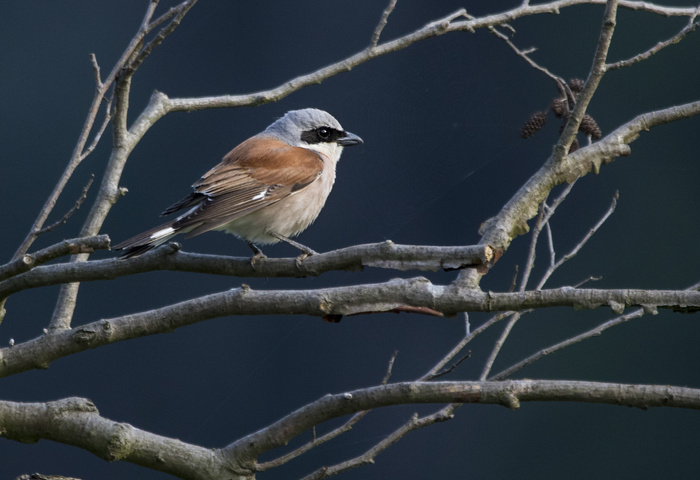
As we wandered along a tree lined track adjacent to a river, Hoopoes, Golden Orioles and Nightingales were singing and we could hear Bee Eaters flying overhead giving their fluty trills. It was a real pleasure just to walk along and listen. I was watching a Red Backed Shrike, (as you do), in a bush.
Susan and Vlado were talking about twenty yards away and casually Vlado said ‘Steve, do you want a Lesser Spotted Woodpecker’? If ever there was a rhetorical question!!
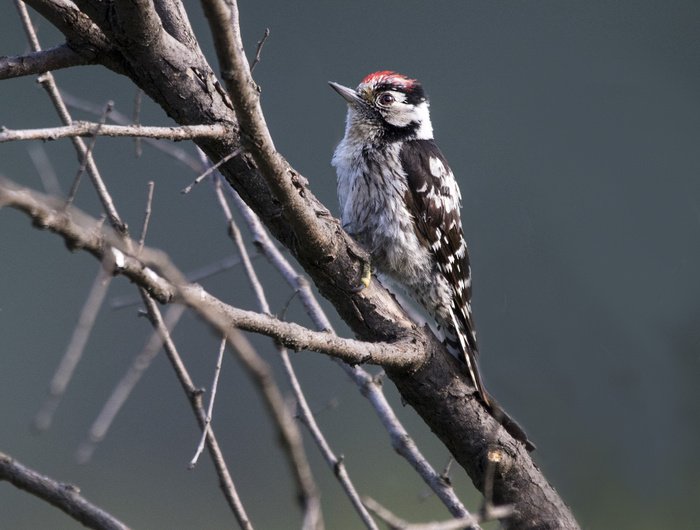
I hurried along and there in front of us was a male, I couldn’t wait to take a few shots.
I told Vlado that it didn’t matter what else I saw, my day was made just by seeing this lovely little bird.
The day, however, was not over, but that's for another blog........
We were hoping to see one of these little Woodpeckers in Bulgaria or Romania because they do not have the problems that we have in the UK regarding crashing bird numbers.
We drove to an isolated area very early one morning, we were up and about just after first light every day to maximise the comfortable temperatures, because throughout this trip it was in excess of thirty degrees every day and getting up early when you are seeing nice wildlife has never been a problem for us.
As we wandered along a tree lined track adjacent to a river, Hoopoes, Golden Orioles and Nightingales were singing and we could hear Bee Eaters flying overhead giving their fluty trills. It was a real pleasure just to walk along and listen. I was watching a Red Backed Shrike, (as you do), in a bush.
Susan and Vlado were talking about twenty yards away and casually Vlado said ‘Steve, do you want a Lesser Spotted Woodpecker’? If ever there was a rhetorical question!!
I hurried along and there in front of us was a male, I couldn’t wait to take a few shots.
I told Vlado that it didn’t matter what else I saw, my day was made just by seeing this lovely little bird.
The day, however, was not over, but that's for another blog........
Wallcreeper - the Hoopoe of the Rock Face!
01st July 2019
01st July 2019
We have seen Wallcreepers previously in the Pyrenees but they are always a nice bird to see anywhere. They live a precarious life nesting high up on very remote cliff faces in inhospitable areas.
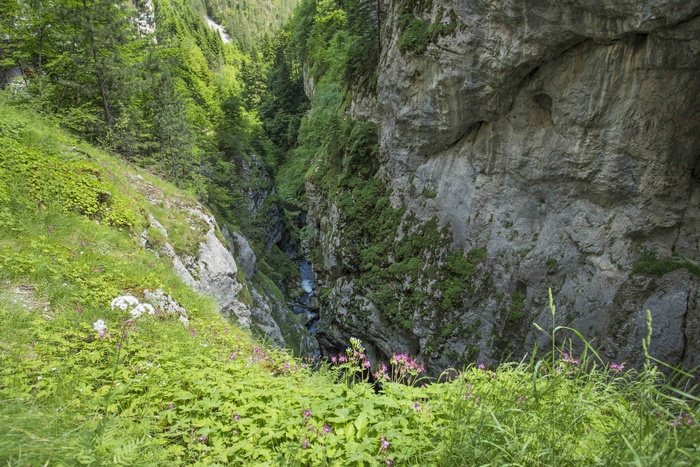
They are a colourful bird when they open their wings to reveal the blood – red markings, but until then they can often go undetected.
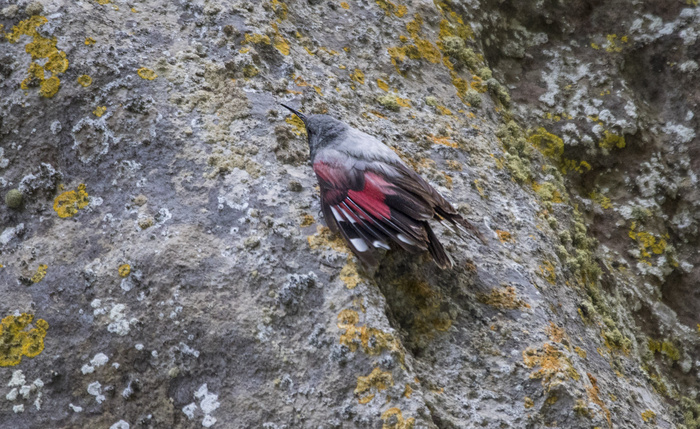
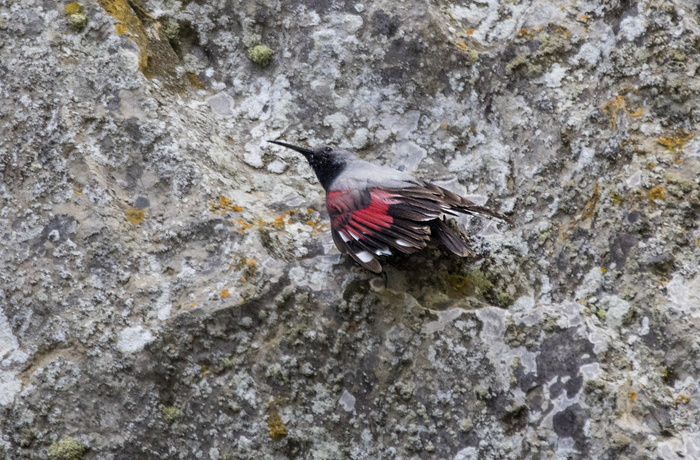
They flutter around, high up on these cliff faces like a giant butterfly or even a Hoopoe and they have been named by some as the Hoopoe of the cliff face. We drove to remote areas in the mountains of Bulgaria and Romania to try and see these birds and in a few locations we could see them flying high above us and then perching on the cliff faces.
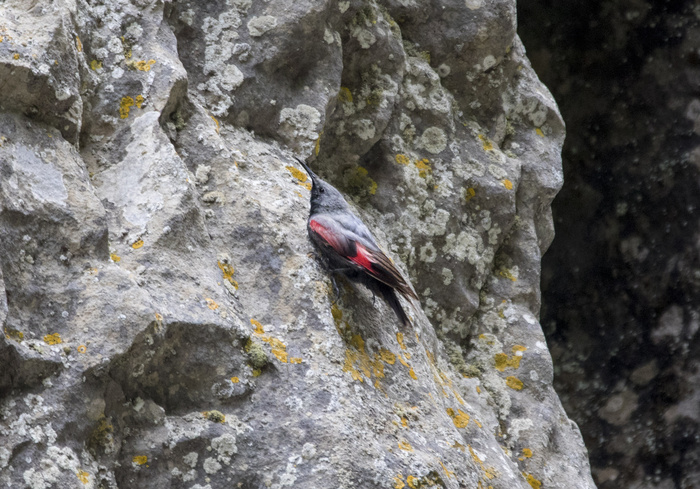
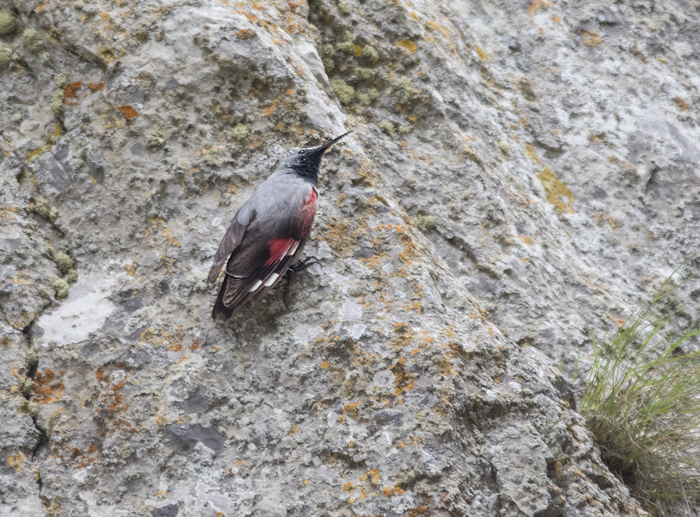
These birds spend their life clinging to vertiginous rocks ‘Winkling’ out small grubs, spiders and other insects.
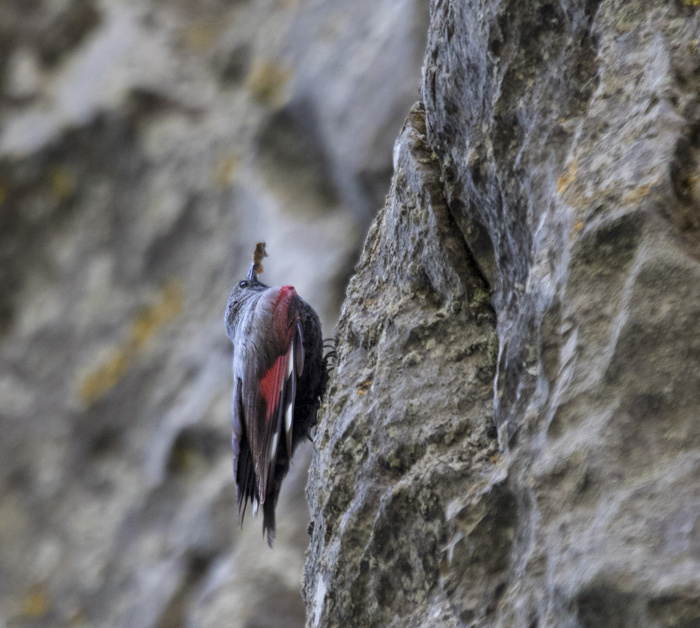
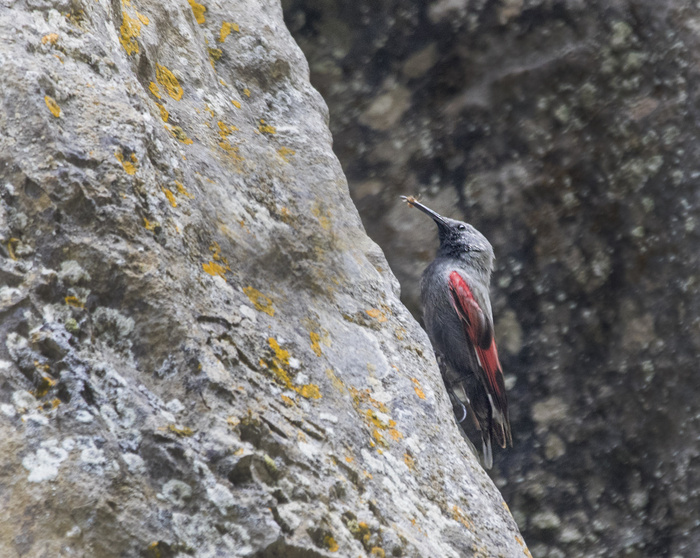
We spent time in locations watching them go back and fore nest sites high up on the cliffs and it was a very pleasant way to spend early mornings.
They are a colourful bird when they open their wings to reveal the blood – red markings, but until then they can often go undetected.
They flutter around, high up on these cliff faces like a giant butterfly or even a Hoopoe and they have been named by some as the Hoopoe of the cliff face. We drove to remote areas in the mountains of Bulgaria and Romania to try and see these birds and in a few locations we could see them flying high above us and then perching on the cliff faces.
These birds spend their life clinging to vertiginous rocks ‘Winkling’ out small grubs, spiders and other insects.
We spent time in locations watching them go back and fore nest sites high up on the cliffs and it was a very pleasant way to spend early mornings.
The precarious life of the Cuckoo.
29th May 2019
29th May 2019
When people hear a Cuckoo calling, usually in the distance, they just hear that sound of spring, but most never realise what’s going on in the Cuckoo’s life. The constant daily harassment from not only the birds whose nests they parasitize , principally Meadow Pipits in this area,
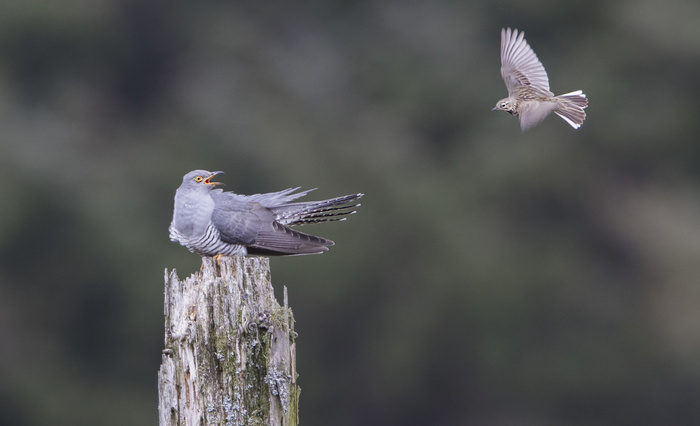
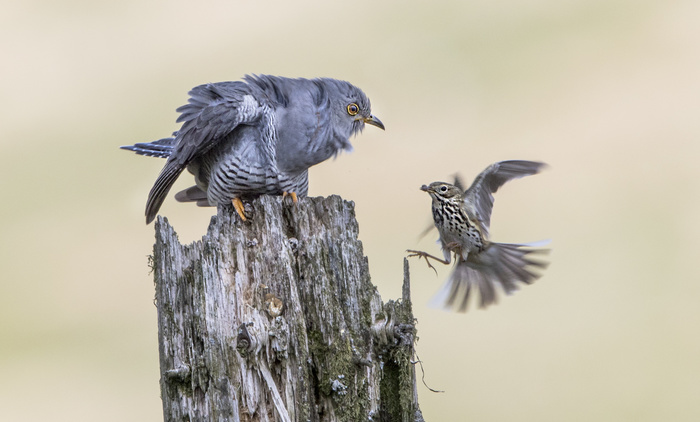
but other birds who join in, like Chaffinch.
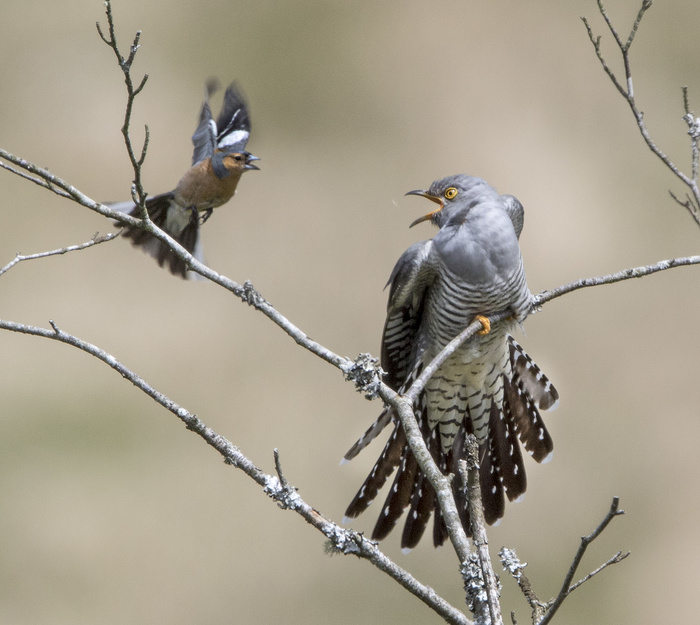
Some may say it serves the Cuckoo right for laying eggs in other birds’ nests, but I will defend the Cuckoo because it is only doing what nature intended for it and I can’t help feeling admiration for this characterful and intelligent bird. When a Cuckoo is calling, usually from a perched position, although I have seen them calling in flight, there will be numerous small birds just sitting beside it.
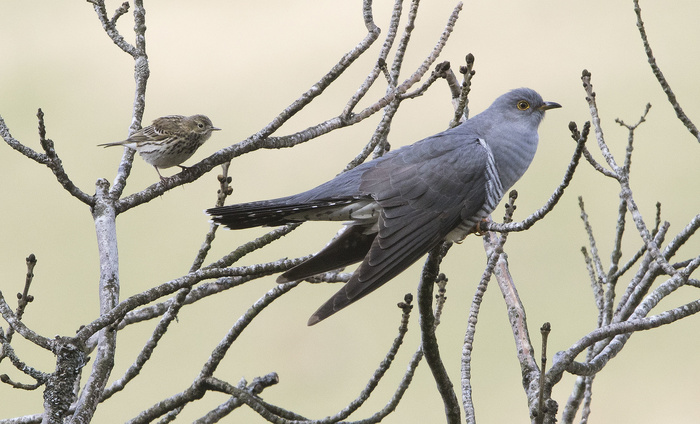
and when it is not looking they will typically peck its tail or jump onto its back, purely to annoy it. If these small birds just perch next to a Cuckoo it will stay there but it doesn’t like being touched and if it is it will open its beak showing that blood red gape to the perpetrators.
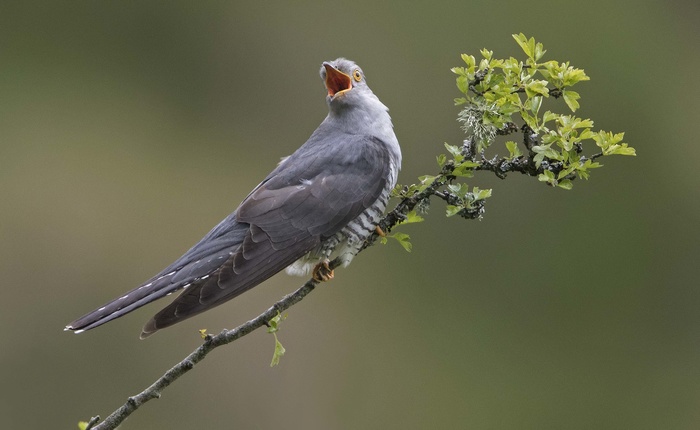
Cuckoos can get really shaken up during these altercations some of which are quite vicious.
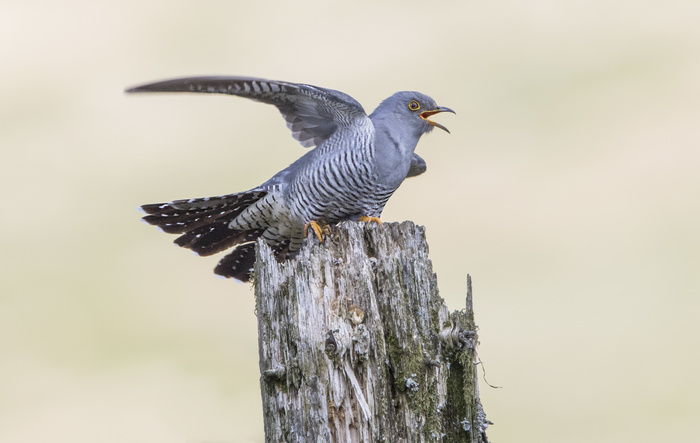
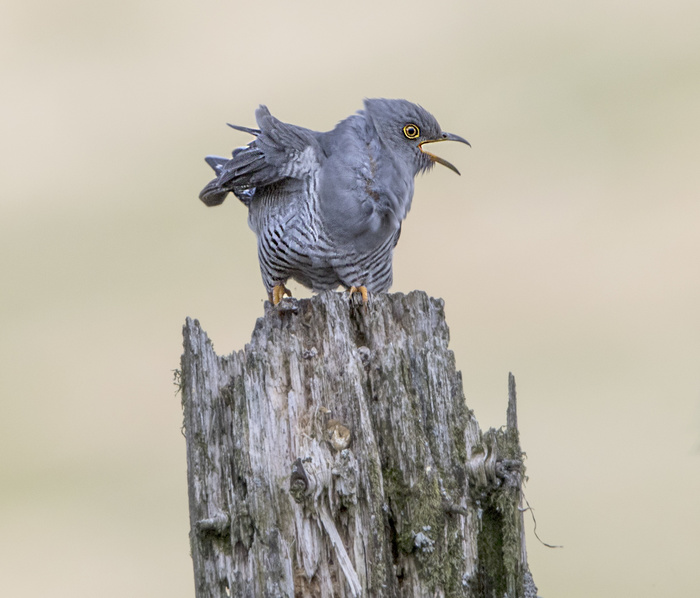
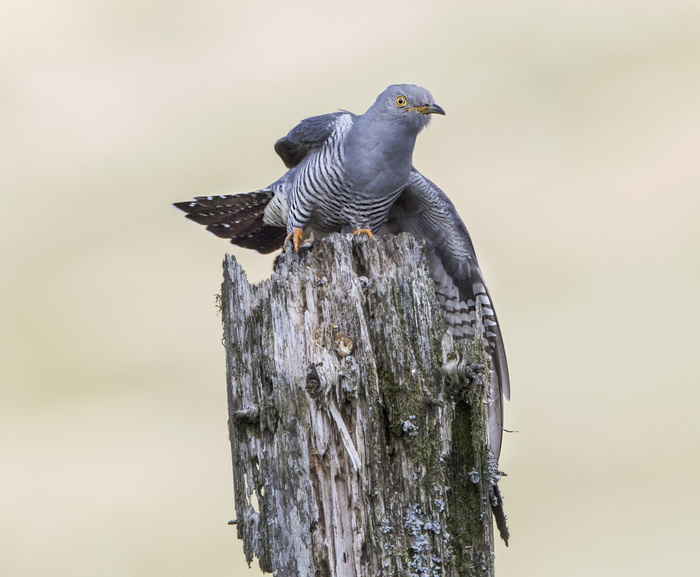
When these small birds’ antics become intolerable the Cuckoo will take flight, but unfortunately so do the same small birds and you can then see the classic flight image of a Cuckoo with a string of birds behind it, bearing similarities to a child’s kite with streamers attached. Then when the Cuckoo alights on a new perch the whole tedious scenario is repeated.
In between this constant provocation a male Cuckoo has to find a female, then hopefully mate successfully and then that female, who is also harassed,
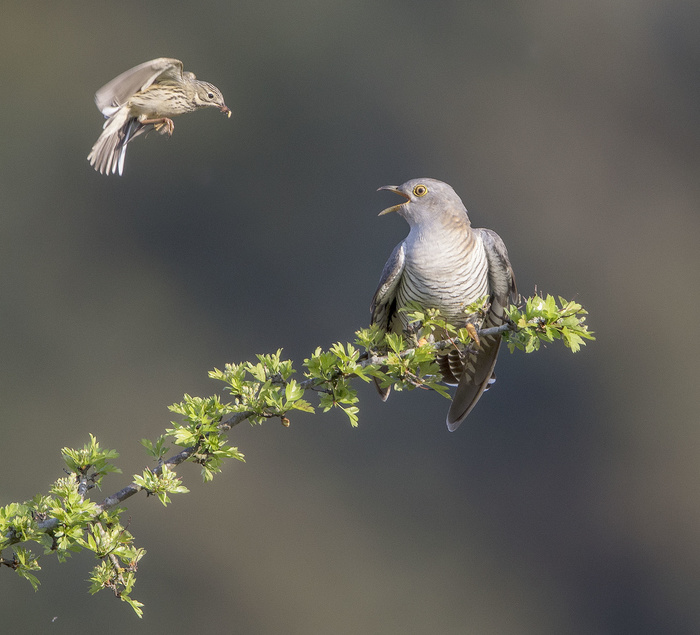
has to show extreme cunning to get her egg into a host’s nest in just a few seconds. This whole performance must take place over a relatively short period of time. Cuckoos arrive here in the Brecon Beacons at the end of April and by late June it’s all over, so it has to be a well drilled procedure. I have to admire these birds if only for the scenarios depicted above.
I also love to hear their call when they arrive and miss it when they leave. We all love to hear a Cuckoo calling, it conjures up images in our minds of warm sunny spring days, and I for one hope it continues undiminished!!
but other birds who join in, like Chaffinch.
Some may say it serves the Cuckoo right for laying eggs in other birds’ nests, but I will defend the Cuckoo because it is only doing what nature intended for it and I can’t help feeling admiration for this characterful and intelligent bird. When a Cuckoo is calling, usually from a perched position, although I have seen them calling in flight, there will be numerous small birds just sitting beside it.
and when it is not looking they will typically peck its tail or jump onto its back, purely to annoy it. If these small birds just perch next to a Cuckoo it will stay there but it doesn’t like being touched and if it is it will open its beak showing that blood red gape to the perpetrators.
Cuckoos can get really shaken up during these altercations some of which are quite vicious.
When these small birds’ antics become intolerable the Cuckoo will take flight, but unfortunately so do the same small birds and you can then see the classic flight image of a Cuckoo with a string of birds behind it, bearing similarities to a child’s kite with streamers attached. Then when the Cuckoo alights on a new perch the whole tedious scenario is repeated.
In between this constant provocation a male Cuckoo has to find a female, then hopefully mate successfully and then that female, who is also harassed,
has to show extreme cunning to get her egg into a host’s nest in just a few seconds. This whole performance must take place over a relatively short period of time. Cuckoos arrive here in the Brecon Beacons at the end of April and by late June it’s all over, so it has to be a well drilled procedure. I have to admire these birds if only for the scenarios depicted above.
I also love to hear their call when they arrive and miss it when they leave. We all love to hear a Cuckoo calling, it conjures up images in our minds of warm sunny spring days, and I for one hope it continues undiminished!!
Common Quail - The Impossible Photography Subject....?
24th May 2019
24th May 2019
Early in the morning, three days ago, I went out into my garden to get something from my car. The morning was still with little bird song but suddenly an uncommon bird’s call stopped me in my tracks. I thought ‘What on earth is that’? And then it dawned on me that it was a Common Quail singing from the winter barley field below my garden.
Common by name but not by nature, these highly elusive migrants from the continent usually arrive in June in small numbers and around here they are rarely heard and even less rarely seen! The last bird heard was about eight years ago, so an unusual event for this area. I telephoned the county bird recorder who lives locally and on his arrival we both heard the bird singing clearly. However, we both realised with a dose of reality that although it was very nice to hear this rare bird, a sighting was totally unrealistic because Quail are notoriously difficult to see, spending all of their time hidden in typically, a barley crop.
The following day Susan and I were out in the garden and it was obvious to us that this Quail was singing outside the barley field where I first heard it. It was very close to our house and with the chance of a probable once in a lifetime sighting on the cards I again telephoned the county recorder and another of our birding friends and asked them to come over and walk in the field where the obvious singing was coming from. Frustratingly, while we were waiting for them to arrive the singing was getting progressively quieter and the bird was moving away. When they arrived we all went cautiously into the field where the singing was coming from but there was no sign of the bird and as we approached the barley field perimeter we could all hear the singing coming from just the other side of the fence - the bird had once again retreated back into its favoured habitat – ARRRRGH!!
The following morning I arranged with our good neighbour, the farmer who owns the barley field, for Susan and me to walk the perimeter, in the unlikely event that we would see the Quail. On entering the field we could immediately hear its loud song, and as we got nearer and nearer the song was getting louder. We estimated that we were about ten feet away when everything went quiet. We sat down and just listened, and then from about fifty feet away the singing stated again. As we stood up the Quail flew about thirty yards into the crop, but we were elated, it was a UK life tick for us both and we were contented at just seeing such an elusive bird. We left the field happy with this very rare sighting.
However, it wasn’t over, not by a long shot!
The next day we had been out for a nice walk on a local hillside and we had seen Cuckoo, Yellow Hammer, Redstart and some young Chiffchaffs, so a nice morning out. After unloading my car and going into the house we were having some tea and I said I’d left my binocular case in my car, so I went outside and thirty yards away at the edge of the barley field there is an animal’s drinking trough, and as I looked a bird flew off the edge of the trough and into the field. To my utter astonishment I could see it was the Quail. I realised the bird was looking for water and as I am always on the lookout for photographic opportunities I got a planting tray from the garden shed and I took it down the field and placed it in the long grass near the drinking trough. I filled it with water from a watering can and then returned to my garden to see if it was in a favourable position. When I was happy I then set up my Canon 600 f4 prime lens with a 1.4 converter for maximum reach below the fence line of the field that borders our garden, thereby looking through the wires, and I then placed some camo netting in front for a bit more of a disguise. Susan sat on a garden chair just to the side also looking through the fence and we settled down and just waited – we were about twenty five yards away. This was more in hope than expectation realising how shy these birds are – but if you don’t try you’ll never know!!
About an hour later we could hear the Quail singing loudly again, near to the water trough and I couldn’t believe it as I saw it fly over the barley field fence and land in a tangle of old branches and nettles. It was still singing but we couldn’t see it, this is typical unfortunately. Then I looked on the left of this tangle of wood and grass and I could see the bird looking up the field. I had the camera on silent shooting just in chase, and I took a number of frames of the bird in various poses.
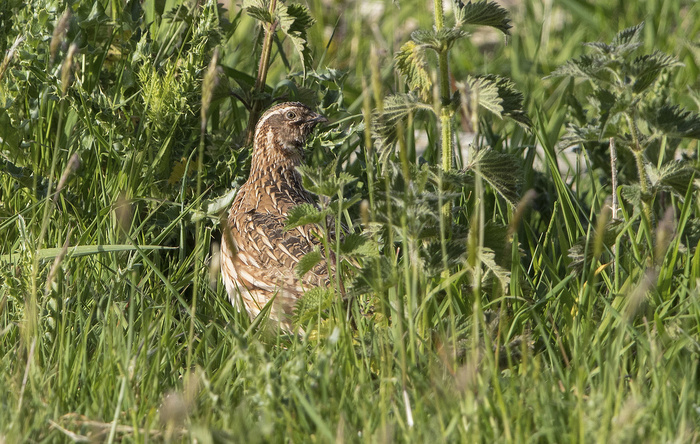
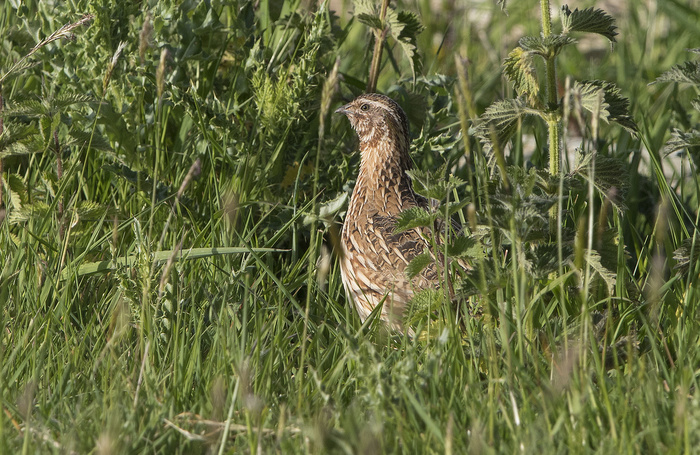
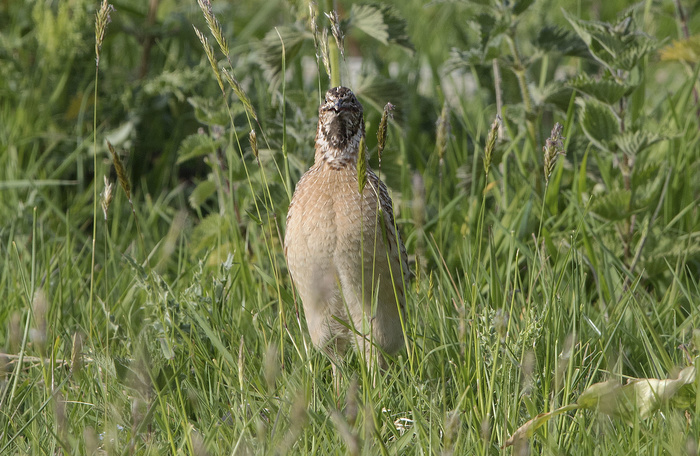
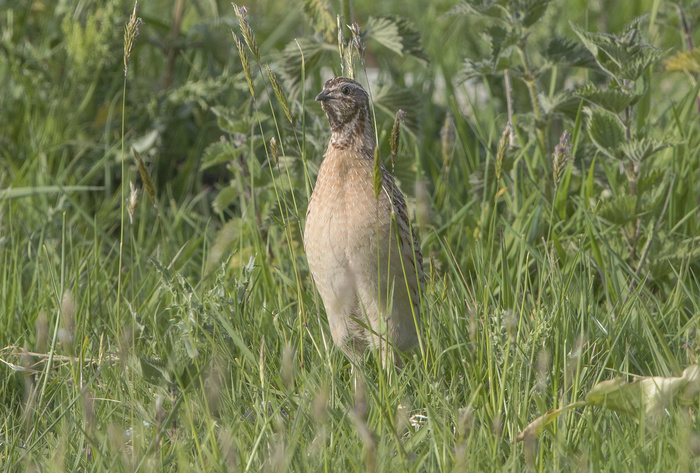
We both had good views of a very elusive subject. Everything then went silent and it disappeared back into the foliage and after about ten minutes had passed we both thought the bird had again retreated back to the barley field. What happened next though was one of the biggest shocks of my birding life, I looked over the top of my lens and I could now see the Quail in the long grass about fifteen feet from my lens - I literally could not believe it!! It had sneaked through the long grass and then made its way up the fence line out of our sight. A horrible feeling swept over me – would it be too close for my lens to focus? - the stuff of nightmares. I pressed the focus button and to my relief it snapped into focus and I shot it at what must have been very close to minimum focussing distance – fifteen feet. Most of the bird was hidden in long grass but I had a great portrait shot of one of the shyest birds around.
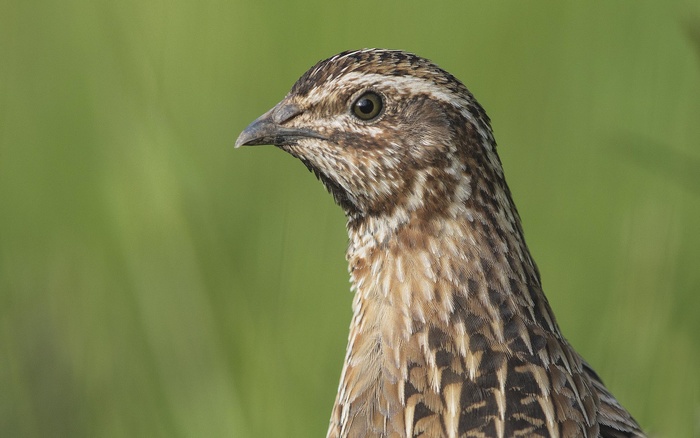
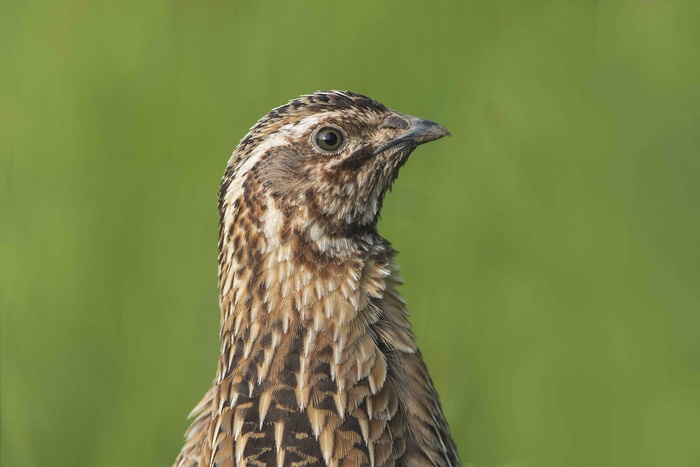
Susan also had great views through the fence wire. Then it just disappeared again and later we could hear it taking off and flying back into the barley field - What an experience!!
Please see Latest Images, Common Quail for a few more images.
Also footage of this male bird singing can be seen on the 'video clips' page of this site.
Common by name but not by nature, these highly elusive migrants from the continent usually arrive in June in small numbers and around here they are rarely heard and even less rarely seen! The last bird heard was about eight years ago, so an unusual event for this area. I telephoned the county bird recorder who lives locally and on his arrival we both heard the bird singing clearly. However, we both realised with a dose of reality that although it was very nice to hear this rare bird, a sighting was totally unrealistic because Quail are notoriously difficult to see, spending all of their time hidden in typically, a barley crop.
The following day Susan and I were out in the garden and it was obvious to us that this Quail was singing outside the barley field where I first heard it. It was very close to our house and with the chance of a probable once in a lifetime sighting on the cards I again telephoned the county recorder and another of our birding friends and asked them to come over and walk in the field where the obvious singing was coming from. Frustratingly, while we were waiting for them to arrive the singing was getting progressively quieter and the bird was moving away. When they arrived we all went cautiously into the field where the singing was coming from but there was no sign of the bird and as we approached the barley field perimeter we could all hear the singing coming from just the other side of the fence - the bird had once again retreated back into its favoured habitat – ARRRRGH!!
The following morning I arranged with our good neighbour, the farmer who owns the barley field, for Susan and me to walk the perimeter, in the unlikely event that we would see the Quail. On entering the field we could immediately hear its loud song, and as we got nearer and nearer the song was getting louder. We estimated that we were about ten feet away when everything went quiet. We sat down and just listened, and then from about fifty feet away the singing stated again. As we stood up the Quail flew about thirty yards into the crop, but we were elated, it was a UK life tick for us both and we were contented at just seeing such an elusive bird. We left the field happy with this very rare sighting.
However, it wasn’t over, not by a long shot!
The next day we had been out for a nice walk on a local hillside and we had seen Cuckoo, Yellow Hammer, Redstart and some young Chiffchaffs, so a nice morning out. After unloading my car and going into the house we were having some tea and I said I’d left my binocular case in my car, so I went outside and thirty yards away at the edge of the barley field there is an animal’s drinking trough, and as I looked a bird flew off the edge of the trough and into the field. To my utter astonishment I could see it was the Quail. I realised the bird was looking for water and as I am always on the lookout for photographic opportunities I got a planting tray from the garden shed and I took it down the field and placed it in the long grass near the drinking trough. I filled it with water from a watering can and then returned to my garden to see if it was in a favourable position. When I was happy I then set up my Canon 600 f4 prime lens with a 1.4 converter for maximum reach below the fence line of the field that borders our garden, thereby looking through the wires, and I then placed some camo netting in front for a bit more of a disguise. Susan sat on a garden chair just to the side also looking through the fence and we settled down and just waited – we were about twenty five yards away. This was more in hope than expectation realising how shy these birds are – but if you don’t try you’ll never know!!
About an hour later we could hear the Quail singing loudly again, near to the water trough and I couldn’t believe it as I saw it fly over the barley field fence and land in a tangle of old branches and nettles. It was still singing but we couldn’t see it, this is typical unfortunately. Then I looked on the left of this tangle of wood and grass and I could see the bird looking up the field. I had the camera on silent shooting just in chase, and I took a number of frames of the bird in various poses.
We both had good views of a very elusive subject. Everything then went silent and it disappeared back into the foliage and after about ten minutes had passed we both thought the bird had again retreated back to the barley field. What happened next though was one of the biggest shocks of my birding life, I looked over the top of my lens and I could now see the Quail in the long grass about fifteen feet from my lens - I literally could not believe it!! It had sneaked through the long grass and then made its way up the fence line out of our sight. A horrible feeling swept over me – would it be too close for my lens to focus? - the stuff of nightmares. I pressed the focus button and to my relief it snapped into focus and I shot it at what must have been very close to minimum focussing distance – fifteen feet. Most of the bird was hidden in long grass but I had a great portrait shot of one of the shyest birds around.
Susan also had great views through the fence wire. Then it just disappeared again and later we could hear it taking off and flying back into the barley field - What an experience!!
Please see Latest Images, Common Quail for a few more images.
Also footage of this male bird singing can be seen on the 'video clips' page of this site.
Confiding Cuckoo.
12th May 2019
12th May 2019
I decided to visit another of my Cuckoo sites two days ago, the weather was showery but that doesn’t bother Cuckoos. People associate them with warm sunny climates and rightly so, but they do ‘tough it out’ when they have to. I have had a lot to do with Cuckoos over the years, watching and photographing them for a long time now. Most people are content to just hear their call in the distance but never get to see the vocalist. That was never enough for me and I have always had a fascination for these enigmatic yet iconic birds that visit us each year for such a brief time. Sometime in late April or early May people realise that they have just heard a Cuckoo, usually in the distance, and a few weeks later they realise they haven’t heard a Cuckoo for a while. By the middle of June the Cuckoos call tends to fall away and all too quickly before we realise it they are gone again, hopefully having successfully laid an egg in an unwitting Meadow Pipit, Dunnock or Reed Warbler’s nest. I hear people saying all the time that they have never seen a Cuckoo, and that’s sad, they should make the effort because they are missing out on seeing a really characterful and often comical bird. The variety of noises they make will surprise anybody that hears it and they are also a very attractive bird to see.
I always make an effort to see Cuckoos every spring because I don’t know how long that privilege will last, because their numbers are dropping and also I won’t be around for ever, so I intend to make the most of it. I make no apology for my fascination with these wonderful birds!
This particular site is one of about six regular sites that I visit every spring and at least half of those sites always have Cuckoos in residence. I could hear a male bird calling on my arrival at this site and I picked him out on a quite prominent dead tree stump. This was a very positive start because Cuckoos are very much creatures of habit and there was a good chance that he would come back to that tree stump at times throughout the day. I waited for him to fly and then I quickly got to a position about fifty feet away under a dense hawthorn bush that was just about level with the tree stump – there’s nothing worse than looking up to take a photograph, apart from the potential silhouetting there’s the poor perspective to take into account. I did a little judicious pruning of the hawthorn to make it more comfortable for me and then settled down and waited.
I knew it would happen sooner or later and all it takes is small birds, usually Meadow Pipits or Chaffinch to mob the Cuckoo and make it fly and hopefully land on its favoured perches. I waited for some time, there’s no alternative, but at last the Cuckoo came flying towards the tree stump, you always know when a Cuckoo is going to perch by the way it flies, it starts to flutter its wings on approach. It landed on the stump and began to ‘Cuckoo’ straight away and I was able to take many shots.
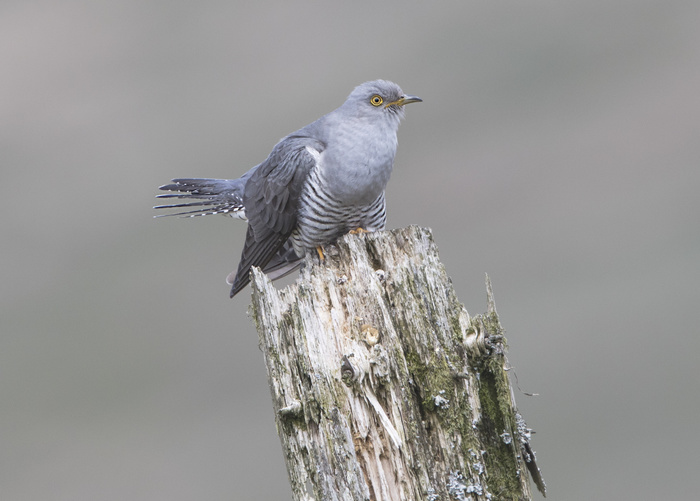
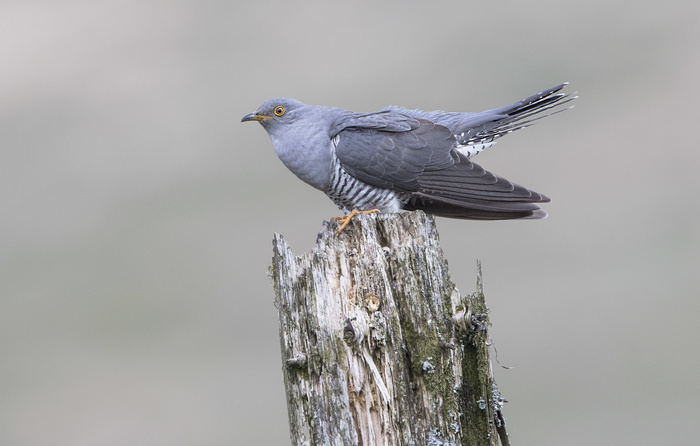
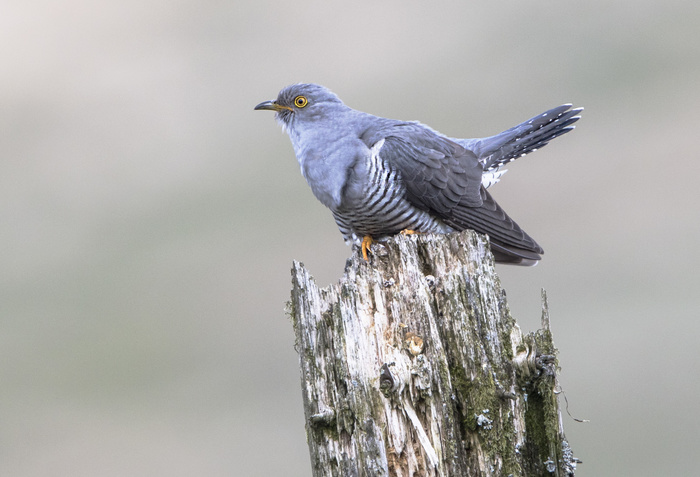
This particular Cuckoo seemed OK with me being sat there, I was subdued colour-wise and very quiet and this is a fundamental - no sudden movements and no noise!! However, the sky was rapidly darkening.
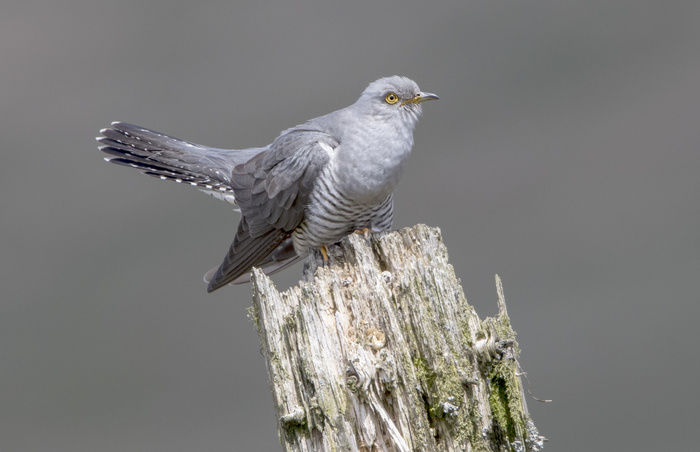
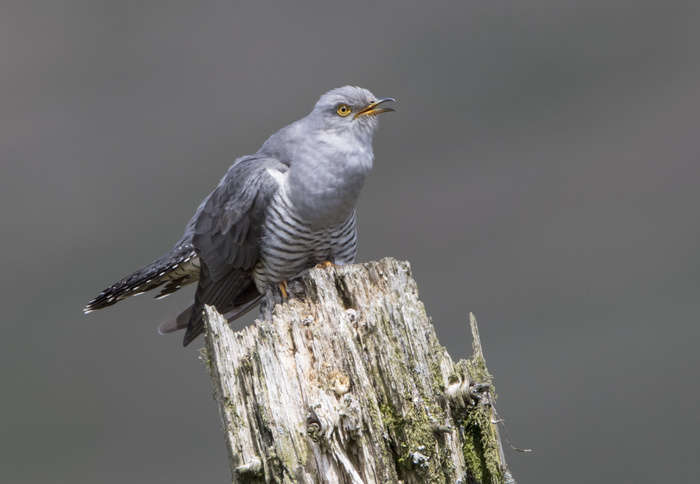
Before too long it started to rain and the rain intensified until there was a huge hailstone storm. The Cuckoo had gone for cover after it got too heavy and I thought that was it for the day. Sometime later when I had emerged from the dense cover of the hawthorn, remarkably he came back to his obviously favourite perch and the photography resumed, now in a rather delightful pale light.
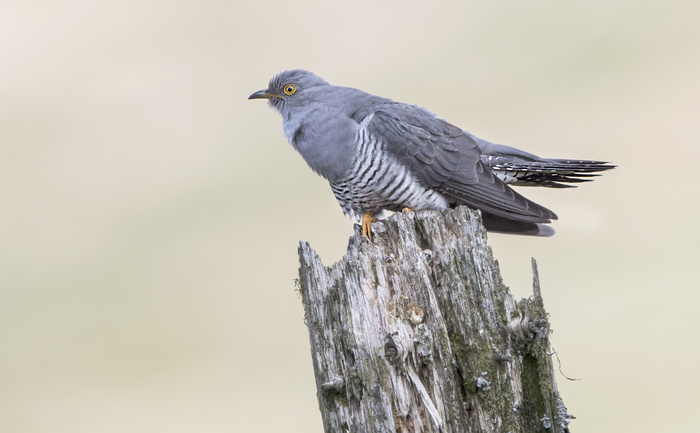
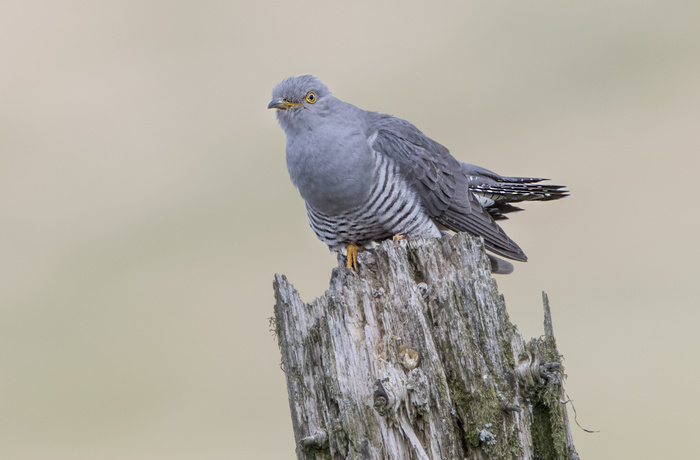
I was in total able to take a multitude of shots of this Cuckoo in various poses and lighting situations, from inky blue, steel grey to a light beige. It was quite a remarkable session with a very confiding bird, and has only served to increase my affection for these wonderful birds.
I always make an effort to see Cuckoos every spring because I don’t know how long that privilege will last, because their numbers are dropping and also I won’t be around for ever, so I intend to make the most of it. I make no apology for my fascination with these wonderful birds!
This particular site is one of about six regular sites that I visit every spring and at least half of those sites always have Cuckoos in residence. I could hear a male bird calling on my arrival at this site and I picked him out on a quite prominent dead tree stump. This was a very positive start because Cuckoos are very much creatures of habit and there was a good chance that he would come back to that tree stump at times throughout the day. I waited for him to fly and then I quickly got to a position about fifty feet away under a dense hawthorn bush that was just about level with the tree stump – there’s nothing worse than looking up to take a photograph, apart from the potential silhouetting there’s the poor perspective to take into account. I did a little judicious pruning of the hawthorn to make it more comfortable for me and then settled down and waited.
I knew it would happen sooner or later and all it takes is small birds, usually Meadow Pipits or Chaffinch to mob the Cuckoo and make it fly and hopefully land on its favoured perches. I waited for some time, there’s no alternative, but at last the Cuckoo came flying towards the tree stump, you always know when a Cuckoo is going to perch by the way it flies, it starts to flutter its wings on approach. It landed on the stump and began to ‘Cuckoo’ straight away and I was able to take many shots.
This particular Cuckoo seemed OK with me being sat there, I was subdued colour-wise and very quiet and this is a fundamental - no sudden movements and no noise!! However, the sky was rapidly darkening.
Before too long it started to rain and the rain intensified until there was a huge hailstone storm. The Cuckoo had gone for cover after it got too heavy and I thought that was it for the day. Sometime later when I had emerged from the dense cover of the hawthorn, remarkably he came back to his obviously favourite perch and the photography resumed, now in a rather delightful pale light.
I was in total able to take a multitude of shots of this Cuckoo in various poses and lighting situations, from inky blue, steel grey to a light beige. It was quite a remarkable session with a very confiding bird, and has only served to increase my affection for these wonderful birds.
Butterfly Nirvana.
12th May 2019
12th May 2019
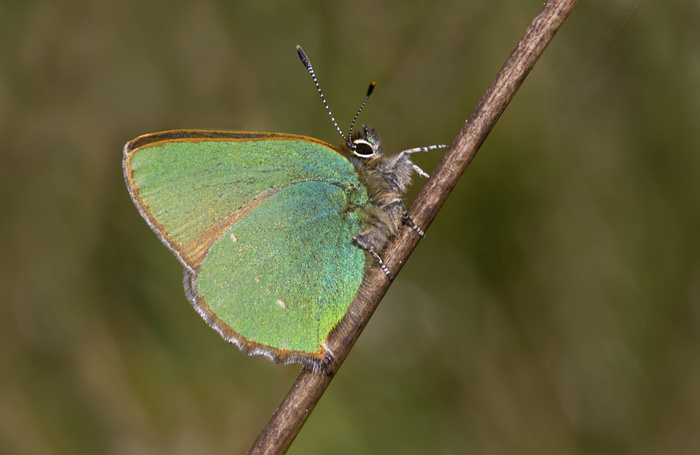
It was a glorious spring morning yesterday and Susan and I were out walking on a local mountain. We had only seen a few Northern Wheatears, which was nice, but not a lot for this time of year. As we dropped down there were numbers of Orange Tip butterflies on the wing which was lovely to see. Then suddenly something caught Susan’s eye and she said ‘Look a Green Hairstreak’, these gorgeous little butterflies are hardly seen by us in the local area. I was busy getting a lens out of my bag and I said ‘Keep your eye on it’, we needn’t have worried because we then saw another one and then more and more until we estimated there to be between two and three hundred on the wing along a forestry edge. They were even trying to land in Susan’s hair as we stood there just watching a veritable spectacle of nature, never have we seen so many butterflies of one species in such a small area. It really made our day and more than made up for the lack of birds up on the mountain.
Bullfinches in our Garden.
08th May 2019
08th May 2019
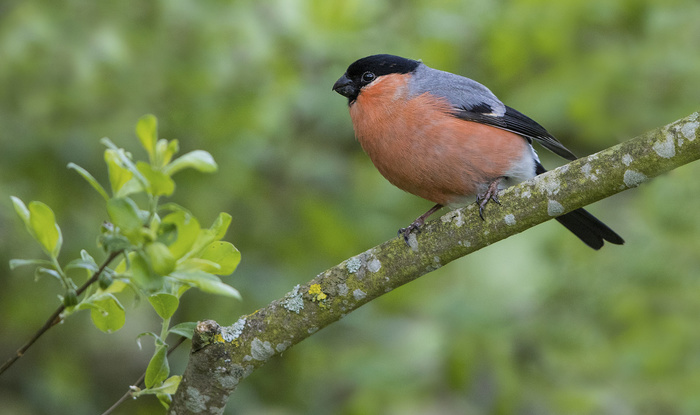
We normally have Bullfinches in our garden from time to time and some years a pair breed in an old hedge at the top of the garden where it is quiet. This spring, however, it looks like we have two pairs in the garden. Birds are beginning to drink from my elevated pond, (see previous blog), and I hope to get some reflections in drier weather. They are one of our best loved and popular hedgerow birds and you can see why.
Photographing Cuckoos.
08th May 2019
08th May 2019
Spring is well and truly upon us now, but you wouldn’t think so looking out of the window of my little office at home from where I create this website, because as I write grey skies and rain are dominating. However, it’s going to be short lived according to the met office and warm weather is coming in for the weekend. Here in the Brecon Beacons the enigmatic Cuckoo has once again graced us with its presence and the male bird’s iconic call is reverberating around the uplands. This call is etched into the natural history of our countryside and I wouldn’t like to imagine a spring without it!
A woman emailed me a few weeks ago asking about Cuckoos, because she had heard one calling last year while out walking and thought, (to use her words), ‘it was magical’, and rightly so because a Cuckoo’s call can have an effect on our psyche, it can influence the way people feel when they hear it. Many people have seen a Cuckoo without realising it, they know the call but they don’t know what the bird looks like. One may have fluttered across a road in front of their car and they just don’t equate what they saw with a Cuckoo and many Cuckoos have been mistaken for birds of prey, most commonly Sparrowhawks.
The real prize, however, is getting close to these beautiful birds and you have to be prepared to work hard to do so. Firstly you have to pin down exactly where the birds are calling from and this can involve detailed observation. Once this has been established you have to then finalise what the bird’s favourite perches are and sometimes these perches are totally inaccessible and that could be the end of it for that particular bird. However, if one of the bird’s favourite perches is approachable then it’s a matter of camouflaging yourself nearby in a hide or under a tree with netting etc. etc.
Cuckoos are very street- wise and are extremely wary of people and they are always watching the surrounding countryside from their perches, looking for available opportunities, so they will see you if you try and approach them. They even call and are alert in semi darkness, as I once found out while setting up a hide.
Yesterday I was out very early at one of about six regular sites I know, where Cuckoos will usually be. Typically it is an upland area with sparsely populated trees and bushes overlooking rough grassland where Meadow Pipits nest.
There’s no magic formula – that’s where they will be!
This particular site has a long dry stone wall bordering the rough grassland with a few hawthorn bushes dotted around. I know these birds like to perch in the tops of these hawthorns when the area is quiet. When I arrived I could hear a bird calling nearby but I didn’t have a great deal of time because I was only on a recon mission. My main objective was to look for Dotterel a few miles away up on top of a local hill – which sadly drew a blank again!
I decided to just place a large ‘Bean – Bag’ on top of this wall opposite to where these hawthorn bushes are. I had a lens placed on top of the bag and some ‘Camo’ netting draped over me - it was a long shot, and I knew it, but that’s all I had time for. I had been there for about half an hour and frustratingly the calling Cuckoo was not coming near and I was thinking about calling it a day when another male bird started calling behind me. I decided to wait a bit longer because two birds really are better than one because they can interact and when this happens any scenario can occur. This is because if they get into a territorial spat then they will fly and perch anywhere during these encounters. They become totally preoccupied and can sometimes perch much closer to the lucky observer than they would normally do. This is also the time a fortunate birder/photographer gets to hear the large variety of noises they make, snorts, gasps, croaks etc. these are noises you will never hear from a distance.
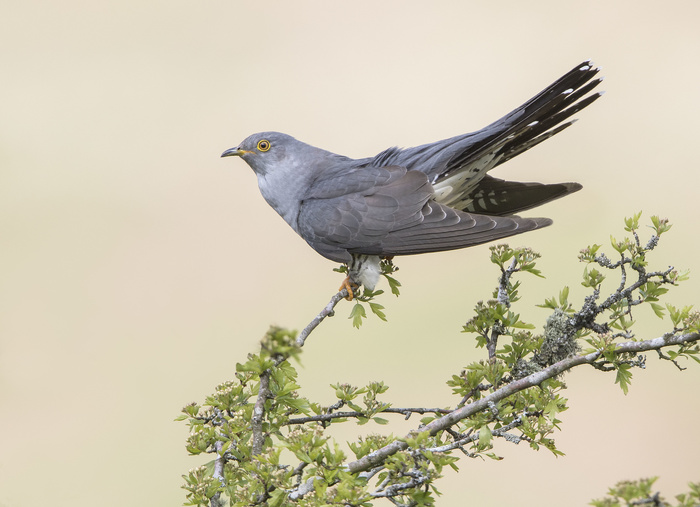
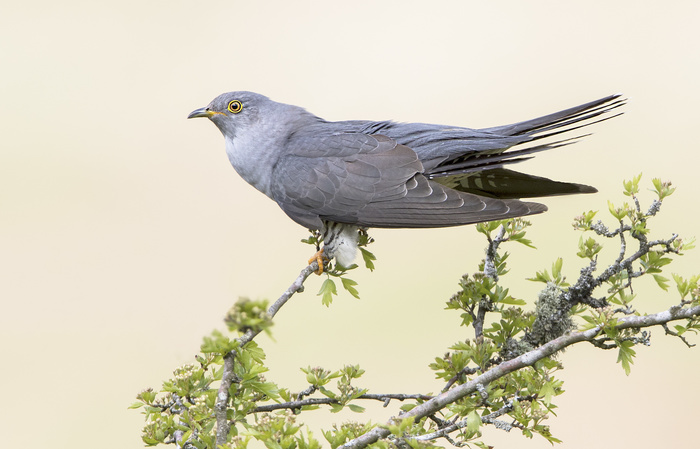
Suddenly it all kicked off as the bird from behind me flew into the area of these hawthorns, this immediately galvanized the other calling Cuckoo to come in like a missile. They were buzzing around the hawthorns making those noises and then incredibly one bird landed right in front of me, I focussed the lens and was just about to fire the shutter when a Chaffinch bombed in and forced the Cuckoo off the top of the bush - I like Chaffinches but I cursed that one!! Then the same bird, having escaped the mobbing Chaffinch, perched on the top of another of the hawthorns. This time I fired the shutter and I had him – ‘In the can’ to use motion picture parlance. However, it was only perched there for about five seconds before a Meadow Pipit mobbed it and that was it, you really haven’t got much time with these birds.
In the images below it looks like the Cuckoo is settled but believe me it certainly was not, it’s just that the shutter speed has frozen the action!
I really had a slice of luck getting the shot but there have been many times over the years when it’s gone the other way - so I’ll take it when it comes.
A woman emailed me a few weeks ago asking about Cuckoos, because she had heard one calling last year while out walking and thought, (to use her words), ‘it was magical’, and rightly so because a Cuckoo’s call can have an effect on our psyche, it can influence the way people feel when they hear it. Many people have seen a Cuckoo without realising it, they know the call but they don’t know what the bird looks like. One may have fluttered across a road in front of their car and they just don’t equate what they saw with a Cuckoo and many Cuckoos have been mistaken for birds of prey, most commonly Sparrowhawks.
The real prize, however, is getting close to these beautiful birds and you have to be prepared to work hard to do so. Firstly you have to pin down exactly where the birds are calling from and this can involve detailed observation. Once this has been established you have to then finalise what the bird’s favourite perches are and sometimes these perches are totally inaccessible and that could be the end of it for that particular bird. However, if one of the bird’s favourite perches is approachable then it’s a matter of camouflaging yourself nearby in a hide or under a tree with netting etc. etc.
Cuckoos are very street- wise and are extremely wary of people and they are always watching the surrounding countryside from their perches, looking for available opportunities, so they will see you if you try and approach them. They even call and are alert in semi darkness, as I once found out while setting up a hide.
Yesterday I was out very early at one of about six regular sites I know, where Cuckoos will usually be. Typically it is an upland area with sparsely populated trees and bushes overlooking rough grassland where Meadow Pipits nest.
There’s no magic formula – that’s where they will be!
This particular site has a long dry stone wall bordering the rough grassland with a few hawthorn bushes dotted around. I know these birds like to perch in the tops of these hawthorns when the area is quiet. When I arrived I could hear a bird calling nearby but I didn’t have a great deal of time because I was only on a recon mission. My main objective was to look for Dotterel a few miles away up on top of a local hill – which sadly drew a blank again!
I decided to just place a large ‘Bean – Bag’ on top of this wall opposite to where these hawthorn bushes are. I had a lens placed on top of the bag and some ‘Camo’ netting draped over me - it was a long shot, and I knew it, but that’s all I had time for. I had been there for about half an hour and frustratingly the calling Cuckoo was not coming near and I was thinking about calling it a day when another male bird started calling behind me. I decided to wait a bit longer because two birds really are better than one because they can interact and when this happens any scenario can occur. This is because if they get into a territorial spat then they will fly and perch anywhere during these encounters. They become totally preoccupied and can sometimes perch much closer to the lucky observer than they would normally do. This is also the time a fortunate birder/photographer gets to hear the large variety of noises they make, snorts, gasps, croaks etc. these are noises you will never hear from a distance.
Suddenly it all kicked off as the bird from behind me flew into the area of these hawthorns, this immediately galvanized the other calling Cuckoo to come in like a missile. They were buzzing around the hawthorns making those noises and then incredibly one bird landed right in front of me, I focussed the lens and was just about to fire the shutter when a Chaffinch bombed in and forced the Cuckoo off the top of the bush - I like Chaffinches but I cursed that one!! Then the same bird, having escaped the mobbing Chaffinch, perched on the top of another of the hawthorns. This time I fired the shutter and I had him – ‘In the can’ to use motion picture parlance. However, it was only perched there for about five seconds before a Meadow Pipit mobbed it and that was it, you really haven’t got much time with these birds.
In the images below it looks like the Cuckoo is settled but believe me it certainly was not, it’s just that the shutter speed has frozen the action!
I really had a slice of luck getting the shot but there have been many times over the years when it’s gone the other way - so I’ll take it when it comes.
Female Orange Tip Butterfly.
05th May 2019
05th May 2019
The female Orange Tip Butterfly is much less conspicuous tham the male. We are all used to seeing the male with his bright orange wing tips, (see previous blog post, spring in the Brecon Beacons), this wing pattern serves as a warning to potential predators that Orange Tips are very distasteful to eat because of their bitter mustard oil taste, this mustard taste is accumalated from their food plants in the caterpillar stage. As a result once a bird has tasted an Orange Tip, the experience, it is said, is unlikely to be repeated!
The females only protection, however, is camoflage, and this is very effective when she is at rest, as the delicate moss green and lichen-like markings blend in with plants like Cow Parsley and Garlic Mustard the latter being one of their principal foodplants.
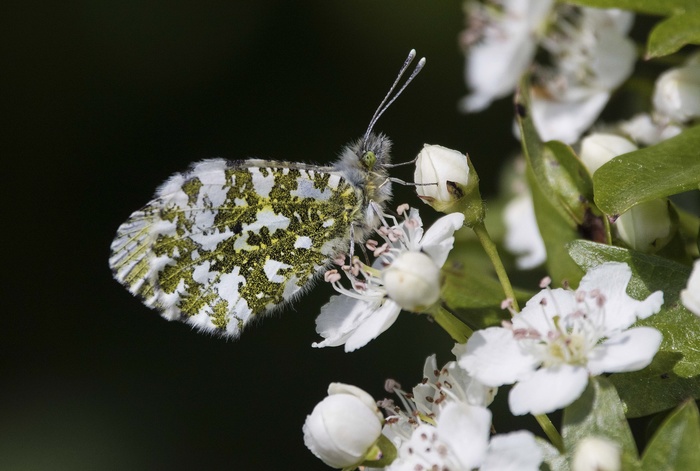
The females fly so infrequently that they don't need warning markers like the males.
She is so beautiful!
The females only protection, however, is camoflage, and this is very effective when she is at rest, as the delicate moss green and lichen-like markings blend in with plants like Cow Parsley and Garlic Mustard the latter being one of their principal foodplants.
The females fly so infrequently that they don't need warning markers like the males.
She is so beautiful!
Bluebells.
04th May 2019
04th May 2019
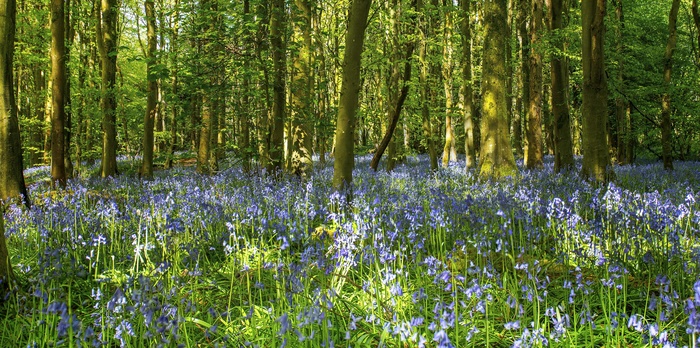
We were walking in a local bluebell wood early this morning, outside of the wood there was a bitterly cold wind blowing but in the wood it was much calmer and milder. These glorious little flowers wont be out for much longer because they flowered earlier than usual this year. Another week at best and that will be it for another year, it's a shame this lovely natural spectacle is so short lived.
Wood Warbler - Jewel of the Woods.
02nd May 2019
02nd May 2019
I was out walking on the Beacons early this morning and I heard three male Cuckoos calling.
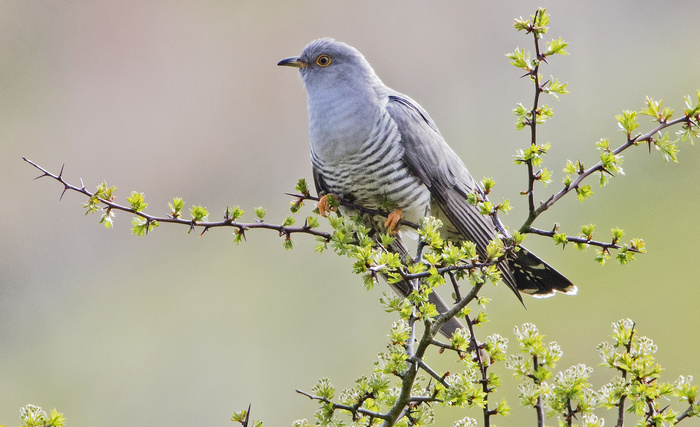
So at last they’re arriving at their usual sites. As I approached a large sycamore tree a bird flew out and kept low over the ground, it fluttered along like a Cuckoo and initially that’s what I thought it was. However, as I saw it in my binoculars I could see it was slate blue in colour and very small, too small for a Cuckoo, I realised then that I had spooked a male Merlin - much too late for a photograph but very nice indeed to see what is a very rare raptor. As I walked on I could hear a really raucous noise and suddenly three Jays flew over my head then some more and more again until I counted fifteen birds in total, a very good count of Jays. They all flew off into the distance interacting as they went, quite a spectacle!
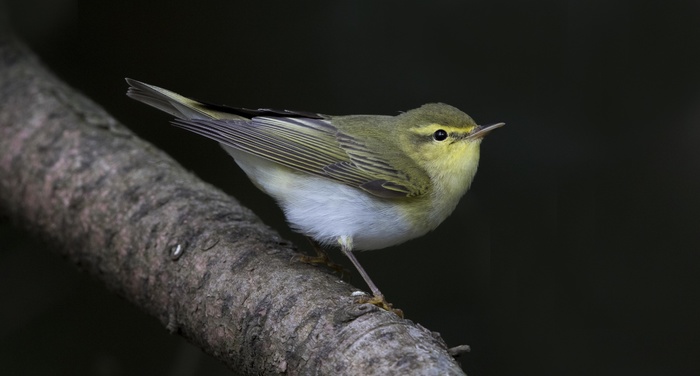
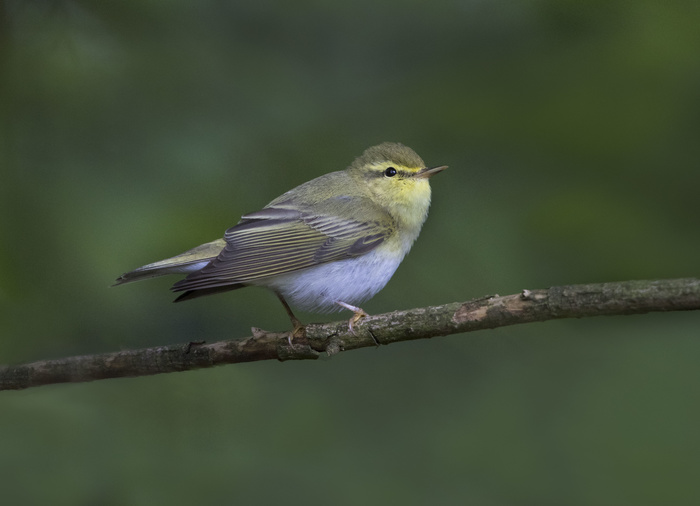
As I began to drop down to lower levels, Tree Pipits were singing from the tops of the trees and Blackcaps, Chiffchaffs and Willow Warblers were all singing on what was a very pleasant morning. Then suddenly I could hear the distinctive ‘Spinning Coin’ song of the Wood Warbler. These are one of my favourite little spring birds, they look so pristine with their snow white and lemon plumage and as I got nearer to the woods I could hear a bird calling and singing. I waited at the woods edge with a lens at the ready and sure enough a bird started to display, darting around the foliage. These little birds don’t stop still for long, but I managed a few quick shots before it disappeared back into the dim light of the woods.
A nice finale to a very pleasant mornings walk.
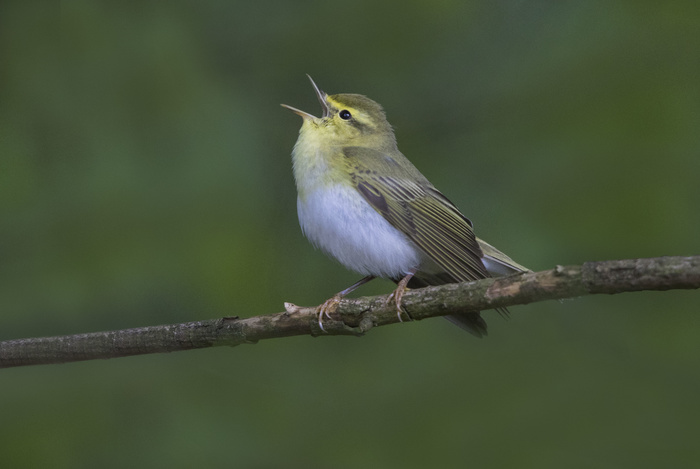
So at last they’re arriving at their usual sites. As I approached a large sycamore tree a bird flew out and kept low over the ground, it fluttered along like a Cuckoo and initially that’s what I thought it was. However, as I saw it in my binoculars I could see it was slate blue in colour and very small, too small for a Cuckoo, I realised then that I had spooked a male Merlin - much too late for a photograph but very nice indeed to see what is a very rare raptor. As I walked on I could hear a really raucous noise and suddenly three Jays flew over my head then some more and more again until I counted fifteen birds in total, a very good count of Jays. They all flew off into the distance interacting as they went, quite a spectacle!
As I began to drop down to lower levels, Tree Pipits were singing from the tops of the trees and Blackcaps, Chiffchaffs and Willow Warblers were all singing on what was a very pleasant morning. Then suddenly I could hear the distinctive ‘Spinning Coin’ song of the Wood Warbler. These are one of my favourite little spring birds, they look so pristine with their snow white and lemon plumage and as I got nearer to the woods I could hear a bird calling and singing. I waited at the woods edge with a lens at the ready and sure enough a bird started to display, darting around the foliage. These little birds don’t stop still for long, but I managed a few quick shots before it disappeared back into the dim light of the woods.
A nice finale to a very pleasant mornings walk.
Damselflies emerging.
22nd April 2019
22nd April 2019
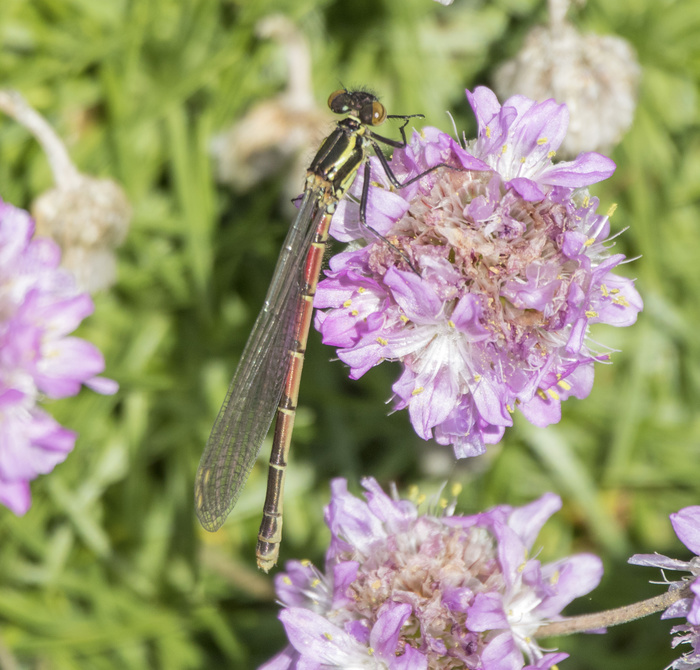
In this warm weather Damselflies are starting to emerge and this morning Susan noticed what turned out to be a Large Red Damselfly on the flowers at the edge of a very small ornamental pond in our front garden. This little pond is no more than ten gallons in capacity so it just goes to show how a seemingly insignificant little eco system can support lots of insect life - every little helps!!
Sleepy Sparrowhawk.
22nd April 2019
22nd April 2019
Over the last week the juvenile Sparrowhawk that is visiting our garden on a regular basis, (see previous blogs), has been resting underneath a Cotoneaster shrub during the heat of the day. A few days ago I decided to try and capture him on video. I don’t have a dedicated video camera so I used the video feature on my canon 5D Mk IV camera to try and get some footage.
I could see the branch that he was perching on regularly, so I set the camera and lens up about 18 inches away, on a small wooden box covered with some camo netting.
There are some inherent problems with filming like this, principally because I had to try and predict what part of the branch he would perch on, focus on that point and then switch off the autofocus to stop the lens possibly hunting around to focus, thereby getting blurred images or even spooking him with the noise of the focussing motor. Also, because of EU regulations, (ARRRGH!!!), top end stills cameras that have video functions are classified as video cameras, thereby, falling under the film industries taxation laws. This means in short that if your camera is able to take videos longer than 30mins then it is liable for tax. This would cost the manufacturers of these cameras money, which would be passed on to the customer, thereby increasing prices and impacting on sales.
As a result of the above, I had to reset the filming sequence, because it had stopped every 30mins and hope that the bird didn’t arrive when I was doing so. More frustratingly, it is not possible currently on Canon DSLR cameras to trigger the video function remotely, because you have to press a button to lock the mirror up before you can take a video.
I went through this procedure a few times until luckily I managed to record him on the branch, he is not ideally framed but that was all I had. On the day I filmed him he sat under the Cotoneaster for two hours but the camera had switched itself off after 30mins. Very annoying, but that’s wildlife and that’s EU regulations.
In the heat of the day he became progressively sleepier – please see video below.
https://youtu.be/Z2PySTmy7zY
I could see the branch that he was perching on regularly, so I set the camera and lens up about 18 inches away, on a small wooden box covered with some camo netting.
There are some inherent problems with filming like this, principally because I had to try and predict what part of the branch he would perch on, focus on that point and then switch off the autofocus to stop the lens possibly hunting around to focus, thereby getting blurred images or even spooking him with the noise of the focussing motor. Also, because of EU regulations, (ARRRGH!!!), top end stills cameras that have video functions are classified as video cameras, thereby, falling under the film industries taxation laws. This means in short that if your camera is able to take videos longer than 30mins then it is liable for tax. This would cost the manufacturers of these cameras money, which would be passed on to the customer, thereby increasing prices and impacting on sales.
As a result of the above, I had to reset the filming sequence, because it had stopped every 30mins and hope that the bird didn’t arrive when I was doing so. More frustratingly, it is not possible currently on Canon DSLR cameras to trigger the video function remotely, because you have to press a button to lock the mirror up before you can take a video.
I went through this procedure a few times until luckily I managed to record him on the branch, he is not ideally framed but that was all I had. On the day I filmed him he sat under the Cotoneaster for two hours but the camera had switched itself off after 30mins. Very annoying, but that’s wildlife and that’s EU regulations.
In the heat of the day he became progressively sleepier – please see video below.
https://youtu.be/Z2PySTmy7zY
Spring in the Brecon Beacons.
13th April 2019
13th April 2019
In February this year we had a very mild spell of weather here in the Brecon Beacons, then we experienced a few weeks of really vicious, wet and windy weather in March, which brought damage and tragically, some fatalities. Trees were blown down and areas of the country were flooded badly which were the causes of the aforementioned tragedies. The water levels are now thankfully receding on the rivers, but Llangors Lake will take about another month to get back to normal, if we have no more heavy rain.
Wildlife, however, just like the rest of us has to get on with it and as the Daffodils start to die back the grassy areas around the Beacons and indeed my garden, are now covered with masses of Lesser Celandine and Primrose. The woods are full of Wood Anemone and Ladies Smock is now appearing with the Forget –Me - Not, a few early Bluebells are also showing through in sheltered places.
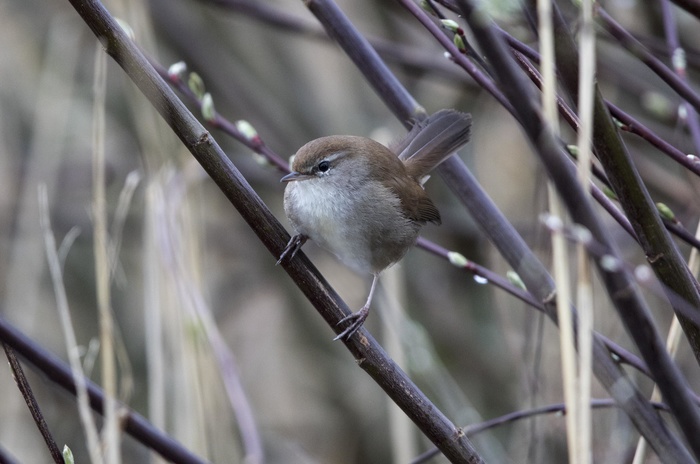
I have spent a few hours down at Llangors Lake over the last week and there are signs of spring appearing, Cetti’s Warblers are becoming more vocal - these are such a difficult bird to photograph!
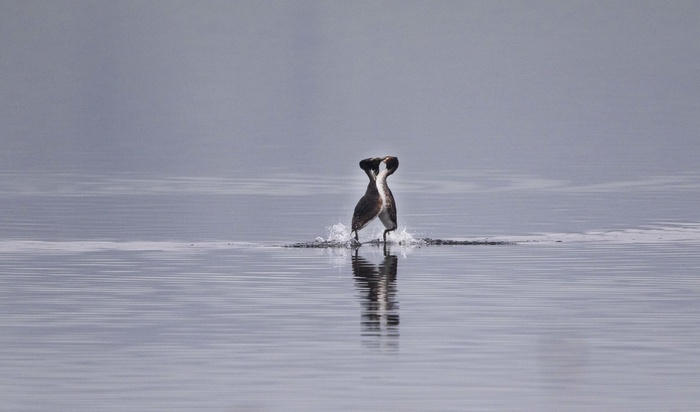
Great Crested Grebes are performing their courting rituals, frustratingly at a distance.
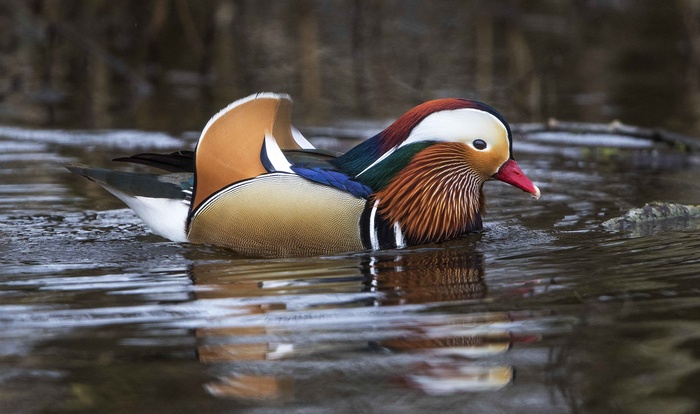
A Mandarin Duck at the north end of the lake is looking particularly colourful.
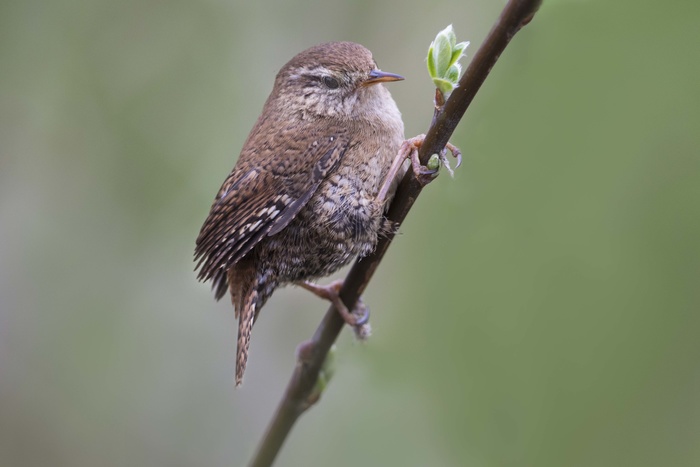
Wrens are singing from everywhere – such a noisy - but still endearing little bird!
While all these birds have probably been in the area all year round, they liven up, as indeed we all do, as the weather improves.
Arriving over the last week or two Ring Ouzels are back on territory in very small numbers at Craig Cerrig Gleisiad in the Beacons, lovely to hear a male singing last week very early on a bitterly cold morning. There are Chiffchaffs and Blackcaps singing everywhere, along with a few Willow Warblers. Sand Martins and Swallows are now flying and one or two Common Redstarts are just arriving, while the Blue Tits in our garden tentatively explore the nest boxes.
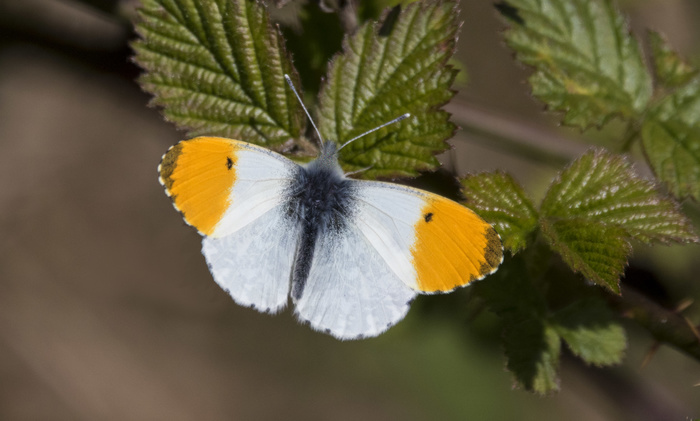
However, there is one sign of spring that I like to look for in particular and that is the Orange Tip butterfly. This small but beautiful insect is the first butterfly to emerge from a pupa/chrysalis in spring, as opposed to other early spring flying butterflies such as Peacock, that have over-wintered as adults. Today Susan and I saw five of these little gems, it was lovely to see them flying around the bramble patches near Llangors Lake.
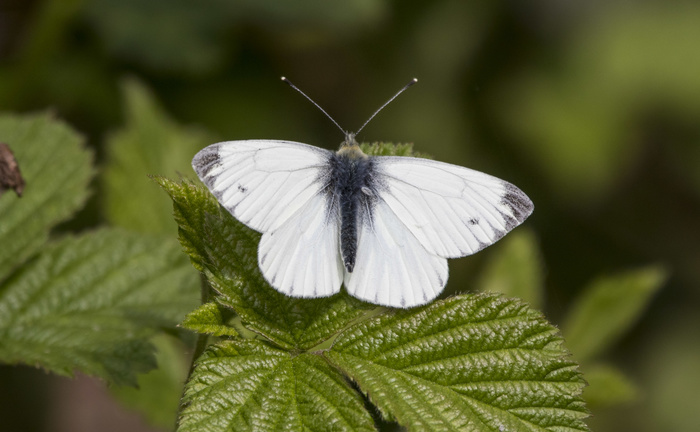
Another lovely Butterfly which is just taking to the wing is the Green Veined White,
and like the Orange tip, at this time of year, these butterflies have also emerged from an overwintering pupa/chrysalis.
Let’s hope we have a nice spring and summer again this year!
Wildlife, however, just like the rest of us has to get on with it and as the Daffodils start to die back the grassy areas around the Beacons and indeed my garden, are now covered with masses of Lesser Celandine and Primrose. The woods are full of Wood Anemone and Ladies Smock is now appearing with the Forget –Me - Not, a few early Bluebells are also showing through in sheltered places.
I have spent a few hours down at Llangors Lake over the last week and there are signs of spring appearing, Cetti’s Warblers are becoming more vocal - these are such a difficult bird to photograph!
Great Crested Grebes are performing their courting rituals, frustratingly at a distance.
A Mandarin Duck at the north end of the lake is looking particularly colourful.
Wrens are singing from everywhere – such a noisy - but still endearing little bird!
While all these birds have probably been in the area all year round, they liven up, as indeed we all do, as the weather improves.
Arriving over the last week or two Ring Ouzels are back on territory in very small numbers at Craig Cerrig Gleisiad in the Beacons, lovely to hear a male singing last week very early on a bitterly cold morning. There are Chiffchaffs and Blackcaps singing everywhere, along with a few Willow Warblers. Sand Martins and Swallows are now flying and one or two Common Redstarts are just arriving, while the Blue Tits in our garden tentatively explore the nest boxes.
However, there is one sign of spring that I like to look for in particular and that is the Orange Tip butterfly. This small but beautiful insect is the first butterfly to emerge from a pupa/chrysalis in spring, as opposed to other early spring flying butterflies such as Peacock, that have over-wintered as adults. Today Susan and I saw five of these little gems, it was lovely to see them flying around the bramble patches near Llangors Lake.
Another lovely Butterfly which is just taking to the wing is the Green Veined White,
and like the Orange tip, at this time of year, these butterflies have also emerged from an overwintering pupa/chrysalis.
Let’s hope we have a nice spring and summer again this year!