News
White Winged Terns.
24th August 2025
24th August 2025
These charismatic birds don't dive into water for food like the 'White Terns' instead they not only skim over water for their food but fly over fields hunting for insets etc. They can appear seemingly out of nowhere sometimes in quite large flocks, and then disappear just as quickly.
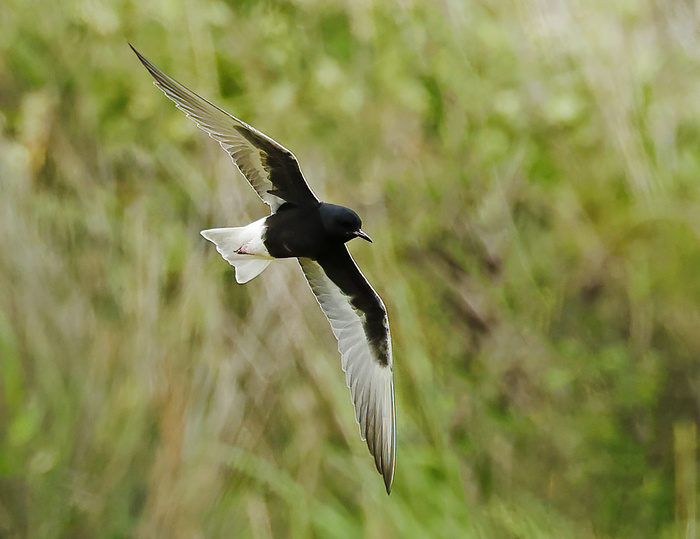
They are hauntingly beautiful in appearance and so delicate in flight.
They are hauntingly beautiful in appearance and so delicate in flight.
Canon R6 Mk2 - Birds in flight.
24th August 2025
24th August 2025
In a previous blog I outlined my purchase of a Canon R6 Mk2 as a backup camera to my Canon R5. I don’t spend money unless I do the research and I’m very pleased to say it performed beyond expectations, especially for birds in flight. I never thought it would be able to track extremely fast moving birds. However, that theory was dispelled when one afternoon while we were standing on an old stone bridge looking out over a small river outlet, something literally ‘Zoomed’ very low over our heads from behind and then another and another etc. All we heard was the faint whistle of their wings and then it became apparent – Alpine Swifts, these are proper speed merchants and would be the ultimate test for birds in flight photography.
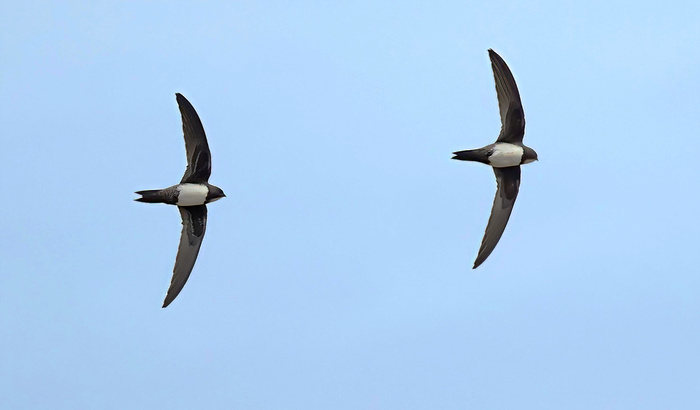
I was really taken aback when the Canon R6 Mk2 that I had coupled with the Canon RF 100-500 zoom lens started to lock onto these aerial acrobats, it was amazing to witness.

Once focus was acquired if I could keep up with the flight of these birds then shots could be achieved!! If anyone is in doubt about buying this small lightweight camera (for birds in flight in particular) then don’t be - it is superb.
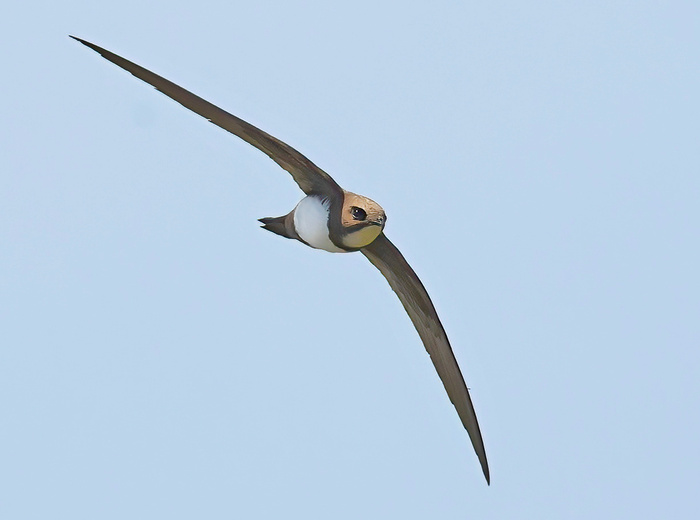
Alpine Swift.
I was really taken aback when the Canon R6 Mk2 that I had coupled with the Canon RF 100-500 zoom lens started to lock onto these aerial acrobats, it was amazing to witness.
Once focus was acquired if I could keep up with the flight of these birds then shots could be achieved!! If anyone is in doubt about buying this small lightweight camera (for birds in flight in particular) then don’t be - it is superb.
Alpine Swift.
Lesvos 2025.
24th August 2025
24th August 2025
Susan and I have just arrived back from a three week birding trip to the northern Aegean island of Lesvos. Spectacular falls of birds occurred during our time there, in particular Red-footed Falcons, European Rollers and Purple Herons.
Things will take a bit longer this time because I have had to finally admit that my current PC cannot cope with the sheer volume and size of the files that modern 'Mirrorless' cameras produce, so as I type a new high powered machine dedicated to processing photographs is being built for me and should be ready sometime next week.
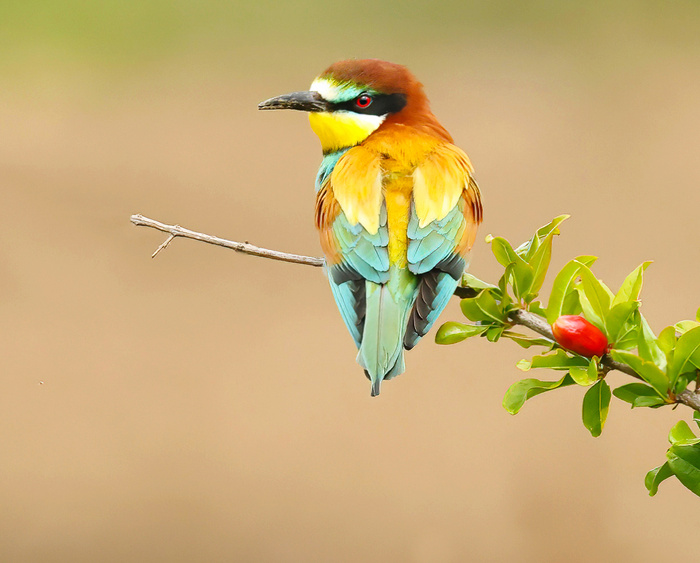
European Bee Eater.
Every image from the trip was shot 'Handheld' with a Canon Rf 100-500 lens.
Things will take a bit longer this time because I have had to finally admit that my current PC cannot cope with the sheer volume and size of the files that modern 'Mirrorless' cameras produce, so as I type a new high powered machine dedicated to processing photographs is being built for me and should be ready sometime next week.
European Bee Eater.
Every image from the trip was shot 'Handheld' with a Canon Rf 100-500 lens.
Canon R6 MK2 update.
26th May 2025
26th May 2025
After posting the reasons for purchasing this camera and what I intended to use it for, mainly a back-up camera, to say I'm pleased is an understatement. It's always a nervous time when you get to finally put a camera through its paces, but it has passed with flying colours. Prior to visiting Lesvos this year I wondered about the camera's tracking capabilities but I needn't have done. I have posted some images of difficult birds I have photographed to support this, it's no good just theorizing about these things you have to have images to back these theories up.
The other main concern was about whether or not the media cards and the camera's buffer memory would be able to cope with fast shooting e.g. sustained twenty frames per second bursts. I can now confirm that I never hit the Camera's buffer limit and also the cards read and wrote the data without any hiatus in my shooting.
For everyday wildlife photography I can't see any problems in the above mentioned areas and everyday photography is what the majority of people, me included, do.
Bee Eaters are fast moving and erratic birds in flight and one afternoon I just sat in my vehicle near to where these lovely birds were hunting insects. They were flying from all directions and angles but I was still able to get them in flight a number of times. If I was precise I tracked them for three or four seconds at twenty fps before they went out of view and this was no problem for this camera. The media cards also read and wrote the data in a few seconds.
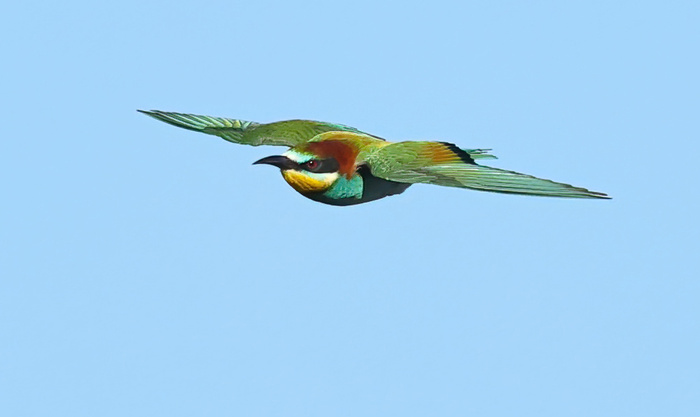
European Bee Eater.
The other main concern was about whether or not the media cards and the camera's buffer memory would be able to cope with fast shooting e.g. sustained twenty frames per second bursts. I can now confirm that I never hit the Camera's buffer limit and also the cards read and wrote the data without any hiatus in my shooting.
For everyday wildlife photography I can't see any problems in the above mentioned areas and everyday photography is what the majority of people, me included, do.
Bee Eaters are fast moving and erratic birds in flight and one afternoon I just sat in my vehicle near to where these lovely birds were hunting insects. They were flying from all directions and angles but I was still able to get them in flight a number of times. If I was precise I tracked them for three or four seconds at twenty fps before they went out of view and this was no problem for this camera. The media cards also read and wrote the data in a few seconds.
European Bee Eater.
Spotted Redshanks.
24th May 2025
24th May 2025
Spotted Redshanks are one of my favourite waders and unfortunately I rarely get to see them in summer plumage because they don't breed in the UK. In Lesvos you do get opportunities to see certain waders in summer plumage Curlew Sandpiper and Little Stint etc.
Photographic opportunities for Spotted Redshanks are a great deal more infrequent so when two dropped in for a couple of days I had to try and photograph them, they really are rather lovely.
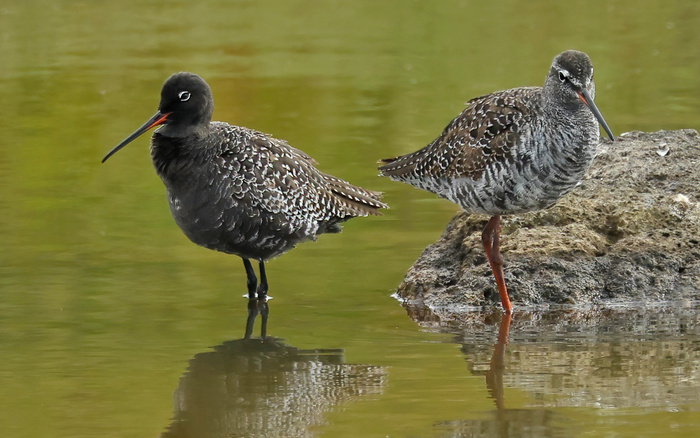
Photographic opportunities for Spotted Redshanks are a great deal more infrequent so when two dropped in for a couple of days I had to try and photograph them, they really are rather lovely.
Black Stork.
24th May 2025
24th May 2025
One of my favourite birds on the island of Lesvos, where they inhabit areas containing water. These lovely gentle birds spend their time there wading around looking for frogs etc. They are very shy and we surprised this bird near the confluence of two streams in a beautiful and remote setting near an old monastery, and like the people who previously lived there, they like peace and quiet, and fortunately for us as it wheeled up and flew away it came quite close. Their beautiful colouration isn't perceived at distance, they just look black, but up close........
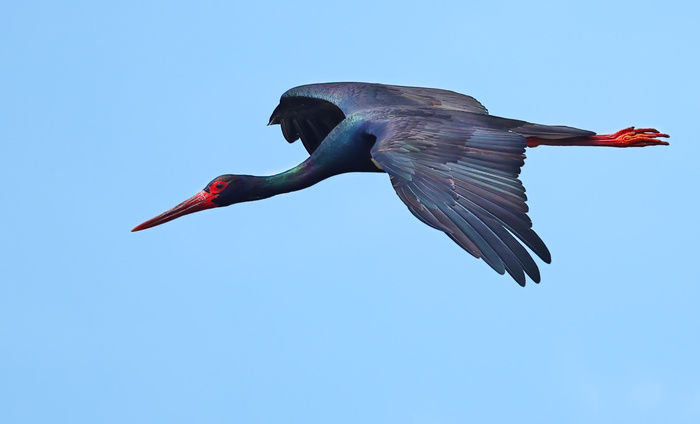
Shot with a Canon R6 mk2 and a Canon EF 70-200 f4 lens.
You don't always need a big lens to get a shot!
Shot with a Canon R6 mk2 and a Canon EF 70-200 f4 lens.
You don't always need a big lens to get a shot!
Lesser Grey Shrike.
21st May 2025
21st May 2025
The Lesser Grey Shrike is one of the four shrikes that can be seen on the island of Lesvos. They are the least numerous of the four and without doubt the most difficult to photograph. They are very easily spooked and are highly unapproachable.
My second statement was exemplified with no birds seen in the first week. I was beginning to think we would miss seeing them altogether which would have been disappointing to say the least. I try and photograph all four shrikes went I’m on the island.
However, one early morning we had travelled over to the west and having stopped the car with the intention of walking along the road checking the trees and bushes for migrants, which can be very rewarding there, there was a Lesser Grey Shrike perched right out in the open, sometimes you can’t make it up. I stayed at the car, it’s no good trying to approach these birds they will fly off immediately. I fired off a few shots and I could see I had some reasonable images. We started to walk and off it flew and disappeared as usual but at least I had something.
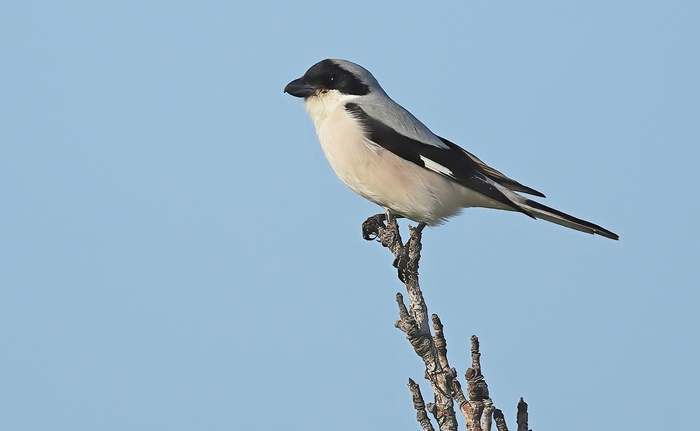
My second statement was exemplified with no birds seen in the first week. I was beginning to think we would miss seeing them altogether which would have been disappointing to say the least. I try and photograph all four shrikes went I’m on the island.
However, one early morning we had travelled over to the west and having stopped the car with the intention of walking along the road checking the trees and bushes for migrants, which can be very rewarding there, there was a Lesser Grey Shrike perched right out in the open, sometimes you can’t make it up. I stayed at the car, it’s no good trying to approach these birds they will fly off immediately. I fired off a few shots and I could see I had some reasonable images. We started to walk and off it flew and disappeared as usual but at least I had something.
Great Spotted Cuckoo.
19th May 2025
19th May 2025
One bird that is difficult to get close to is the Great Spotted Cuckoo. This applies to any country they inhabit, they exhibit typical Cuckoo behaviour, and they are intelligent, street-wise and crafty. You have to watch their behaviour and be patient in the extreme.
Susan and I were at a location known for small numbers of these birds but nothing was showing or calling and after an hour we were going to leave, but I said ‘Let’s have a cup of coffee before we go’ We always carry a little travel flask of coffee it’s so convenient. As we were sat there suddenly I saw something out of the the corner of my eye flying from a small bush. Remarkably it was a Great Spotted Cuckoo – the crafty so and so had been there all the time we were there!!
It flew into the bottom of another small bush and just stayed there for ten minutes, but we now knew it was there. However, it started to move and then dropped to the ground no doubt to catch a caterpillar or some sort of insect. Then it started to make its way up to the top of the bush and we could now see it in plain view, what a chance to shoot it. These are elusive birds and opportunities like this don’t come around too often.
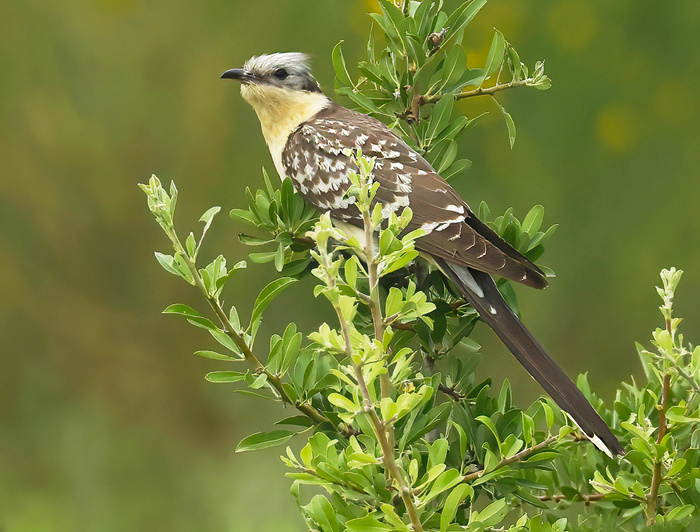
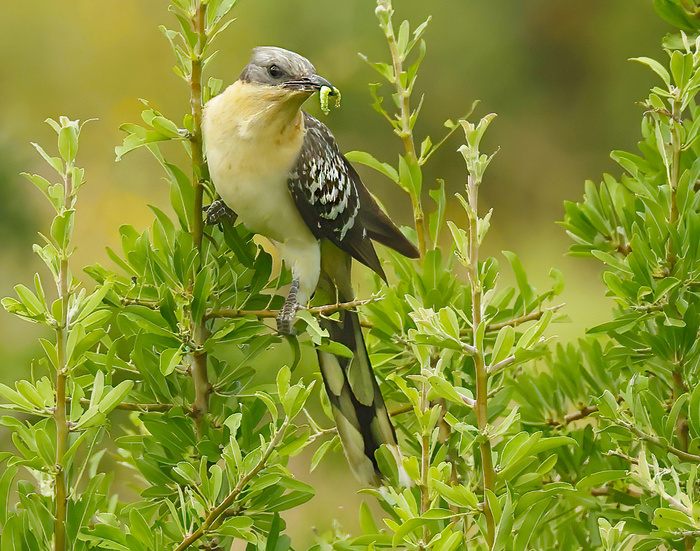
Susan and I were at a location known for small numbers of these birds but nothing was showing or calling and after an hour we were going to leave, but I said ‘Let’s have a cup of coffee before we go’ We always carry a little travel flask of coffee it’s so convenient. As we were sat there suddenly I saw something out of the the corner of my eye flying from a small bush. Remarkably it was a Great Spotted Cuckoo – the crafty so and so had been there all the time we were there!!
It flew into the bottom of another small bush and just stayed there for ten minutes, but we now knew it was there. However, it started to move and then dropped to the ground no doubt to catch a caterpillar or some sort of insect. Then it started to make its way up to the top of the bush and we could now see it in plain view, what a chance to shoot it. These are elusive birds and opportunities like this don’t come around too often.
Common Swift.
01st May 2025
01st May 2025
I knew they did it but I have never seen it because I have never been able to freeze the action before.
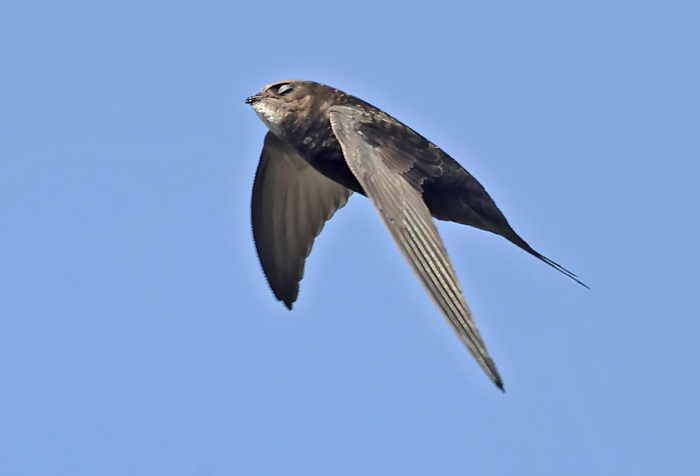
A Common Swift asleep on the wing.
Canon R6 Mk2 / Canon Rf 100/500 - 3200/sec.
A Common Swift asleep on the wing.
Canon R6 Mk2 / Canon Rf 100/500 - 3200/sec.
Lesvos synopsis.
01st May 2025
01st May 2025
Bird watching and photographic opportunities on Lesvos are many and varied and I can understand why people go there every year. I try when possible not to do that because anywhere can become stale irrespective of its wildlife. Lesvos has become more popular than ever in the last few years, especially with tour companies, and I personally think it's diluting the allure of the island as big groups of people are inevitably noisy and intrusive.
I remember well one day on the Kalloni Saltpans road where a few people were watching and photographing a very nice selection of waders up close from the confines of their vehicle when this white minibus screeched to a halt as the driver could see the birds we were watching. The sliding door was noisily slung open and this 'Oaf' jumped out brandishing a large 'White Lens' and immediately entirely spooked the waders, he might have had a large lens but he had no fieldcraft or regard for other people whatsoever and I suppose looking back this was a sign of things to come.
However, if you know the geography of the island it's still quite easy to have a very quiet day away from people. This may seem selfish but in reality if you want to see and photograph wildlife 'anywhere' it's best to be on your own. I accept everybody has a right to look at wildlife but unequivocally twenty people e.g. are far more intrusive than one or two.
At the airport you can see these buses dropping off one group and then immediately loading the next group on, it's almost like a shuttle service.
The logistics of this tour company bird watching is horrible as well, you may be stuck in the back of a mini bus with no outlook for an hour or so as you are ferried from one 'Hotspot' to another. We witnessed a convoy of five of these buses in a line driving to the latest birding location and it's really off-putting. There's no freedom of choice for the individual and these companies also charge the earth, up to £2300 for a week's guided birding!!
For the last few years now a 'WhatsApp' group has been operating during the main birding weeks and you can see these 'tour leaders' with their bus loads of people lurching from one location to another based on these WhatsApp posts. This group then has the obvious number of opinionated people who criticise other members, and the groups moderators are also telling members what or where they cannot do or go.
We have been members previously for a short time, just perusing the App and not really reacting to any info and it is quite amusing to see the antics of some members. In addition, as with other social media groups you get the inevitable arguing, back biting, sarcasm and veiled insults etc.
Alternatively we have been enjoying driving around the island on and off for over twenty years, just finding our own birds and we much prefer that. If we find something worthwhile we will always tell people e.g. when I found a White Throated Robin in the Meladia Valley in 2023 I told as many people as I could, but highlighting birds that are in good numbers, like Bee Eaters is pointless, these Apps discourage people from finding their own birds.
When Richard Brooks pioneered birding in Lesvos after first visiting the island in 1991 it must have been so quiet, and he basically must have had the island's birds to himself.
Richard is a rather blunt character and he has undoubtedly upset many people, personally I don't mind him, once you understand that he has difficulty suppressing his feelings (It's called, 'saying it like it is') which has become unacceptable these days, bordering on being illegal even, and you then speak the same way to him then everything is fine. Undoubtably though, without his insight and forethought birding on Lesvos wouldn't be what it is today - good or bad.
I remember well one day on the Kalloni Saltpans road where a few people were watching and photographing a very nice selection of waders up close from the confines of their vehicle when this white minibus screeched to a halt as the driver could see the birds we were watching. The sliding door was noisily slung open and this 'Oaf' jumped out brandishing a large 'White Lens' and immediately entirely spooked the waders, he might have had a large lens but he had no fieldcraft or regard for other people whatsoever and I suppose looking back this was a sign of things to come.
However, if you know the geography of the island it's still quite easy to have a very quiet day away from people. This may seem selfish but in reality if you want to see and photograph wildlife 'anywhere' it's best to be on your own. I accept everybody has a right to look at wildlife but unequivocally twenty people e.g. are far more intrusive than one or two.
At the airport you can see these buses dropping off one group and then immediately loading the next group on, it's almost like a shuttle service.
The logistics of this tour company bird watching is horrible as well, you may be stuck in the back of a mini bus with no outlook for an hour or so as you are ferried from one 'Hotspot' to another. We witnessed a convoy of five of these buses in a line driving to the latest birding location and it's really off-putting. There's no freedom of choice for the individual and these companies also charge the earth, up to £2300 for a week's guided birding!!
For the last few years now a 'WhatsApp' group has been operating during the main birding weeks and you can see these 'tour leaders' with their bus loads of people lurching from one location to another based on these WhatsApp posts. This group then has the obvious number of opinionated people who criticise other members, and the groups moderators are also telling members what or where they cannot do or go.
We have been members previously for a short time, just perusing the App and not really reacting to any info and it is quite amusing to see the antics of some members. In addition, as with other social media groups you get the inevitable arguing, back biting, sarcasm and veiled insults etc.
Alternatively we have been enjoying driving around the island on and off for over twenty years, just finding our own birds and we much prefer that. If we find something worthwhile we will always tell people e.g. when I found a White Throated Robin in the Meladia Valley in 2023 I told as many people as I could, but highlighting birds that are in good numbers, like Bee Eaters is pointless, these Apps discourage people from finding their own birds.
When Richard Brooks pioneered birding in Lesvos after first visiting the island in 1991 it must have been so quiet, and he basically must have had the island's birds to himself.
Richard is a rather blunt character and he has undoubtedly upset many people, personally I don't mind him, once you understand that he has difficulty suppressing his feelings (It's called, 'saying it like it is') which has become unacceptable these days, bordering on being illegal even, and you then speak the same way to him then everything is fine. Undoubtably though, without his insight and forethought birding on Lesvos wouldn't be what it is today - good or bad.
Long-eared Owls.
01st May 2025
01st May 2025
Long-eared Owls are difficult birds to find in the UK, which is pretty much accepted. They are crepuscular and nocturnal and during the day they roost in thickets and other dense cover. As a result of this I’m sure they are under - recorded thus making accurate population estimations difficult.
Their call is a single or double deep foghorn-like hoot and the young birds just make a single squeaky call like a gate hinge that needs oiling.
On Lesvos these owls favour Eucalyptus stands and Corsican Pine trees, they can also be found in Olive groves. However, all of these habitats are not easy when it comes to tracking them down in their day roosts.
Patience and careful examination of these trees is needed to find birds in exposed situations where a photograph is possible and having said that close approach is not acceptable because they are easily disturbed.
We were at a roosting site early one morning with no one else around thankfully, because there has been a big increase in bird tour companies on the island and if they are present then you are wasting your time. They are so noisy and intrusive – talking loudly, wearing light coloured clothes and pointing etc. which is not very good field craft. A fundamental principle of successful wildlife photography – KEEP QUIET!!
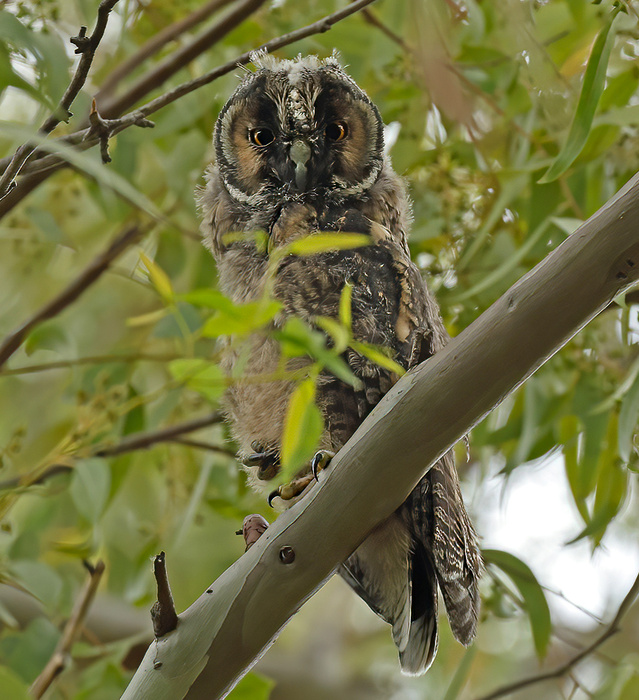
In about ten minutes we could see two chicks.
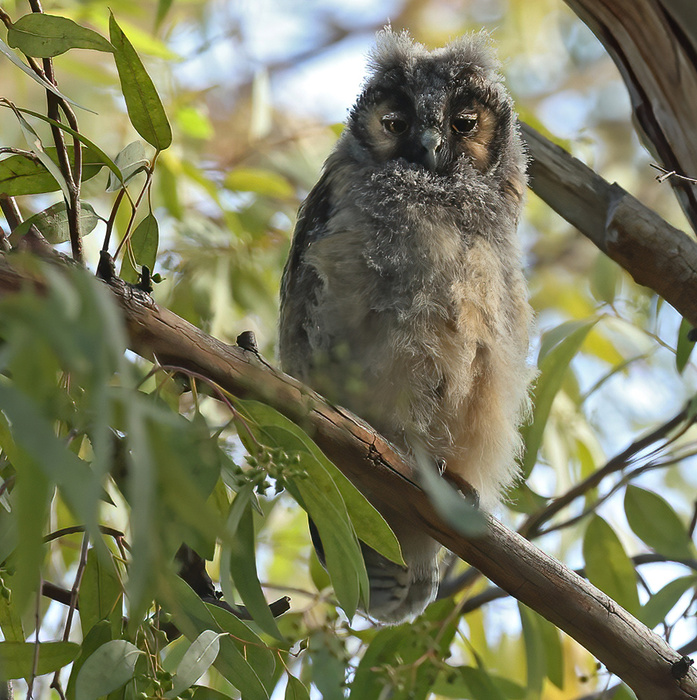
One chick is more advanced with many more flight feathers prominent.
After a bit more scrutiny we could see the adult female, she was never going to be far away keeping a watchful eye on the youngsters.
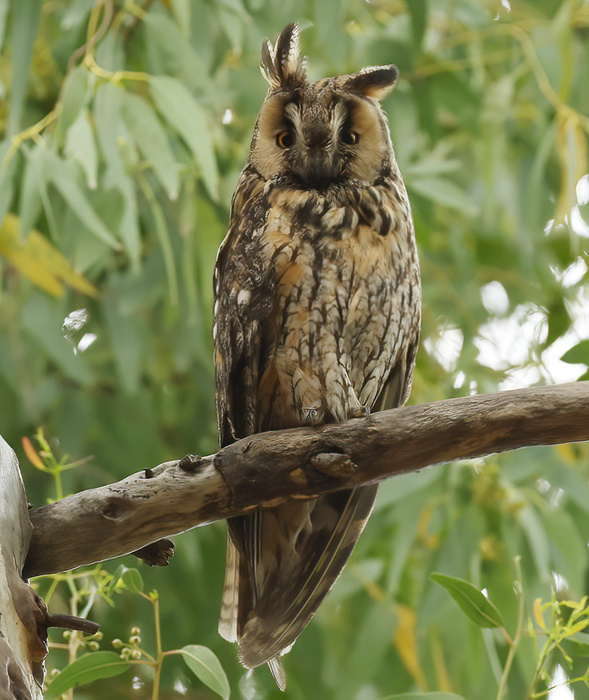
These are lovely birds, slighter in build than a Tawny Owl and with two prominent ear tufts (Not used for hearing) but from which they get their name.
Notice the birds orange eyes, this indicates they are crepuscular and nocturnal.
Owls with yellow eyes, such as the Short-eared Owl are diurnal.
Their call is a single or double deep foghorn-like hoot and the young birds just make a single squeaky call like a gate hinge that needs oiling.
On Lesvos these owls favour Eucalyptus stands and Corsican Pine trees, they can also be found in Olive groves. However, all of these habitats are not easy when it comes to tracking them down in their day roosts.
Patience and careful examination of these trees is needed to find birds in exposed situations where a photograph is possible and having said that close approach is not acceptable because they are easily disturbed.
We were at a roosting site early one morning with no one else around thankfully, because there has been a big increase in bird tour companies on the island and if they are present then you are wasting your time. They are so noisy and intrusive – talking loudly, wearing light coloured clothes and pointing etc. which is not very good field craft. A fundamental principle of successful wildlife photography – KEEP QUIET!!
In about ten minutes we could see two chicks.
One chick is more advanced with many more flight feathers prominent.
After a bit more scrutiny we could see the adult female, she was never going to be far away keeping a watchful eye on the youngsters.
These are lovely birds, slighter in build than a Tawny Owl and with two prominent ear tufts (Not used for hearing) but from which they get their name.
Notice the birds orange eyes, this indicates they are crepuscular and nocturnal.
Owls with yellow eyes, such as the Short-eared Owl are diurnal.
Hoopoe in flight.
01st May 2025
01st May 2025
The Hoopoe is an awkward bird to photograph well, yes you can sometimes see one probing soft earth and sand for grubs etc. but usually it’s a case of seeing one flying across a field usually away from you and then they frustratingly disappear. For such a distinctive bird they can be very difficult to locate even when hearing their obvious call.
In an olive grove nearby to where we were staying we kept seeing a bird flying back and fore from the grove across our line of view. Hoopoes love olive groves because they are generally quiet, there is space between the trees for them to dig around in the earth and the trees are perfect for nesting in because of the way they grow leaving gaps and crevices in their trunks.
I watched this particular bird for some time and finally I could see where it was going. It was flying into a newly threshed field where obviously various small insects and grubs etc. had been exposed by the threshing and were therefore easily foraged.
I waited in a convenient gap in the hedge hoping it would continue its behaviour, however, these birds are wary and suspicious so I wasn’t confident. I needn’t have worried though because it flew straight past me and down into the threshings finding food and then flying back to the grove.
I made myself ready for the next visit because there was very little time to catch it in flight - full stop. This was a small field and as the bird flew over the hedge into the field there was no time to react because you couldn’t tell when it was going to appear, one thing I was sure of was that it would return.
In it came again but once it landed in amongst the grass I couldn’t see it, but I knew roughly where it was, so this gave me a little time to react to get a flight shot. After it took off I had roughly three seconds before it flew over the hedge again, but the R6 MK2 locked onto it immediately. Using ‘Back button focus’ is perfect for a situation like this, you focus using a pre-selected button on the back of the camera and once the camera acquires focus on the subject you depress the shutter button conventionally. Three seconds is not much so I still had to be on the mark. Impressively it didn’t matter if the bird was above or below the skyline, the camera still achieved focus, my previous cameras struggled with subjects against cluttered backgrounds because the auto focus could become confused.
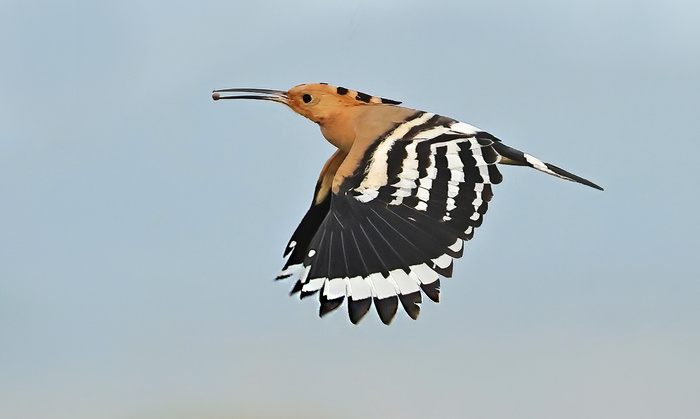
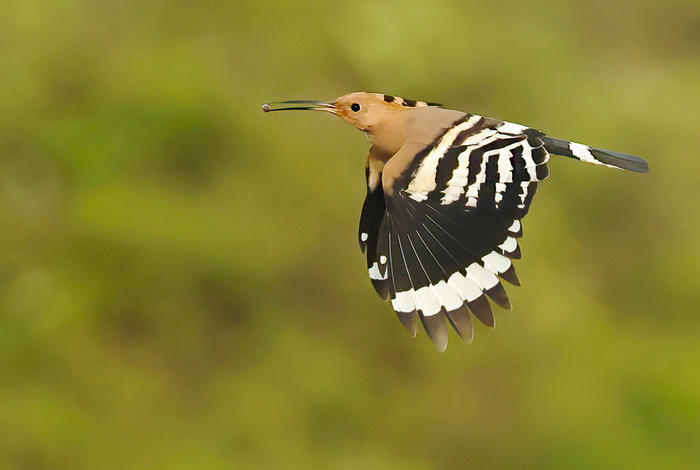
Satisfying to catch an awkward bird in flight.
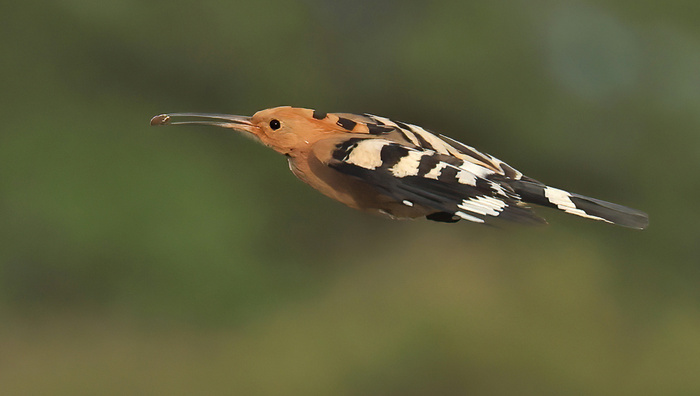
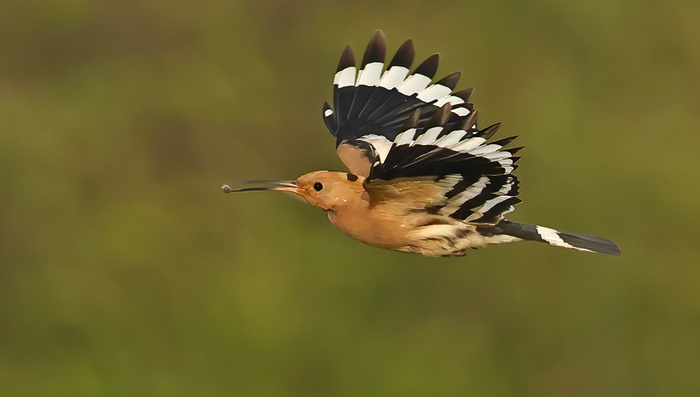
In an olive grove nearby to where we were staying we kept seeing a bird flying back and fore from the grove across our line of view. Hoopoes love olive groves because they are generally quiet, there is space between the trees for them to dig around in the earth and the trees are perfect for nesting in because of the way they grow leaving gaps and crevices in their trunks.
I watched this particular bird for some time and finally I could see where it was going. It was flying into a newly threshed field where obviously various small insects and grubs etc. had been exposed by the threshing and were therefore easily foraged.
I waited in a convenient gap in the hedge hoping it would continue its behaviour, however, these birds are wary and suspicious so I wasn’t confident. I needn’t have worried though because it flew straight past me and down into the threshings finding food and then flying back to the grove.
I made myself ready for the next visit because there was very little time to catch it in flight - full stop. This was a small field and as the bird flew over the hedge into the field there was no time to react because you couldn’t tell when it was going to appear, one thing I was sure of was that it would return.
In it came again but once it landed in amongst the grass I couldn’t see it, but I knew roughly where it was, so this gave me a little time to react to get a flight shot. After it took off I had roughly three seconds before it flew over the hedge again, but the R6 MK2 locked onto it immediately. Using ‘Back button focus’ is perfect for a situation like this, you focus using a pre-selected button on the back of the camera and once the camera acquires focus on the subject you depress the shutter button conventionally. Three seconds is not much so I still had to be on the mark. Impressively it didn’t matter if the bird was above or below the skyline, the camera still achieved focus, my previous cameras struggled with subjects against cluttered backgrounds because the auto focus could become confused.
Satisfying to catch an awkward bird in flight.
European Roller.
01st May 2025
01st May 2025
Another bird that is painfully shy is the European Roller – they just won’t tolerate any form of approach. Driving through the remote and rough Meladia valley we could see a bird perched on overhead wires – this is typical behaviour for them, but it doesn’t make a good shot, you are always looking up and who wants a wire through your shot? – I don’t!
As the car approached the bird inevitably moved further on down the wires, it’s just the way it is with them. This time, however, there was a change of behaviour it landed in a small bush – maybe there was a chance of a shot!
We inched close until we were opposite and there was still no movement, I switched the engine off, this usually spooks them, but not this time. I opened the door as quietly as possible and skulked out of the car, keeping low. I knew I had to put my head over the parapet so to speak to get a shot and I thought that would be the final straw, but it wasn’t, it was tolerating me – very unusual indeed. I fired off a couple of shots and I got it before it did indeed fly off, never to be seen again.
The most tolerant Roller I've encountered.
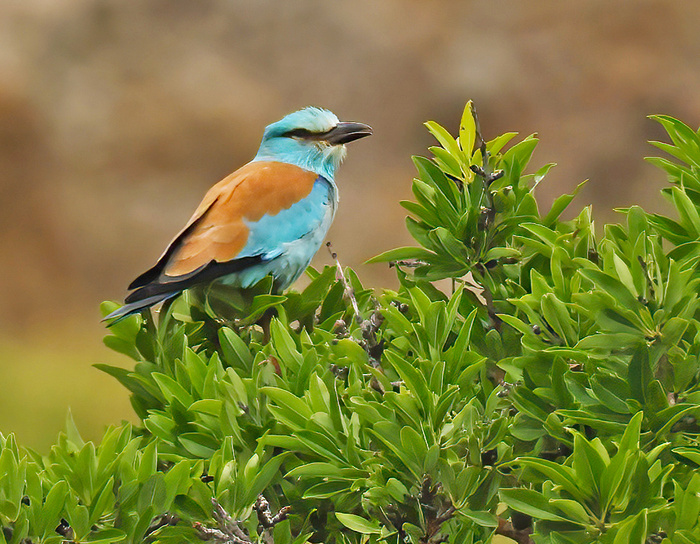
As the car approached the bird inevitably moved further on down the wires, it’s just the way it is with them. This time, however, there was a change of behaviour it landed in a small bush – maybe there was a chance of a shot!
We inched close until we were opposite and there was still no movement, I switched the engine off, this usually spooks them, but not this time. I opened the door as quietly as possible and skulked out of the car, keeping low. I knew I had to put my head over the parapet so to speak to get a shot and I thought that would be the final straw, but it wasn’t, it was tolerating me – very unusual indeed. I fired off a couple of shots and I got it before it did indeed fly off, never to be seen again.
The most tolerant Roller I've encountered.
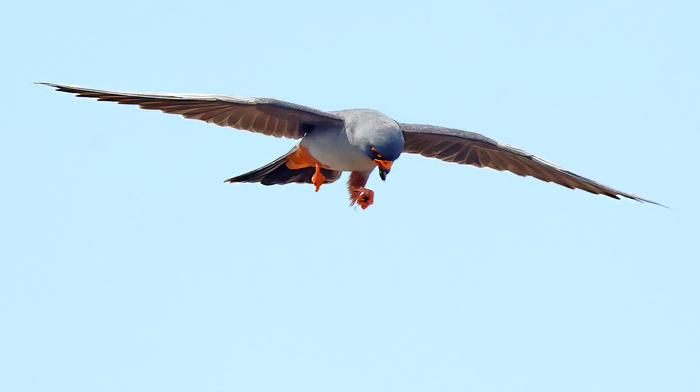
Red-footed Falcons V Canon R6 Mk2 – no contest!!
01st May 2025
01st May 2025
As I mentioned previously a big fall of these magnificent birds occurred across the island and when they come in numbers it is a sight to behold – in one location 105 birds were reported, just amazing.
Travelling across a very rocky landscape in the west of the island we could see about twenty birds in the distance flying around. We though they were Barn Swallows, until we got closer and could see they were falcons. These birds are just so beautiful, we quickly stopped the car and jumped out before they decided to move on – what a bird they are.
Once again the Canon R6 Mk2 locked onto them and allowed me to get some action shots as they ‘Hawked’ for flying insects.
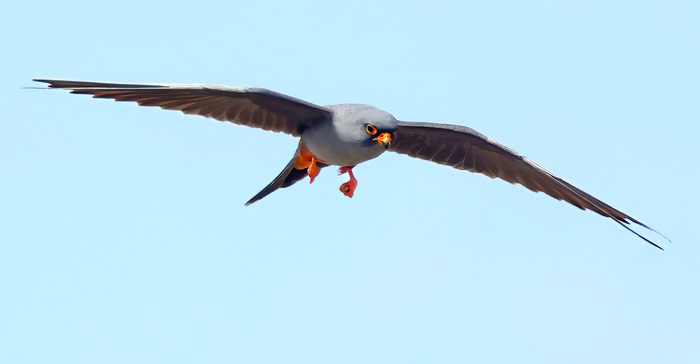
Males.
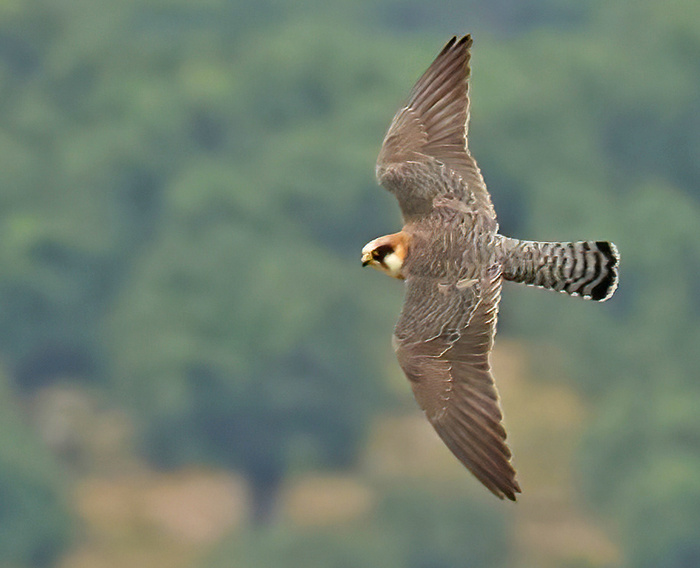
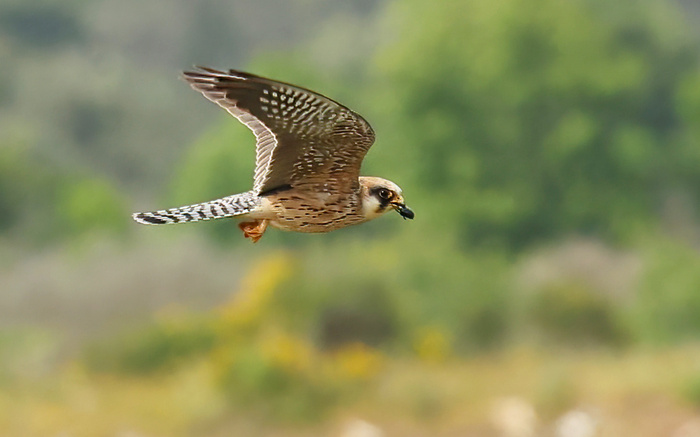
Female.
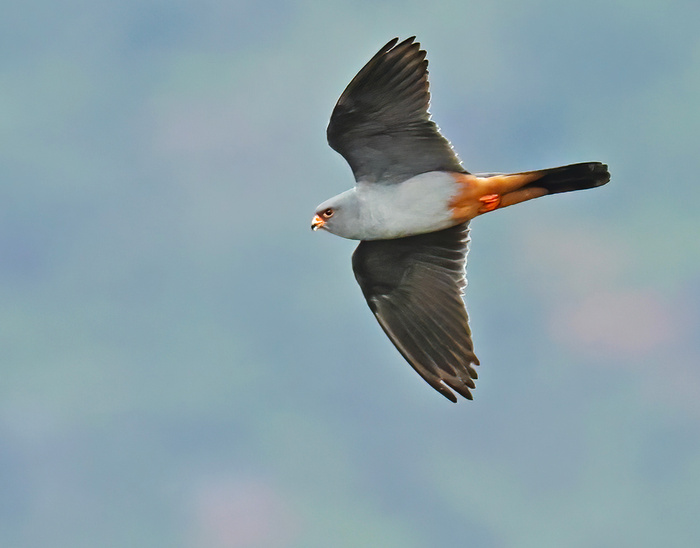
Male
Travelling across a very rocky landscape in the west of the island we could see about twenty birds in the distance flying around. We though they were Barn Swallows, until we got closer and could see they were falcons. These birds are just so beautiful, we quickly stopped the car and jumped out before they decided to move on – what a bird they are.
Once again the Canon R6 Mk2 locked onto them and allowed me to get some action shots as they ‘Hawked’ for flying insects.
Males.
Female.
Male
Glorious Spring Weather.
13th April 2025
13th April 2025
Migrant birds are now starting to come into the Brecon Beacons. Early visitors like Chiffchaffs and Sand Martins have been here for a couple of weeks, Blackcaps and now Willow Warblers are singing. Barn Swallows are also here in small numbers and a Cuckoo was reported singing this week- nice and early.
After an unusual spell of glorious spring weather which has lasted for a couple of weeks I decided to walk up onto the high ‘Beacons’ to see if any Ring Ouzels had arrived, the weather has been perfect for birds to migrate on light winds and warm air. As I made my way up the mountain very early, with no one around, (just as I like it), the usual Stonechats appeared and a couple of Barn Swallows flew overhead, a Peregrine Falcon called from on high but I didn’t see it, but reliably Ravens played on the light breeze.
After reaching the valley top and walking along the ridge to where I usually see Ring Ouzels, (although never guaranteed), I could hear nothing, which was disappointing. I carried on for a hundred yards and I could see a single male Northern Wheatear which sadly disappeared quickly. A little further on I saw a bird in a very small pool in amongst the rough grass and amazingly I could see it was a Ring Ouzel bathing. How this very small and shallow pool had retained water during this exceptionally dry spell intrigued me somewhat, but nevertheless there it was. Unfortunately after seeing me the Ouzel flew off and quickly disappeared, but at least I knew there was one bird around.
I settled down on my favourite spot in the heather overlooking a large gulley and poured a cup of coffee and opened up my pack of sandwiches, which were very welcome because I hadn’t eaten anything since the previous day. The only sound was a pair of Skylarks singing as they hovered above me on the warm air currents, and as I sat there, in repose, on the soft springy heather on a glorious spring morning with all sound from the outside world removed, I began to realise how lucky I was to be able to do this. Normally I have to put on another layer at this point but the weather was so warm it really was quite remarkable.
A minute or so later I could hear a soft ‘Chuck Chuck’ the contact call of a Ring Ouzel. I put my coffee down and got my camera ready and yes there it was in a small Whitebeam tree which hung precariously to the steep cliffs on the side of the gulley. It wasn’t close but I could see through my binoculars that it was the same bird I had seen bathing because it was still wet.
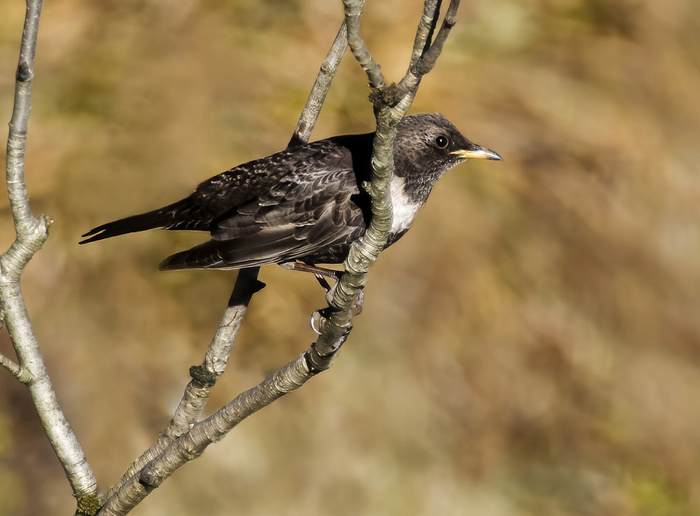
I took a few shots before it flew off again and disappeared. I spent a very pleasant hour at this location, however, the Ouzel didn’t return, and I neither saw nor heard any other Ouzels which was puzzling given the perfect weather on the day and over the previous two weeks. I hope more will arrive and this is not a sign of a bad summer for these lovely but fragile birds.
After an unusual spell of glorious spring weather which has lasted for a couple of weeks I decided to walk up onto the high ‘Beacons’ to see if any Ring Ouzels had arrived, the weather has been perfect for birds to migrate on light winds and warm air. As I made my way up the mountain very early, with no one around, (just as I like it), the usual Stonechats appeared and a couple of Barn Swallows flew overhead, a Peregrine Falcon called from on high but I didn’t see it, but reliably Ravens played on the light breeze.
After reaching the valley top and walking along the ridge to where I usually see Ring Ouzels, (although never guaranteed), I could hear nothing, which was disappointing. I carried on for a hundred yards and I could see a single male Northern Wheatear which sadly disappeared quickly. A little further on I saw a bird in a very small pool in amongst the rough grass and amazingly I could see it was a Ring Ouzel bathing. How this very small and shallow pool had retained water during this exceptionally dry spell intrigued me somewhat, but nevertheless there it was. Unfortunately after seeing me the Ouzel flew off and quickly disappeared, but at least I knew there was one bird around.
I settled down on my favourite spot in the heather overlooking a large gulley and poured a cup of coffee and opened up my pack of sandwiches, which were very welcome because I hadn’t eaten anything since the previous day. The only sound was a pair of Skylarks singing as they hovered above me on the warm air currents, and as I sat there, in repose, on the soft springy heather on a glorious spring morning with all sound from the outside world removed, I began to realise how lucky I was to be able to do this. Normally I have to put on another layer at this point but the weather was so warm it really was quite remarkable.
A minute or so later I could hear a soft ‘Chuck Chuck’ the contact call of a Ring Ouzel. I put my coffee down and got my camera ready and yes there it was in a small Whitebeam tree which hung precariously to the steep cliffs on the side of the gulley. It wasn’t close but I could see through my binoculars that it was the same bird I had seen bathing because it was still wet.
I took a few shots before it flew off again and disappeared. I spent a very pleasant hour at this location, however, the Ouzel didn’t return, and I neither saw nor heard any other Ouzels which was puzzling given the perfect weather on the day and over the previous two weeks. I hope more will arrive and this is not a sign of a bad summer for these lovely but fragile birds.
Camera talk - might be boring!
01st March 2025
01st March 2025
As I have mentioned previously I have always operated with two camera bodies but for the last year I have only had one – the superb Canon R5. The R5 is a great camera, 45 megapixels, eye tracking focus, twenty fps etc. etc. This is a full frame body but with the option of a 1.6 crop mode which is great for a bird photographer, it’s just like zooming in or out for different situations.
However, with the new camera releases by Canon – already the R5 Mk2 and the expected R6 Mk3, there are some good deals to be found on the existing R5 and R6 Mk2.
I will never be sucked in by the camera marketing people because I have been taking wildlife photos for too long now and getting good wildlife shots is all about field craft and composition rather than new cameras! I would. therefore. only be interested in the R5 MK2 as an upgrade for my R5 if there were 'Real World' improvements, like better autofocus e.g.
Conversely upgrading from a DSLR to a mirrorless camera is undoubtedly worth it on so many levels. Better autofocus, vastly improved ISO performance, higher FPS,and silent shooting etc.
I don’t buy without extensive research and for a second body the R6 Mk2 seemed like a good option for me, so I went ahead and bought one along with the BG R20 battery grip. This camera has a 24.2 megapixel sensor in a full frame body, again with the 1.6 cropping option on the sensor. It also has superb animal eye tracking and shoots at various fps, from a ridiculous maximum of 40fps. However, 40fps is not really a viable option because even shooting in CRAW, which I also do on my R5 (as opposed to full RAW) which greatly reduces file size with no discernable loss in quality, the camera buffer fills up in under four seconds – not practicable. Therefore, I will be shooting at twenty fps – more than enough I have found.
Some media cards, particularly inhibit really high frame rates because of their lower write speeds. SD UHS2 V90 cards (The Fastest) claim a maximum write speed of about 300mb/sec. The downside also is these cards are prohibitively expensive, especially Sony and Sandisk.
This is slow compared to the CF Express Type B cards I use in my Canon R5, which write at 1500mb/sec. These cards allow me to shoot basically unlimited frames in CRAW and at 20fps.
After much research and after some tests I can confirm that shooting at 20fps in CRAW and using a Kingston ‘Canvas React’ V60 card, I can shoot around a hundred and sixty frames, about eight seconds before the camera buffer fills up. This may not seem much but it’s quite a long time and the card clears the camera buffer in about five seconds - acceptable to me. You don’t need SD UHS 2 V90 cards unless you are shooting 4K video, admittedly they will clear the buffer in a shorter time but they are also at least twice the price.
The R6 Mk2 also has ‘pre-capture’, a feature that allows a photographer to get shots they would undoubtable miss without it. This feature is suitable in very particular situations, and I will be using it from time to time.
My R5 will sit on my EF 600 f4 is 2 lens with a EF 1.4 TC attached - a great combination.
The new R6 Mk2 will be paired with the Canon 100-500 F7.1 zoom lens as a walk – around combo, very lightweight and sharp.
Another reason I chose this camera is the button layout that is virtually identical to the R5, this may seem irrelevant but it isn’t because when you get used to a particular camera body, switching to another button layout on another body and then back again after is problematic, I know from experience.
Assigning features like double back - button focussing, 1.6 crop/full frame switch and pre-capture to a single customizable button on both cameras is so convenient.
I am looking forward to using both combos in the spring.
However, with the new camera releases by Canon – already the R5 Mk2 and the expected R6 Mk3, there are some good deals to be found on the existing R5 and R6 Mk2.
I will never be sucked in by the camera marketing people because I have been taking wildlife photos for too long now and getting good wildlife shots is all about field craft and composition rather than new cameras! I would. therefore. only be interested in the R5 MK2 as an upgrade for my R5 if there were 'Real World' improvements, like better autofocus e.g.
Conversely upgrading from a DSLR to a mirrorless camera is undoubtedly worth it on so many levels. Better autofocus, vastly improved ISO performance, higher FPS,and silent shooting etc.
I don’t buy without extensive research and for a second body the R6 Mk2 seemed like a good option for me, so I went ahead and bought one along with the BG R20 battery grip. This camera has a 24.2 megapixel sensor in a full frame body, again with the 1.6 cropping option on the sensor. It also has superb animal eye tracking and shoots at various fps, from a ridiculous maximum of 40fps. However, 40fps is not really a viable option because even shooting in CRAW, which I also do on my R5 (as opposed to full RAW) which greatly reduces file size with no discernable loss in quality, the camera buffer fills up in under four seconds – not practicable. Therefore, I will be shooting at twenty fps – more than enough I have found.
Some media cards, particularly inhibit really high frame rates because of their lower write speeds. SD UHS2 V90 cards (The Fastest) claim a maximum write speed of about 300mb/sec. The downside also is these cards are prohibitively expensive, especially Sony and Sandisk.
This is slow compared to the CF Express Type B cards I use in my Canon R5, which write at 1500mb/sec. These cards allow me to shoot basically unlimited frames in CRAW and at 20fps.
After much research and after some tests I can confirm that shooting at 20fps in CRAW and using a Kingston ‘Canvas React’ V60 card, I can shoot around a hundred and sixty frames, about eight seconds before the camera buffer fills up. This may not seem much but it’s quite a long time and the card clears the camera buffer in about five seconds - acceptable to me. You don’t need SD UHS 2 V90 cards unless you are shooting 4K video, admittedly they will clear the buffer in a shorter time but they are also at least twice the price.
The R6 Mk2 also has ‘pre-capture’, a feature that allows a photographer to get shots they would undoubtable miss without it. This feature is suitable in very particular situations, and I will be using it from time to time.
My R5 will sit on my EF 600 f4 is 2 lens with a EF 1.4 TC attached - a great combination.
The new R6 Mk2 will be paired with the Canon 100-500 F7.1 zoom lens as a walk – around combo, very lightweight and sharp.
Another reason I chose this camera is the button layout that is virtually identical to the R5, this may seem irrelevant but it isn’t because when you get used to a particular camera body, switching to another button layout on another body and then back again after is problematic, I know from experience.
Assigning features like double back - button focussing, 1.6 crop/full frame switch and pre-capture to a single customizable button on both cameras is so convenient.
I am looking forward to using both combos in the spring.
Even More Crossbills on an even colder morning!!
08th February 2025
08th February 2025
Another morning birding around the locality yesterday, leaden skies, squally showers and a penetrating bitterly cold wind made for very unpleasant conditions indeed. However, it’s no good huddling around the fire, you have to get out if you want to see wildlife. We decided to have a look at a site where we have been seeing and very fortunately photographing a number of Common Crossbills.
We took a flask of coffee and a few biscuits with us, you can’t beat a hot drink and a nibble of something when you are out waiting around for wildlife.
A number of people walked past us on their way up on to the hills, every one of them inevitably heading for Pen y Fan!
A young couple walked by coming from the car park lower down the road and took an obviously wrong turning back in the direction they had come from only on another track. I said nothing, it was none of my business. Here they come again walking past us and saying nothing, obviously having no idea where to go. After a few minutes staring at their phones the young girl in frustration asked me for directions to the ‘Horseshoe’ walk. This is a walk frequently seen on social media and as a result people want to do it. I showed them the way and off they went, hopelessly underclad, inappropriately shod and nothing to drink or eat either – Hey Ho!
After a cup of coffee in the warmth of the vehicle, because it was seriously cold now, the Crossbills arrived, and we could see them in a small bush about fifty yards away and we counted twelve in this one small bush - it looked like a sweet shop with all their colours on display – Beautiful! This is quite unusual behaviour for these birds they are normally up high in conifers, they always come down to drink, they have to, but this is different – we weren’t complaining.
A man walked passed coming from the direction of the Beacons and he stopped to ask what we were looking at, we explained it was Crossbills and he was very excited because he explained they were high on his list of birds to see. I said ‘this is your lucky day then’ Susan leant him her binoculars and he was over the moon with the sighting. We asked him if he had been up on the top of the mountain and he said no because it was too cold and very windy so he had come back, and he had a jacket on and was wrapped up – sensible choice, never extend yourself if you don’t feel comfortable. He left happy and as he was walking down the road I could see him waving his arms and saying ‘Yes, Crossbills’.
I thought about the previous couple and how they were dressed and I thought they would have had difficulty completing ‘The Horseshoe’ walk. I hoped that they too were sensible.
Shortly after another man appeared and said the rescue helicopter was airlifting someone off the ridge. We had seen the helicopter earlier on and this was obviously the reason. It wasn’t the couple we had spoken to because they would not have had time to get up on to the ridge by then thankfully.
Grey skies and flat light was not a good situation for a photograph but when the birds got a little nearer I shot a few frames, nothing to shout about, but a record nevertheless.
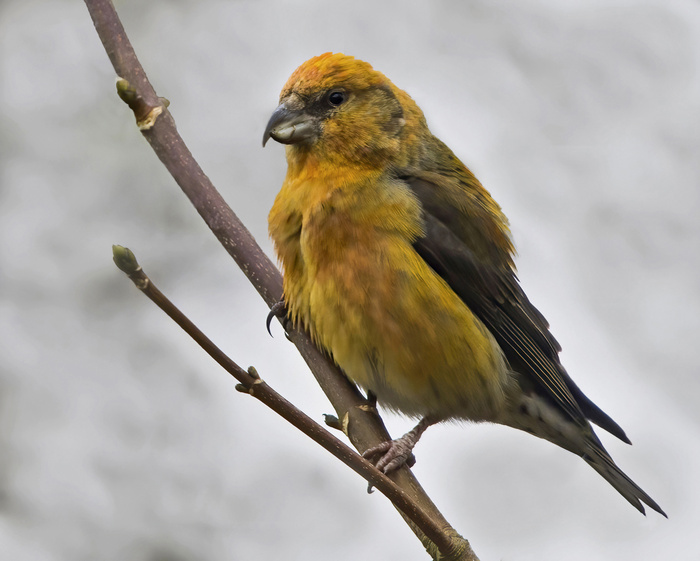
Oh for some decent light and calmer winds, perhaps next week?
We took a flask of coffee and a few biscuits with us, you can’t beat a hot drink and a nibble of something when you are out waiting around for wildlife.
A number of people walked past us on their way up on to the hills, every one of them inevitably heading for Pen y Fan!
A young couple walked by coming from the car park lower down the road and took an obviously wrong turning back in the direction they had come from only on another track. I said nothing, it was none of my business. Here they come again walking past us and saying nothing, obviously having no idea where to go. After a few minutes staring at their phones the young girl in frustration asked me for directions to the ‘Horseshoe’ walk. This is a walk frequently seen on social media and as a result people want to do it. I showed them the way and off they went, hopelessly underclad, inappropriately shod and nothing to drink or eat either – Hey Ho!
After a cup of coffee in the warmth of the vehicle, because it was seriously cold now, the Crossbills arrived, and we could see them in a small bush about fifty yards away and we counted twelve in this one small bush - it looked like a sweet shop with all their colours on display – Beautiful! This is quite unusual behaviour for these birds they are normally up high in conifers, they always come down to drink, they have to, but this is different – we weren’t complaining.
A man walked passed coming from the direction of the Beacons and he stopped to ask what we were looking at, we explained it was Crossbills and he was very excited because he explained they were high on his list of birds to see. I said ‘this is your lucky day then’ Susan leant him her binoculars and he was over the moon with the sighting. We asked him if he had been up on the top of the mountain and he said no because it was too cold and very windy so he had come back, and he had a jacket on and was wrapped up – sensible choice, never extend yourself if you don’t feel comfortable. He left happy and as he was walking down the road I could see him waving his arms and saying ‘Yes, Crossbills’.
I thought about the previous couple and how they were dressed and I thought they would have had difficulty completing ‘The Horseshoe’ walk. I hoped that they too were sensible.
Shortly after another man appeared and said the rescue helicopter was airlifting someone off the ridge. We had seen the helicopter earlier on and this was obviously the reason. It wasn’t the couple we had spoken to because they would not have had time to get up on to the ridge by then thankfully.
Grey skies and flat light was not a good situation for a photograph but when the birds got a little nearer I shot a few frames, nothing to shout about, but a record nevertheless.
Oh for some decent light and calmer winds, perhaps next week?
A lucky day.
08th February 2025
08th February 2025
I spent some time at a lower elevation on Thursday visiting a local pond near Brecon, there were some Wigeon just bobbing around and sleeping half the time but quite close to the shoreline. These are attractive ducks and because the water was calm and there was a chance of a shot I tucked myself in near some foliage and just waited. I was carrying my R5 with the Canon 100-500 f7.1 zoom with me, my go to walk around lens.
Closer they came until I could get a decent shot and I was quite pleased with getting a few shots out of the blue, this is the way it is sometimes.
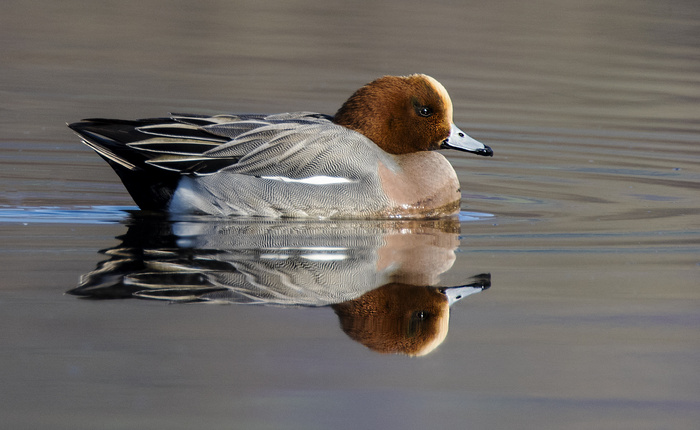
Surprisingly when I looked up from the water I could now see a Common Buzzard on top of a small tree nearby – another unexpected shot, better and better.
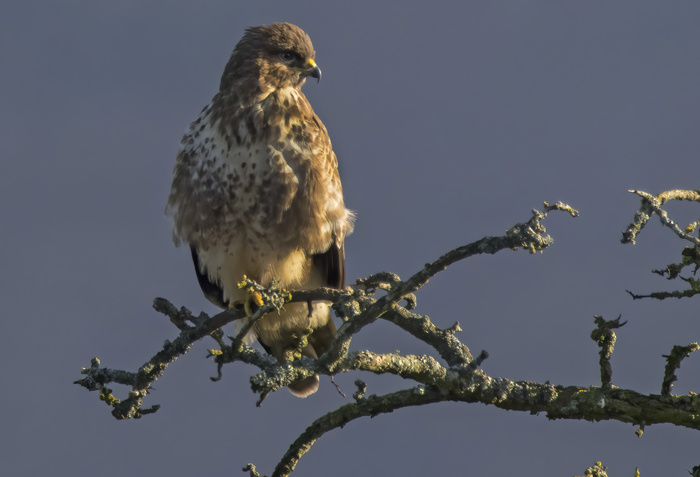
However, the biggest surprise of all was awaiting me because I had ostensibly packed in by now and I was walking back to my vehicle when suddenly and I really mean suddenly, there was a Barn Owl immediately in front of me. It was gliding on flat wings fifteen yards away coming right for me.
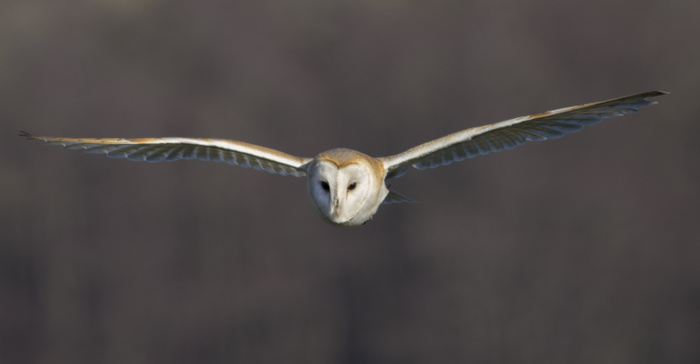
I had hardly any time to react I just pointed the lens and shot a few frames, then it was all over and it disappeared over a hedge as quickly as it had appeared and I didn’t see it again.
What a surprise three images from nothing!
I contemplated buying a lottery ticket on the way home but that was probably pushing it.
Closer they came until I could get a decent shot and I was quite pleased with getting a few shots out of the blue, this is the way it is sometimes.
Surprisingly when I looked up from the water I could now see a Common Buzzard on top of a small tree nearby – another unexpected shot, better and better.
However, the biggest surprise of all was awaiting me because I had ostensibly packed in by now and I was walking back to my vehicle when suddenly and I really mean suddenly, there was a Barn Owl immediately in front of me. It was gliding on flat wings fifteen yards away coming right for me.
I had hardly any time to react I just pointed the lens and shot a few frames, then it was all over and it disappeared over a hedge as quickly as it had appeared and I didn’t see it again.
What a surprise three images from nothing!
I contemplated buying a lottery ticket on the way home but that was probably pushing it.
More Crossbills on a bitterly cold morning.
01st February 2025
01st February 2025
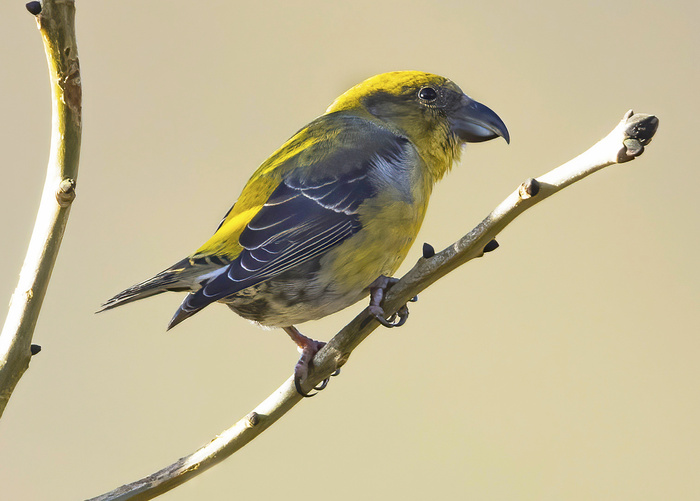
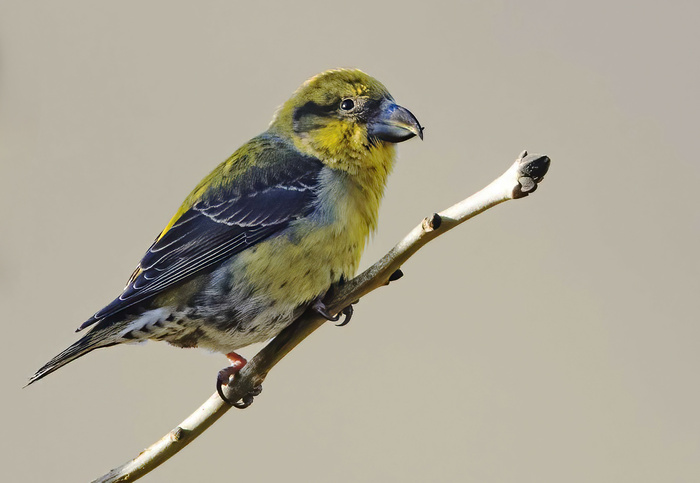
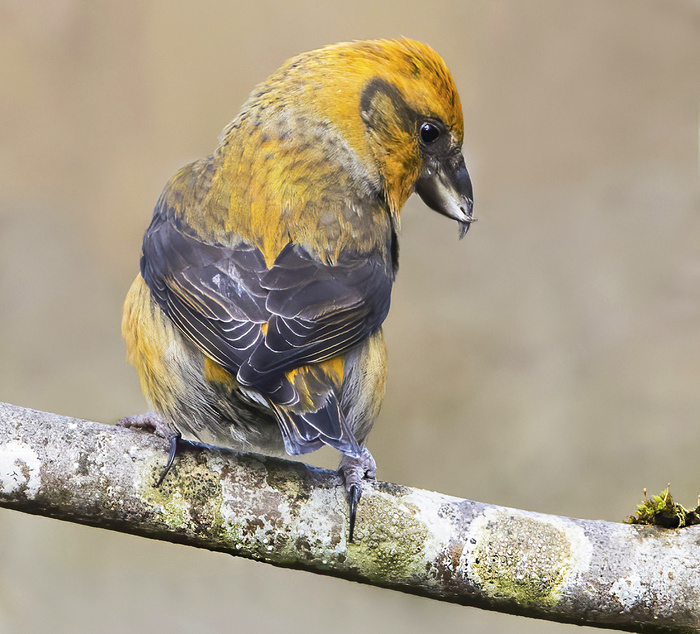
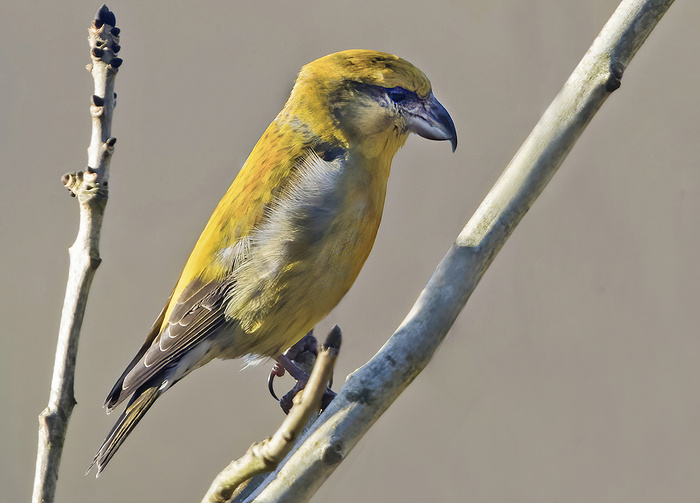
It’s been a cold few days looking for Crossbills up on the lower slopes of the Brecon Beacons. This morning, my latest visit, was no exception, an overcast morning to start with after some heavy rain during the night. The roads here are in a poor condition after being ravaged by the recent storms, large potholes and edge break-up are common. A nasty penetrating wind blew as I waited in my vehicle for the first sounds of the birds. After about an hour I heard their first tell-tale calls and a few birds appeared in the tree tops. I dragged myself out into the cold morning air and set up my gear on the tripod and gimbal head. I was using the Canon 600mm lens because of the reach and the supreme image quality. The Canon 100-500 f7.1 is a superb walk around lens and I can’t speak highly enough of it but when you need reach and image quality with a still relatively large aperture, you can’t beat the big primes.
I had had one or two shots of a female Crossbill but the light wasn’t the best, although the sun was breaking through so I was hopeful. You don’t get anything from wildlife photography unless you are willing to persevere, sometimes it’s boring and often abortive but you have to ‘Keep on trucking’ as they say in the trade.
I waited by the low trees that I first photographed some Crossbills in on my first visit because it’s no good wandering around looking for birds high up in the pines – looking up is never the best, eye level always, without exception, produces the best shots. If you do go wandering then you can bet the birds will appear in the place you left, you have to stick at it!
Then my theory proved correct, there she was a beautiful female bird looking at me and striking a most attractive pose.
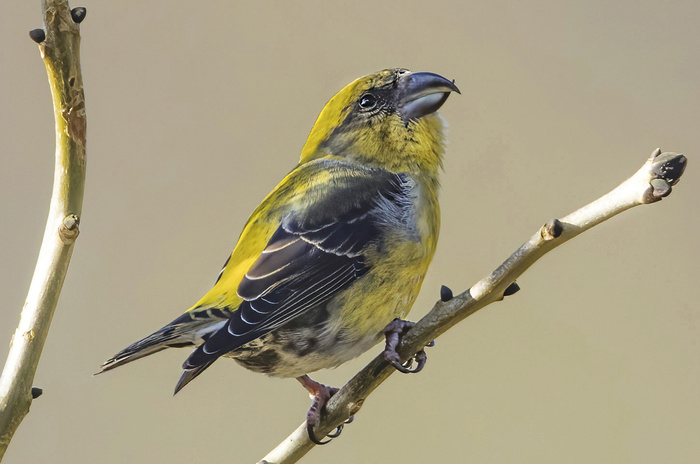
I shot her straight away before she flew - they don’t stay long.
Another hour had passed and then out of nowhere unbelievably a male bird landed in a small Ash sapling six feet away from me. I daren’t move, and I couldn’t shoot him anyway because he was too close and also I was in shock, this just doesn’t happen! He took off and landed on the grass some thirty feet away and then flew again and perched in a small tree. I almost couldn’t believe it, I shot him quickly before he flew off - WOW!!
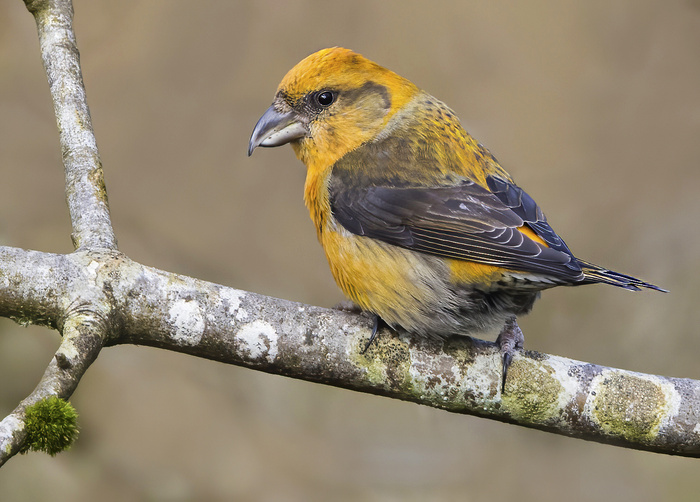
I hardly noticed at first, probably because of the adrenalin rush I had just experienced but it had now got considerably colder, so I decided to call it a day, because in this location as the day goes on the light starts to come from the wrong direction anyway and everything is silhouetted. I was also fairly sure the birds weren’t going to come any closer than they had in the last few minutes. I packed up and left contented with what I had, because there’s a limit and I had reached it by now.
A few more from the sessions.
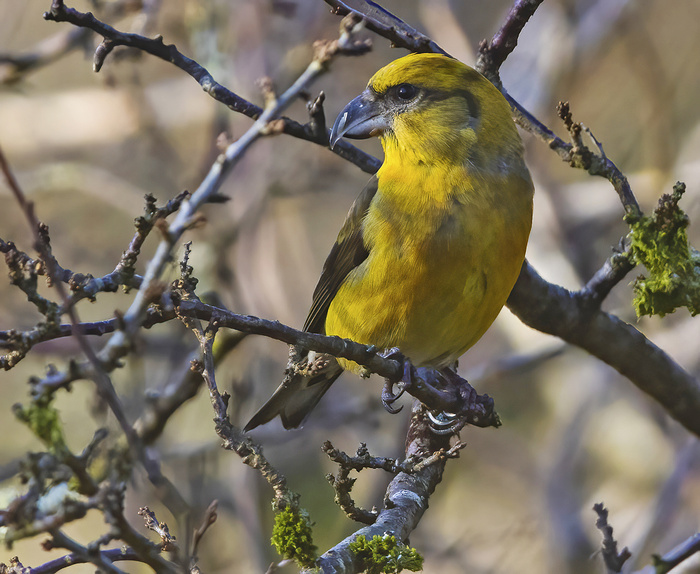
I had had one or two shots of a female Crossbill but the light wasn’t the best, although the sun was breaking through so I was hopeful. You don’t get anything from wildlife photography unless you are willing to persevere, sometimes it’s boring and often abortive but you have to ‘Keep on trucking’ as they say in the trade.
I waited by the low trees that I first photographed some Crossbills in on my first visit because it’s no good wandering around looking for birds high up in the pines – looking up is never the best, eye level always, without exception, produces the best shots. If you do go wandering then you can bet the birds will appear in the place you left, you have to stick at it!
Then my theory proved correct, there she was a beautiful female bird looking at me and striking a most attractive pose.
I shot her straight away before she flew - they don’t stay long.
Another hour had passed and then out of nowhere unbelievably a male bird landed in a small Ash sapling six feet away from me. I daren’t move, and I couldn’t shoot him anyway because he was too close and also I was in shock, this just doesn’t happen! He took off and landed on the grass some thirty feet away and then flew again and perched in a small tree. I almost couldn’t believe it, I shot him quickly before he flew off - WOW!!
I hardly noticed at first, probably because of the adrenalin rush I had just experienced but it had now got considerably colder, so I decided to call it a day, because in this location as the day goes on the light starts to come from the wrong direction anyway and everything is silhouetted. I was also fairly sure the birds weren’t going to come any closer than they had in the last few minutes. I packed up and left contented with what I had, because there’s a limit and I had reached it by now.
A few more from the sessions.
Crossbills and Sat Navs.
23rd January 2025
23rd January 2025
Yesterday Susan and I were out looking for Crossbills again because this is the best time of year to see them because they are now displaying and singing as a precursor to breeding. We drove onto the lower ‘Beacons’ using the narrow single track road up to the old Neuadd Reservoir. After passing the designated parking areas about two hundred yards further on the road has a barrier across it. We parked on the roadside pull-in before there because there is an isolated stand of conifers and deciduous trees where historically we have seen Crossbills.
Yesterday was no exception because almost immediately we could hear Crossbills calling, that ‘Clipping’ sound they make, there were birds also singing and displaying, a lovely sight. Unfortunately thick grey clouds began to quickly roll over really spoiling the light and making it a great deal colder because it was mid-afternoon by then.
A car then appeared and a young couple about twenty or so stopped to ask me the way to Pen y Fan. This peak attracts people like moths to a candle flame because it is the highest in the Brecon Beacons. I politely told them I thought they were in the wrong place to walk to Pen y Fan and back based on the time of day. I also noticed that they were hopelessly under-clothed and shod for this walk. However, I didn’t mention this because it was none of my business. I only advised them about the walk they were about to undertake at this time of day based on my experience of walking these mountains for forty five years. They thanked me and turned around – I didn’t see them again, presumably they took my advice which was good because they seemed to be a sensible and nice couple.
Ten minutes later here comes another car, same scenario, ‘Which way to Pen y Fan please. I asked them how they got to this point and they replied their Sat Nav had directed them to it, which I suspected is how the first couple had arrived. This couple said they intended to do ‘The Horseshoe’ walk (at this time of day I thought) and they didn’t even know which track to take to approach the peaks. By now I had stopped giving opinions and just pointed the way because they seemed determined to proceed – they would have been coming back in darkness and cold and they too were inadequately attired.
If they had completed the horseshoe walk, which I seriously doubt, they would have had to climb Fan Fawr, Crybin, Pen y fan, Corn Ddu and then along the ridge from Bwlch Duwynt back to the conifer block above the Neuadd reservoir which is full of horrible soft peat in places and then descend a really steep slope back down to the neuadd road to the car park. It’s just really dangerous to attempt this type of walk with this total lack of knowledge or planning.
We had decided to pack up now because the light was poor and the birds had also disappeared but as we were leaving another car appeared, however, I just drove on having had enough of feeling like an extra from the film ‘Groundhog Day’.
I will be returning to this site next week on a hopefully better day because it has some good potential.
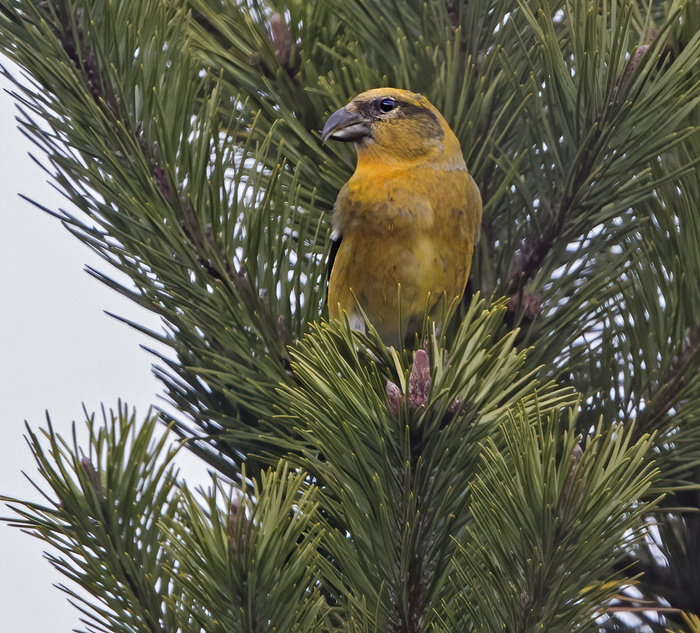
Yesterday was no exception because almost immediately we could hear Crossbills calling, that ‘Clipping’ sound they make, there were birds also singing and displaying, a lovely sight. Unfortunately thick grey clouds began to quickly roll over really spoiling the light and making it a great deal colder because it was mid-afternoon by then.
A car then appeared and a young couple about twenty or so stopped to ask me the way to Pen y Fan. This peak attracts people like moths to a candle flame because it is the highest in the Brecon Beacons. I politely told them I thought they were in the wrong place to walk to Pen y Fan and back based on the time of day. I also noticed that they were hopelessly under-clothed and shod for this walk. However, I didn’t mention this because it was none of my business. I only advised them about the walk they were about to undertake at this time of day based on my experience of walking these mountains for forty five years. They thanked me and turned around – I didn’t see them again, presumably they took my advice which was good because they seemed to be a sensible and nice couple.
Ten minutes later here comes another car, same scenario, ‘Which way to Pen y Fan please. I asked them how they got to this point and they replied their Sat Nav had directed them to it, which I suspected is how the first couple had arrived. This couple said they intended to do ‘The Horseshoe’ walk (at this time of day I thought) and they didn’t even know which track to take to approach the peaks. By now I had stopped giving opinions and just pointed the way because they seemed determined to proceed – they would have been coming back in darkness and cold and they too were inadequately attired.
If they had completed the horseshoe walk, which I seriously doubt, they would have had to climb Fan Fawr, Crybin, Pen y fan, Corn Ddu and then along the ridge from Bwlch Duwynt back to the conifer block above the Neuadd reservoir which is full of horrible soft peat in places and then descend a really steep slope back down to the neuadd road to the car park. It’s just really dangerous to attempt this type of walk with this total lack of knowledge or planning.
We had decided to pack up now because the light was poor and the birds had also disappeared but as we were leaving another car appeared, however, I just drove on having had enough of feeling like an extra from the film ‘Groundhog Day’.
I will be returning to this site next week on a hopefully better day because it has some good potential.