News
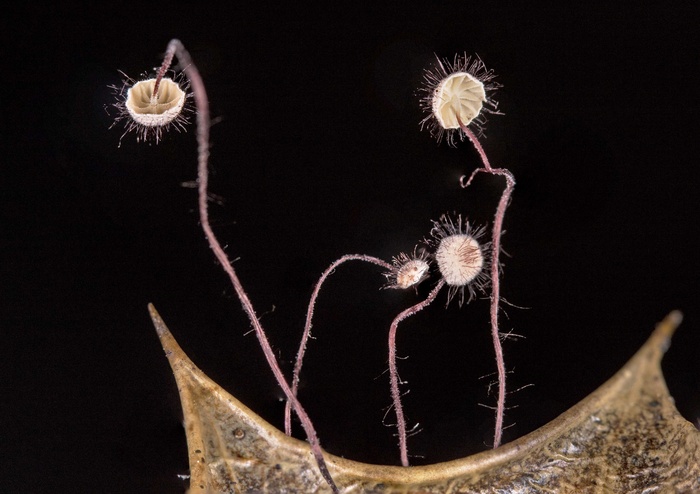
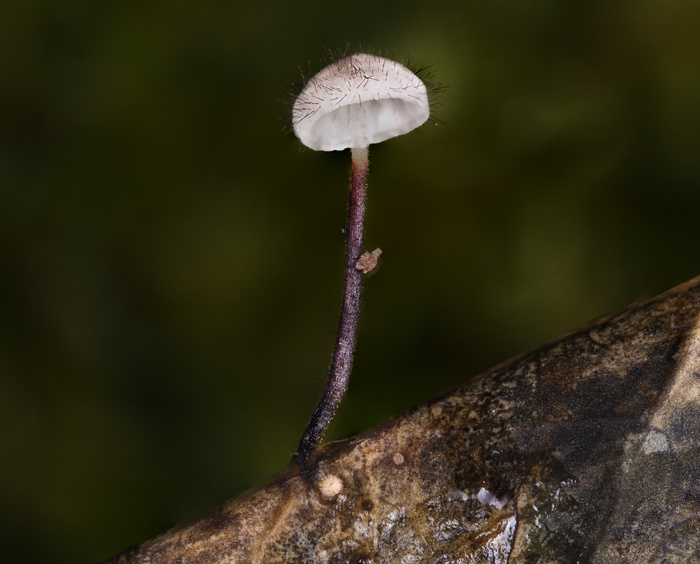
Holly Parachute Fungi.
19th January 2021
19th January 2021
Susan and I were out walking yesterday along an enclosed path near where we live which was thankfully sheltering us from a spell of squally weather. We have on our walks been looking for Fungi, and there is still plenty around if you make an effort to look. We try and make an effort to get some exercise and alleviate the boredom that we and obviously the rest of the country are suffering from during this time. Some way along this path I just happened to look down at some Holly leaf litter which was dried out but when I parted the leaves with a stick I couldn’t believe what was underneath – a large amount of Holly Parachute Fungi! These Fungi are very difficult to locate because of their diminutive size, some of the caps are only one millimetre across. To say we were pleased is an understatement. These fungi only grow on damp decaying Holly leaves so you have to pull away the top of the leaf litter which is usually dry, and look at the damp leaves underneath. I managed to take a few shots, (with great difficulty), a small portable LED light on a mini flexible tripod and some small foldable light reflectors make such a difference and also my twin macro flash unit is invaluable.
Manfrotto 055 carbon fibre tripod.
Manfrotto MHXPRO tilt and pan head.
Canon 7D mk2 DSLR
Canon EF100 f2.8 is macro lens.
Canon 25mm Extension Tube.
Yongnuo Twin Macro Flash unit.
Mini flexible tripod.
Small twin coloured LED light unit.
Flexible light reflector kit.
Manfrotto 055 carbon fibre tripod.
Manfrotto MHXPRO tilt and pan head.
Canon 7D mk2 DSLR
Canon EF100 f2.8 is macro lens.
Canon 25mm Extension Tube.
Yongnuo Twin Macro Flash unit.
Mini flexible tripod.
Small twin coloured LED light unit.
Flexible light reflector kit.
2021 - 'Lockdown' Walk.
12th January 2021
12th January 2021
Well here we are in 2021 and we are still in ‘Lockdown’. What a dreadful situation this is, with the current ‘Wave’ of this pandemic, as they predicted, worse than the first. Susan and I will both be having the vaccinations, but when that will be goodness knows, as we are neither old nor vulnerable enough to be included in the first vaccination programmes. I’m not grumbling about that for obvious reasons, so we will abide by the rules and batten down the hatches until this is all over. In the meantime we have been going for local walks from home, but unlike the previous spring there is very little wildlife to see.
In particular walking locally exemplifies the barren nature of the surrounding countryside in winter, where fields are cropped short and there are just a few Corvid flocks and the odd Common Buzzard scavenging for food. There are far more birds seen in our garden than anywhere we are walking with Siskins now starting to visit the feeders – always welcome!
We have over the last year or so become interested in fungi and I wish we had done it earlier because it is a fascinating subject. You have to diversify your wildlife interests because birding can become difficult at certain times in this area and Butterflies and Dragonflies exist in a relatively short window and last year was dreadful for them. I don’t do much landscape work, just the odd scene if the fancy takes me, so you have to fill your time doing something.
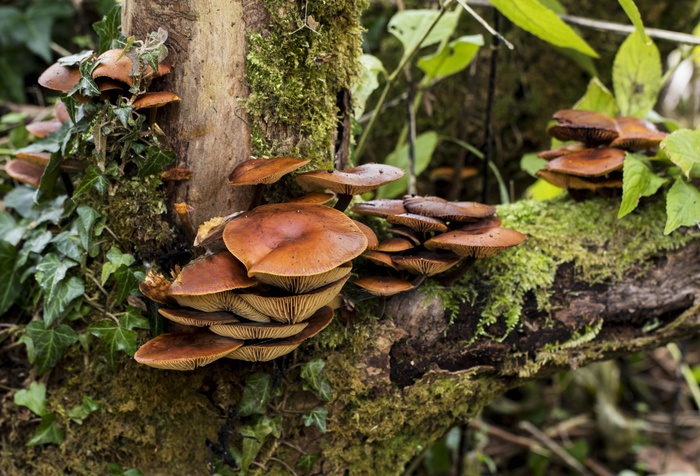
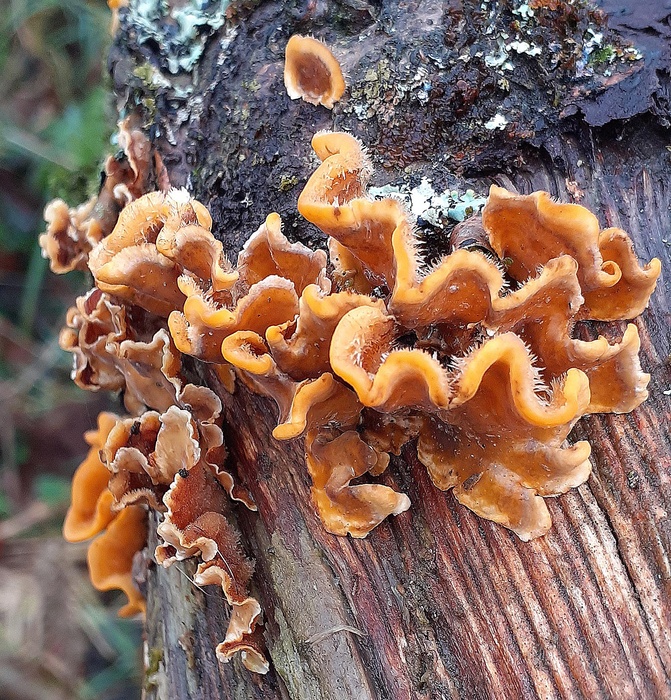
Yesterday we were on one of our local walks and we were pleased to see some nice Fungi.
Velvet Shank
Hairy Curtain Crust
Smokey Bracket Species?
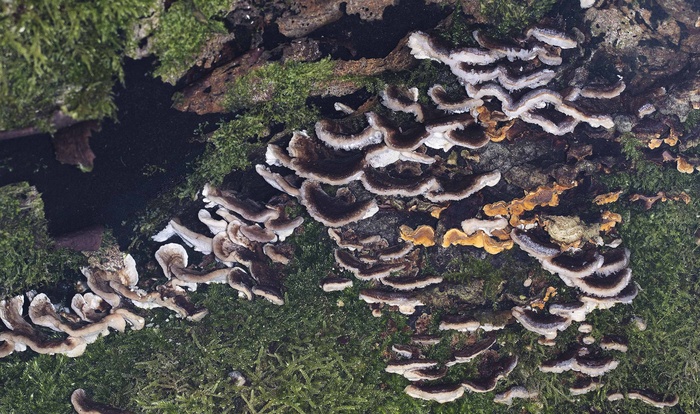
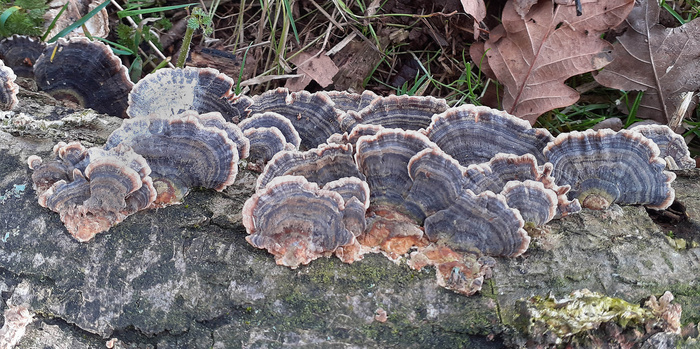
Turkey Tail
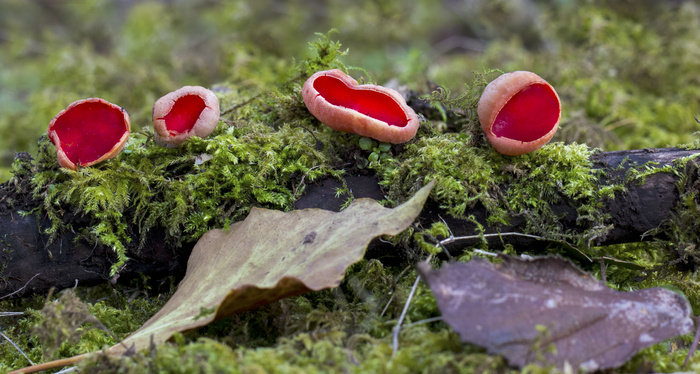
In particular though, Scarlet Elf Cup, a winter mushroom that is starting to show through the leaf litter, it can be seen in good numbers on woodland floors for the next few months and it’s worth seeking out because it’s really lovely.
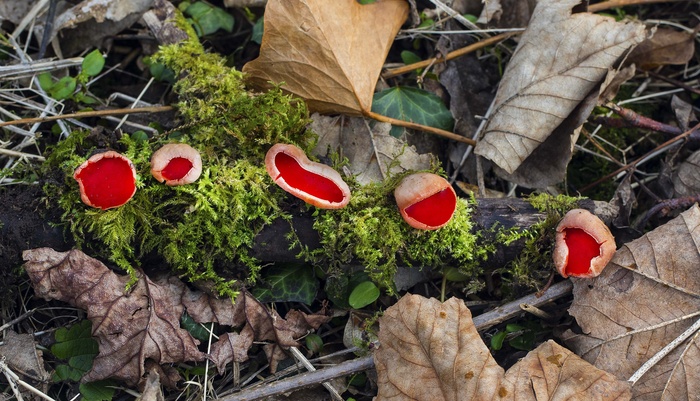
Scarlet Elf Cup
Back home in an attempt to divorce myself form this current malaise I have been reading a series of books by an author named Elly Griffiths whose murder/mystery books are situated in North Norfolk - a place near to my heart as people will know who read this blog regularly. Her books are very good indeed, with a fast moving dynamic style of writing that never gets bogged down. I saw a real bargain on line with ten of her books for £22.50 - normally about £32.50, so I snapped them up, and what a bargain they are. The central characters in the series are Dr Ruth Galloway a forensic archaeologist living near the marshes on the North Norfolk coast and DCI Harry Nelson a hard bitten no nonsense detective. Her obvious academic view on life juxtaposed with Nelson’s ‘university of life’ attitude come together perfectly.
I can highly recommend these very well written books, great value.
In particular walking locally exemplifies the barren nature of the surrounding countryside in winter, where fields are cropped short and there are just a few Corvid flocks and the odd Common Buzzard scavenging for food. There are far more birds seen in our garden than anywhere we are walking with Siskins now starting to visit the feeders – always welcome!
We have over the last year or so become interested in fungi and I wish we had done it earlier because it is a fascinating subject. You have to diversify your wildlife interests because birding can become difficult at certain times in this area and Butterflies and Dragonflies exist in a relatively short window and last year was dreadful for them. I don’t do much landscape work, just the odd scene if the fancy takes me, so you have to fill your time doing something.
Yesterday we were on one of our local walks and we were pleased to see some nice Fungi.
Velvet Shank
Hairy Curtain Crust
Smokey Bracket Species?
Turkey Tail
In particular though, Scarlet Elf Cup, a winter mushroom that is starting to show through the leaf litter, it can be seen in good numbers on woodland floors for the next few months and it’s worth seeking out because it’s really lovely.
Scarlet Elf Cup
Back home in an attempt to divorce myself form this current malaise I have been reading a series of books by an author named Elly Griffiths whose murder/mystery books are situated in North Norfolk - a place near to my heart as people will know who read this blog regularly. Her books are very good indeed, with a fast moving dynamic style of writing that never gets bogged down. I saw a real bargain on line with ten of her books for £22.50 - normally about £32.50, so I snapped them up, and what a bargain they are. The central characters in the series are Dr Ruth Galloway a forensic archaeologist living near the marshes on the North Norfolk coast and DCI Harry Nelson a hard bitten no nonsense detective. Her obvious academic view on life juxtaposed with Nelson’s ‘university of life’ attitude come together perfectly.
I can highly recommend these very well written books, great value.
Hair Ice - an unusual phenomenon to end 2020.
31st December 2020
31st December 2020
Susan and I have seen some nice fungi on our walks this winter and there are still some to see albeit at the end of the main fungi season.
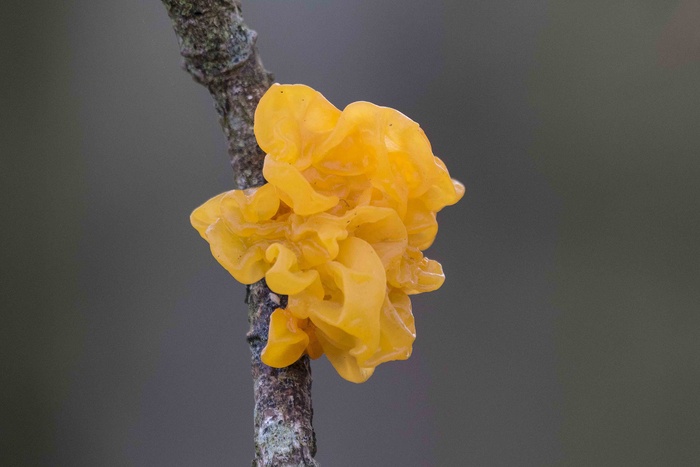
Witches Butter.
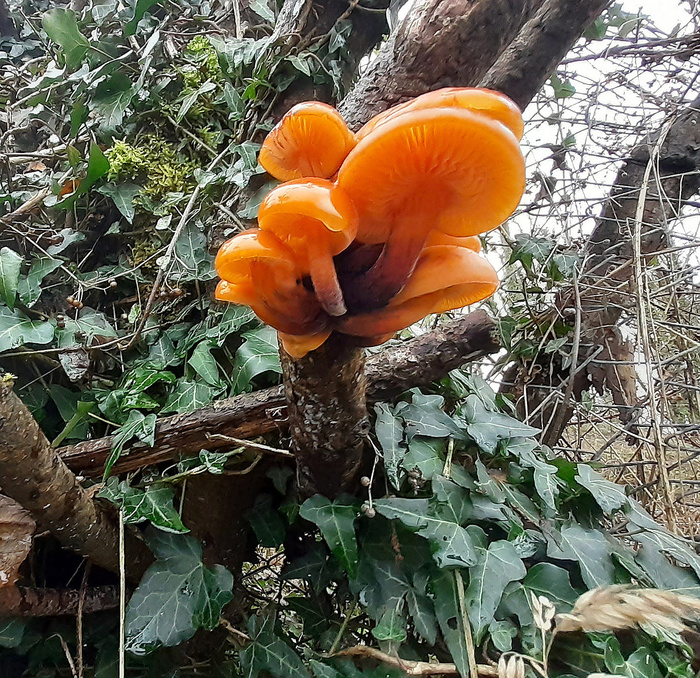
Velvet Shank.
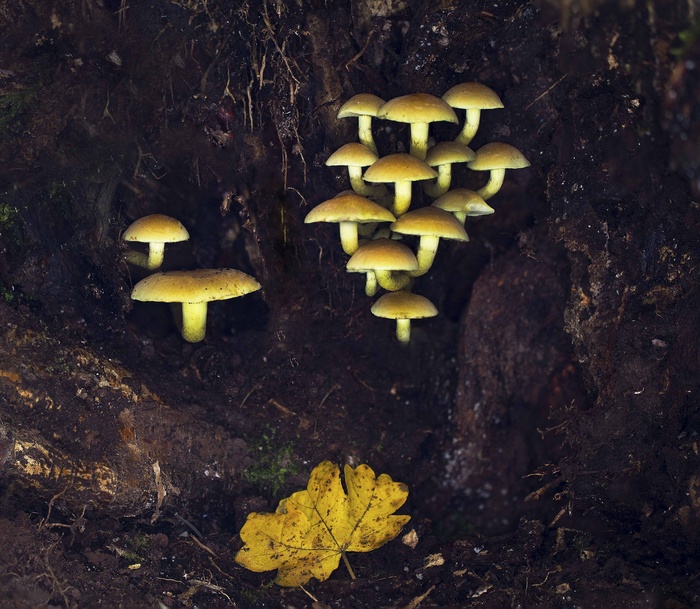
Sulphur Tuft. (Quite Poisonous).
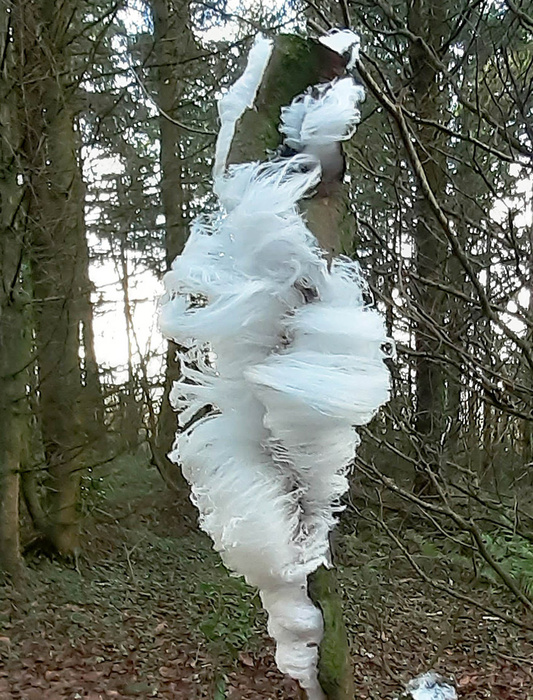
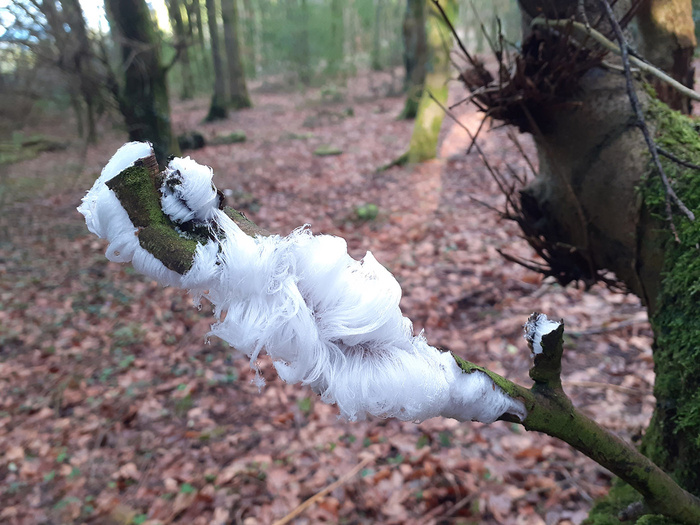
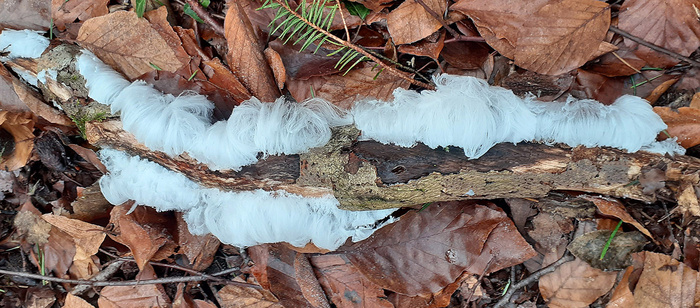
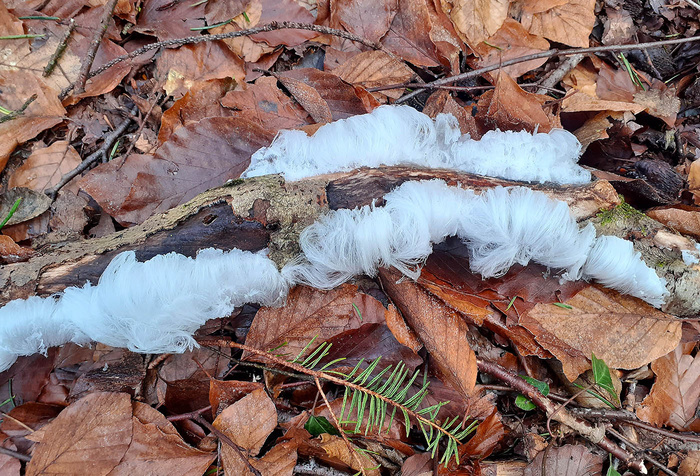
However, this morning on a walk through a local woods I looked on the ground among some fallen wood and I thought I could see ice. This seemed a little peculiar because it wasn’t that cold, and on closer inspection we came across a very unusual sight indeed. We could see what looked like an extremely unusual fungus but on touching it just melted. We took a number of photographs so we could reference it later at home.
This is what we had seen, it is known as Hair Ice;
When a very specific set of circumstances come together; a humid winter night in a forest when the temperature is just below 0 degrees Celsius and usually at a particular latitude of between 45 - 55 degrees north. A fungus named Exidiopsis Effusa which grows on damp rotting deciduous wood enables incredibly delicate ice crystals to form. This fungus, uses a complex process, unexplained by science for many years – (liquid water on the fungus freezes on contact with the surrounding atmosphere, and by a still not fully understood mechanism, is drawn out), allowing these ice structures to grow and resemble the shape and size of human hairs – about 0.01mm in diameter and several centimetres long. The fungus also supplies a recrystallization inhibitor containing complex organic compounds of Lignin and Tannin allowing these ice structures to maintain their incredibly fragile state and shape for a number of hours until there is a rise in the ambient temperature which results in melting. Because of these really quite specific set of circumstances this is quite a rare phenomenon and was a total and unexpected pleasure to see and photograph this morning – a fine end to 2020!
Happy New Year to all.
Witches Butter.
Velvet Shank.
Sulphur Tuft. (Quite Poisonous).
However, this morning on a walk through a local woods I looked on the ground among some fallen wood and I thought I could see ice. This seemed a little peculiar because it wasn’t that cold, and on closer inspection we came across a very unusual sight indeed. We could see what looked like an extremely unusual fungus but on touching it just melted. We took a number of photographs so we could reference it later at home.
This is what we had seen, it is known as Hair Ice;
When a very specific set of circumstances come together; a humid winter night in a forest when the temperature is just below 0 degrees Celsius and usually at a particular latitude of between 45 - 55 degrees north. A fungus named Exidiopsis Effusa which grows on damp rotting deciduous wood enables incredibly delicate ice crystals to form. This fungus, uses a complex process, unexplained by science for many years – (liquid water on the fungus freezes on contact with the surrounding atmosphere, and by a still not fully understood mechanism, is drawn out), allowing these ice structures to grow and resemble the shape and size of human hairs – about 0.01mm in diameter and several centimetres long. The fungus also supplies a recrystallization inhibitor containing complex organic compounds of Lignin and Tannin allowing these ice structures to maintain their incredibly fragile state and shape for a number of hours until there is a rise in the ambient temperature which results in melting. Because of these really quite specific set of circumstances this is quite a rare phenomenon and was a total and unexpected pleasure to see and photograph this morning – a fine end to 2020!
Happy New Year to all.
Sunset over 'The Allt'.
10th December 2020
10th December 2020
There’s one thing about the weather in the Brecon Beacons and that is once it starts raining in the autumn then there is no stopping it, and frustratingly this autumn is no exception!! Since the weather ‘turned’ in October we have had a miserable run of wind and rain, only punctuated with a few sunny days here and there. We have had little in the way of nice sunrises and sunsets, just the odd one. Where we live it’s impossible to predict when a nice sunset in particular, is going to occur, it’s totally random. Sometimes I look out of the window and there it is, but annoyingly it’s too late by then because it only lasts for a couple of minutes. However, a couple of weeks ago we were walking in a local forestry in the late afternoon and I had taken a couple of ‘nothing shots’ when we could see what appeared to be a nice sunset unfolding – a rare occurrence indeed! I needed one more image for the annual calendar I make for ourselves and our good neighbours on the adjacent farm. I have sold calendars in the past, purely by accident, when people have seen them and then wanted one, but it’s not really something I want to do. In the past I have seen and heard people trying to sell calendars – badgering people who are not really interested and are too polite to refuse. I can’t see me ever doing that, it’s so embarrassing. There’s one well known birder/photographer in Norfolk who I know and who has a bad reputation for doing this and when people see him coming they quickly walk the other way to avoid his sales pitch. In reality anybody, even with the most basic of cameras, can produce a calendar, but for the amount you make on them it’s just not worth the effort. You can buy a mass produced calendar on the high street for a fiver and that’s all ninety nine percent of people want. Anyway I digress; I quickly set my gear up looking across the valley as the sunset evolved into a glorious scene. I was pleased that the final image for my 2021 calendar was ’in the can'.
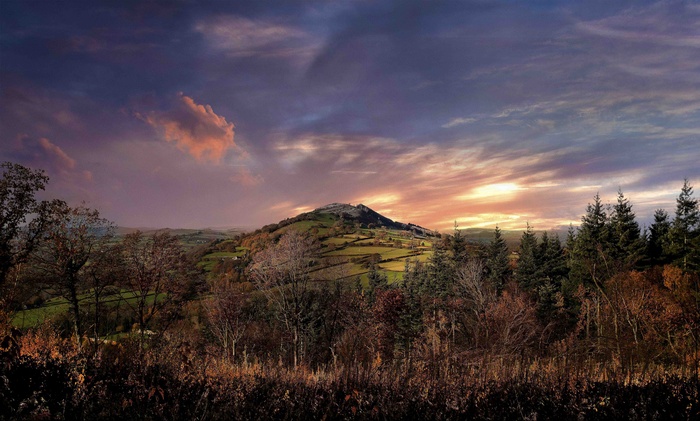
View from Buckland Forest, Bwlch - looking across the valley to Allt yr Esgair - known locally as 'The Allt'
View from Buckland Forest, Bwlch - looking across the valley to Allt yr Esgair - known locally as 'The Allt'
Fungi in the Rain.
14th November 2020
14th November 2020
This run of Atlantic weather fronts that are sweeping across the country recently is quite depressing. As I type this blog today I’m looking out of the window of my little office from where I create this website at leaden skies, strong winds and lashing rain. This weather, combined with Covid 19 restrictions in some parts of the country, must be a veritable nightmare for people, and I sincerely hope that the tentative, but positive news of a vaccine this week comes to fruition. The whole future of this country and indeed the world is hugely dependent on the synthesis of a successful vaccine.
We are very lucky living in the Brecon Beacons with wide open spaces away from this awful situation, nevertheless you cannot drop your guard for a second with regard to this virus. Even when out walking if Susan or I open a gate we sanitize our hands, never in my wildest dreams did I think we would be doing things like that.
Thankfully yesterday we did manage to get out for a walk locally, we walked up a path near our house that leads to a hill named Allt yr Esgair.
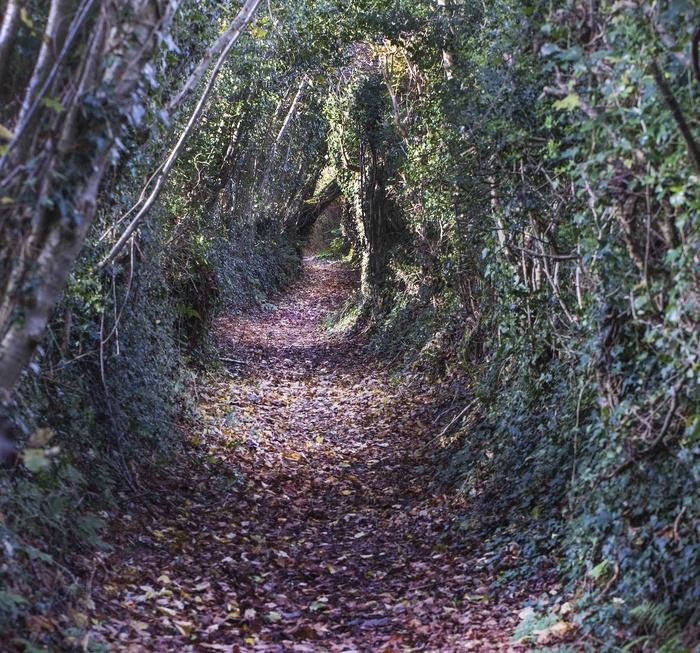
Sometimes the appropriately named Jelly Eared Fungus can be found, (formally known as Judas’s or Jew’s ear fungus), growing on trees on the path side. This fungus goes quite hard in dry conditions but after rain becomes soft and pliable.
It is apparently edible, however, I would not recommend eating any Fungi growing in the countryside unless you really know what you’re doing – (Serious Point)!! I buy my mushrooms from the local farm shop or supermarket.
As we walked along, suddenly a bird exploded from the vegetation and flew ahead of us before disappearing over the top of the hedges that line the path. We could see clearly that it was a Woodcock, these are frustrating birds to see well, with their cryptic plumage they are usually so well camouflaged that you don’t even know they’re there or they are flying away at speed after being flushed. Many come into the UK in autumn and their migration is strongly associated with a full moon.
Further on we found some Jelly Eared Fungus and took a few shots before retracing our footsteps back.

The weather looked too threatening to go up on to the hill, because if you are caught out up there without the proper clothing you can get a right royal soaking.
Buoyed by finding our first fungi of the day we decided to look for more, knowing it would be difficult because it’s quite late in the season. However, we walked a local grassland, not too far from the vehicle, because the weather still looked quite unstable. We were lucky to see a good variety of species alongside an old stone wall that borders the Penpont estate near Brecon.
Common Inkcap
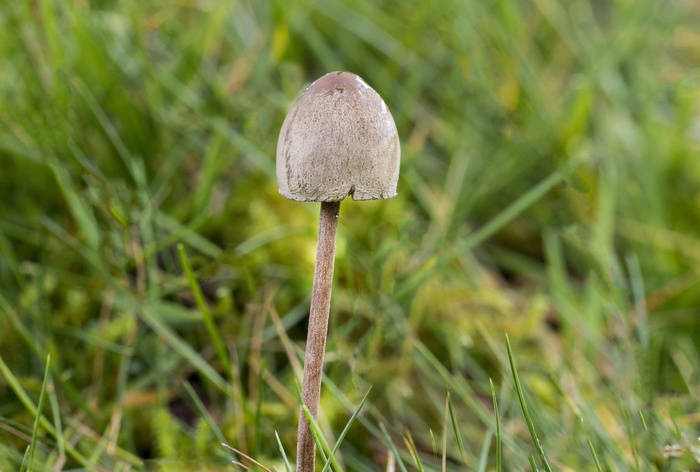
Golden Waxcap
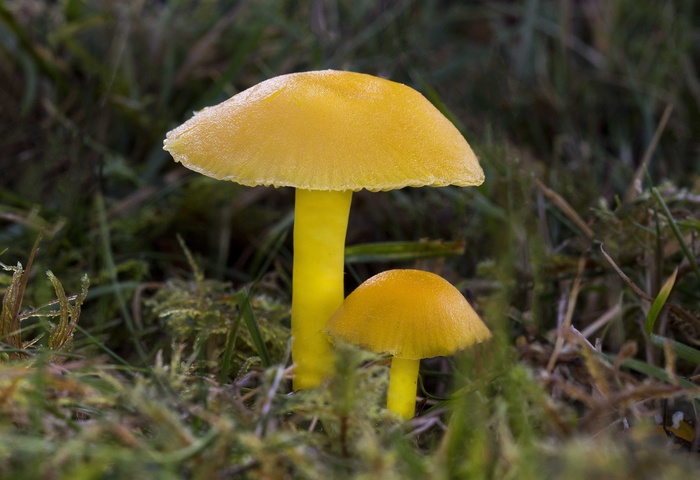
Meadow Waxcap
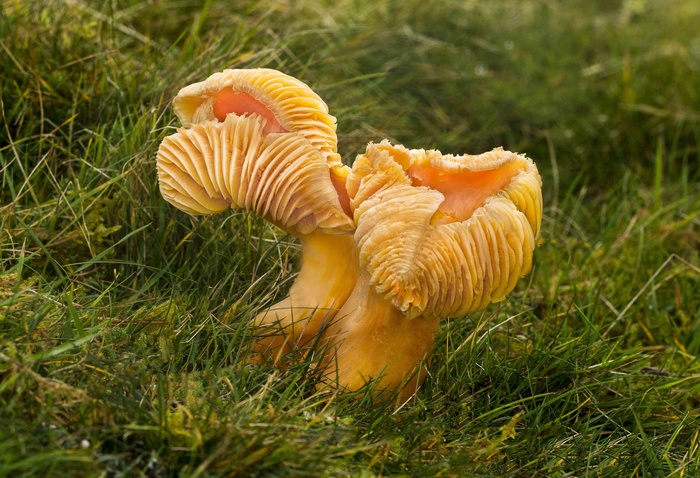
Just as we were packing up it started to rain and there was just enough time to take a quick shot of a quite intense rainbow that had appeared, (albeit with a macro lens).
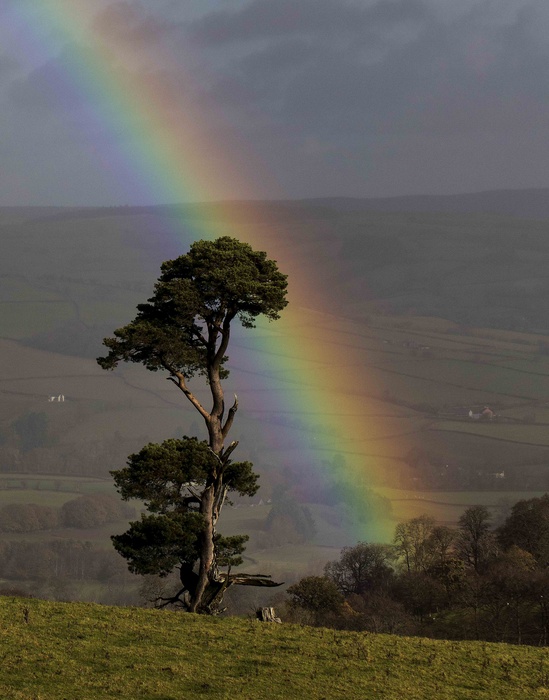
We then hurried back to the vehicle and just made it as it began to lash down with rain. We headed for home with a few images just in time for lunch - a bowl of Susan’s excellent cream of butternut squash and red pepper soup - Delicious!!
We are very lucky living in the Brecon Beacons with wide open spaces away from this awful situation, nevertheless you cannot drop your guard for a second with regard to this virus. Even when out walking if Susan or I open a gate we sanitize our hands, never in my wildest dreams did I think we would be doing things like that.
Thankfully yesterday we did manage to get out for a walk locally, we walked up a path near our house that leads to a hill named Allt yr Esgair.
Sometimes the appropriately named Jelly Eared Fungus can be found, (formally known as Judas’s or Jew’s ear fungus), growing on trees on the path side. This fungus goes quite hard in dry conditions but after rain becomes soft and pliable.
It is apparently edible, however, I would not recommend eating any Fungi growing in the countryside unless you really know what you’re doing – (Serious Point)!! I buy my mushrooms from the local farm shop or supermarket.
As we walked along, suddenly a bird exploded from the vegetation and flew ahead of us before disappearing over the top of the hedges that line the path. We could see clearly that it was a Woodcock, these are frustrating birds to see well, with their cryptic plumage they are usually so well camouflaged that you don’t even know they’re there or they are flying away at speed after being flushed. Many come into the UK in autumn and their migration is strongly associated with a full moon.
Further on we found some Jelly Eared Fungus and took a few shots before retracing our footsteps back.
The weather looked too threatening to go up on to the hill, because if you are caught out up there without the proper clothing you can get a right royal soaking.
Buoyed by finding our first fungi of the day we decided to look for more, knowing it would be difficult because it’s quite late in the season. However, we walked a local grassland, not too far from the vehicle, because the weather still looked quite unstable. We were lucky to see a good variety of species alongside an old stone wall that borders the Penpont estate near Brecon.
Common Inkcap
Golden Waxcap
Meadow Waxcap
Just as we were packing up it started to rain and there was just enough time to take a quick shot of a quite intense rainbow that had appeared, (albeit with a macro lens).
We then hurried back to the vehicle and just made it as it began to lash down with rain. We headed for home with a few images just in time for lunch - a bowl of Susan’s excellent cream of butternut squash and red pepper soup - Delicious!!
Magic Mushroom.
31st October 2020
31st October 2020
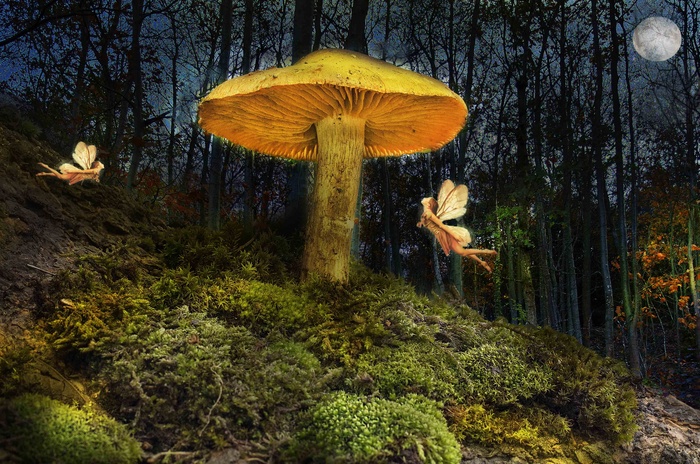
Whenever there’s a full moon on All Hallows Eve some mushrooms over in the local wood grow to a huge size. They also glow magically and this attracts the woodland fairies, and if you are very quiet, (and remember to use a portable hide and silent mode on your camera), you may be lucky enough to capture a similar scene.
Photoshop on a Rainy Day.
28th October 2020
28th October 2020
In the Brecon Beacons we are enduring a horrible spell of wet and windy weather, day after day during our current ’Lockdown’ period. Susan and I have been dodging the weather to get a few local walks in to offset the boredom. Today in one of the many quiet times, I was looking at some images of fungi, casually taken with my mobile, on one of the said walks. A few of the images looked to have some potential for a bit of ‘Fantasy Photography’ using Photoshop, so I set about trying to transform it into something totally different.
Using ‘Layers’ and ‘Layer Masks’ allows you to light paint and colour in particular areas of any image, creating glowing effects and different colours, which can give an ethereal look. They are very useful tools for this type of digital photography manipulation and it can give some good results.
However you do need to recognize an image that has potential to start with, otherwise it's hard work for no reward.
I used a very ordinary image, (that I felt had that potential), of a cluster of fungi growing on some dead wood.
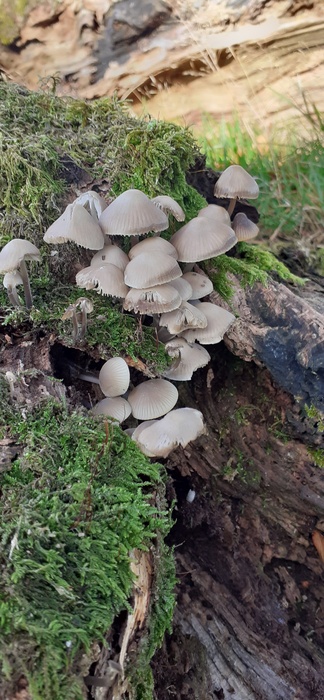
And employing the above techniques the image has been totally transformed. I also added a fairy using image blending to give it the final touch.
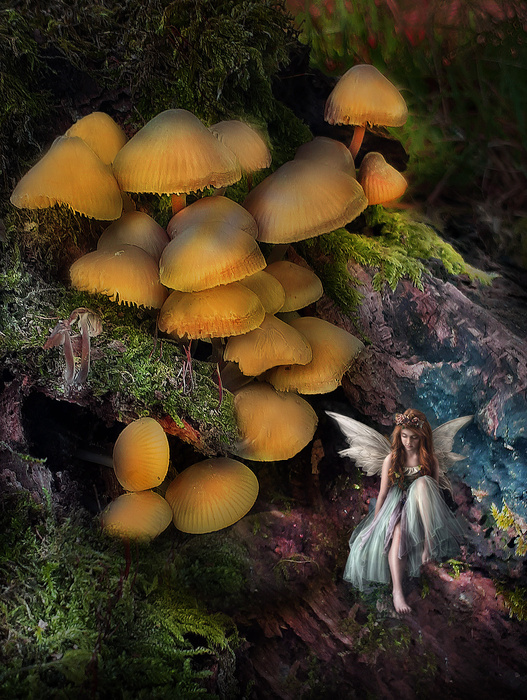
Well you have to try and do something in these dark times!
Using ‘Layers’ and ‘Layer Masks’ allows you to light paint and colour in particular areas of any image, creating glowing effects and different colours, which can give an ethereal look. They are very useful tools for this type of digital photography manipulation and it can give some good results.
However you do need to recognize an image that has potential to start with, otherwise it's hard work for no reward.
I used a very ordinary image, (that I felt had that potential), of a cluster of fungi growing on some dead wood.
And employing the above techniques the image has been totally transformed. I also added a fairy using image blending to give it the final touch.
Well you have to try and do something in these dark times!
The Milkweed Plant.
26th October 2020
26th October 2020
Earlier on this year when we went to see a Rose Coloured Starling just north of Brecon the man who first reported the bird came out of his house to talk to us. He turned out to be a real butterfly expert and he and his wife were growing many different plants in their garden and green houses that were suitable for attracting butterflies. They were also keeping lots of caterpillars on various plants for the conservation of various species. He kindly gave Susan a milkweed cutting in a pot, he was using this plant to ‘Cultivate’ butterflies, including Monarchs in the past. This plant is a fundamental resource for Monarch Butterflies in North America because it is the only plant that both the butterflies and caterpillars can eat. Milkweed is quite toxic because of the Glycosides it contains and this toxin subsequently makes both the butterfly and caterpillar poisonous to potential predators. Monarch butterflies are in real trouble with their numbers crashing, and there is a big programme of milkweed cultivation, including in people’s gardens, in North America in an effort to reverse this decline.
When we were birding in Cape May, New Jersey, USA about fifteen years ago we saw a presentation by some butterfly experts on the Monarchs and there were hundreds hanging from some trees and some of them were being wing tagged to monitor their movements. They really are very impressive insects and to see a big movement, sometimes in the tens of millions must be some sight.
The milkweed cutting grew well outside in our garden during the rest of the summer and is now inside to protect it from potential frosts.
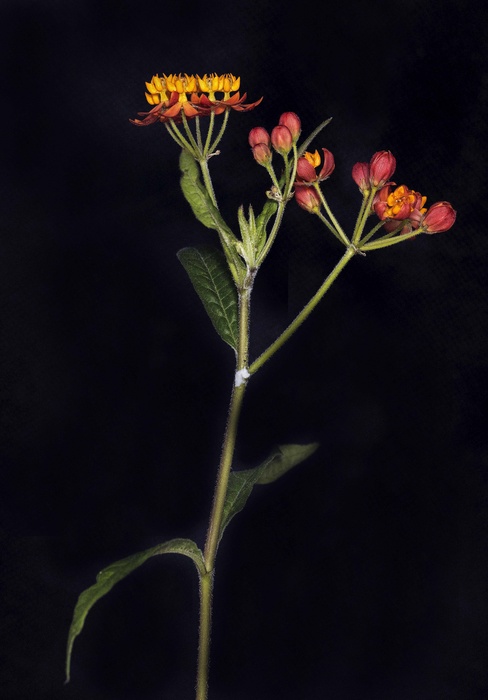
Because of the warm conditions indoors a few days ago the seed pods began to open to reveal a most attractive scene. The ‘Flax’ that surrounds the seeds and acts as a parachute to aid dispersal is so delicate and has a beautiful silver sheen.
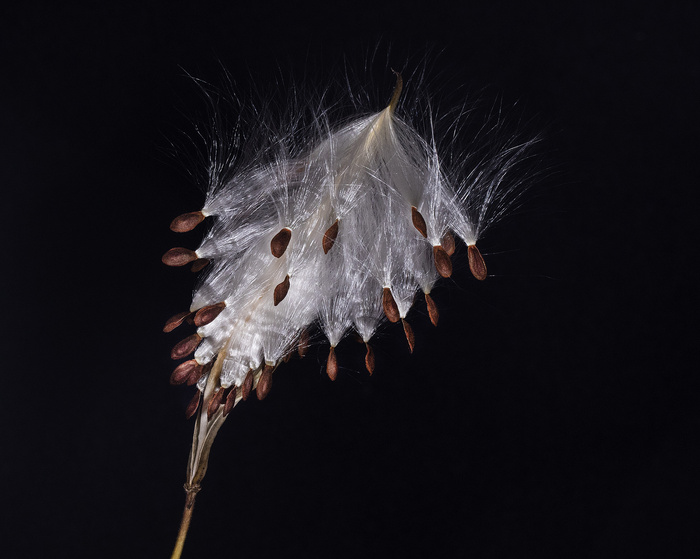
Susan kept some seeds for next season to grow some new plants, so let’s all look forward to that time – good luck to everyone in the current difficult times.
When we were birding in Cape May, New Jersey, USA about fifteen years ago we saw a presentation by some butterfly experts on the Monarchs and there were hundreds hanging from some trees and some of them were being wing tagged to monitor their movements. They really are very impressive insects and to see a big movement, sometimes in the tens of millions must be some sight.
The milkweed cutting grew well outside in our garden during the rest of the summer and is now inside to protect it from potential frosts.
Because of the warm conditions indoors a few days ago the seed pods began to open to reveal a most attractive scene. The ‘Flax’ that surrounds the seeds and acts as a parachute to aid dispersal is so delicate and has a beautiful silver sheen.
Susan kept some seeds for next season to grow some new plants, so let’s all look forward to that time – good luck to everyone in the current difficult times.
Ring Ouzels Before 'Lockdown'.
21st October 2020
21st October 2020
In my previous blog I aired my reservations about visiting the Elan Valley to look for Ring Ouzels and I stand by what I said regarding the hordes of visitors being a problem for a photographer. Disappointingly this week, on Monday to be precise, we received the daunting news that Wales would enter into another full ‘Lockdown’ for two weeks starting this Friday. This started me thinking about trying to go and photograph the Ouzels, but the thought of all the people was still putting me off. However, when I saw the weather forecast for today it was pretty bleak, rain all day, but that wasn’t as bad as you would imagine. It’s no good if you are walking or bird watching because you will get soaking wet, but if you are sat in your vehicle in the dry waiting to take some photographs it’s not bad at all! In addition the rain would put most people off visiting that area, but the birds would still be there.
This made my mind up and I prepared all my gear, made some sandwiches and a flask got up early and Susan and I left a very rainy Brecon Beacons to drive to the Elan Valley. It only took about an hour, and on arriving I was pleased to see quite a good crop of Rowan berries on the trees in the car park. There was no one around, so we quickly set up, I put the Goretex cover over my lens and we got everything into the car. Susan was on the back seat with me in the front passenger seat – the usual setup. The rain was falling steadily and we hoped it would continue for a couple of hours. We didn’t have to wait too long to hear that soft Chuck Chuck of a Ring Ouzel and soon after three or four birds began coming down off the quarry face to feed on the Rowans.
We had great views and I took a few reasonable shots as they flew back and fore amidst the falling rain, but inevitably the odd car came into the car park and the birds retreated back up high on the rocks. The rain started to slacken and we knew this would mean more people and indeed they started to arrive, but it didn’t matter we had achieved what we set out to do. It’s not very often we were thankful for a good old wet Welsh Wednesday, but on this occasion we were!!
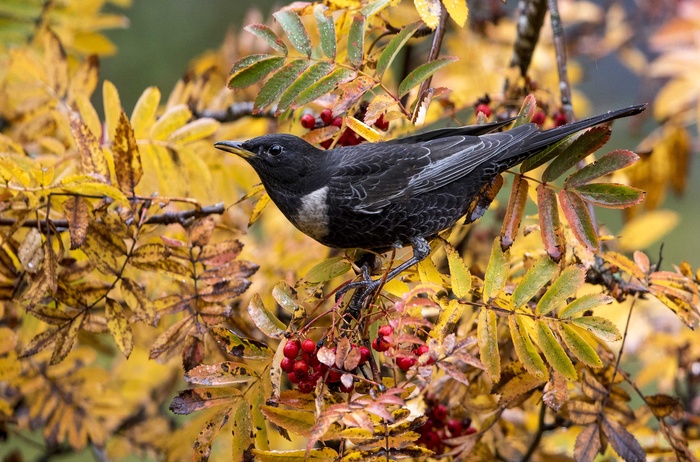
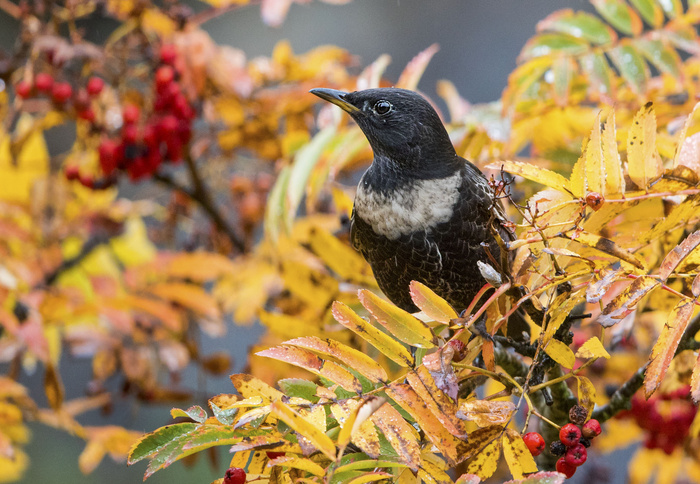
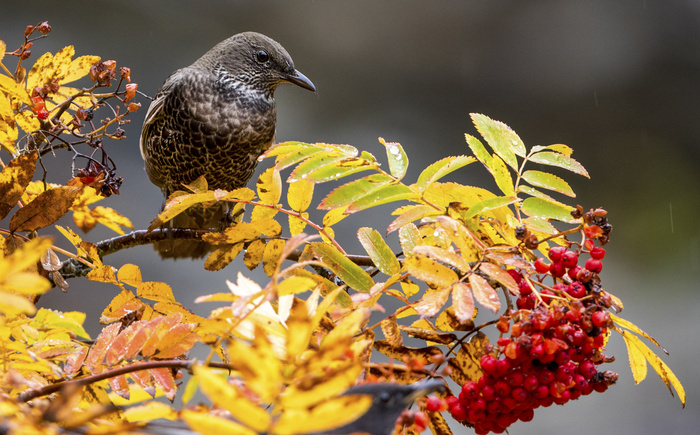
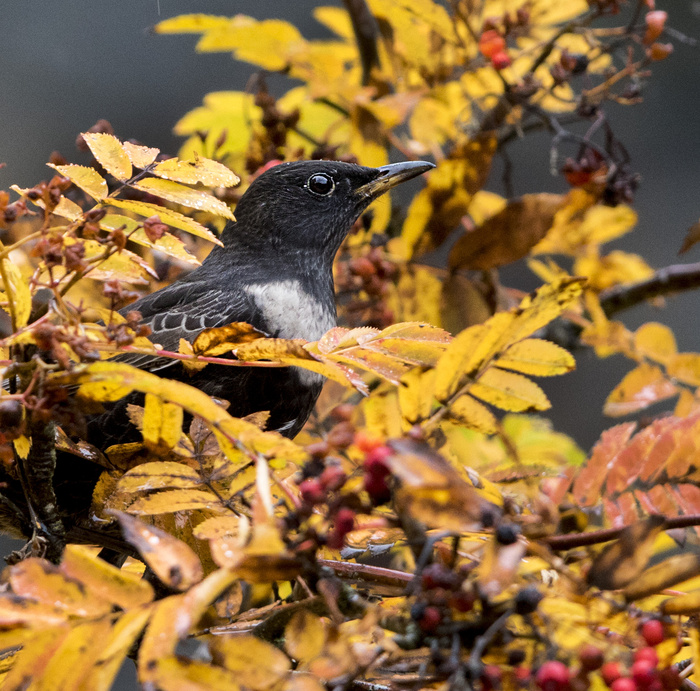
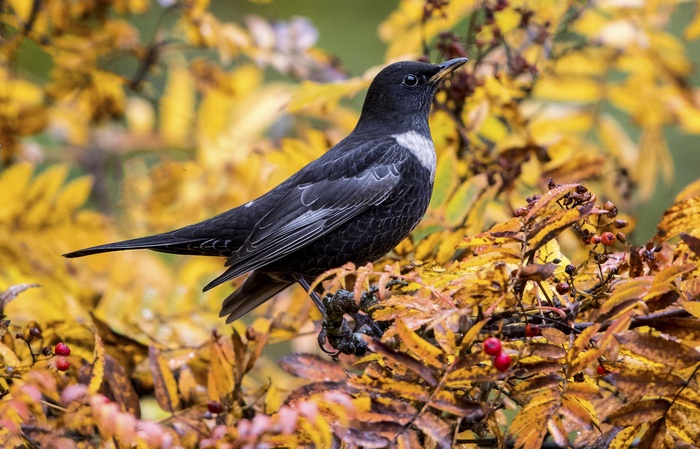
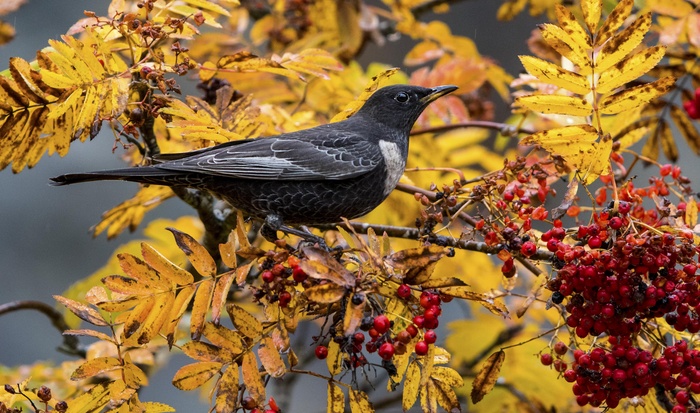
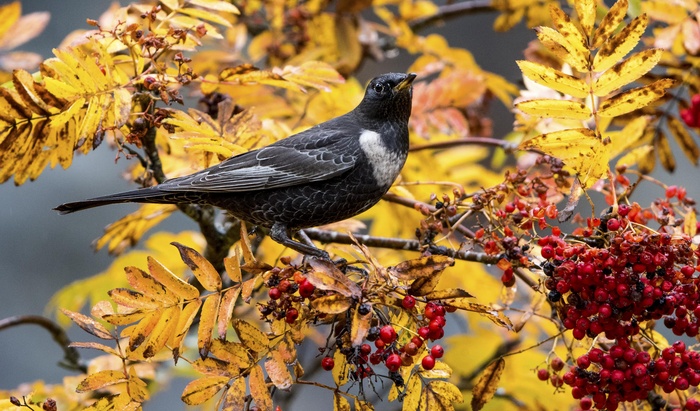
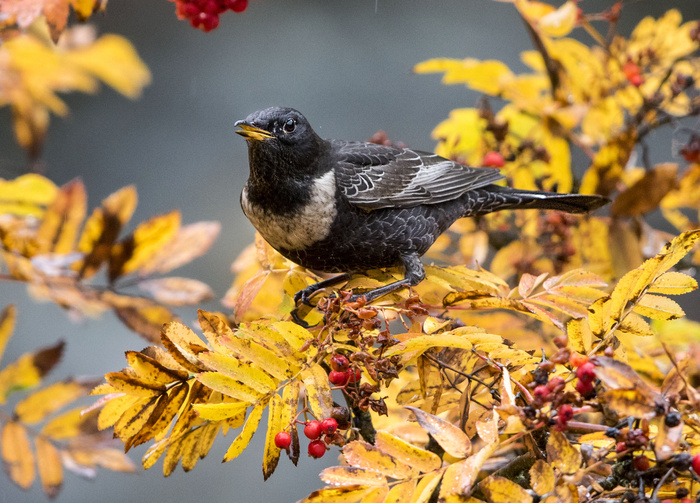
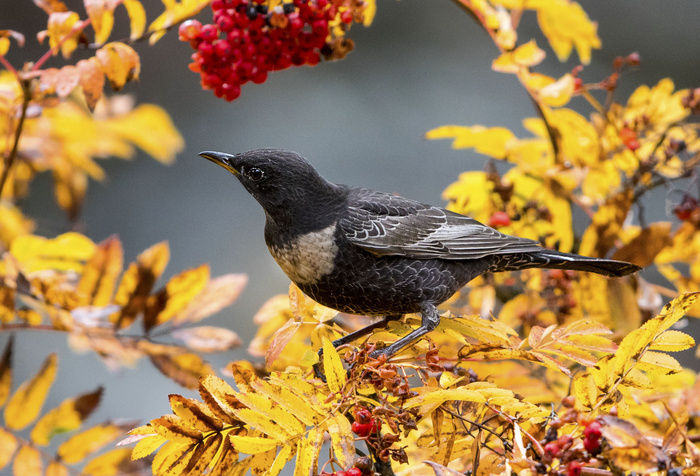
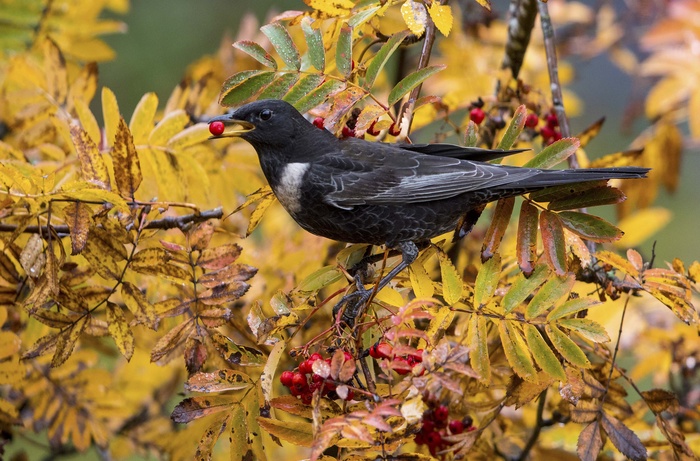
This made my mind up and I prepared all my gear, made some sandwiches and a flask got up early and Susan and I left a very rainy Brecon Beacons to drive to the Elan Valley. It only took about an hour, and on arriving I was pleased to see quite a good crop of Rowan berries on the trees in the car park. There was no one around, so we quickly set up, I put the Goretex cover over my lens and we got everything into the car. Susan was on the back seat with me in the front passenger seat – the usual setup. The rain was falling steadily and we hoped it would continue for a couple of hours. We didn’t have to wait too long to hear that soft Chuck Chuck of a Ring Ouzel and soon after three or four birds began coming down off the quarry face to feed on the Rowans.
We had great views and I took a few reasonable shots as they flew back and fore amidst the falling rain, but inevitably the odd car came into the car park and the birds retreated back up high on the rocks. The rain started to slacken and we knew this would mean more people and indeed they started to arrive, but it didn’t matter we had achieved what we set out to do. It’s not very often we were thankful for a good old wet Welsh Wednesday, but on this occasion we were!!
Ring Ouzels - It's that time of year.
19th October 2020
19th October 2020
Every autumn Ring Ouzels appear in mid-Wales on their return passage from their breeding grounds further north. They can appear anywhere but usually they choose an area with a supply of berries that can sustain them for a few days before they carry on their southerly journey to North Africa. They are seen in the main from mid-October through to early November, but they can linger well into November some years if there is a good supply of berries or the weather is favourable.
Birds always appear in the Elan valley in mid-wales, usually around the car parks which is totally out of character with their shy nature. These birds like remote craggy hillsides away from people, but these car parks are where the Rowan berries are – one of their favoured autumn foods. Ring Ouzels basically have the same diet as the Blackbird and are or course a close relative.
As in previous years reports are coming in of Ouzels in the Elan valley car parks this week but there is one major drawback in that area and that is people. There is a huge amount of people visiting the valley to see the scenery and obviously driving in and out of these car parks, however, what is more off putting are the packs of motor cyclists roaring through there - they are a real nuisance. Everybody has a right to visit there that much is obvious, but if you are a nature watcher it can be very frustrating. It is even more frustrating if you are a nature photographer because you can guarantee that just as the Ring Ouzels for example are about to perch in a favourable position a car will pull up and doors will slam and people will start talking loudly and that is the end of that!!
I remember a few years back a few birders/photographers, me included, were tucked right up in the far corner of a car park near to where birds were coming to feed on the rowans. The rest of the car park was virtually empty and we were waiting patiently with lenses hanging out of open windows of the cars waiting for a shot. Suddenly a man drove into the car park and ignored all the empty spaces and unbelievably drove up and stopped right in front of all the vehicles totally blocking the view to the birds. We couldn’t believe somebody could be so unobservant, he had every right of course to park where he pleased and we thought it was all over. His wife, however, who was more observant elbowed him and pointed in our direction the look on his face was a picture in itself as he sheepishly reversed back into the car park.
Ironically these car parks are where you will get the best shots of these birds if you are lucky with the traffic and this is just typical of nature watching. Wildlife rarely does what you want it to and people certainly never do.
Having said this I have had reasonable shots of Ring Ouzels in the spring.
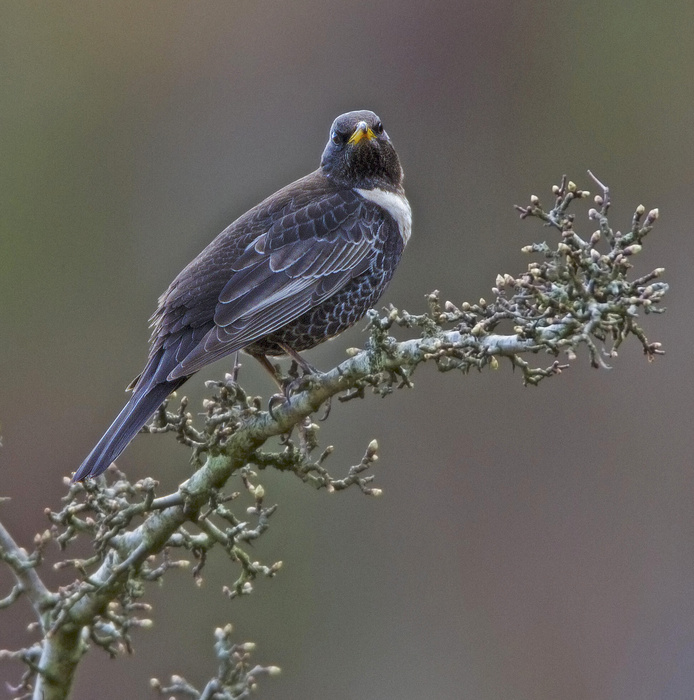
But it is when they are perched in autumn rowans with the red berries and turning leaves that they are for me the most photogenic.
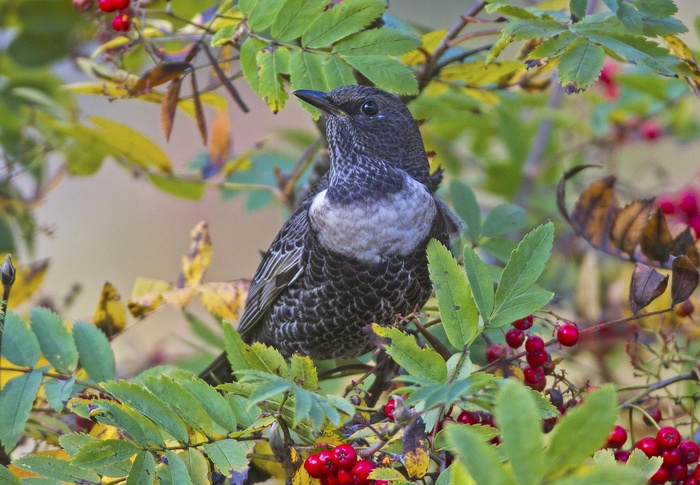
There are one or two quarries locally where Ring Ouzels turn up this time of year, one is a horrible remote disused place with huge hanging growths of cotoneaster drooping down vertical rock faces. I never go there because it can be quite precarious to get a decent shot and it’s just not worth it.
The other is also remote but less awkward and this week a birding friend of ours saw four birds in the ‘better’ quarry. It’s about a half mile walk up to where the birds were seen, feeding again on rowans growing out of a quarry face. Susan and I decided to have a look, and early yesterday morning we drove over there. As we were driving along the main road we could see a large bird in the middle of the road and as we got nearer we could see it was a Tawny Owl.
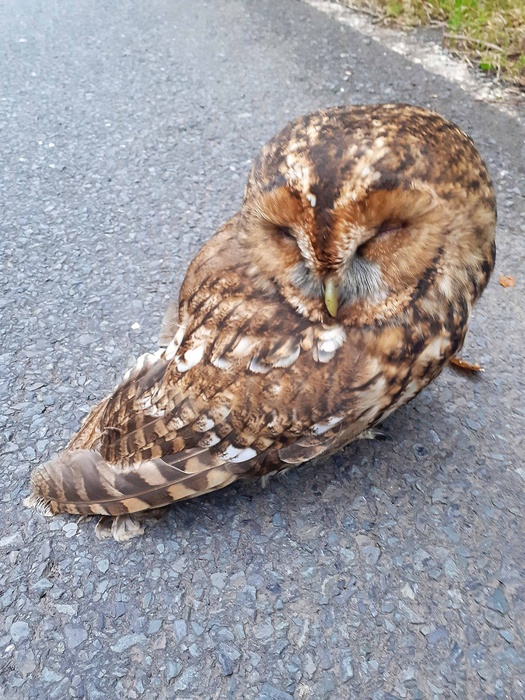
This happens to these birds early in the morning, it must have been hit by a car, but it didn’t look hurt just stunned, so I carried it into the long grass out of the way and we drove on fairly confident it would be OK.
When we arrived at the quarry we couldn’t see or hear any Ouzels but after about half an hour we heard the tell-tale contact calls - a soft ‘Chuk Chuk’. The birds weren’t going to come really close but that was OK, we just sat on some flat rocks on the quarry floor and watched the birds coming and going and interacting with each other – it was a very nice couple of hours.
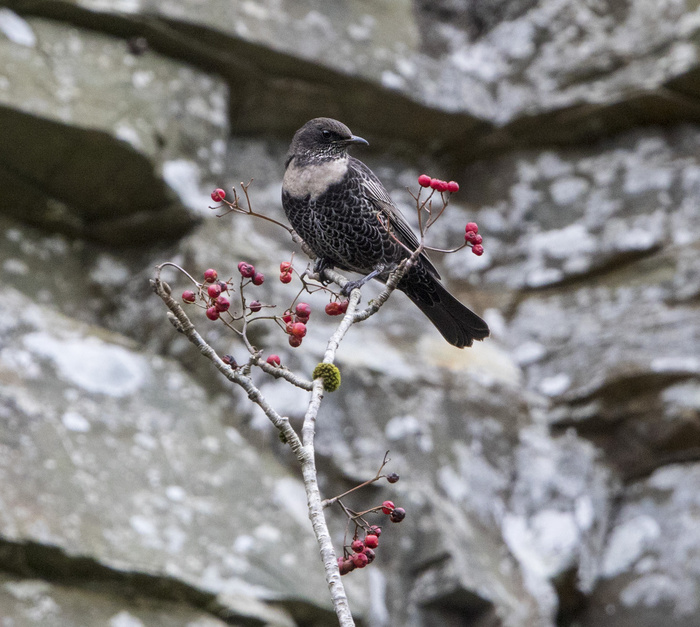
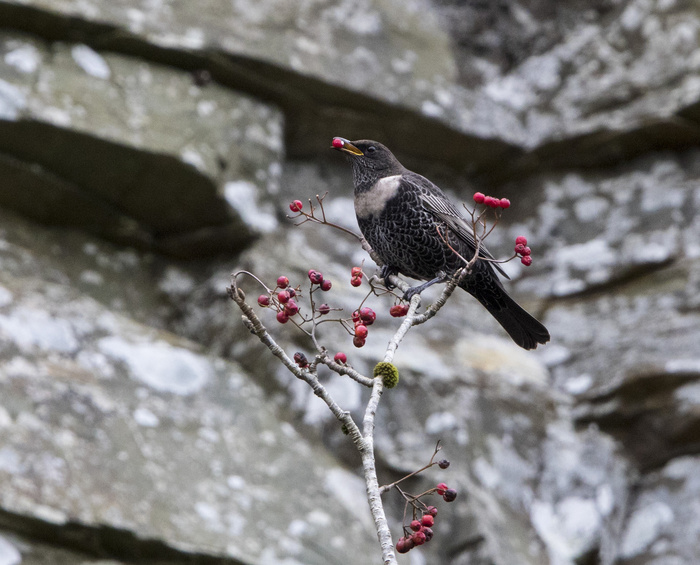
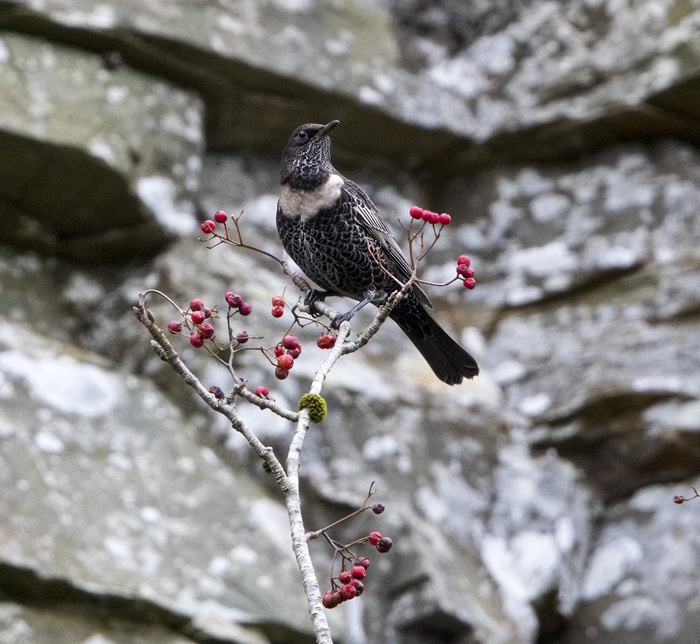
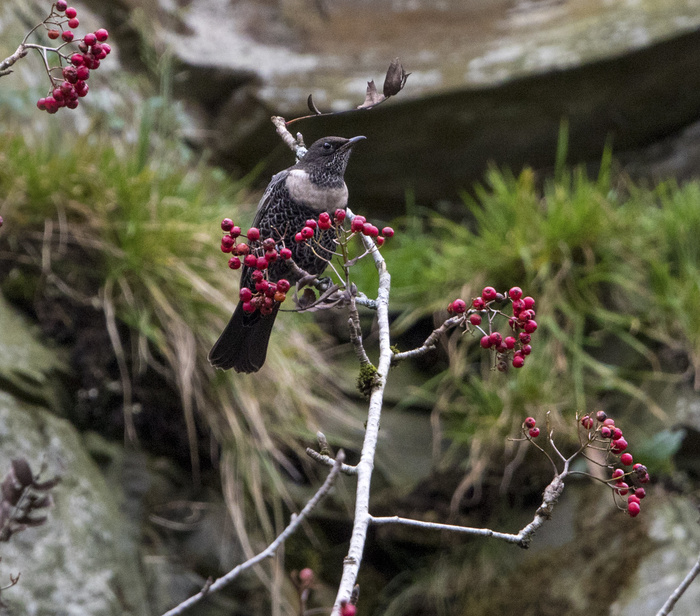
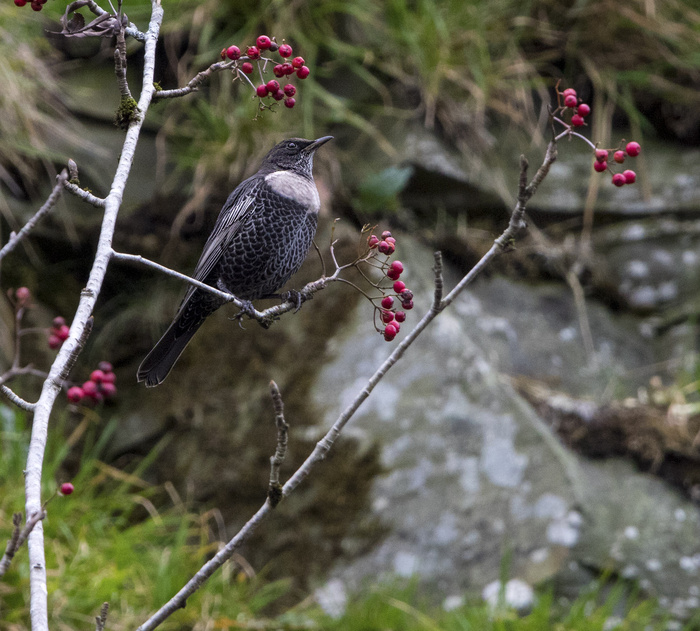
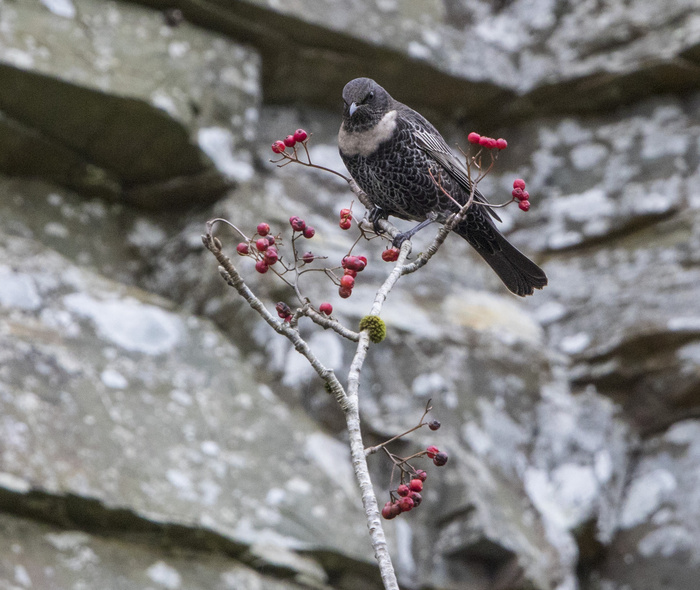
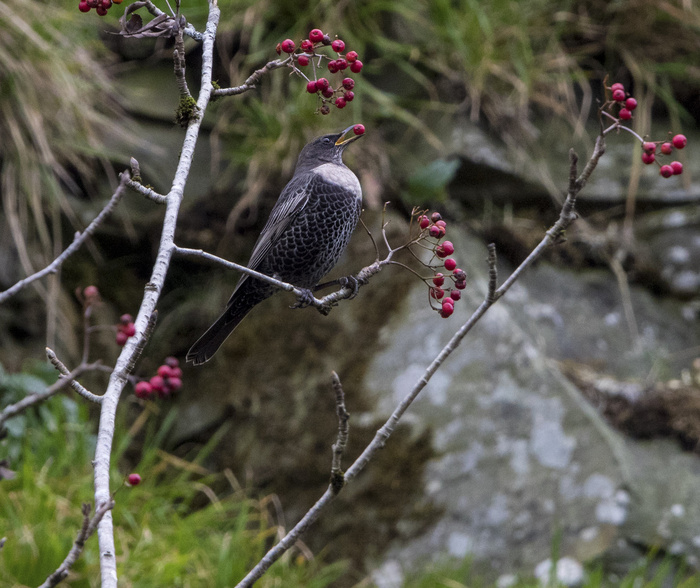
After we left the quarry we driving along the main road where we had seen the Tawny Owl and were dismayed to find a man standing at the roadside looking at the bird exactly where we had left it. We stopped and told him what had happened and thankfully he was on the phone to a rescue centre who would take the Owl in. I hope it is going to be OK.
Birds always appear in the Elan valley in mid-wales, usually around the car parks which is totally out of character with their shy nature. These birds like remote craggy hillsides away from people, but these car parks are where the Rowan berries are – one of their favoured autumn foods. Ring Ouzels basically have the same diet as the Blackbird and are or course a close relative.
As in previous years reports are coming in of Ouzels in the Elan valley car parks this week but there is one major drawback in that area and that is people. There is a huge amount of people visiting the valley to see the scenery and obviously driving in and out of these car parks, however, what is more off putting are the packs of motor cyclists roaring through there - they are a real nuisance. Everybody has a right to visit there that much is obvious, but if you are a nature watcher it can be very frustrating. It is even more frustrating if you are a nature photographer because you can guarantee that just as the Ring Ouzels for example are about to perch in a favourable position a car will pull up and doors will slam and people will start talking loudly and that is the end of that!!
I remember a few years back a few birders/photographers, me included, were tucked right up in the far corner of a car park near to where birds were coming to feed on the rowans. The rest of the car park was virtually empty and we were waiting patiently with lenses hanging out of open windows of the cars waiting for a shot. Suddenly a man drove into the car park and ignored all the empty spaces and unbelievably drove up and stopped right in front of all the vehicles totally blocking the view to the birds. We couldn’t believe somebody could be so unobservant, he had every right of course to park where he pleased and we thought it was all over. His wife, however, who was more observant elbowed him and pointed in our direction the look on his face was a picture in itself as he sheepishly reversed back into the car park.
Ironically these car parks are where you will get the best shots of these birds if you are lucky with the traffic and this is just typical of nature watching. Wildlife rarely does what you want it to and people certainly never do.
Having said this I have had reasonable shots of Ring Ouzels in the spring.
But it is when they are perched in autumn rowans with the red berries and turning leaves that they are for me the most photogenic.
There are one or two quarries locally where Ring Ouzels turn up this time of year, one is a horrible remote disused place with huge hanging growths of cotoneaster drooping down vertical rock faces. I never go there because it can be quite precarious to get a decent shot and it’s just not worth it.
The other is also remote but less awkward and this week a birding friend of ours saw four birds in the ‘better’ quarry. It’s about a half mile walk up to where the birds were seen, feeding again on rowans growing out of a quarry face. Susan and I decided to have a look, and early yesterday morning we drove over there. As we were driving along the main road we could see a large bird in the middle of the road and as we got nearer we could see it was a Tawny Owl.
This happens to these birds early in the morning, it must have been hit by a car, but it didn’t look hurt just stunned, so I carried it into the long grass out of the way and we drove on fairly confident it would be OK.
When we arrived at the quarry we couldn’t see or hear any Ouzels but after about half an hour we heard the tell-tale contact calls - a soft ‘Chuk Chuk’. The birds weren’t going to come really close but that was OK, we just sat on some flat rocks on the quarry floor and watched the birds coming and going and interacting with each other – it was a very nice couple of hours.
After we left the quarry we driving along the main road where we had seen the Tawny Owl and were dismayed to find a man standing at the roadside looking at the bird exactly where we had left it. We stopped and told him what had happened and thankfully he was on the phone to a rescue centre who would take the Owl in. I hope it is going to be OK.
Out and About at Last.
19th September 2020
19th September 2020
I’ve posted very little on this website during this spring and summer, in fact it’s probably been the least active time since the site started. Spring birding in the Beacons was essentially ruined by ‘Covid19’and ironically as finally the restrictions were lifted the spring was over and it was too late for one of my favourite spring birds, the Cuckoo. I have really missed seeing them this spring, but I must put it into perspective – it could have been far worse!!
I have however, been very busy at home tackling many DIY jobs – I started by fixing a water leak in a chamber that feeds our septic tank, (not a nice job) replacing an old clay soil pipe and concreting a new base. Then I erected a new fence around the property, knocking in new fence posts with a massive sledge hammer and post thumper borrowed from my neighbour. That was hard graft and I take my hat off to those guys who do that for a living! Next I painted the whole of our house from chimney to floor with a mega coat of masonry paint also hard and awkward work. Then I painted all the fences, rails, two garden sheds and a large garden wall. I then went indoors to remove the existing double oven and ceramic hob in our kitchen and fit a new oven and induction hob, which were a slightly different size – so carpentry and electrical work was needed. Finally in an effort to combat the guttering on our house filling up with falling leaves in the autumn I fitted circular brushes to all the guttering and cable tied them in to resist the wind. I hope it does the job because removing leaves from guttering off a ladder is a messy and horrible job.
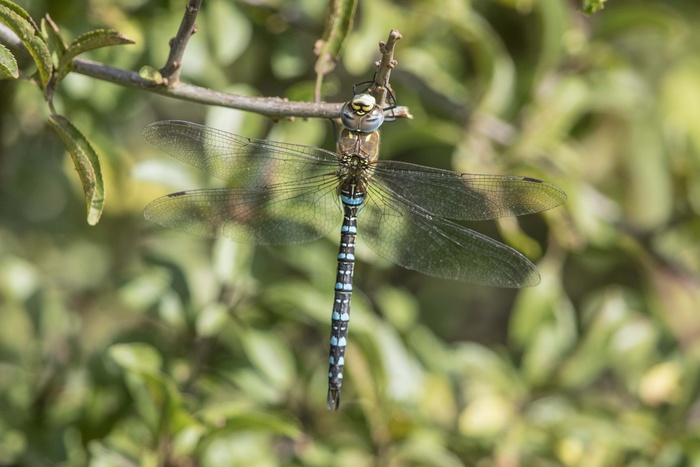
Finally now I’m free, and in anticipation of some autumn birding. The weather at the moment is very nice indeed and Susan and I went walking this week and finally there are good numbers of Dragonflies on the wing – mainly Migrant Hawkers.
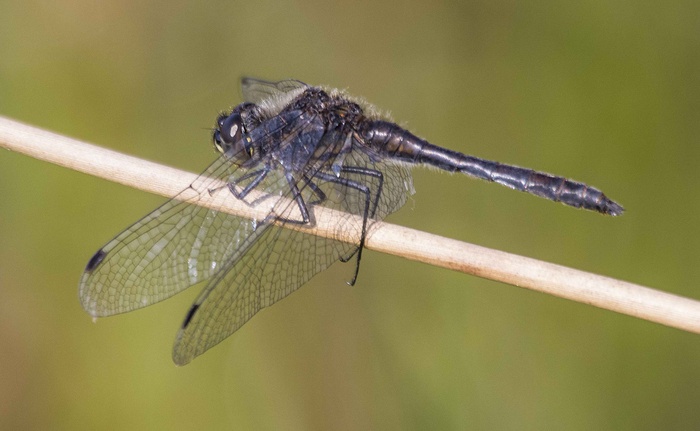
Also nice to see a few Black Darters.
The migrant Hawkers are out in their hundreds down at Llangors Lake, it’s always the same with them this time of year.
We also walked along a track in an upland deciduous wood and were very pleased to hear a Willow Tit calling, a very rare occurrence in the Beacons and indeed nationally these days.
A comparison between Willow and Marsh Tits.
Willow Tit.
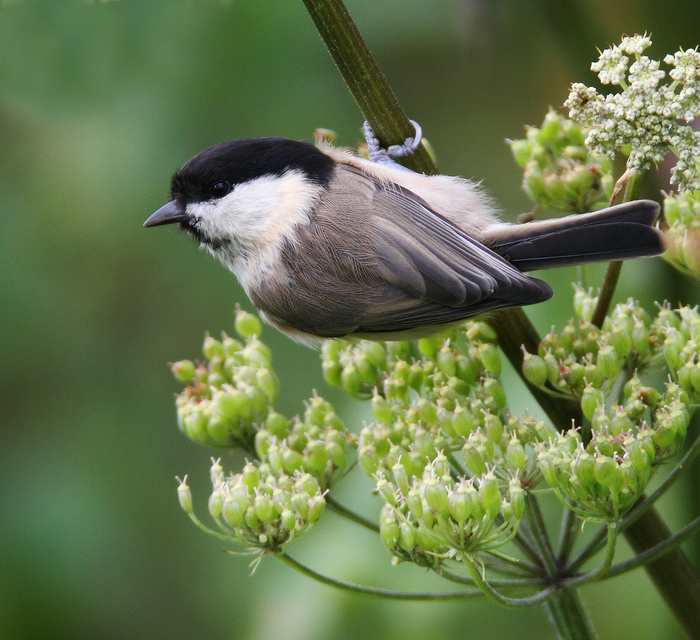
Willow Tits usually favour damper areas around young trees.
They usually have a more Matt black cap which extends down to the mantle.
There is also an appearance of a pale wing panel
caused by light fringing of the wing feathers.
They also usually have a larger bib which is less defined than the Marsh Tit.
Their plumage is also warmer and more buff on the flanks.
Call is a very conspicuous nasal Chee Chee Chee
Marsh Tit.
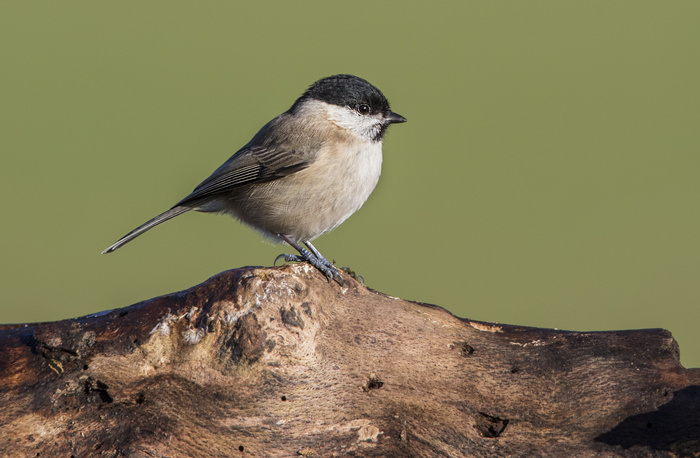
Marsh Tits usually prefer more mature deciduous trees.
They usually have a glossier black cap which is less extensive than
the Willow Tit.
Marsh Tits always have a pale spot on the upper mandible which is never seen
on the Willow Tit - diagnostic!!
Their call always starts with an explosive Pichu.
As we walked along a small path off the main forest track we came across a cluster of attractive Fly Agaric mushrooms - always nice to see.
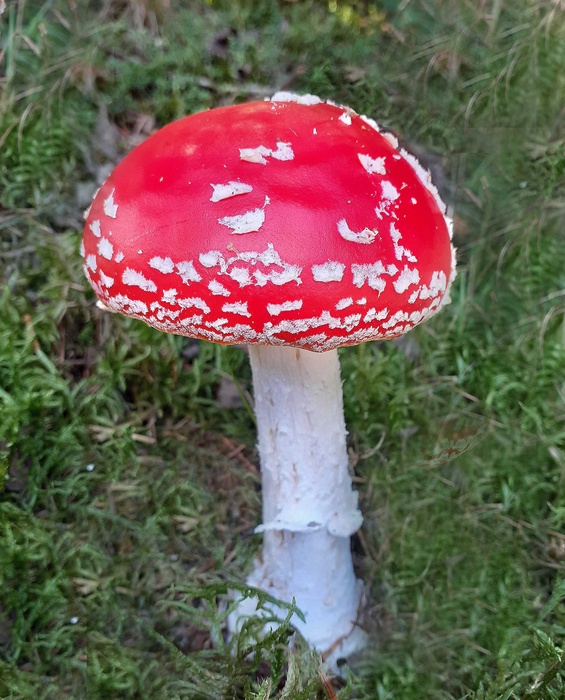
Care is needed, however, because as is well documented, although attractive these fungi are hallucinogenic and quite poisonous!
It is great to be out again and let’s look forward to a nice autumn with some good photographic opportunities.
I have however, been very busy at home tackling many DIY jobs – I started by fixing a water leak in a chamber that feeds our septic tank, (not a nice job) replacing an old clay soil pipe and concreting a new base. Then I erected a new fence around the property, knocking in new fence posts with a massive sledge hammer and post thumper borrowed from my neighbour. That was hard graft and I take my hat off to those guys who do that for a living! Next I painted the whole of our house from chimney to floor with a mega coat of masonry paint also hard and awkward work. Then I painted all the fences, rails, two garden sheds and a large garden wall. I then went indoors to remove the existing double oven and ceramic hob in our kitchen and fit a new oven and induction hob, which were a slightly different size – so carpentry and electrical work was needed. Finally in an effort to combat the guttering on our house filling up with falling leaves in the autumn I fitted circular brushes to all the guttering and cable tied them in to resist the wind. I hope it does the job because removing leaves from guttering off a ladder is a messy and horrible job.
Finally now I’m free, and in anticipation of some autumn birding. The weather at the moment is very nice indeed and Susan and I went walking this week and finally there are good numbers of Dragonflies on the wing – mainly Migrant Hawkers.
Also nice to see a few Black Darters.
The migrant Hawkers are out in their hundreds down at Llangors Lake, it’s always the same with them this time of year.
We also walked along a track in an upland deciduous wood and were very pleased to hear a Willow Tit calling, a very rare occurrence in the Beacons and indeed nationally these days.
A comparison between Willow and Marsh Tits.
Willow Tit.
Willow Tits usually favour damper areas around young trees.
They usually have a more Matt black cap which extends down to the mantle.
There is also an appearance of a pale wing panel
caused by light fringing of the wing feathers.
They also usually have a larger bib which is less defined than the Marsh Tit.
Their plumage is also warmer and more buff on the flanks.
Call is a very conspicuous nasal Chee Chee Chee
Marsh Tit.
Marsh Tits usually prefer more mature deciduous trees.
They usually have a glossier black cap which is less extensive than
the Willow Tit.
Marsh Tits always have a pale spot on the upper mandible which is never seen
on the Willow Tit - diagnostic!!
Their call always starts with an explosive Pichu.
As we walked along a small path off the main forest track we came across a cluster of attractive Fly Agaric mushrooms - always nice to see.
Care is needed, however, because as is well documented, although attractive these fungi are hallucinogenic and quite poisonous!
It is great to be out again and let’s look forward to a nice autumn with some good photographic opportunities.
Quiet Times on the Wildlife Front.
21st August 2020
21st August 2020
I have not posted anything of note on this website throughout these very unpredictable times because earlier on in the spring and summer there have been obvious limitations on personal movement and lately we have been experiencing huge swings in our weather. These weather episodes have consisted of a couple of weeks of stifling heat with daytime temperatures of thirty Celsius, which is too hot for me when at home, and even worse, twenty plus Celsius during the night. Frustratingly, now that the horrible humid spell is over we are experiencing day after day of heavy rain with grey skies and low hanging cloud. During this period we have been out a few times but it is very quiet bird – wise at this time of year anyway and Butterflies and Dragonflies are also disappointingly very few and far between.
On a wild life note when I had a bonfire during the dry spell I noticed something moving in amongst the garden waste and after investigation I could see a big toad – a fine specimen.
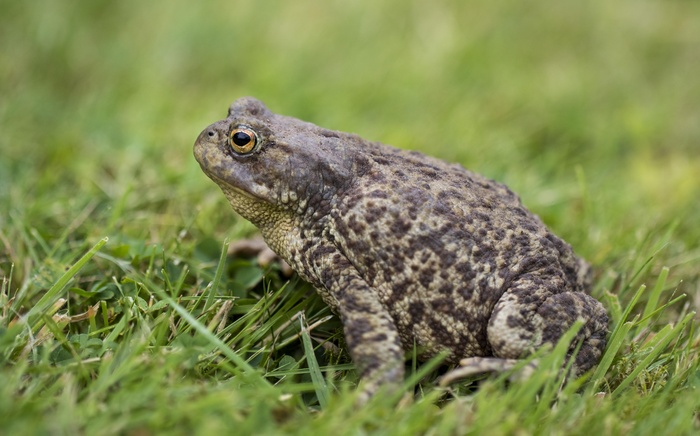
I removed it before I set the fire, it’s so easy to kill small animals who are hiding/hibernating in these garden waste areas.
For the last two months there has been a Hare in the fields around our house but it is very wary and when I have disturbed it a few times while walking it has quickly darted into cover. I spooked it from a pea crop last week while walking a fence line but again it scooted away. A few days ago, again walking, I had been watching a Migrant Hawker dragonfly on the edge of a wood.
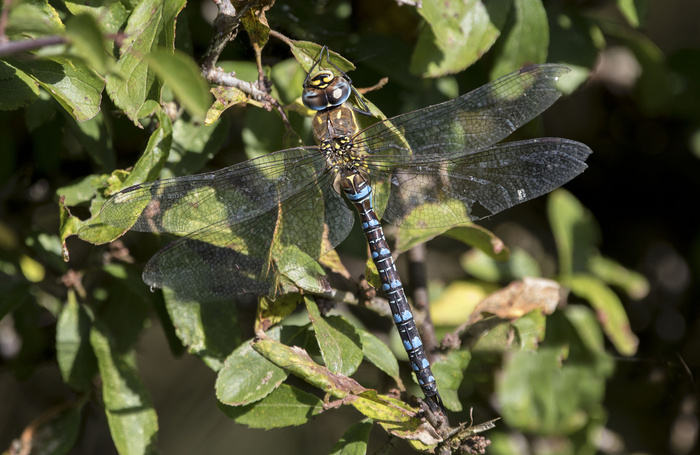
One of the few this season, and briefly a bit further on a Spotted Flycatcher.
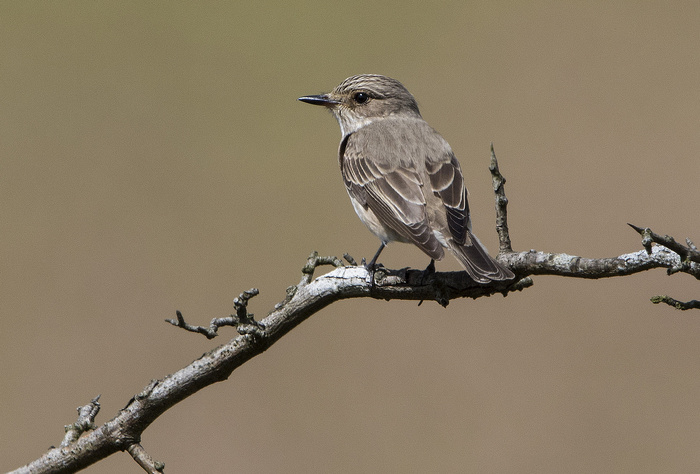
I had casually shot a few frames of both and walked on. I came to the edge of a hedge line and carefully peered around just in case there was something there - standard practise. To my surprise there was the Hare just sat in the grass about fifteen yards away.
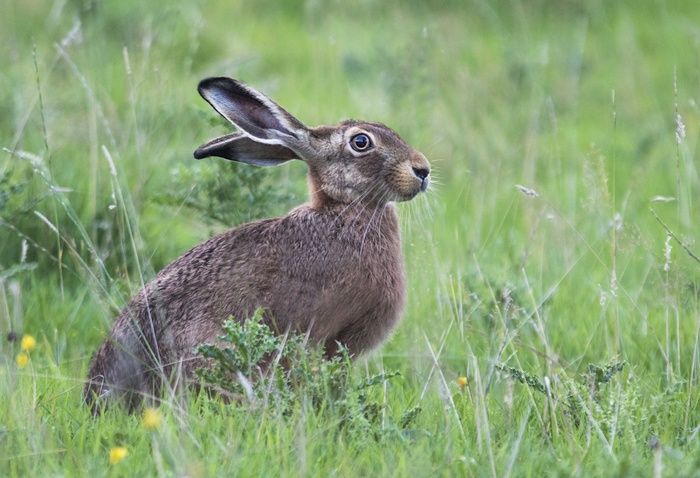
Amazingly it seemed to tolerate me, but in fairness I was being very careful. I managed to fire off a few shots with my little Sigma zoom lens before, in a matter seconds, it casually loped away covering a hundred yards in no time at all – amazing! They really are a lovely animal and frustratingly they are often seen in other parts of the country, typically Norfolk but they are uncommon around here.
On a wild life note when I had a bonfire during the dry spell I noticed something moving in amongst the garden waste and after investigation I could see a big toad – a fine specimen.
I removed it before I set the fire, it’s so easy to kill small animals who are hiding/hibernating in these garden waste areas.
For the last two months there has been a Hare in the fields around our house but it is very wary and when I have disturbed it a few times while walking it has quickly darted into cover. I spooked it from a pea crop last week while walking a fence line but again it scooted away. A few days ago, again walking, I had been watching a Migrant Hawker dragonfly on the edge of a wood.
One of the few this season, and briefly a bit further on a Spotted Flycatcher.
I had casually shot a few frames of both and walked on. I came to the edge of a hedge line and carefully peered around just in case there was something there - standard practise. To my surprise there was the Hare just sat in the grass about fifteen yards away.
Amazingly it seemed to tolerate me, but in fairness I was being very careful. I managed to fire off a few shots with my little Sigma zoom lens before, in a matter seconds, it casually loped away covering a hundred yards in no time at all – amazing! They really are a lovely animal and frustratingly they are often seen in other parts of the country, typically Norfolk but they are uncommon around here.
Rose Coloured Starling in the Brecon Beacons.
01st July 2020
01st July 2020
This spring there is quite an influx of Rose Coloured Starlings in the UK. They appeared in France a few weeks ago and it was predicted, rightly so, that we would see some in this country. They have been seen in various counties in the UK and as far west as the Pembrokeshire islands. I always live in hope but I didn’t expect there to be any seen in the Brecon Beacons because there are not many rarities recorded here. However, on a local blog the day before yesterday there was a report of one a few miles from where I live so yesterday Susan and I went to try and find it but not before checking a few cherry trees where I know Common Starlings and Blackbirds eat this fruit. Sadly there were no birds around these fruit laden trees so we moved on to the reported location mentioned above. Unfortunately this location was right on the very busy A470 road with cars and lorries thundering past every few seconds throughout the time we spent there. The upside was the two people who reported the bird were very pleasant company and were keen and knowledgeable naturalists especially in the butterfly and moth field. We waited some time while only Common Starlings and Blackbirds flew around and the weather fluctuated between bright sunshine and grey cloud with light drizzle, but eventually the Rose Coloured Starling flew in. It landed in a hedge in the field behind the cherry trees that were on the roadside. After a dangerous crossing of the said road, (you really have to be careful there as many vehicles were travelling very quickly and if you tripped over while crossing that road you could be in serious trouble). Frustratingly the bird, as usual, was too distant for a decent shot, but still nevertheless, was a very nice bird to see. After about a minute it flew off again and didn’t return, so after another hour of thundering traffic we called it a day and headed for home and some peace and quiet – Phew!!
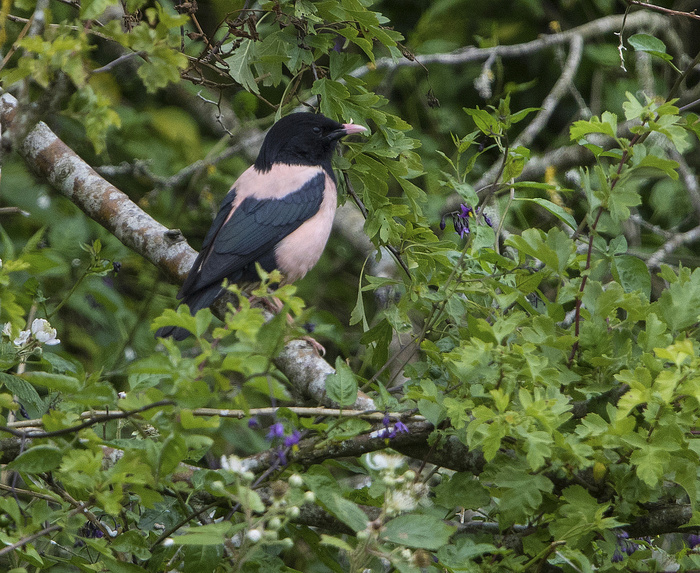
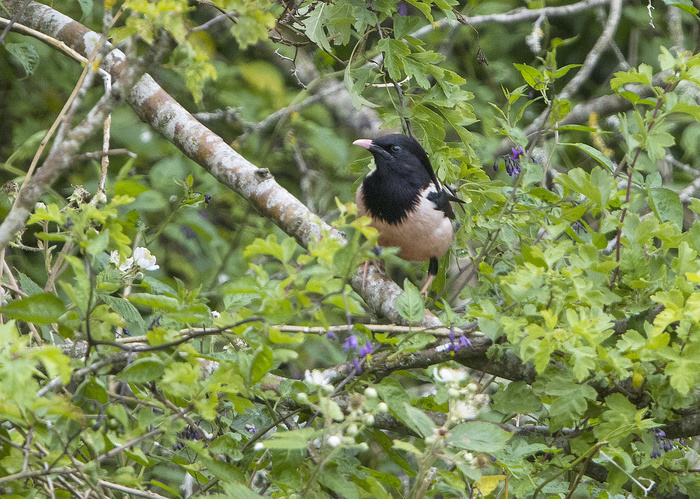
Adult male - pink wash and long glossy black crest - very nice bird!!
Adult male - pink wash and long glossy black crest - very nice bird!!
Still Locked Down!!
26th June 2020
26th June 2020
Birding in the Brecon Beacons is very difficult at the moment because, as in the rest of Wales, we are only allowed to drive around five miles from home. In addition that journey is only supposed to take place to meet a relative or friend. It’s not meant for taking exercise or, in my case to watch wildlife. However, we have driven in excess of that distance but still remained local, because it’s one thing to drive five miles in an urban area where you could in theory meet your relatives quite easily, but many people living in the countryside are substantial distances from their relatives and it is impossible to meet up. I don’t feel guilty therefore about driving more than five miles, because on the ‘two occasions’ that we have done so, we saw no one and only stood outside the vehicle, just for something as basic as a change of scenery. I know in theory we could have broken down but that was quite unlikely in a new vehicle and apart from those two fifteen mile journeys we have absolutely stayed very local, just walking around the fields and country lanes to get some exercise.
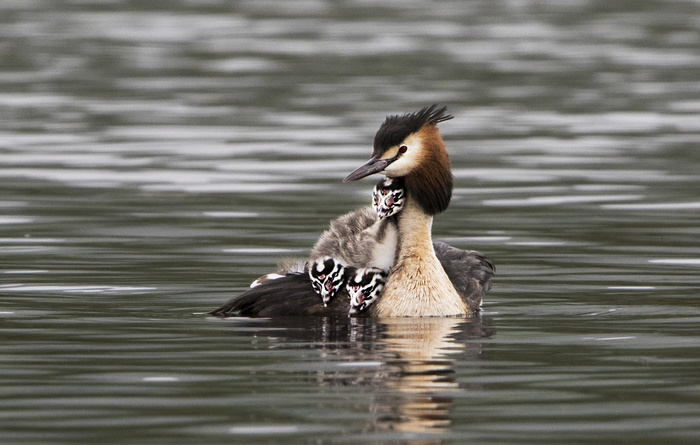
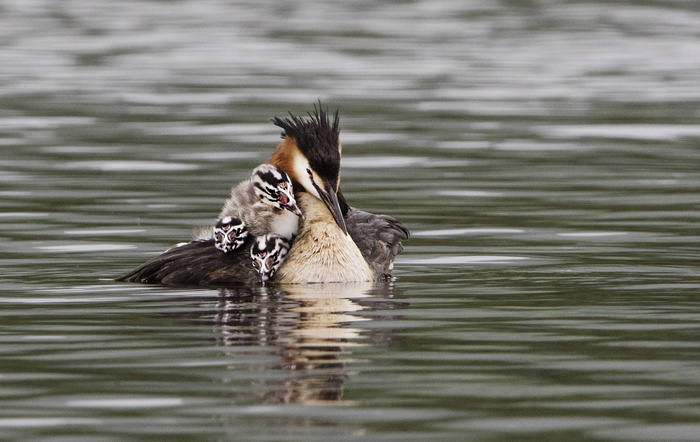
As a result I have posted very little on this website during the month of June but the site’s position on the ‘Fat Birder’ website list has not dropped down the rankings at all, which is quite pleasing. I did visit the Llangasty car park at Llangors Lake a few days ago and saw a pair of Great Crested Grebes with youngsters that were quite well grown, but still riding on their mother’s back. I managed a record shot of them by hiding below a fence as they approached a bit nearer, they were still too far away really and the light was really bad, grey and overcast with a light drizzle, but it was still nearer than usual, because normally there would be too many people around to disturb them.
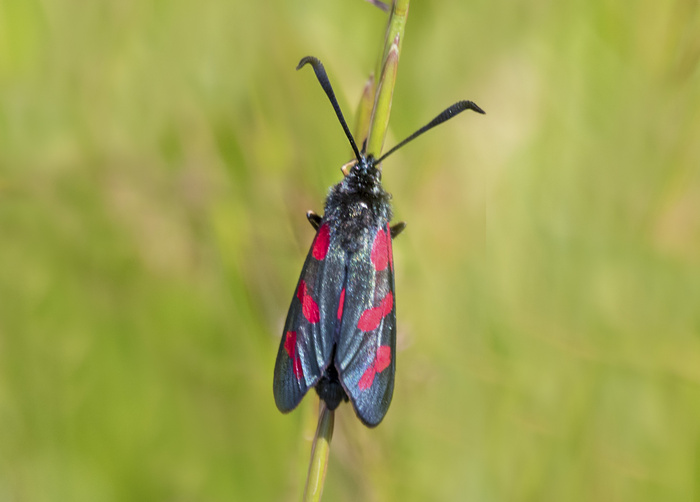
With the weather greatly improved we walked through a local meadow yesterday where there was a huge variety of wild flowers and plants and the corresponding amount of insects. What a lovely sight with hundreds of Meadow Brown butterflies on the wing, interspersed with Red Admiral, Small Tortoiseshell and Common Blue. Disappointingly very few Dragonflies are flying, just a few Emperors, Four Spot Chasers and Common Hawker, however, that will improve into July. In terms of moths there were large numbers of Six Spot Burnets flying, these beautiful scarlet red moths are a real pleasure to see.
Looking forward there is hopefully something positive happening in July and that is the predicted removal, if conditions are appropriate, of the aforementioned driving restrictions. This will mean a great deal to people, especially those living in the countryside, as mentioned previously.
Unfortunately the best potential birding is over - those birders hoping for an encounter with the enigmatic Dotterel or the charismatic Cuckoo will have to wait for another spring.
A sobering thought is that at least we will be around to try again next spring……
As a result I have posted very little on this website during the month of June but the site’s position on the ‘Fat Birder’ website list has not dropped down the rankings at all, which is quite pleasing. I did visit the Llangasty car park at Llangors Lake a few days ago and saw a pair of Great Crested Grebes with youngsters that were quite well grown, but still riding on their mother’s back. I managed a record shot of them by hiding below a fence as they approached a bit nearer, they were still too far away really and the light was really bad, grey and overcast with a light drizzle, but it was still nearer than usual, because normally there would be too many people around to disturb them.
With the weather greatly improved we walked through a local meadow yesterday where there was a huge variety of wild flowers and plants and the corresponding amount of insects. What a lovely sight with hundreds of Meadow Brown butterflies on the wing, interspersed with Red Admiral, Small Tortoiseshell and Common Blue. Disappointingly very few Dragonflies are flying, just a few Emperors, Four Spot Chasers and Common Hawker, however, that will improve into July. In terms of moths there were large numbers of Six Spot Burnets flying, these beautiful scarlet red moths are a real pleasure to see.
Looking forward there is hopefully something positive happening in July and that is the predicted removal, if conditions are appropriate, of the aforementioned driving restrictions. This will mean a great deal to people, especially those living in the countryside, as mentioned previously.
Unfortunately the best potential birding is over - those birders hoping for an encounter with the enigmatic Dotterel or the charismatic Cuckoo will have to wait for another spring.
A sobering thought is that at least we will be around to try again next spring……
Common Redstarts.
27th May 2020
27th May 2020
I am hopeful that the government in Wales will relax some of the restrictions in the announcement on Friday the 29th May. Many people are waiting with baited breath, birdwatchers are straining on the leash! Having said that this ‘Lockdown’ scenario has initiated an increase in local patch birding and that is not a bad thing. Also closet bird watchers have come out of the woodwork, people who obviously watch nature and don’t usually share their observations are now doing so. I certainly hope this continues and a new type of nature reporting will be ongoing. One prime example of this ‘Lockdown’ reporting is the number of Common Whitethroats that have been heard and seen. Either this is a particularly good spring for them or they are always under- reported. Either reason is good news!
Roadside wild flowers are in abundance because of non-existent council mowing and I sincerely hope they don’t have any withdrawal symptoms when the restrictions are lifted! This should be a lesson for them and as a result I hope they realise this obsessive manicuring of the countryside is totally unnecessary.
Susan and I have maintained our walks and are trying to vary the routes in an attempt to alleviate any boredom because although we live out in the country there are only so many local walks you can undertake. Saying this a few days ago we walked up onto a local hillside and as we exited a steep lane onto the open hill we could hear Common Redstarts calling and sure enough a male was perching on the post of a farm gate. The female was also flitting about going back and fore a nest in an old gnarled hawthorn – a typical habitat used as a nesting site for these birds.
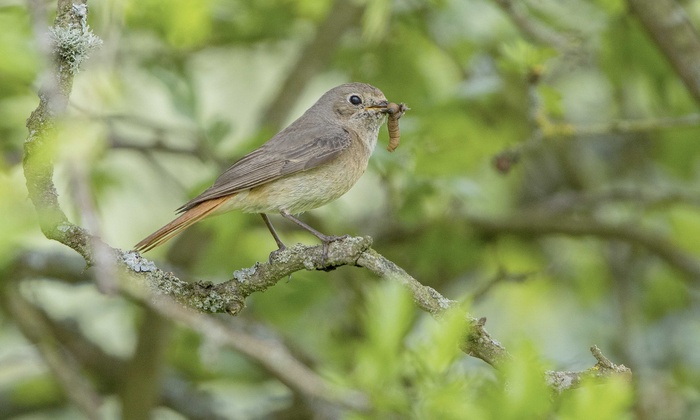
Female with food.
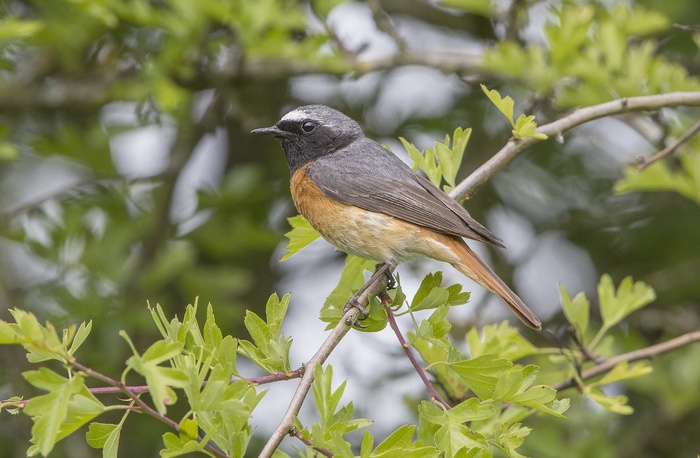
Male.
In their natural habitat.
We walked on and about a hundred yards away in an old stone wall of a long-derelict barn there was another pair showing nesting behaviour. Although widespread it’s always nice to see these lovely spring migrants because they can be quite shy and elusive.
The male of the first pair showed little regard for us when we walked past and continued to catch flies and beetles and sing openly – quite unusual behaviour for a Redstart. This started me thinking, because there was another gate to a field opposite to the gate post he was perching on. Therefore, both gates were set back from the track and with the width of the track added to this it gave me room to stay well away from their feeding activities and therefore not risk any disturbance. You can always tell if you are a problem to birds and if so it’s time to move on!! I noticed a small gnarled tree branch lying on the side of the track on our way back down and I inserted it into the old barbed wire fence near to the bird’s favourite fence post just to provide a more aesthetic perch for a photograph. If he took to it then all well and good if not then there was no harm done.
I needed my Canon 600 f4 to achieve any decent shots from this distance and this is the beauty of a big prime f4. It allows you to add on a 1.4 tele converter without causing any noticeable image degradation and when this is mounted on a 1.6 cropped sensor camera it results in a focal length of 1344mm @ f5.6. Unfortunately even though it’s the Mark 2 version of the 600 it’s still heavy going up a steep hill and coupled with a big carbon fibre tripod and a heavy duty gimbal head and a pair of binoculars and my lightweight walk stool, (indispensable), to sit on - results in a weight of 20+ pounds. This is not kit for walking up mountains that is why I bought the Sigma 150-600 contemporary lens –lightweight in comparison!
Susan dropped me off in her car at the entrance to the track on the main road, it’s only about half a mile away from home but both ways that’s a mile with that unnecessary weight on your back. As I made my way up a tarmac road and then the track, which is very uneven, I was relieved to hear and then see the male bird in exactly the same spot and on what was obviously his favourite gate post. He completely ignored me – which was very good news, I quickly set up and sat down on my stool up against the gate opposite, waiting to see if he was going to perch on the piece of gnarled wood I had left there.
I had been there about ten minutes when I could hear the clatter of horses hooves coming up the uneven track and then a single horse and rider appeared, but suddenly when the horse saw me it shied violently, it must have been day dreaming - it threw the woman rider into the air and turned and ran back down the very uneven track. I had deliberately kept quiet as I always do around horses and made no sudden movements, so it was just a freak incident. Nevertheless, I was horrified and fully expected to hear a very bad accident as the woman shouted at the horse to stop. However, because of very good horsemanship she gained control and dismounted. She came back up the track leading the horse this time, which in hindsight would probably be the best option, at least until she reached the open hill. I asked if she and the horse were all right and thankfully there was no harm done. However, she was visibly shaken and understandably so.
With all this commotion the Redstarts had gone into cover and I really thought that was the end of it. However, after a few minutes I could hear the male calling and he duly appeared on his gate post. As he started to adeptly catch flies from the air, he flew onto my perch which allowed me to take a number of shots in various poses and he continued to forage for food in front of me sometimes coming very close with total confidence. I have never had a Redstart behave like that before and it was a real pleasure to experience.
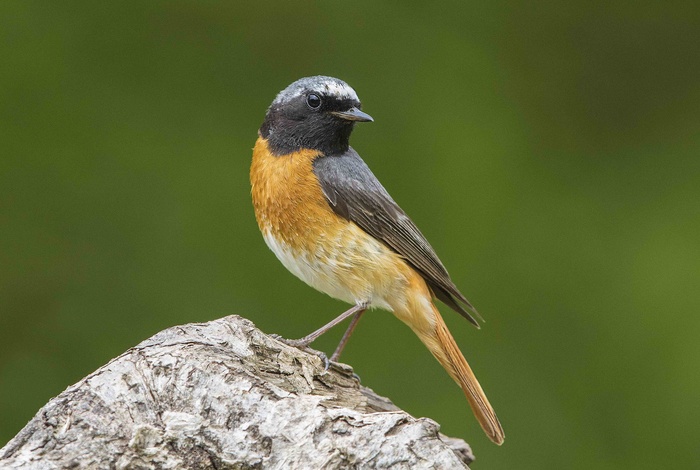
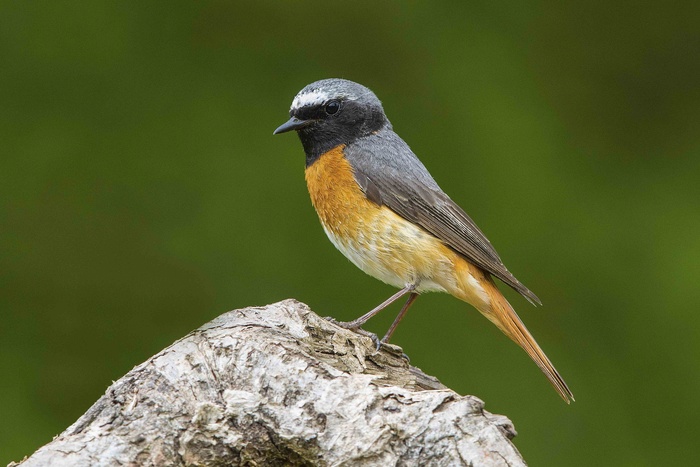
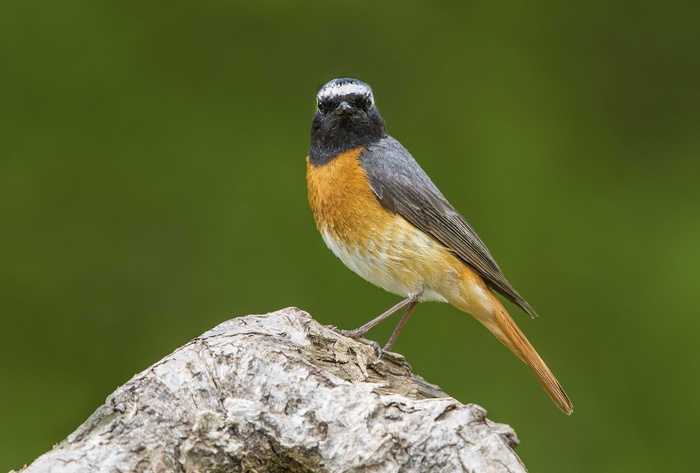
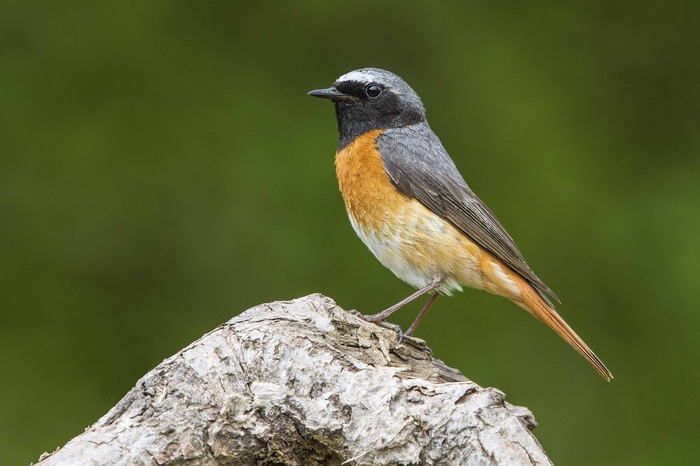
I was there for some time watching them go about their daily routine before I packed up and made my way down to be picked up by Susan.
They really are beautiful little birds.
A very nice but quite eventful morning.
Roadside wild flowers are in abundance because of non-existent council mowing and I sincerely hope they don’t have any withdrawal symptoms when the restrictions are lifted! This should be a lesson for them and as a result I hope they realise this obsessive manicuring of the countryside is totally unnecessary.
Susan and I have maintained our walks and are trying to vary the routes in an attempt to alleviate any boredom because although we live out in the country there are only so many local walks you can undertake. Saying this a few days ago we walked up onto a local hillside and as we exited a steep lane onto the open hill we could hear Common Redstarts calling and sure enough a male was perching on the post of a farm gate. The female was also flitting about going back and fore a nest in an old gnarled hawthorn – a typical habitat used as a nesting site for these birds.
Female with food.
Male.
In their natural habitat.
We walked on and about a hundred yards away in an old stone wall of a long-derelict barn there was another pair showing nesting behaviour. Although widespread it’s always nice to see these lovely spring migrants because they can be quite shy and elusive.
The male of the first pair showed little regard for us when we walked past and continued to catch flies and beetles and sing openly – quite unusual behaviour for a Redstart. This started me thinking, because there was another gate to a field opposite to the gate post he was perching on. Therefore, both gates were set back from the track and with the width of the track added to this it gave me room to stay well away from their feeding activities and therefore not risk any disturbance. You can always tell if you are a problem to birds and if so it’s time to move on!! I noticed a small gnarled tree branch lying on the side of the track on our way back down and I inserted it into the old barbed wire fence near to the bird’s favourite fence post just to provide a more aesthetic perch for a photograph. If he took to it then all well and good if not then there was no harm done.
I needed my Canon 600 f4 to achieve any decent shots from this distance and this is the beauty of a big prime f4. It allows you to add on a 1.4 tele converter without causing any noticeable image degradation and when this is mounted on a 1.6 cropped sensor camera it results in a focal length of 1344mm @ f5.6. Unfortunately even though it’s the Mark 2 version of the 600 it’s still heavy going up a steep hill and coupled with a big carbon fibre tripod and a heavy duty gimbal head and a pair of binoculars and my lightweight walk stool, (indispensable), to sit on - results in a weight of 20+ pounds. This is not kit for walking up mountains that is why I bought the Sigma 150-600 contemporary lens –lightweight in comparison!
Susan dropped me off in her car at the entrance to the track on the main road, it’s only about half a mile away from home but both ways that’s a mile with that unnecessary weight on your back. As I made my way up a tarmac road and then the track, which is very uneven, I was relieved to hear and then see the male bird in exactly the same spot and on what was obviously his favourite gate post. He completely ignored me – which was very good news, I quickly set up and sat down on my stool up against the gate opposite, waiting to see if he was going to perch on the piece of gnarled wood I had left there.
I had been there about ten minutes when I could hear the clatter of horses hooves coming up the uneven track and then a single horse and rider appeared, but suddenly when the horse saw me it shied violently, it must have been day dreaming - it threw the woman rider into the air and turned and ran back down the very uneven track. I had deliberately kept quiet as I always do around horses and made no sudden movements, so it was just a freak incident. Nevertheless, I was horrified and fully expected to hear a very bad accident as the woman shouted at the horse to stop. However, because of very good horsemanship she gained control and dismounted. She came back up the track leading the horse this time, which in hindsight would probably be the best option, at least until she reached the open hill. I asked if she and the horse were all right and thankfully there was no harm done. However, she was visibly shaken and understandably so.
With all this commotion the Redstarts had gone into cover and I really thought that was the end of it. However, after a few minutes I could hear the male calling and he duly appeared on his gate post. As he started to adeptly catch flies from the air, he flew onto my perch which allowed me to take a number of shots in various poses and he continued to forage for food in front of me sometimes coming very close with total confidence. I have never had a Redstart behave like that before and it was a real pleasure to experience.
I was there for some time watching them go about their daily routine before I packed up and made my way down to be picked up by Susan.
They really are beautiful little birds.
A very nice but quite eventful morning.
Our Little Jumping Spiders.
14th May 2020
14th May 2020
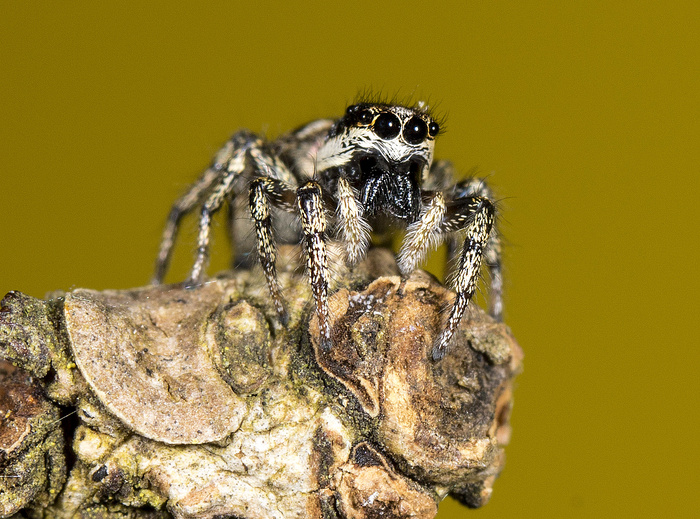
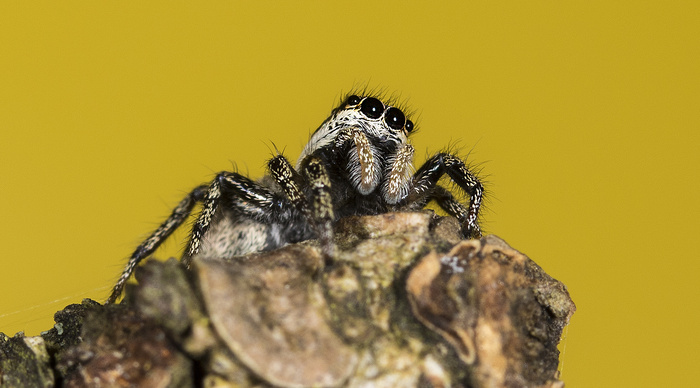
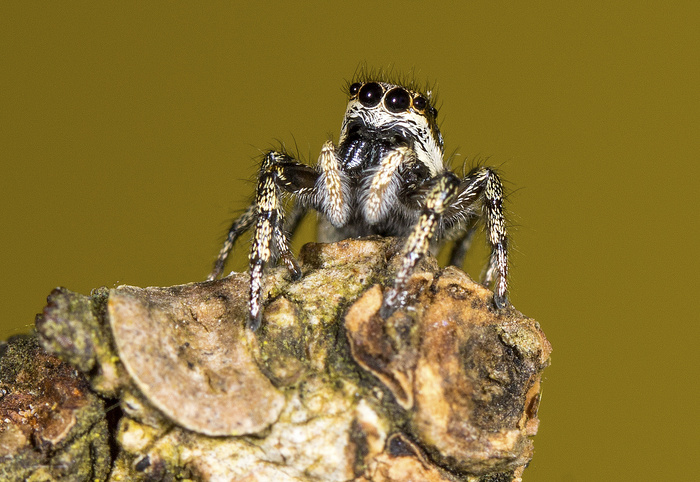
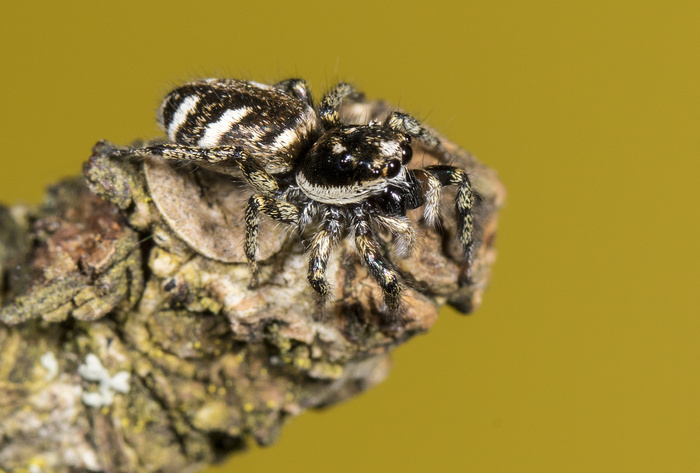
I have been looking for the Zebra jumping spiders that we saw on one of the garden sheds last week but the weather has been too cold for them to come out because these spiders really like warm sunny conditions. Alternatively I started to look inside the particular shed where we had seen them and where there is shelter from the cold wind. After a few days I managed to locate the female up on the shed roof and she happily climbed onto my finger and then into a specimen pot. I brought her inside and let her wander around on a few small props while I tried to photograph her. She is a very accommodating and friendly little spider and she posed in numerous positions allowing me to take some nice shots. After twenty minutes she was returned back to where I found her and she wandered off to do whatever spiders do. We have become quite fond of her and I hope she is around for some time along with the male that we also photographed last week.
Britain's Birds - Fieldguide.
13th May 2020
13th May 2020
About nine months ago I was contacted, via my website, by the compilers of a field guide to the Birds of Great Britain and Ireland. They said they would like to have one of my images of a female Ring Ouzel for the upcoming second edition of this very popular and bestselling book. I agreed because it’s always nice to have your images in print no matter how limited. I emailed the particular image they wanted – this particular image was taken in a very cold spring a few years back when Ring Ouzels were prevented from accessing their breeding grounds higher up because of the said inclement weather.
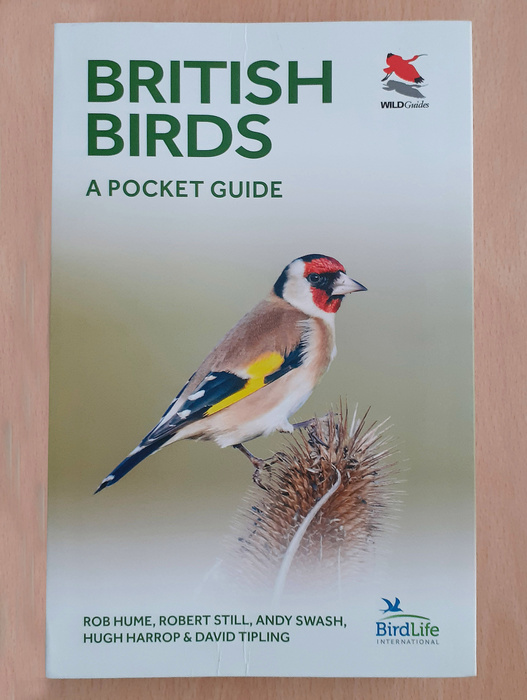
I thought no more about it and assumed that would be the end of the contact, however, I was pleasantly surprised when a couple of months later I received in the post a ‘Pocket Guide’ of the main book.
I thought it was quite nice of them because although some book authors who request images supply a complimentary copy there are many who don’t. I supplied numerous images, (one used as a full page spread), to a very well known ‘Welsh’ TV presenter's wildlife book a few years ago and received absolutely nothing – but there you go!!
As time progressed I had forgotten about the image I had supplied, but yesterday a delivery van arrived and I took receipt of a parcel - I casually opened it and was very pleasantly surprised to now find a full copy of the above field guide. Having looked through it in detail I can see why it’s a best seller – it is without fear of contradiction the most comprehensive field guide to the birds of Britain and Ireland I have ever seen.
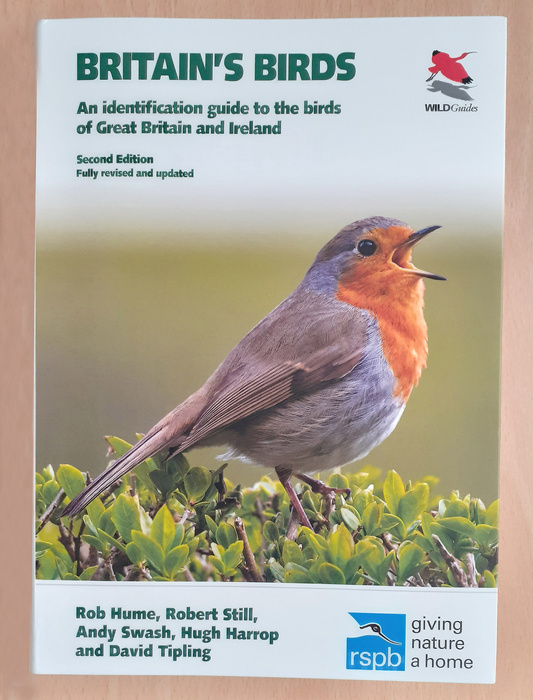
It is full of top notch images of every bird that has been recorded in the UK and Ireland. With more than 3500 actual photographs, detailed information on all the various plumages you are likely to encounter, accurate comparisons of species and simple but very good step by step help with identification.
I own a number of field guides to the birds of Britain and Ireland but this book is a country mile in front of them all.
Neither of the books are hard covered, but I personally prefer that. The ‘Pocket Guide’ retails at £10.00 and the main book retails at £20.00. I have received thirty pounds worth of books for one image supplied and that is very impressive. (Having said that these complimentary copies have in no way influenced my opinion), they are extremely high quality and you will notice that when you pick them up. If you are a birder and are thinking of getting a new top quality field guide to the birds of Britain and Ireland at a very reasonable price, then these publications are the ones for you.
Well I thought it was all over - (to quote commentary from a well known football match), but it wasn't, because now unbelievably I have received in the post another book - A field guide to the birds of Europe.
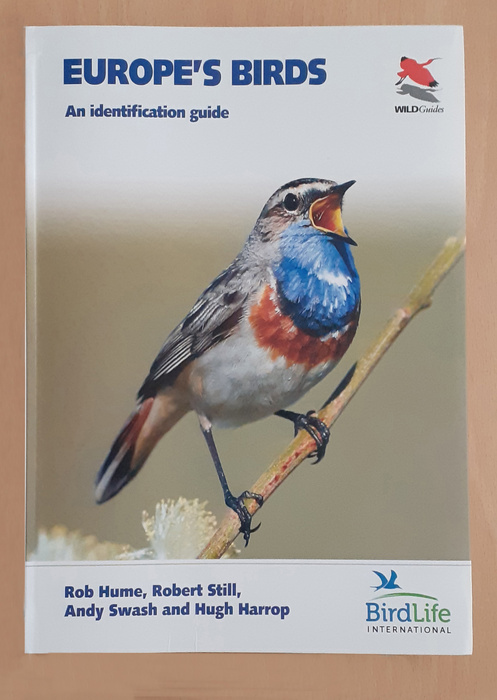
It is also a top quality affair in the same vein as the previous two! Full of information and top notch plates. I can't believe it really, that's now £50.00 of complimentary books for one image supplied. I am blown away by this, and I can also highly recommend this book, I guarantee you won't be disappointed by any of these publications - superb!!
I thought no more about it and assumed that would be the end of the contact, however, I was pleasantly surprised when a couple of months later I received in the post a ‘Pocket Guide’ of the main book.
I thought it was quite nice of them because although some book authors who request images supply a complimentary copy there are many who don’t. I supplied numerous images, (one used as a full page spread), to a very well known ‘Welsh’ TV presenter's wildlife book a few years ago and received absolutely nothing – but there you go!!
As time progressed I had forgotten about the image I had supplied, but yesterday a delivery van arrived and I took receipt of a parcel - I casually opened it and was very pleasantly surprised to now find a full copy of the above field guide. Having looked through it in detail I can see why it’s a best seller – it is without fear of contradiction the most comprehensive field guide to the birds of Britain and Ireland I have ever seen.
It is full of top notch images of every bird that has been recorded in the UK and Ireland. With more than 3500 actual photographs, detailed information on all the various plumages you are likely to encounter, accurate comparisons of species and simple but very good step by step help with identification.
I own a number of field guides to the birds of Britain and Ireland but this book is a country mile in front of them all.
Neither of the books are hard covered, but I personally prefer that. The ‘Pocket Guide’ retails at £10.00 and the main book retails at £20.00. I have received thirty pounds worth of books for one image supplied and that is very impressive. (Having said that these complimentary copies have in no way influenced my opinion), they are extremely high quality and you will notice that when you pick them up. If you are a birder and are thinking of getting a new top quality field guide to the birds of Britain and Ireland at a very reasonable price, then these publications are the ones for you.
Well I thought it was all over - (to quote commentary from a well known football match), but it wasn't, because now unbelievably I have received in the post another book - A field guide to the birds of Europe.
It is also a top quality affair in the same vein as the previous two! Full of information and top notch plates. I can't believe it really, that's now £50.00 of complimentary books for one image supplied. I am blown away by this, and I can also highly recommend this book, I guarantee you won't be disappointed by any of these publications - superb!!
Zebra Spiders.
06th May 2020
06th May 2020
Now that the weather has warmed up there are a lot more insects to see and we have been on the lookout for subjects for macro photography. We didn’t, however, realise that today would be a ‘special macro‘ day. It was a beautiful warm spring day and I had just finished cutting the grass and was putting the mower away and Susan was potting - up some runner beans in one of the sheds. Suddenly she shouted ‘Jumping Spider’!! I dropped everything and ran to get a specimen pot to try and capture it. These little spiders have been number one on our wanted list since buying a macro lens. They don’t spin webs they jump onto their prey and are very agile indeed. I managed to manoeuvre the spider into a pot and put it somewhere dark while I got the equipment ready. It’s difficult to get the props and backgrounds right for these small subjects and I realise now that good props are everything. I decided to fill the top of an old margarine tub with building sand and then placed it on top of an egg box so I could look straight at the spider. These spider’s posture can frequently be quite erect and they can be very photogenic when they are in this position. While this was going on Susan found another one and I couldn’t quite believe what was happening we had male and female Zebra spiders!!
We were worried that the spiders would live up to their name and jump away but we needn’t have worried because they were very accommodating and after getting used to the props they happily walked around and even rested on my finger and posed in some classic jumping spider positions.
These really are lovely friendly little spiders and it was a pleasure to photograph them.
Both spiders, as with all our subjects, were unharmed and returned to their natural habitat after a short time.
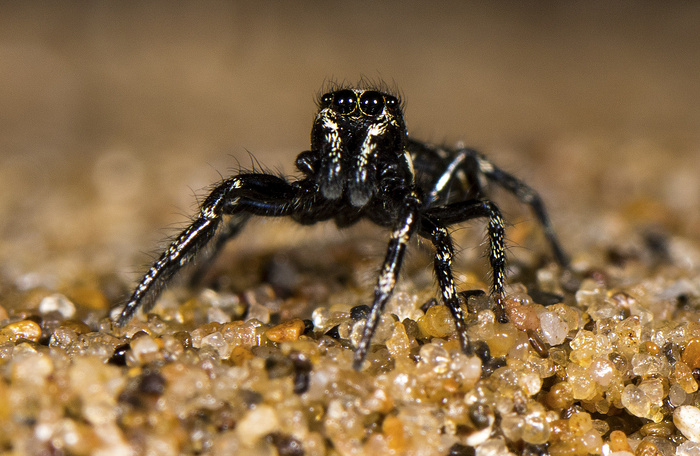
Male.
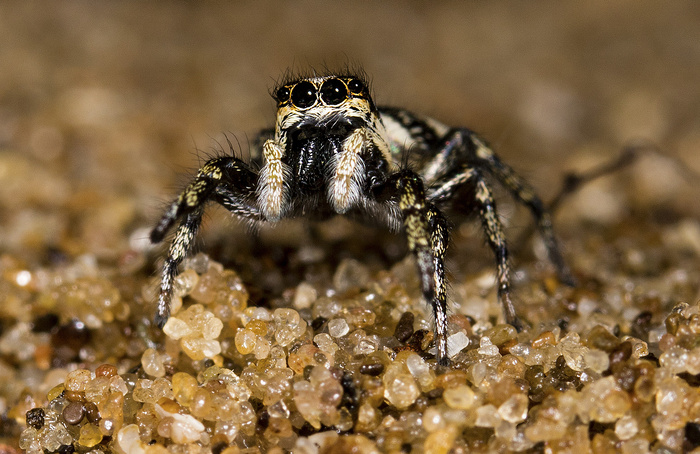
Female
We were worried that the spiders would live up to their name and jump away but we needn’t have worried because they were very accommodating and after getting used to the props they happily walked around and even rested on my finger and posed in some classic jumping spider positions.
These really are lovely friendly little spiders and it was a pleasure to photograph them.
Both spiders, as with all our subjects, were unharmed and returned to their natural habitat after a short time.
Male.
Female
Lockdown Walks.
23rd April 2020
23rd April 2020
We have had glorious weather in the Brecon Beacons over the last couple of weeks and it’s a good job given the present horrible situation. At least people who can get out can enjoy some sunshine and warmth. I don’t want to dwell on the subject but it must be a desperate situation to be penned in with little end in sight because it’s just not good for people’s mental wellbeing. Let’s all hope for a breakthrough soon.
We are very fortunate to have access to farmland that is adjacent to our house, this gives us freedom to walk without restriction and it is a massive privilege. Over the last week we have walked on the lower slopes of a local hillside that is on this private land and we have witnessed the arrival of a number of spring migrants, Redstarts, Swallows, House Martins, Tree Pipits, Cuckoo, Willow and Garden Warblers. These are in addition to the Chiffchaffs and Blackcaps that are already in our garden. It is wonderful to hear all this bird song as we walk along and I have been carrying my Sigma 150 - 600 Contemporary lens on my shoulder. We don’t hang about and limit the walk to three miles in total, taking photos basically as we pass through the habitats.
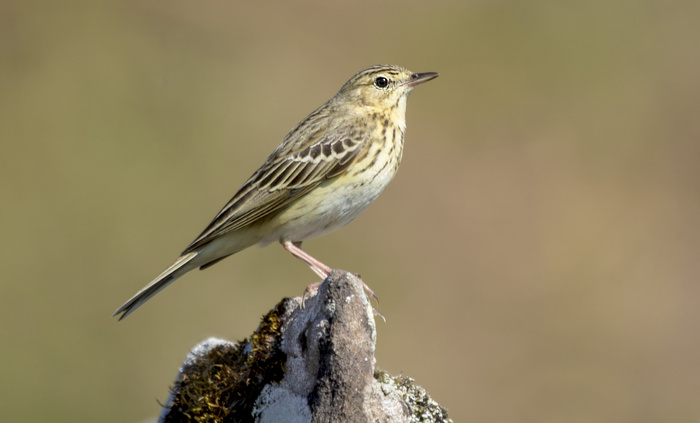
Yesterday we were watching Tree Pipits up in the air and singing their comical song as they then descended to land, typically in a tree. They are quite entertaining to watch and one was consistently landing on a stone wall so I took the opportunity of a shot.
Notice the faint black eye stripe, pale coloured lower mandible, faint streaking to the flanks and belly and short hind claw - all different to Meadow Pipit which these birds can be confused with.
The bird was very confiding and wasn’t bothered in the least as we walked by.
A bit further on in amongst the Chiffchaff, Willow Warbler, and Wren’s singing we could hear Garden Warbler. These birds are probably the least seen and photographed of the common spring warblers because of their shy and secretive behaviour. They are prolific singers, perhaps not as ‘Flutey’ as a Blackcap, a more strident and clipped song, but still very pleasant. I had a brief view yesterday but I was more concentrated today as we passed through the bushes where the bird was singing from. I managed a few shots before it disappeared into cover and it was pleasing to get one or two usable images, nothing too fancy but OK. We don’t get these little warblers in front of the lens very often so it was satisfying.
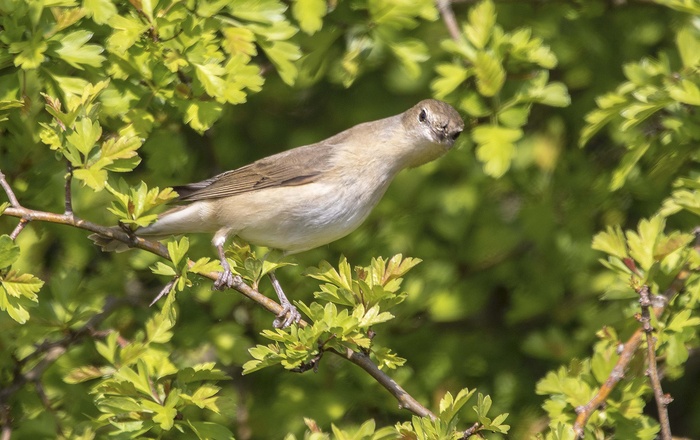
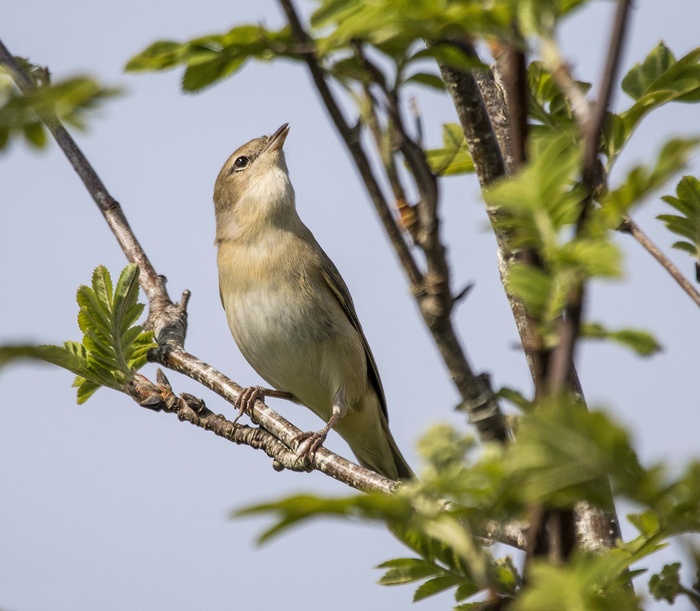
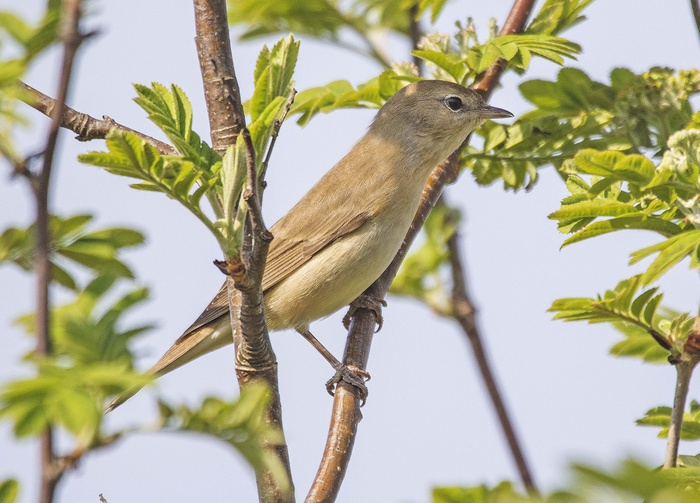
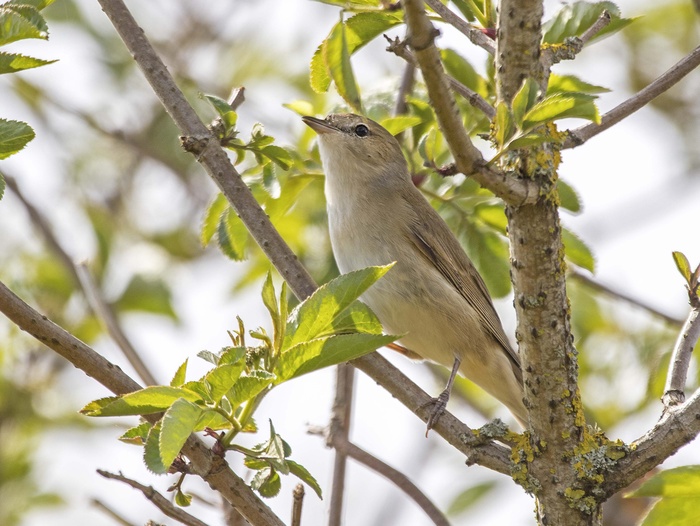
These birds are fairly nondescript, they have a gentle appearance with no supercillium or eye stripe. However, they do have a conspicuous white eye ring and a grey neck which are good field characteristics. The grey neck can just be seen in the bottom image above.
We are very fortunate to have access to farmland that is adjacent to our house, this gives us freedom to walk without restriction and it is a massive privilege. Over the last week we have walked on the lower slopes of a local hillside that is on this private land and we have witnessed the arrival of a number of spring migrants, Redstarts, Swallows, House Martins, Tree Pipits, Cuckoo, Willow and Garden Warblers. These are in addition to the Chiffchaffs and Blackcaps that are already in our garden. It is wonderful to hear all this bird song as we walk along and I have been carrying my Sigma 150 - 600 Contemporary lens on my shoulder. We don’t hang about and limit the walk to three miles in total, taking photos basically as we pass through the habitats.
Yesterday we were watching Tree Pipits up in the air and singing their comical song as they then descended to land, typically in a tree. They are quite entertaining to watch and one was consistently landing on a stone wall so I took the opportunity of a shot.
Notice the faint black eye stripe, pale coloured lower mandible, faint streaking to the flanks and belly and short hind claw - all different to Meadow Pipit which these birds can be confused with.
The bird was very confiding and wasn’t bothered in the least as we walked by.
A bit further on in amongst the Chiffchaff, Willow Warbler, and Wren’s singing we could hear Garden Warbler. These birds are probably the least seen and photographed of the common spring warblers because of their shy and secretive behaviour. They are prolific singers, perhaps not as ‘Flutey’ as a Blackcap, a more strident and clipped song, but still very pleasant. I had a brief view yesterday but I was more concentrated today as we passed through the bushes where the bird was singing from. I managed a few shots before it disappeared into cover and it was pleasing to get one or two usable images, nothing too fancy but OK. We don’t get these little warblers in front of the lens very often so it was satisfying.
These birds are fairly nondescript, they have a gentle appearance with no supercillium or eye stripe. However, they do have a conspicuous white eye ring and a grey neck which are good field characteristics. The grey neck can just be seen in the bottom image above.
Macro - Another World.
31st March 2020
31st March 2020
I’ve been thinking about buying a macro lens for some time and the thought of this awful situation enduring where we are all ‘confined to barracks’, finally tipped the balance. Birding as we know it in the spring is finished that much is obvious, perhaps a few migrants will appear in my garden, Chiffchaff and Blackcap are already singing in the wood below my house where my little nature reserve is and I will be trying to photograph them soon. With the possibility of Dragonfly, Butterfly and Landscape photography also ruled out, Macro photography in my garden is all that’s left. Apart from Susan and I going for a three mile walk every morning, where we basically see no one else, and one car journey a week to get ‘Essential’ supplies, that’s it! I thank God we have a large garden and access to quiet country lanes. My heart goes out to people living in towns and cities who are penned in day after day, it must be so depressing. However, it could obviously be infinitely worse for any of us and I know I am one of the fortunate ones with nothing to complain about and I am so grateful for it believe me. Let’s all hope for a quick turnaround where this virus can be brought under control and the country can get back on an even keel.
I decided to buy Canon as usual, I like lenses that are compatible with my cameras it makes things easier. I bought a Canon EF100 f2.8 L is usm Macro lens – a tried and tested performer. In order to get half decent images of small things in sometimes awkward lighting conditions I also bought a twin macro flash. Natural light is always best but sometimes it’s in short supply and you have to compensate.
Here is an image of an early Grey Moth from yesterday - the first image from this combo.
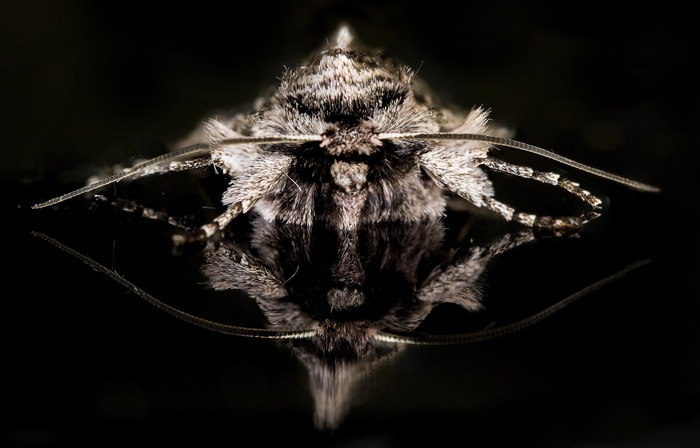
Lesser Celandine
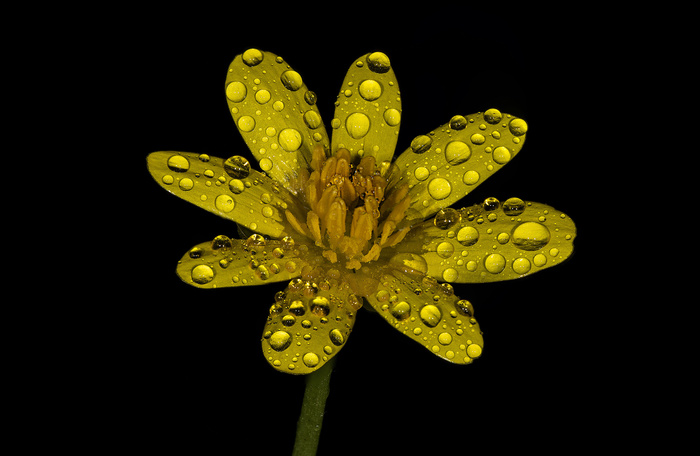
Sac spider
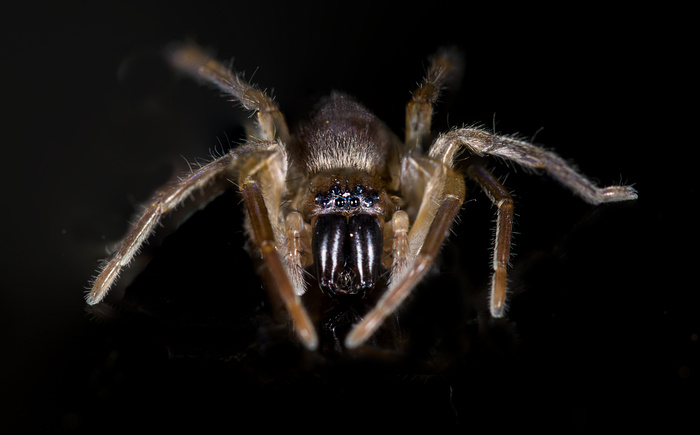
Wolf spider
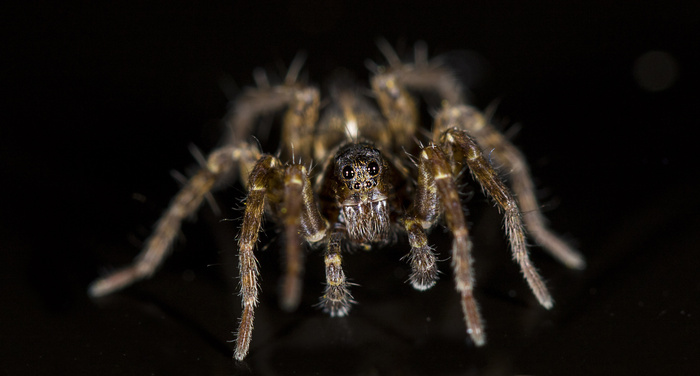
Female Black Lace Web Spider
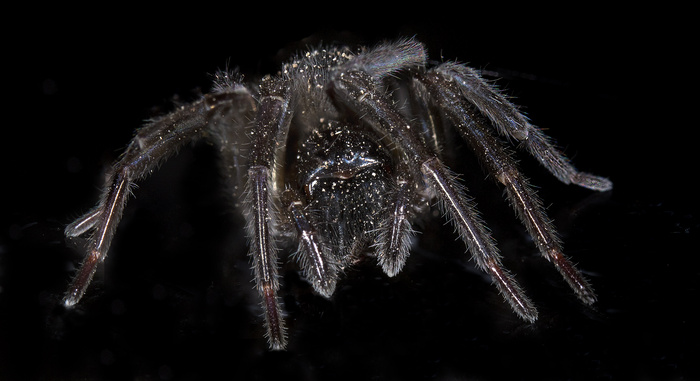
A review of this combination is now available in the Equipment Reviews section of this site.
Also another Portfolio just started - Macro - on front page.
I decided to buy Canon as usual, I like lenses that are compatible with my cameras it makes things easier. I bought a Canon EF100 f2.8 L is usm Macro lens – a tried and tested performer. In order to get half decent images of small things in sometimes awkward lighting conditions I also bought a twin macro flash. Natural light is always best but sometimes it’s in short supply and you have to compensate.
Here is an image of an early Grey Moth from yesterday - the first image from this combo.
Lesser Celandine
Sac spider
Wolf spider
Female Black Lace Web Spider
A review of this combination is now available in the Equipment Reviews section of this site.
Also another Portfolio just started - Macro - on front page.